Ultimate Care Guide for Your Moonstone Heart Necklace
Learn how to safely clean, store, and maintain your moonstone heart necklace to preserve its adularescence and prevent scratches or cracks.

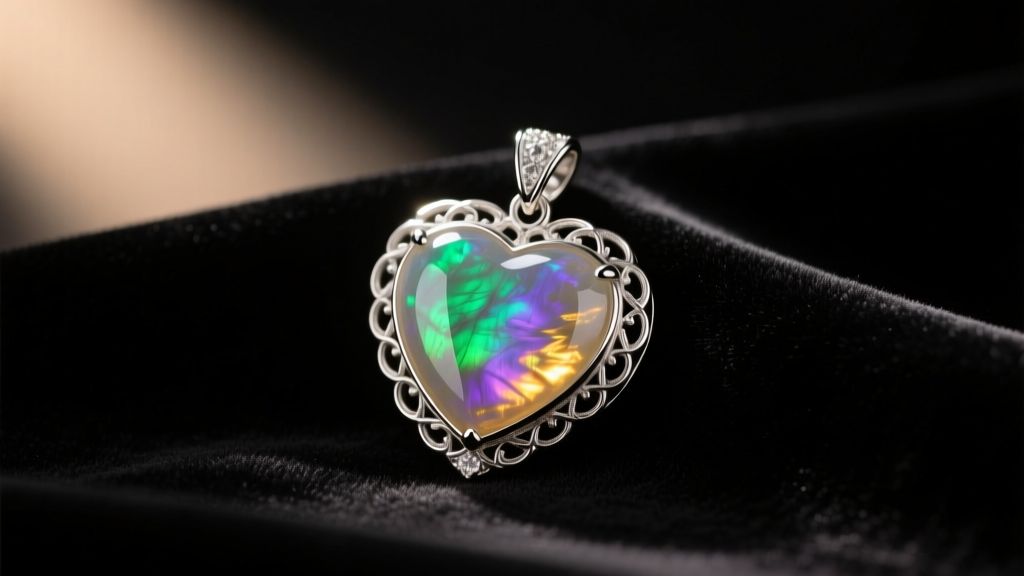
The Delicate Allure of Moonstone Jewelry
A moonstone heart necklace is more than just a romantic symbol; it is a wearable piece of geological art. Known for its captivating adularescence—the billowy, floating light that seems to glide across the surface of the gem—moonstone has been a favorite in jewelry design for centuries. However, this ethereal beauty comes with a unique set of vulnerabilities. Unlike diamonds or sapphires, moonstone requires a highly specific, gentle approach to cleaning and maintenance. If you own a moonstone heart pendant, understanding the mineral's physical properties is the first step in ensuring its glow lasts a lifetime.
According to the Gemological Institute of America (GIA), moonstone is a variety of the feldspar-group mineral orthoclase. Its signature glow is caused by light scattering between microscopic, alternating layers of orthoclase and albite. When skin oils, lotions, and environmental dust accumulate on the surface of the stone, they block light from entering these layers, effectively 'turning off' the stone's signature shimmer. Regular, safe cleaning is not just about hygiene; it is essential for maintaining the optical phenomenon that makes your necklace valuable.
Understanding the Risks: Hardness and Cleavage
Before you reach for any cleaning supplies, you must understand two critical gemological terms: Mohs hardness and cleavage. Moonstone ranks between 6 and 6.5 on the Mohs scale of mineral hardness. To put this in perspective, a steel knife is about 5.5, while quartz (dust in the air) is 7. This means your moonstone can easily be scratched by everyday dust or harder gemstones in your jewelry box.
More importantly, moonstone has perfect cleavage in two directions. Cleavage refers to the way a mineral breaks along structural planes of weakness. A hard knock against a marble countertop or the intense vibrations of an ultrasonic cleaner can cause the stone to fracture or split entirely. This is why the heart shape, which often features a delicate bottom point and a thin cleft at the top, requires extra mindfulness during daily wear and cleaning.
The Heart Shape Factor: Dirt Traps and Vulnerable Points
The anatomy of a heart-shaped pendant introduces specific maintenance challenges. The 'cleft' at the top of the heart, where the bail (the loop that holds the chain) is attached, is a prime trap for cosmetic buildup. Foundation, moisturizer, and dead skin cells pack tightly into this crevice. Furthermore, the bottom point of the heart is highly susceptible to chipping if the pendant swings and strikes a hard surface. If your moonstone is set in a prong setting rather than a protective bezel, the prongs themselves can catch on knit sweaters, potentially lifting and exposing the vulnerable edges of the stone.
Step-by-Step Safe Cleaning Method
Forget harsh chemicals, commercial jewelry dips, and abrasive polishing cloths. Cleaning a moonstone heart necklace requires a mild, manual approach. Follow this exact protocol to restore your pendant's adularescence without risking structural damage.
What You Will Need
- Lukewarm distilled water (tap water can leave mineral deposits)
- A drop of mild, phosphate-free dish soap (like Dawn)
- An extra-soft baby toothbrush or a dedicated makeup brush
- A wooden toothpick (for the heart's cleft)
- A lint-free microfiber cloth
The Cleaning Process
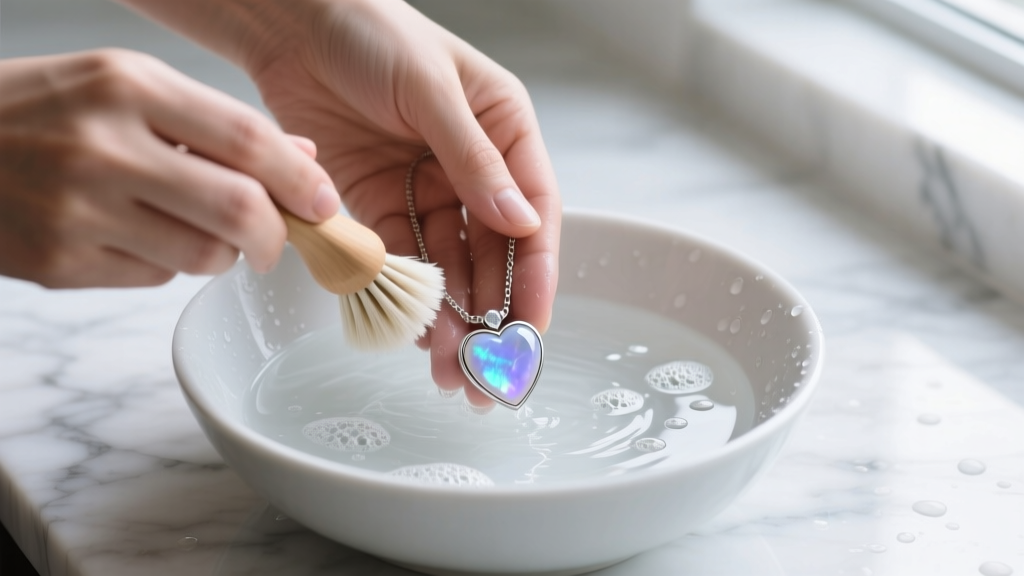
- Prepare the Solution: Mix a few drops of mild dish soap into a bowl of lukewarm distilled water. Ensure the water is not hot, as sudden temperature changes can cause thermal shock and crack the feldspar.
- Soak Briefly: Submerge only the pendant (try to keep the chain out if it is a delicate box chain, which we will address later) for no more than 3 to 5 minutes. This loosens surface oils.
- Agitate Gently: Using the baby toothbrush, lightly sweep across the dome of the moonstone. Do not press hard; let the bristles and the soapy water do the work.
- Detail the Cleft: Take the wooden toothpick and gently scrape the inside of the heart's top cleft and the back of the setting where the stone meets the metal. Wood is softer than both the moonstone and sterling silver or gold, so it will dislodge grime without scratching.
- Rinse and Dry: Rinse the pendant under a gentle stream of lukewarm distilled water. Pat it dry immediately with the microfiber cloth. Do not let it air dry, as water spots can dull the polish of the metal setting.
The 'Never Do This' Hazard List
The most common way jewelry is ruined is through well-intentioned but fundamentally flawed cleaning methods. The table below outlines the specific hazards that threaten moonstone pendants.
| Cleaning Method / Agent | Risk Level | Why It Damages Moonstone |
|---|---|---|
| Ultrasonic Cleaners | Critical | High-frequency vibrations will exploit the stone's perfect cleavage, causing internal fractures or complete shattering. |
| Steam Cleaners | Critical | Sudden thermal shock from high-heat steam can crack the feldspar layers instantly. |
| Ammonia / Bleach | High | Harsh chemicals can degrade the polish of the stone and permanently damage porous metal alloys in the setting. |
| Silver Dip Solutions | High | Acidic tarnish removers will strip the natural luster of the moonstone and leave a chalky, irreversible residue. |
| Toothpaste / Baking Soda | Moderate | These are abrasive. They will create micro-scratches on the moonstone's surface, permanently clouding its adularescence. |
Chain Maintenance: The Hidden Dirt Trap
While the moonstone heart pendant gets all the attention, the chain it hangs on requires equal care. Heart pendants are frequently paired with delicate chains, such as 0.8mm cable chains or intricate box chains. Box chains, while beautiful and sturdy, are notorious for trapping lotion and dead skin inside their tiny, square interlocking links. Over time, this buildup turns the chain stiff and dark.
To clean the chain, lay it flat on a clean towel. Dip a soft lint-free cloth into your soapy distilled water solution, wring it out until it is just damp, and pull the chain through the cloth, pinching it gently. Repeat this process with a clean, damp cloth to remove soap residue, and finish by pulling it through a dry microfiber cloth. For stubborn grime in box chains, a soft interdental brush (the kind used for braces or retainers) can safely reach into the links without applying the damaging pressure of a standard toothbrush.
Strategic Storage and Daily Wear Rules
Proper care extends far beyond the cleaning process. How you store and wear your moonstone heart necklace dictates its longevity.
The 'Last On, First Off' Rule
Moonstone is highly sensitive to the chemicals found in everyday cosmetics. Hairspray, perfume, sunscreen, and lotions will create a filmy barrier over the stone, suffocating its glow. Always make your necklace the absolute last thing you put on when getting dressed, and the very first thing you take off when you get home. Never wear it to the gym, the swimming pool (chlorine is highly destructive), or the sauna.
Isolated Storage
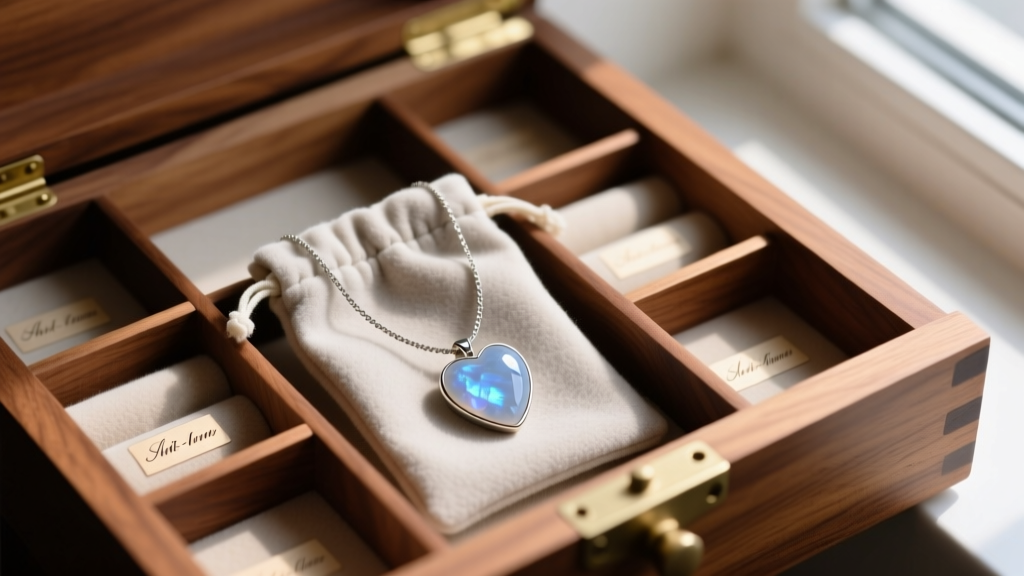
Because moonstone is easily scratched by harder materials, it should never be tossed into a communal jewelry dish. The Jewelers of America strongly recommends storing softer gemstones individually. Keep your moonstone heart necklace in a dedicated anti-tarnish flannel pouch or a fabric-lined compartment separate from your diamonds, sapphires, and even quartz-based stones like amethyst or citrine. Furthermore, always fasten the clasp before storing to prevent the chain from tangling around the pendant's bail, which can bend the delicate metal loop over time.
When to Seek Professional Maintenance
Even with meticulous home care, a moonstone heart necklace worn daily should be inspected by a professional jeweler once a year. If your stone is held in a prong setting, the jeweler will check for prong wear. Because moonstone is often cut en cabochon (with a smooth, rounded dome), the prongs must be perfectly flush against the stone. If a prong lifts, it can catch on fabric and pry the stone out of its setting.
If your moonstone has accumulated deep, microscopic scratches that have dulled its surface, a professional lapidary can re-polish the stone. This process removes a microscopic layer of the feldspar, restoring the smooth surface required for light to enter and create that mesmerizing, floating adularescence. Never attempt to buff or polish the stone yourself with a Dremel or polishing compound, as the heat generated by friction will crack the gem.
Final Thoughts
A moonstone heart necklace is a deeply personal, romantic piece of jewelry that reflects light in a way no other gemstone can. By respecting its geological vulnerabilities—avoiding ultrasonics, steering clear of harsh chemicals, and paying special attention to the heart-shaped crevices—you ensure that its ethereal glow remains as captivating as the day you first clasped it around your neck.


