Caring for the Most Expensive Pearl Necklace: Expert Guide
Learn how to protect, clean, and store high-value pearl jewelry. Discover expert maintenance tips to preserve the most expensive pearl necklace in your vault.

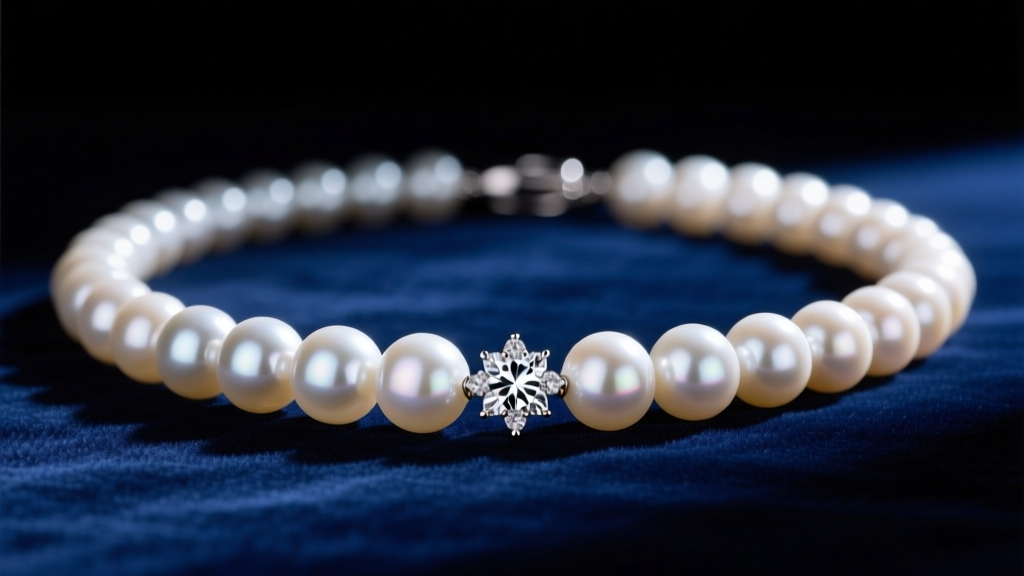
When curating a high-jewelry collection, few pieces command the reverence of a masterwork strand of natural or high-grade cultured pearls. Whether your vault holds a modern Mikimoto masterpiece or an heirloom that rivals the most expensive pearl necklace ever sold at auction—such as the legendary La Peregrina, which achieved a record-breaking $11.8 million—the organic nature of these gems demands rigorous, specialized care. Unlike diamonds, rubies, or sapphires, pearls are not inert minerals; they are living, breathing archives of biological history. This comprehensive guide provides museum-grade maintenance protocols to ensure your investment retains its luster, structural integrity, and appraisal value for generations to come.
The Unique Vulnerability of High-Value Nacre
To properly care for investment-grade pearls, one must first understand their microscopic architecture. Pearls rank between 2.5 and 3.0 on the Mohs scale of hardness, making them exceptionally susceptible to scratching from everyday dust, which often contains microscopic quartz particles (Mohs 7.0). More importantly, nacre is a composite material consisting of microscopic crystals of aragonite (calcium carbonate) bound together by conchiolin, an organic protein.
According to the Gemological Institute of America (GIA), it is this organic conchiolin matrix that gives pearls their unique orient and luster, but it is also their greatest vulnerability. Conchiolin is highly sensitive to dehydration, acidic environments, and chemical solvents. When the conchiolin degrades, the aragonite plates lose their structural binding, leading to a dull, chalky appearance and eventual flaking—a catastrophic failure mode for any high-value pearl necklace.
Environmental Threats: Humidity and Temperature
High-end pearls require a highly controlled microclimate. The ideal relative humidity (RH) for storing organic gemstones is between 45% and 55%. If the ambient humidity drops below 30% for extended periods, the conchiolin dries out, causing the nacre to shrink and crack—a phenomenon known in gemology as "crazing." Conversely, humidity levels above 70% can promote the growth of microscopic mold on the silk threading and degrade the conchiolin through excessive moisture retention.
Temperature fluctuations are equally destructive. Pearls should be kept in environments ranging from 65°F to 75°F (18°C to 24°C). Rapid temperature changes, such as moving a pearl necklace from a climate-controlled vault to a hot, humid outdoor environment, can cause the aragonite layers to expand and contract at different rates than the conchiolin binder, leading to internal delamination.
The Professional Cleaning Protocol
Cleaning a high-value pearl necklace requires a gentle, methodical approach that avoids saturating the silk thread or exposing the nacre to harsh chemicals. The golden rule of pearl wear is "last on, first off." Pearls must always be the final accessory you put on after applying cosmetics, perfumes, and hairsprays, and the first item you remove upon returning home.
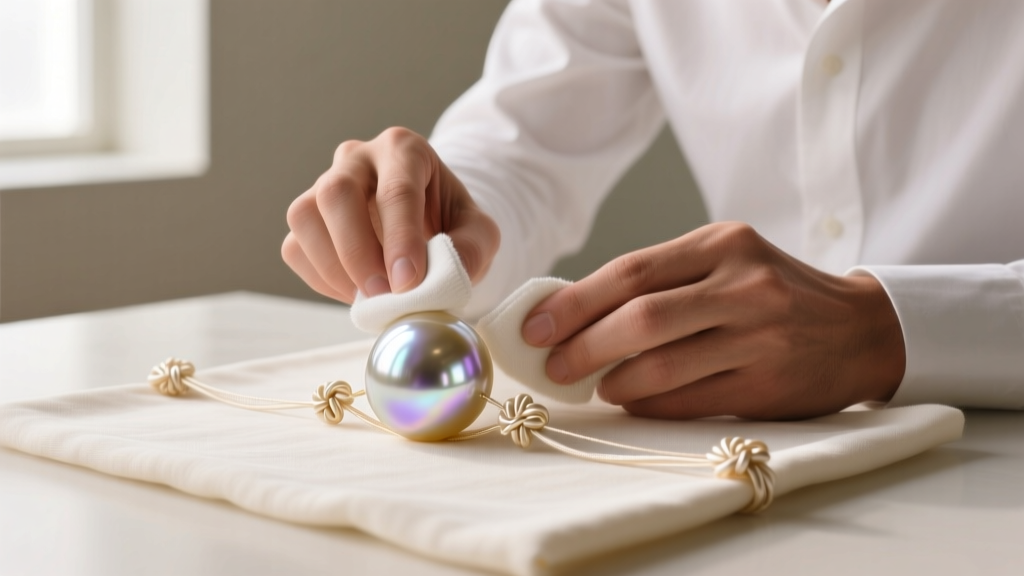
Human sweat is mildly acidic (pH 4.5 to 7.0) and contains salts and urea that can slowly etch the surface of the nacre, destroying the mirror-like luster of top-tier South Sea or Akoya pearls. After every wear, gently wipe each pearl individually with a clean, lint-free microfiber cloth slightly dampened with distilled water. Never use tap water, as the chlorine and fluoride can leave microscopic mineral deposits on the surface.
Expert Warning: Never submerge a knotted pearl necklace in water. Soaking weakens the silk thread, causing it to stretch and potentially snap under the weight of the pearls.
Cleaning Agents and Pearl Safety Matrix
| Cleaning Agent | Chemical Interaction with Nacre | Safety Verdict |
|---|---|---|
| Distilled Water | Neutral; safely removes surface salts and oils. | Safe (Damp cloth only) |
| Mild Baby Soap | Low pH risk; can leave a dulling film if not rinsed. | Use with Extreme Caution |
| Ultrasonic Cleaners | Cavitation bubbles violently strip nacre layers. | Never Use (Destructive) |
| Steam Cleaners | High heat dehydrates conchiolin, causing crazing. | Never Use (Destructive) |
| Ammonia / Bleach | Dissolves calcium carbonate instantly. | Never Use (Destructive) |
Silk Thread Integrity and Restringing
The structural foundation of any premium pearl necklace is its silk thread. High-end jewelers use 100% natural silk, typically Griffin Size F or G (0.40mm to 0.50mm in diameter) for large South Sea pearls. Unlike synthetic threads like nylon, silk possesses a natural elasticity that allows the knots to seat tightly against the drill holes, preventing bead-on-bead friction that can widen the holes and chip the nacre edges.
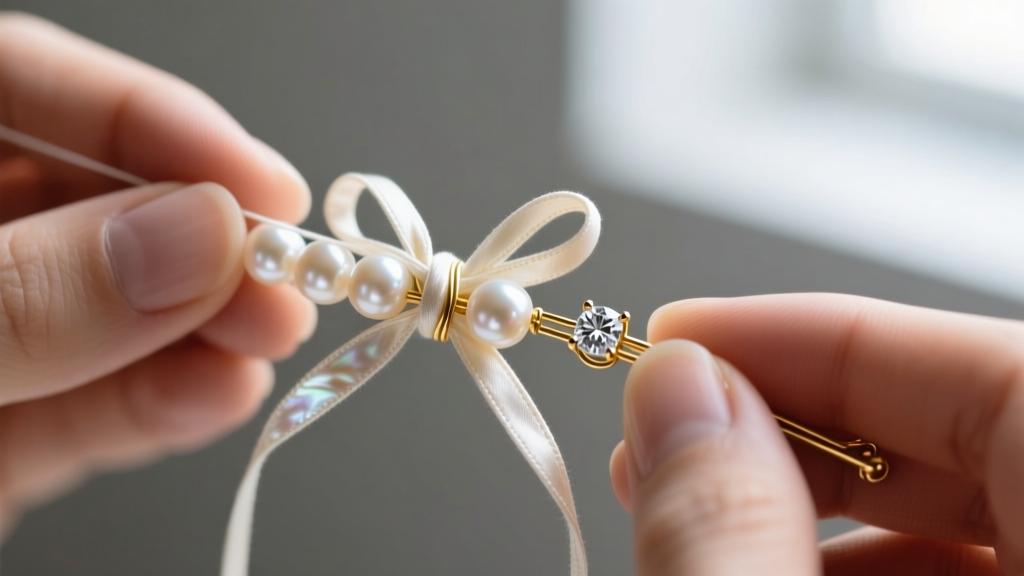
Over time, silk stretches, frays, and absorbs oils from the skin, turning dark and brittle. For a necklace worn frequently, professional restringing is required every 12 to 18 months. A master jeweler will knot between every single pearl to ensure that if the strand breaks, only one gem is lost. Furthermore, the connection point between the silk and the metal clasp must be protected by a small coiled metal tube known as French wire or "gimp." This prevents the metal clasp ring from sawing through the silk thread during wear, a common point of failure in poorly constructed strands.
Archival Storage Solutions
How you store your pearls when they are not being worn is just as critical as how you clean them. Never store pearls in sealed plastic bags or PVC-lined jewelry boxes. Many plastics emit volatile organic compounds (VOCs) and trace amounts of hydrogen chloride gas as they degrade, which will chemically etch the surface of the pearls and cause irreversible yellowing.
Instead, wrap the necklace in acid-free, unbleached archival tissue paper or a soft, untreated cotton pouch. Store the piece flat in a dedicated compartment of a cedar-lined or felt-lined jewelry box. Hanging a heavy pearl necklace on a hook for long periods will cause gravity to permanently stretch the silk thread, creating unsightly gaps between the pearls and the knots. Additionally, pearls benefit from occasional exposure to ambient moisture; wearing them regularly is actually one of the best ways to keep the conchiolin hydrated and the luster vibrant.
Insurance and Appraisal Tracking
Given the volatility of the gemstone market and the unique nature of natural and high-grade cultured pearls, maintaining an up-to-date appraisal is a vital part of the care ecosystem. According to the GIA's care and maintenance guidelines, documenting the exact millimeter size, nacre thickness, luster grade, and overtone of each pearl is essential for insurance replacement. Ensure your appraiser is a certified gemologist who utilizes X-radiography to verify nacre thickness and confirm the absence of bead-nucleation in natural specimens, safeguarding the legacy and financial value of your most prized jewelry investments.


