Value Assessment: Men's Cross Necklace With Thick Chain
Discover how to evaluate a men's cross necklace with thick chain. Compare material grades, chain weights, and price tiers to find true jewelry value.

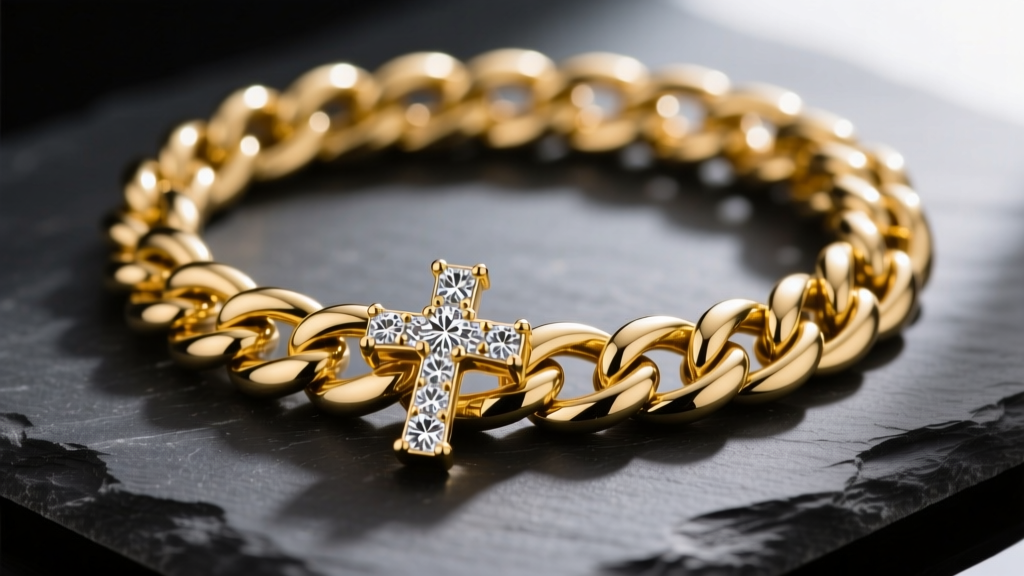
The True Cost of a Men's Cross Necklace With Thick Chain
When shopping for a men's cross necklace with thick chain, the market is flooded with deceptive pricing, misleading material claims, and structurally compromised jewelry. A 'thick' chain generally refers to widths between 6mm and 14mm, a scale that demands serious structural integrity. Evaluating the true value of these pieces requires looking far beyond the aesthetic appeal of a bold cross pendant. You must assess the metallurgical grade, the link construction methodology, the clasp mechanics, and the proportional geometry of the pendant bail. In this comprehensive budget and value assessment, we break down exactly what you should expect to pay, the physical metrics that justify those prices, and the red flags that indicate you are overpaying for hollow or plated imitations.
Material Grades: Where Your Budget Actually Goes
The foundation of any chain's value lies in its base metal and surface treatments. According to the Federal Trade Commission's Jewelry Guides, strict definitions govern how metals can be marketed, yet many online retailers blur these lines. Understanding these distinctions is critical for budget assessment.
316L Surgical Stainless Steel (The Budget Champion)
For buyers with a budget under $100, 316L marine-grade stainless steel is the undisputed king of value. It is highly resistant to tarnish, corrosion, and skin discoloration. A high-quality 8mm stainless steel Cuban link chain with a solid cast cross pendant will typically weigh between 80 and 110 grams and cost between $45 and $85. The value proposition here is exceptional durability, though it lacks the intrinsic melt value of precious metals.
925 Sterling Silver (The Mid-Tier Standard)
Sterling silver offers the bright luster of white gold at a fraction of the cost. However, pure silver is too soft for thick chains, which is why it is alloyed with copper (7.5%). This copper content makes sterling silver prone to oxidation and tarnishing. To combat this, premium manufacturers apply a rhodium flash plating. When evaluating a silver men's cross necklace with thick chain, verify the rhodium thickness. A standard flash plate is merely 0.05 microns and will wear off in months, exposing the tarnish-prone silver beneath. Look for pieces that specify a heavier electroplating process or be prepared for regular polishing maintenance. Expect to pay $150 to $400 for a solid 7mm to 10mm sterling silver chain and pendant set.
Solid Gold (The Investment Tier)
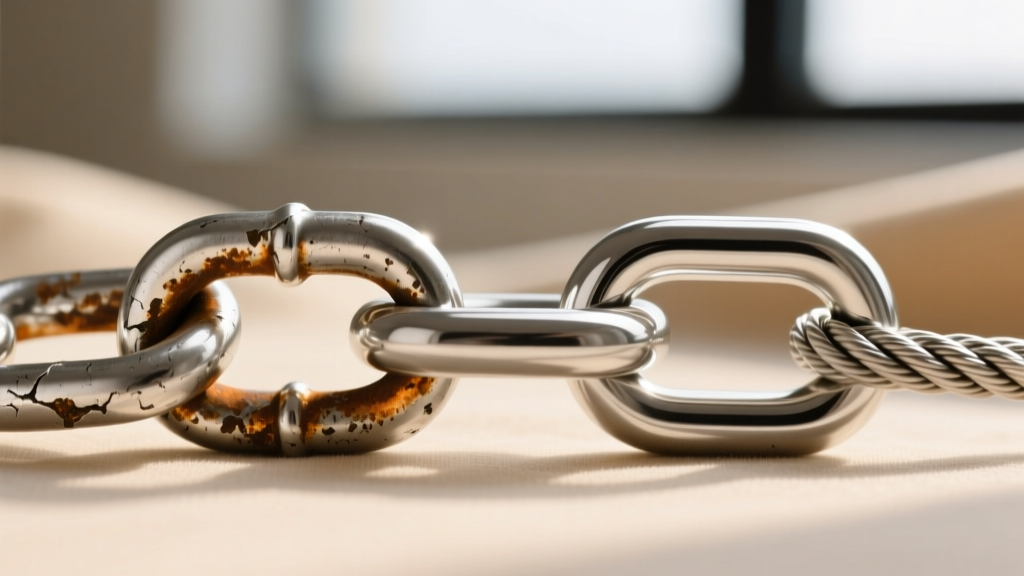
When entering the realm of 10k, 14k, or 18k solid gold, you are paying for intrinsic commodity value plus craftsmanship. The Gemological Institute of America (GIA) notes that 14k gold (58.3% pure gold) provides the ideal balance of rich color and tensile strength required for heavy chains. A genuine solid 14k gold chain is priced based on its gram weight multiplied by the daily spot price of gold, plus a manufacturing premium (usually 15% to 30%). If a retailer is selling a thick gold chain without disclosing its exact gram weight, walk away immediately. Transparency in weight is the primary indicator of a legitimate precious metals dealer.
Chain Thickness, Weight, and Clasp Mechanics
The term 'thick' is subjective, but in the jewelry industry, structural thresholds dictate the necessary hardware. A chain's width directly correlates to its weight and, consequently, the stress placed on its clasp.
| Chain Width | Classification | Avg. Weight (22-inch) | Required Clasp Type | Estimated 14k Gold Price |
|---|---|---|---|---|
| 4mm - 5mm | Medium | 35g - 50g | Standard Lobster Claw | $2,400 - $3,500 |
| 6mm - 8mm | Thick | 65g - 100g | Oversized Lobster / Box | $4,500 - $7,000 |
| 10mm - 12mm | Heavy/Statement | 130g - 180g | Box Clasp w/ Safety Latch | $9,000 - $13,500 |
| 14mm+ | Massive | 220g+ | Custom Hidden Box Clasp | $15,000+ |
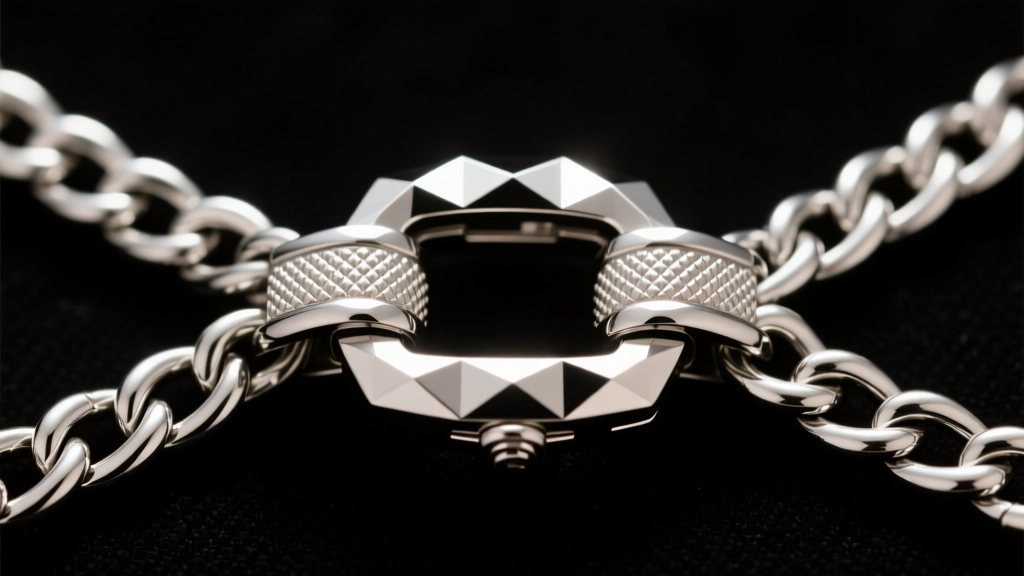
As illustrated above, once a chain surpasses 8mm in width, a standard spring-ring or small lobster clasp becomes a severe liability. The sheer kinetic weight of a 10mm chain swinging against the chest generates enough torque to snap a weak clasp mechanism or bend the jump ring. For any men's cross necklace with thick chain exceeding 8mm, demand a box clasp equipped with a figure-eight safety latch or dual side latches. This mechanical redundancy ensures that if the primary internal tongue mechanism fails, the secondary wire latch will prevent the chain from falling to the floor.
Pendant Bail Proportions: A Frequently Overlooked Value Metric
A common failure point in poorly designed necklaces is the mismatch between the chain's thickness and the cross pendant's bail (the loop that connects the pendant to the chain). If you purchase a 10mm thick Cuban link chain, the pendant bail must have an inner diameter of at least 12mm to 14mm.
When the bail is too tight, the chain cannot articulate properly. This causes the thick links to bind, kink, and grind against the interior of the bail, leading to accelerated metal fatigue and eventual snapping. Furthermore, a restricted bail prevents the cross pendant from laying flat against the sternum, causing it to flip awkwardly. When assessing value, inspect the bail's construction. A high-value piece will feature a solid cast bail with a reinforced solder joint at the base, rather than a thin, stamped sheet-metal loop that can easily be pried open by the weight of the thick chain.
Red Flags: Spotting Overpriced and Hollow Chains
When evaluating your budget, be highly skeptical of the following deceptive practices that artificially inflate the perceived value of a men's cross necklace with thick chain:
- Hollow-Link Construction: Some manufacturers create 12mm or 14mm chains using hollow links to save on gold costs. While they look massive, they weigh a fraction of their solid counterparts. Hollow links are notorious for denting upon minor impact and are nearly impossible for jewelers to repair or solder if a link snaps. Always demand the gram weight; a 12mm chain weighing only 40 grams is hollow.
- Vermeil vs. Gold-Filled vs. Plated: 'Gold plated' means a microscopic layer of gold (at least 0.175 microns) over a base metal like brass. It will wear off rapidly on a thick chain due to high friction against the skin and clothing. 'Gold-filled' requires a much thicker layer of gold (at least 5% of the total weight) mechanically bonded to the core, offering vastly superior longevity. 'Vermeil' is gold plating over sterling silver. For a thick chain meant for daily wear, solid gold or high-quality PVD-coated stainless steel offers the best long-term value.
- Undersized Cross Pendants: A massive 10mm chain paired with a delicate 1-inch cross pendant creates a jarring visual imbalance and places disproportionate stress on a small bail. A proportional setup dictates that a chain between 8mm and 12mm should be paired with a cross pendant measuring at least 2.5 to 4 inches in height to maintain aesthetic harmony and structural equilibrium.
Final Verdict: Maximizing Your Investment
Assessing the value of a men's cross necklace with thick chain requires a disciplined approach that prioritizes metallurgical transparency, structural engineering, and proportional design. If your budget is under $150, invest in premium 316L stainless steel with PVD coating and robust box clasps. If your budget allows for precious metals, strictly purchase solid 14k gold or heavy rhodium-plated 925 silver from dealers who openly publish the exact gram weight and clasp specifications of their inventory. By focusing on these tangible metrics rather than brand markups, you secure a bold, enduring piece of jewelry that delivers genuine, long-term value.


