Mother of Pearl Necklace Vintage Care and Restoration Guide
Learn expert techniques to clean, restore, and store your vintage mother of pearl necklace without damaging its delicate nacre or antique settings.

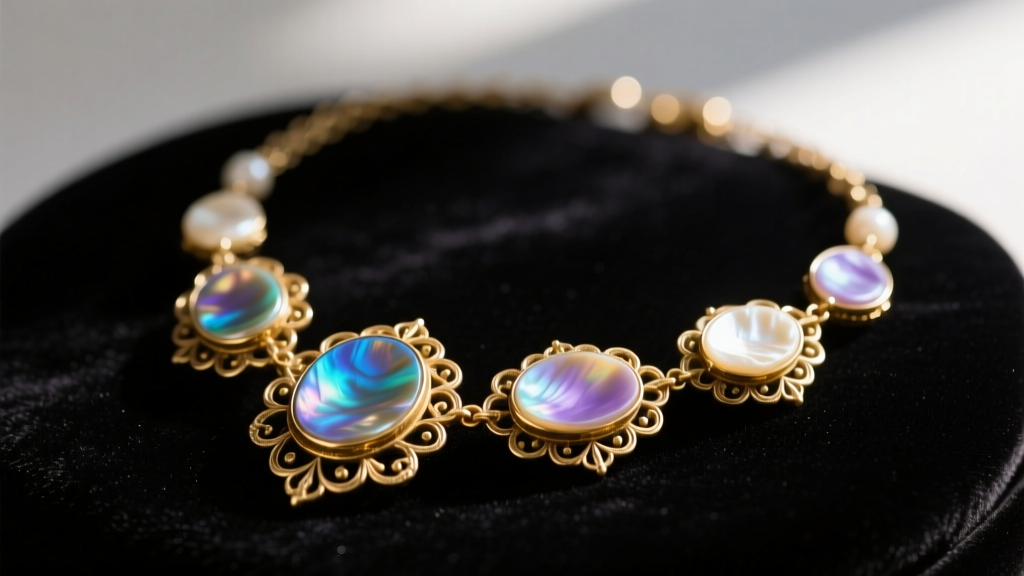
Understanding Nacre: The Science Behind the Vintage Shine
Owning a mother of pearl necklace vintage collectors prize requires more than just an eye for design; it demands a deep understanding of organic gemology. Unlike crystalline gemstones such as diamonds or sapphires, mother of pearl (nacre) is an organic-inorganic composite material. It is primarily composed of microscopic aragonite platelets (calcium carbonate) bound together by conchiolin, a flexible organic protein. On the Mohs hardness scale, nacre ranks a mere 2.5 to 3.0, making it exceptionally vulnerable to scratching, chemical etching, and dehydration.
When dealing with antique and vintage pieces—particularly those from the Victorian, Art Nouveau, or Art Deco eras—the nacre has already endured decades of environmental exposure. The conchiolin can naturally dehydrate over time, leading to a loss of luster or, in severe cases, structural micro-fracturing known as crazing. According to the Gemological Institute of America (GIA), the porous nature of nacre means it readily absorbs oils, cosmetics, and acidic perspiration, which can permanently dull the iridescent play-of-color that makes vintage pieces so highly sought after.
The Fatal Mistakes: What Never to Do
Before attempting any restoration, it is critical to understand which modern jewelry cleaning methods will instantly destroy a vintage mother of pearl necklace. The most common errors include:
- Ultrasonic Cleaners: The high-frequency cavitation bubbles generated by ultrasonic machines literally blast the microscopic aragonite layers off the nacre, leaving the surface pitted and chalky.
- Steam Cleaning: Extreme heat and moisture shock can cause the conchiolin to expand and contract rapidly, resulting in immediate delamination or cracking.
- Commercial Silver Dips: Many vintage necklaces feature oxidized silver or tarnished gold vermeil settings. Commercial liquid silver dips contain thiourea and hydrochloric acid. If these chemicals touch the nacre, they will etch the surface irreversibly within seconds.
- Ammonia and Bleach: Alkaline solutions break down the organic protein matrix, stripping the pearl of its natural orient and luster.
The Safe Cleaning Protocol for Vintage Pieces
To safely clean a vintage mother of pearl necklace, you must rely on gentle, pH-neutral mechanics rather than harsh chemicals. Follow this conservator-approved protocol:
1. Preparation
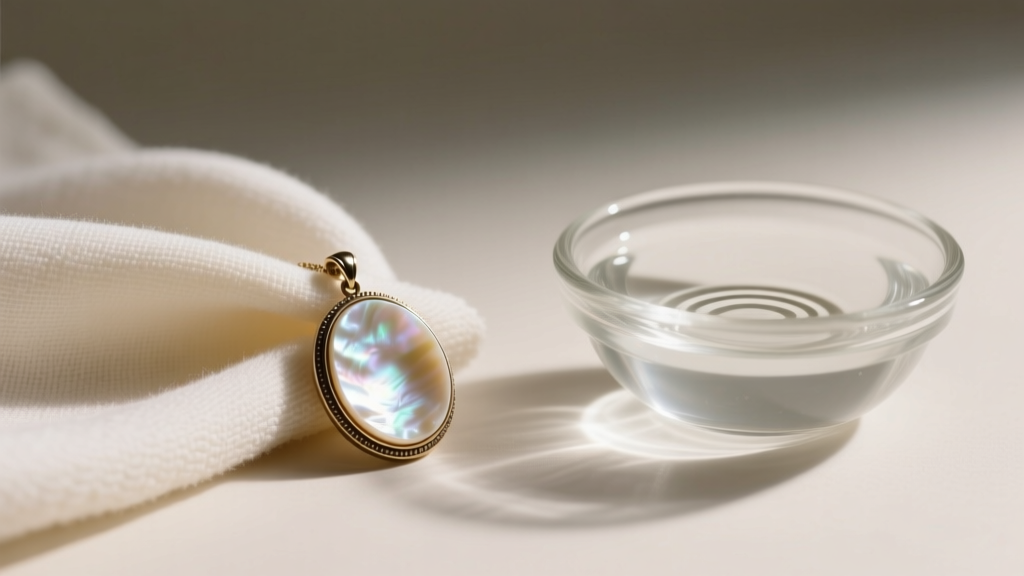
Gather distilled water (never tap water, as chlorine and fluoride can leave microscopic deposits), a pH-neutral liquid soap (such as unscented baby shampoo), a lint-free microfiber cloth, and untreated cotton swabs. Avoid using standard cotton balls, as they can leave tiny fibers caught in the antique metal prongs.
2. The Damp Wipe Method
Dampen the microfiber cloth with a mixture of distilled water and a single drop of pH-neutral soap. Wring it out until it is barely moist. Gently wipe the surface of the mother of pearl, following the natural grain of the nacre if visible. Never submerge a vintage necklace in water. Submersion can weaken the antique silk threading and dissolve historical adhesives like shellac, which were commonly used in 19th and early 20th-century jewelry making.
3. Drying and Polishing
Immediately dry the nacre with a separate, clean, dry microfiber cloth. Buff gently to restore the surface luster. Allow the necklace to air dry completely in a room-temperature environment before storing.
Cleaning Antique Metal Settings Safely
The metalwork surrounding vintage nacre often requires its own specialized care. If your piece features sterling silver that has heavily tarnished, or gold vermeil that has accumulated grime in the filigree, you must isolate the metal from the pearl.
Dip an untreated cotton swab or a wooden toothpick into a tiny amount of specialized, non-ammonia silver polish or a mild baking soda paste. Carefully work the polish into the metal crevices, maintaining a strict 1-millimeter buffer zone away from the nacre. If the polish accidentally touches the mother of pearl, immediately wipe it away with a damp cloth. Once the metal is clean, use a dry swab to remove any residual polish from the setting. For pieces with intentional antique patina or oxidation (common in Victorian mourning jewelry), avoid polishing the recesses entirely to preserve the historical contrast.
Assessing Structural Wear: Threads and Glues
Care is not limited to surface cleaning; structural integrity is paramount. The Victoria and Albert Museum's conservation department notes that organic materials used in vintage jewelry construction degrade predictably over time.
- Silk Threading: If your vintage necklace is strung on silk, inspect the thread between the beads. If it appears frayed, darkened, or stiff, it is compromised. Vintage silk should be professionally restrung every 3 to 5 years if worn regularly. Ensure your jeweler uses French wire (gimp) at the clasp to prevent the metal from cutting the silk.
- Adhesive Failure: Many vintage cameo or inlay pieces rely on natural glues like hide glue or shellac to secure the mother of pearl to the metal backing. If you notice any lifting, clicking sounds, or movement of the nacre within the bezel, stop wearing the piece immediately and consult a professional restorer. Do not attempt to re-glue it with modern cyanoacrylate (Super Glue), which will ruin both the nacre and the antique metal.
Troubleshooting Common Vintage Nacre Issues
Even with meticulous care, vintage pieces may exhibit specific signs of aging. Use this diagnostic table to identify and address common issues:
| Issue | Primary Cause | Expert Solution |
|---|---|---|
| Crazing (Micro-cracks) | Severe dehydration; extreme temperature fluctuations. | Cannot be reversed. Stabilize by storing at 40-50% relative humidity. Avoid wearing in extreme cold or heat. |
| Yellowing / Dullness | Absorption of skin oils, perfume, or nicotine over decades. | Gentle wiping with a damp microfiber cloth. For severe cases, consult a gemologist for professional, ultra-mild polishing. |
| Chipped Edges | Physical impact; friction against adjacent hard gemstones. | Have a lapidary smooth the sharp edges to prevent further flaking. Store separately from other jewelry. |
| Tarnish Transfer | Oxidized silver settings rubbing against the porous nacre. | Carefully clean the nacre edge with a damp swab. Keep the adjacent silver setting consistently polished to prevent transfer. |
Long-Term Storage and Environmental Control
How you store a mother of pearl necklace vintage collectors value is just as important as how you clean it. The most destructive storage mistake is sealing organic gems in airtight plastic bags. Polyvinyl chloride (PVC) and other plastics can emit trace gases that react with the calcium carbonate, causing a permanent cloudy film.
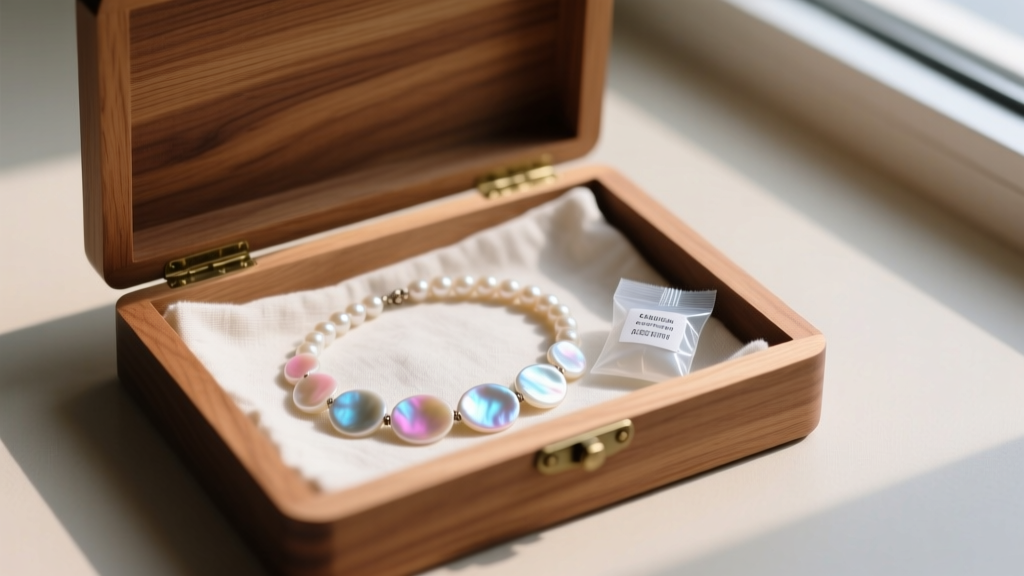
Instead, store your vintage necklace flat in a breathable, unbleached cotton pouch or line a wooden jewelry box with acid-free tissue paper. Laying the necklace flat prevents gravity from stretching the antique silk thread over time. Furthermore, nacre requires a small amount of ambient moisture to prevent the conchiolin from drying out. If you live in an arid climate or use central heating during the winter, place a small, breathable silica gel packet or a specialized jewelry humidification bead pack in the storage compartment to maintain a stable relative humidity of around 40% to 50%.
When to Consult a Professional Conservator
While routine maintenance can be performed at home, certain scenarios demand the expertise of a professional jewelry conservator or a master lapidary. If your vintage necklace features intricate carved nacre (such as Art Deco floral motifs) that has accumulated decades of hardened grime in the recesses, do not attempt to scrape it out with metal tools. A conservator will use specialized wooden micro-tools and optical magnification to safely lift the debris without scratching the delicate carving. Similarly, if the nacre has begun to delaminate from its backing, professional stabilization with conservation-grade, reversible adhesives is required to save the historical integrity of the piece.
Conclusion
A vintage mother of pearl necklace is a wearable piece of history, capturing the light and craftsmanship of a bygone era. By respecting the organic chemistry of nacre, avoiding modern abrasive cleaning technologies, and committing to proper environmental storage, you can preserve the iridescent beauty of your antique piece for generations to come. Treat your vintage jewelry not just as an accessory, but as a delicate artifact that rewards gentle, informed care with a timeless, luminous glow.


