The Ultimate Guide to Buying a Multi Color Jade Necklace
Discover how to evaluate, authenticate, and price a multi color jade necklace. Learn jadeite grades, treatments, and expert buying tips.

The Allure and Complexity of Multi-Color Jade
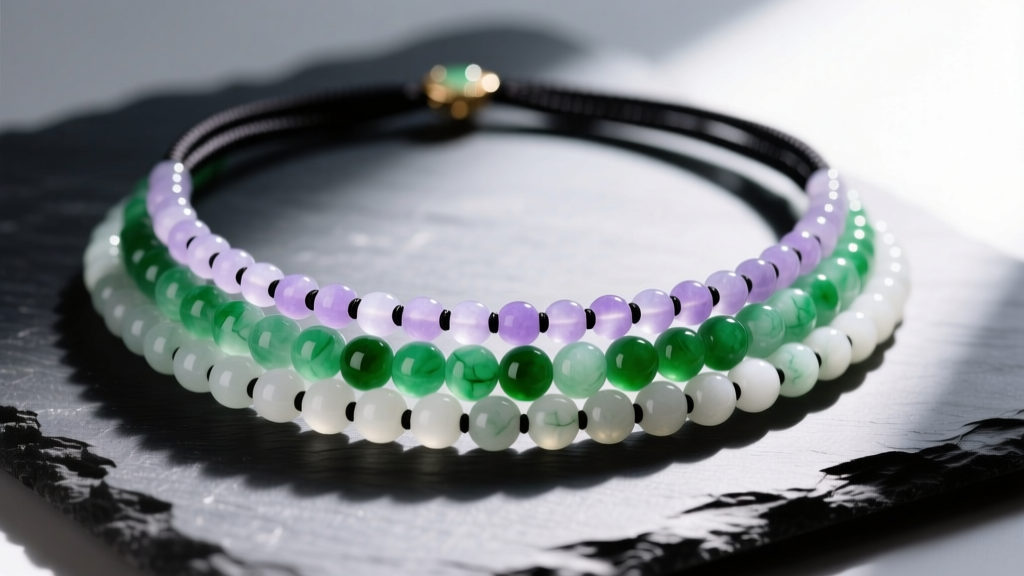
A multi color jade necklace is more than just a piece of jewelry; it is a geological marvel and a profound cultural artifact. In gemological terms, "jade" refers to two distinct metamorphic rocks: jadeite and nephrite. When collectors and connoisseurs seek out vibrant, multi-hued strands, they are almost exclusively looking for high-quality jadeite. The natural occurrence of multiple colors—such as vibrant emerald green, soft lavender, pure white, and earthy russet—within a single bead or strand is exceptionally rare. In Chinese culture, a necklace featuring green, red, and purple is revered as "Fu Lu Shou," symbolizing prosperity, status, and longevity.
However, the modern jewelry market is saturated with treated stones, synthetic imitations, and misleading terminology. Whether you are investing in a heritage piece or shopping for a contemporary fashion statement, understanding the gemological and structural nuances of jade is critical. This comprehensive buying guide will equip you with the expertise needed to navigate the market confidently in 2026.
Jadeite vs. Nephrite: Know Your Minerals
Before evaluating color, you must identify the mineral. According to the Mindat mineral database, jadeite is a pyroxene mineral with a refractive index of approximately 1.66 and a specific gravity of 3.33. Nephrite, an amphibole, is slightly lighter (specific gravity 2.95) and possesses a more fibrous, interlocking crystal structure. While nephrite can exhibit beautiful greens and whites, it rarely displays the vivid lavender, imperial green, or sharp multi-color zoning found in premium jadeite. A genuine multi color jade necklace of high value will be composed of jadeite. Always request gemological confirmation of the mineral species before making a significant purchase.
The ABCs of Jade Treatments: A Buyer’s Warning
The most critical factor in pricing and purchasing jade is its treatment status. The industry categorizes jade into three distinct tiers, and confusing them is the most common mistake novice buyers make.
- Type A (Natural): Completely untreated, except for traditional plum juice polishing and waxing. The colors are 100% natural. This is the only grade that holds investment value.
- Type B (Bleached and Polymer-Impregnated): Acid-washed to remove brown or yellow impurities, then injected with polymer resin to improve translucency. Over time, the resin yellows and degrades, ruining the necklace's appearance and structural integrity.
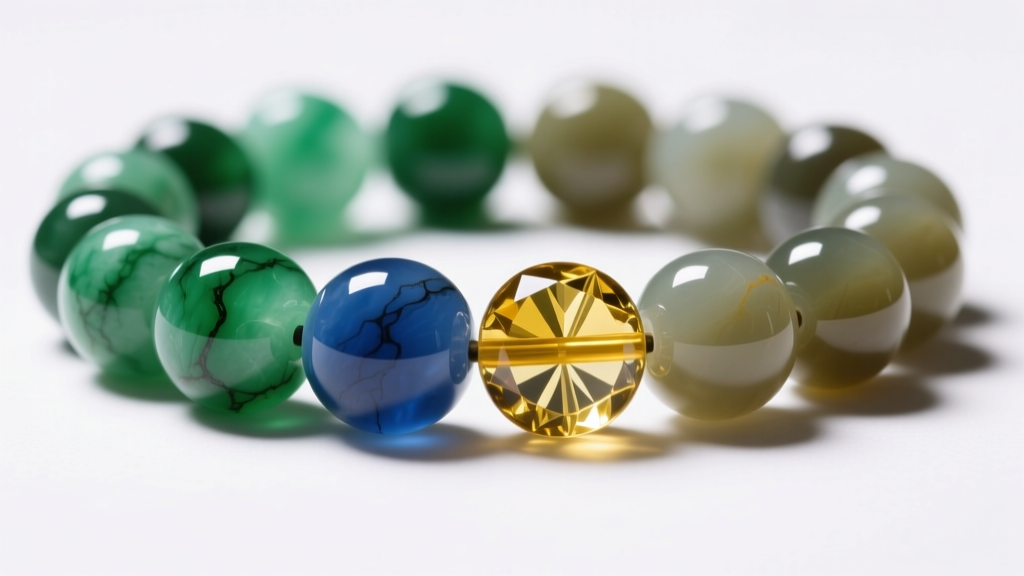
- Type C (Dyed): Artificially colored. In multi-color necklaces, unscrupulous sellers may dye pale beads to mimic rare lavender or imperial green. Under magnification, dye concentrates in the microscopic fractures of the stone, creating a "spidery" network of unnatural color.
Evaluating "Water" and Color Zoning
In the jade trade, transparency and texture are collectively referred to as "water" (shui). The way light penetrates the bead dictates how the multiple colors interact and glow. A bead with excellent water will make the green and lavender hues appear to float inside the stone, rather than sitting flat on the surface.
Jadeite Transparency Grades
| Trade Term | Transparency Level | Visual Description | Impact on Multi-Color Value |
|---|---|---|---|
| Glassy (Bo Li) | Transparent | Clear like glass; highly luminous. | Exponentially increases value; extremely rare in multi-color beads. |
| Ice (Bing) | Sub-Transparent | Like an ice cube; light penetrates deeply. | Premium tier; colors appear vivid and suspended. |
| Glutinous (Nuo) | Semi-Transparent | Like cooked rice; opaque but with a soft inner glow. | Mid-tier; excellent for deep, saturated color zoning. |
| Bean (Dou) | Opaque | Chalky, visible crystal grains, dull. | Low value; colors look flat and painted on. |
When examining a multi color jade necklace, look for "color roots." Natural green or lavender colors in Type A jadeite usually have a root or gradient where the color fades into the white or translucent base of the bead. Dyed stones often lack this natural gradient, displaying abrupt, unnatural color boundaries.
Necklace Construction: Knotting, Spacers, and Hardware
The physical assembly of a jade bead necklace is just as important as the stones themselves. Jadeite is tough, but it is not immune to abrasion. If beads are strung tightly against one another on a wire or synthetic cord, the constant friction will eventually wear down the polish around the drill holes, creating a dull, chalky ring that significantly degrades the necklace's value.
High-end multi color jade necklaces are traditionally strung on natural silk thread with individual hand-tied knots between every single bead. This serves three purposes:
- Abrasion Prevention: The silk knot acts as a buffer, preserving the mirror polish of the drill holes.
- Security: If the strand breaks, the knots ensure you only lose one bead rather than the entire necklace.
- Drape and Flexibility: Knotting allows the necklace to drape fluidly around the neckline, conforming to the wearer's anatomy rather than sitting stiffly.
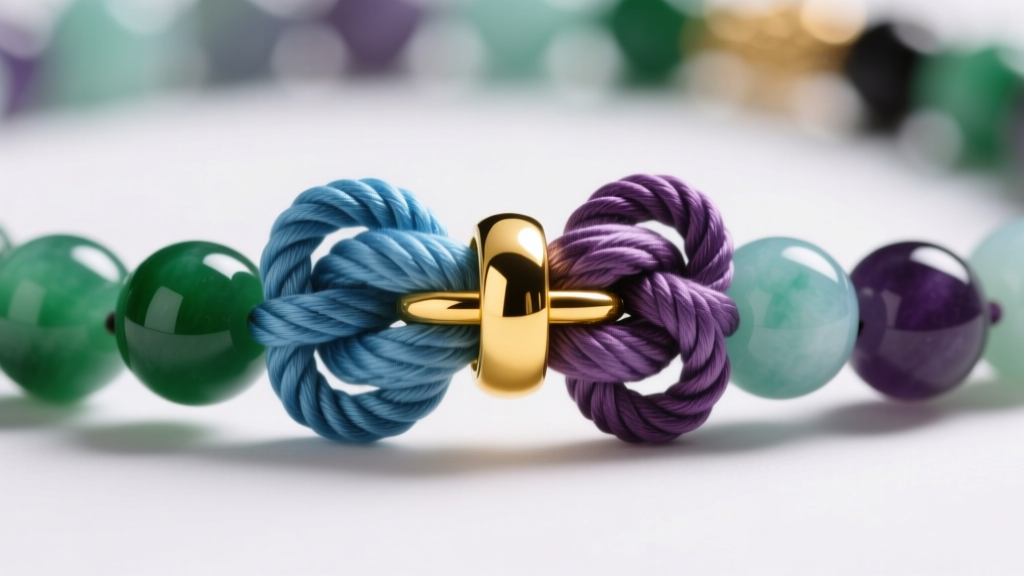
Pay close attention to the clasp. Premium strands often utilize 18k gold barrel clasps or hidden bayonet clasps that maintain the visual continuity of the beads. Avoid necklaces that use cheap base-metal lobster clasps, as this is often a red flag indicating the seller has cut corners on the stones as well.
Authentication and Certification Protocols
Never rely solely on a seller's verbal guarantee or an in-house "certificate of authenticity." In the current market, independent laboratory verification is non-negotiable for high-value jade. The Gemological Institute of America (GIA) and the National Gemstone Testing Center (NGTC) are the gold standards for jade authentication.
A legitimate lab report for a multi color jade necklace will explicitly state "Natural Jadeite" and confirm the absence of polymer impregnation or dye. Gemologists use Fourier Transform Infrared (FTIR) Spectroscopy to detect the specific molecular signatures of polymer resins used in Type B treatments. If a seller refuses to allow a third-party lab inspection, walk away immediately.
2026 Market Pricing and Investment Outlook
The pricing for a multi color jade necklace varies wildly based on the interplay of color saturation, transparency ("water"), and bead size (measured in millimeters). Here is a realistic breakdown of current market tiers:
- Fashion Tier ($100 - $800): Beads (6mm - 8mm) with opaque, "bean" transparency. Colors are natural but muted or heavily mottled with brown/yellow inclusions. Excellent for everyday wear but holds no investment value.
- Collector Tier ($1,500 - $15,000): Beads (8mm - 10mm) with "glutinous" to "ice" transparency. Distinct, pleasing color zoning (e.g., clear white beads interspersed with vibrant green and lavender). Hand-knotted on silk with 18k gold accents.
- Investment Tier ($25,000 - $150,000+): Matched strands of large beads (12mm+) featuring "ice" or "glassy" transparency with rare, highly saturated "Fu Lu Shou" color combinations. These are museum-quality pieces that appreciate over time, frequently appearing at international auction houses.
Expert Insight: "Beware of the 'too good to be true' multi-color strand. A necklace featuring perfectly uniform, highly saturated green and purple beads with zero visible inclusions selling for under $2,000 is almost certainly Type B+C (bleached, polymer-filled, and dyed). Nature rarely achieves perfect, flawless symmetry in multi-color jadeite."
Final Thoughts on Sourcing
Purchasing a multi color jade necklace is an exercise in patience and education. By prioritizing Type A natural stones, demanding FTIR-backed laboratory certification, and scrutinizing the structural integrity of the silk knotting, you ensure that your acquisition is both a breathtaking adornment and a lasting asset. Take your time, study the color roots, and let the natural, unforced beauty of the jade guide your decision.


