Multi Cross Necklace Value Guide: 2026 Pricing & Materials
Discover the true value of a multi cross necklace in 2026. Compare material grades, chain gauges, and pricing to avoid overpaying for cheap hardware.

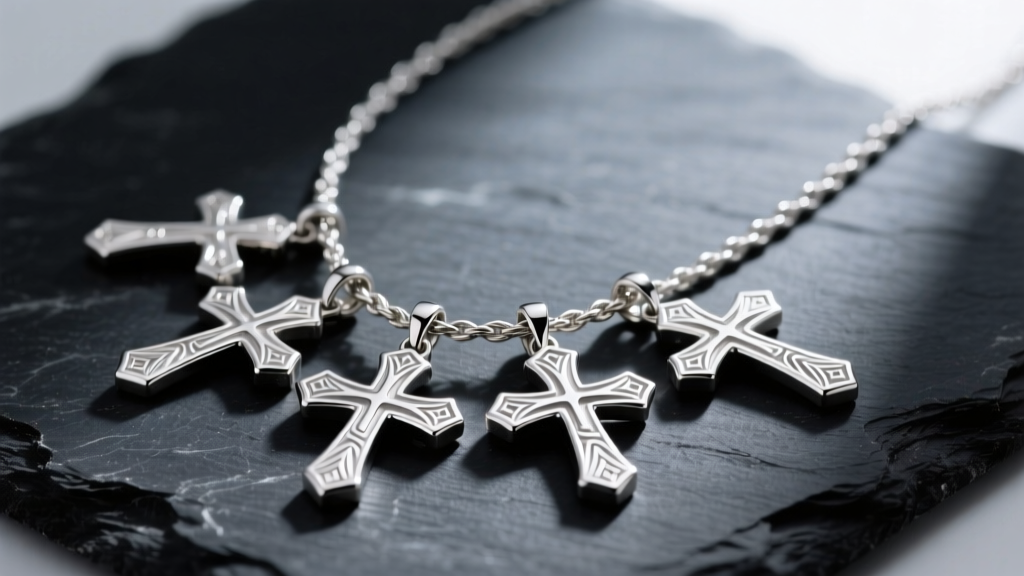
The multi cross necklace has evolved from a niche subculture staple into a mainstream layering essential. However, as demand surges in 2026, the market is heavily saturated with overpriced brass disguised as fine jewelry. When evaluating these pieces, the untrained eye focuses solely on the aesthetic arrangement of the pendants. From a metallurgical and structural standpoint, however, the true value lies in the chain's tensile strength, the manufacturing method of the crosses, and the precise thickness of any precious metal plating.
This comprehensive budget and value assessment will help you decode pricing tiers, identify structural failure points, and ensure you are paying for genuine craftsmanship rather than clever marketing.
The Anatomy of Value: Where Your Money Actually Goes
To accurately assess the price of a multi cross necklace, you must first understand how manufacturing costs are distributed. In a well-constructed piece, the budget allocation typically breaks down as follows:
- Chain and Hardware (45%): The chain bears the kinetic stress of multiple pendants. Heavier gauge chains and secure clasps require more raw metal and precision machining.
- Pendant Casting/Striking (30%): The method used to form the crosses (die-struck vs. cast) drastically alters labor and material costs.
- Finishing and Plating (15%): High-quality rhodium or thick vermeil plating requires specialized electroplating baths and strict quality control.
- Brand Markup (10%): The premium you pay for the designer's name and packaging.
If a retailer is charging premium prices but utilizing lightweight, hollow-cast pendants on a fragile chain, the value proposition is fundamentally flawed.
2026 Material Grade & Pricing Matrix
Material composition is the single largest determinant of both price and longevity. Below is a benchmark matrix for evaluating multi cross necklaces in the current market. According to the Federal Trade Commission Jewelry Guides, specific terminology like 'vermeil' is legally protected and requires a minimum thickness of 2.5 microns of gold over a sterling silver base.
| Material Grade | Base Metal | Plating Thickness | 2026 Price Range | Tarnish Risk | Expected Lifespan |
|---|---|---|---|---|---|
| Gold-Plated Brass | Brass/Copper Alloy | < 0.5 microns | $15 - $45 | Very High | 1 - 6 months |
| 925 Sterling Silver | 92.5% Silver, 7.5% Copper | Rhodium dipped (0.1μm) | $60 - $140 | Low | 5+ years |
| 14k Gold Vermeil | 925 Sterling Silver | 2.5+ microns 14k Gold | $130 - $280 | Low | 2 - 5 years |
| Solid 14k Gold | 58.5% Gold Alloy | N/A (Solid) | $650 - $1,400 | None | Lifetime |
Expert Insight: Never pay 'vermeil' prices for standard gold-plated brass. Always check the product specifications for the base metal and micron thickness. If the brand does not disclose this data, assume it is flash-plated brass.
Chain Gauge and Hardware: The Hidden Failure Points
A multi cross necklace inherently suffers from pendulum stress. Every time you move, the crosses swing, creating kinetic friction and tensile strain on the chain links and jump rings. Most commercial jewelry fails not because the chain snaps in the middle, but because the hardware gives way.

Evaluating Chain Thickness
For a single lightweight pendant, a 1.0mm cable chain is sufficient. However, a multi cross setup requires a minimum gauge of 1.5mm to 2.0mm. Chains thinner than 1.2mm will inevitably stretch and warp under the distributed weight of three or more crosses. Look for sturdy link styles like curb, rope, or thick cable chains that resist tangling and snapping.
The Clasp and Jump Ring Vulnerability
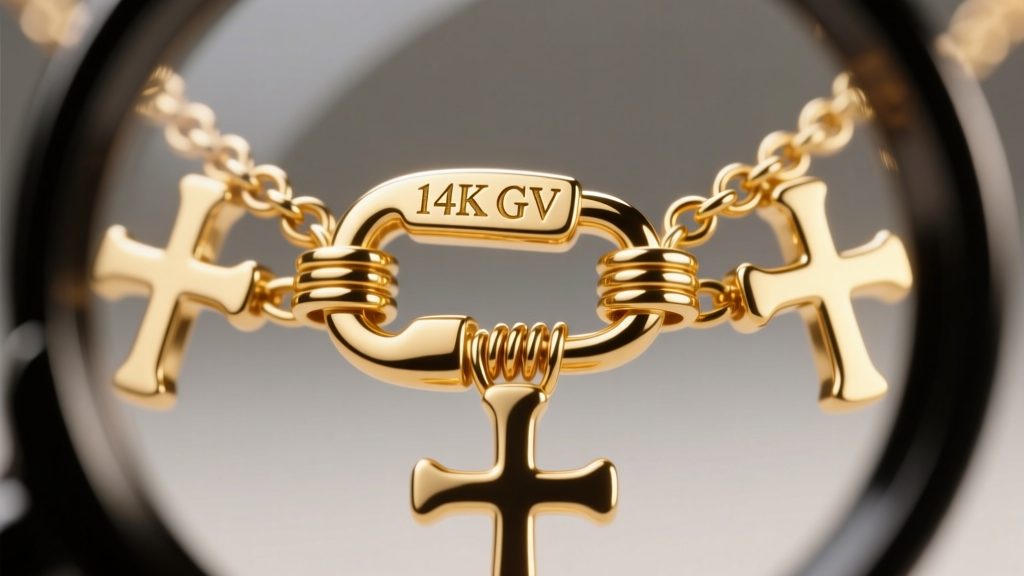
The most common failure mode in layered necklaces is the separation of unsoldered jump rings. When inspecting a piece, examine the jump rings connecting the clasp to the chain and the pendants to the chain.
- Unsoldered Jump Rings: These have a tiny slit where the wire ends meet. Under stress, this slit will pull apart, dropping your pendants.
- Soldered Jump Rings: The slit is fused shut with a laser or torch. This is a hallmark of high-value, durable jewelry.
- Clasp Type: Always opt for a lobster clasp over a spring ring. Spring rings utilize a weak internal coil that degrades quickly when subjected to the lateral pulling force of multiple heavy pendants.
Stamped vs. Cast Cross Pendants: A Manufacturing Breakdown
The way the crosses themselves are manufactured heavily influences the necklace's price, weight, and durability. There are two primary methods used in modern jewelry production: die-striking (stamping) and lost-wax casting.
Die-Struck (Stamped) Crosses
Die-striking involves using a massive hydraulic press to stamp a sheet of precious metal into a steel mold. This process compresses the metal molecules, resulting in a highly dense, incredibly durable pendant. Die-struck crosses are typically solid, heavier, and resist denting. Because the tooling for steel molds is expensive, this method is usually reserved for mid-tier to fine jewelry brands.
Lost-Wax Casting (and Hollow Casting)
Casting involves pouring molten metal into a mold created from a wax prototype. While this allows for intricate, three-dimensional designs, cast metal is inherently more porous and softer than die-struck metal.
The Hollow Casting Trap: To save on precious metal costs, many brands use 'hollow casting' or electroforming. This creates a cross that looks large and substantial but is essentially a thin, fragile shell of metal. These hollow pendants will easily dent if bumped against a hard surface and cannot be repaired or polished by a jeweler without collapsing the structure.
Brand Tier Analysis: Fast Fashion vs. Mid-Tier vs. Fine
Understanding where a brand sits in the market hierarchy helps contextualize the price of their multi cross necklaces. The Gemological Institute of America (GIA) emphasizes that alloy composition and finishing techniques separate true fine jewelry from mass-market accessories.
Tier 1: Fast Fashion & Mall Brands ($15 - $50)
At this price point, you are purchasing brass or zinc alloys with microscopic 'flash' plating (less than 0.1 microns). The crosses are often hollow-cast or made from cheap pot metal. The chains are typically 0.8mm to 1.0mm and utilize weak spring ring clasps. Value Verdict: Poor. These are disposable accessories meant for a single season.
Tier 2: Mid-Tier & Direct-to-Consumer ($80 - $250)
This is the sweet spot for value. Brands in this tier utilize 925 sterling silver or legitimate 14k gold vermeil (2.5+ microns). The chains are appropriately gauged (1.5mm+), and the crosses are either solid cast or die-struck. Hardware is upgraded to lobster clasps with soldered jump rings. Value Verdict: Excellent. You are paying for structural integrity and skin-safe materials without the traditional retail markup.
Tier 3: Fine & Artisan Jewelers ($600 - $2,000+)
Solid 14k or 18k gold, hand-finished details, and custom-drawn chain links. At this level, you are paying for generational longevity, intrinsic metal value, and artisanal labor. Value Verdict: High for heirloom seekers, but subject to diminishing returns if you merely want a fashionable layering piece.
The 2026 Value Assessment Checklist
Before adding a multi cross necklace to your cart, run it through this rapid E-E-A-T (Expertise, Experience, Authoritativeness, and Trustworthiness) checklist to ensure you are making a sound financial decision:
- Verify the Base Metal: Is it explicitly listed as 925 Sterling Silver or Solid Gold? Avoid ambiguous terms like 'gold-tone metal' or 'precious alloy'.
- Check the Plating Microns: If buying vermeil, ensure the brand guarantees at least 2.5 microns of gold thickness.
- Measure the Chain Gauge: Confirm the chain is at least 1.5mm thick to support the distributed weight of multiple crosses.
- Inspect the Hardware: Look for a lobster clasp and, if possible, zoom in on product photos to see if the jump rings are soldered shut.
- Assess the Pendant Weight: Read reviews or product specs for the gram weight. Extremely lightweight crosses on a multi-pendant setup often indicate hollow, easily dented manufacturing.
By prioritizing metallurgical integrity and structural hardware over fleeting brand hype, you can secure a multi cross necklace that not only elevates your aesthetic but stands the test of time, proving its value wear after wear.


