Beginner's Guide to Buying a Teardrop Turquoise Necklace
Discover how to authenticate, choose, and style a teardrop turquoise necklace. Learn about stone grades, matrix patterns, and chain pairings.

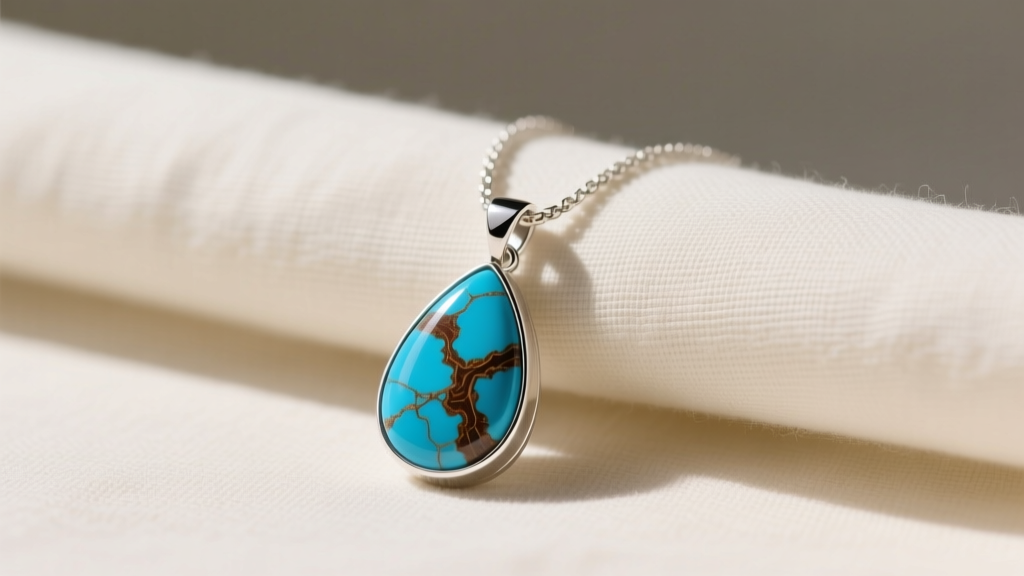
The teardrop turquoise necklace is a cornerstone of versatile jewelry design, bridging the gap between rustic Southwestern heritage and modern minimalist elegance. For beginners navigating the gemstone market, the sheer volume of options—ranging from $20 dyed imitations to $2,000 natural, high-grade cabochons—can be overwhelming. Understanding the nuances of turquoise treatments, matrix patterns, and structural anatomy is essential for making an informed purchase. This guide breaks down everything you need to know to confidently select, authenticate, and style a teardrop turquoise pendant.
The Anatomy of a Teardrop Cabochon
Unlike faceted gemstones that rely on light refraction, turquoise is almost exclusively cut into a cabochon—a smoothly polished, domed shape without facets. The teardrop (or pear) shape is particularly prized because it elongates the neckline and provides a larger canvas for the stone's natural matrix (the host rock webbing) to display unique patterns.
When shopping, pay close attention to the dimensions. A standard, versatile teardrop pendant typically measures between 15x30mm and 20x40mm. Pendants smaller than 10x20mm are ideal for delicate layering, while stones exceeding 30x60mm make bold, statement pieces. The dome's height (or cabbing depth) also matters; a higher dome catches more ambient light and feels more substantial, but it requires a deeper, more secure bezel setting to prevent the stone from popping out upon impact.
Decoding Turquoise: Natural vs. Stabilized vs. Fake
The most critical aspect of buying turquoise is understanding its treatment status. Because natural turquoise is a relatively soft, porous hydrous phosphate of copper and aluminum (ranking 5 to 6 on the Mohs hardness scale), it is highly susceptible to cracking and discoloration from skin oils and cosmetics.
| Turquoise Type | Treatment Process | Durability & Care | Estimated Price Range (Pendant Only) |
|---|---|---|---|
| Natural / Untreated | None. Cut and polished only. | Low. Highly porous; changes color with wear. Requires strict care. | $300 - $1,500+ |
| Stabilized | Impregnated with clear epoxy resin under pressure. | High. Sealed against oils and water. Retains original color permanently. | $75 - $400 |
| Reconstituted | Turquoise dust mixed with epoxy and dyes, then molded. | Medium. Durable but lacks natural matrix patterns and value. | $20 - $60 |
| Dyed Howlite / Magnesite | Cheap white stones dyed blue to mimic turquoise. | High. Very hard, but the dye can fade or rub off over time. | $10 - $30 |
According to the Gemological Institute of America (GIA), stabilization is a widely accepted industry practice that makes the stone viable for everyday jewelry. However, sellers must disclose this treatment. Reconstituted stones and dyed howlite, on the other hand, are considered imitation or composite materials and should be priced accordingly.
Famous Mines: Sourcing the Best Matrix Patterns
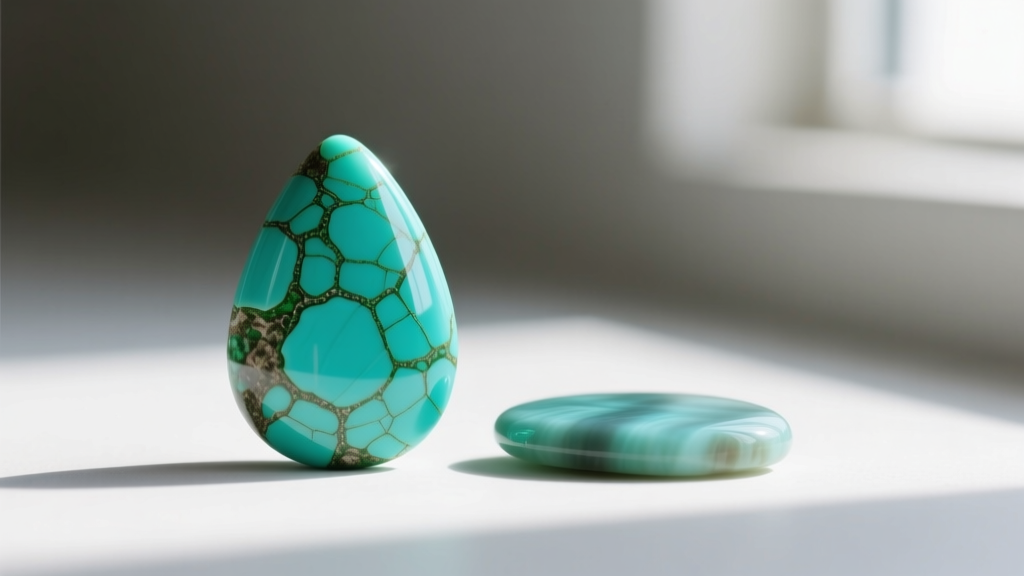
The value and aesthetic of your teardrop turquoise necklace are heavily dictated by its origin mine. The host rock (matrix) creates the spiderweb, mottled, or pyrite-flecked patterns that collectors covet.
- Sleeping Beauty (Arizona): Famous for its solid, sky-blue color with little to no matrix. The mine closed in 2012, making genuine, untreated Sleeping Beauty teardrops highly sought-after and increasingly expensive on the vintage market.
- Kingman (Arizona): Known for deep, vibrant blues contrasted by striking brown or black matrix webbing. Kingman stones often contain tiny flecks of pyrite (fool's gold), which authenticate the stone and add a metallic sparkle.
- Royston (Nevada): Prized for its dramatic two-tone color shifts, blending rich forest greens with bright sky blues, all tied together by a heavy, golden-brown matrix. Royston teardrops are exceptionally unique, meaning no two pendants look exactly alike.
Selecting the Right Chain and Bail
A teardrop pendant is only as good as the hardware that supports it. The bail (the loop that connects the stone to the chain) and the chain metal drastically alter the necklace's overall vibe.
Metal Pairings
Sterling silver (925) is the traditional and most popular pairing for turquoise. The cool, bright white of the silver amplifies the blue and green tones of the stone. For a vintage or Southwestern look, opt for oxidized sterling silver, where the crevices of the metal are intentionally darkened to highlight intricate stamp-work or casting details.
Conversely, yellow gold (14k or 18k) creates a warm, luxurious contrast, particularly with green-heavy Royston turquoise or stones featuring golden-brown matrix. Rose gold is a modern, unconventional choice that pairs beautifully with stones that have reddish-brown or copper-heavy webbing.
Bail Construction
Avoid cheap glue-on bails (often found in mass-produced mall jewelry), as the adhesive degrades over time, especially when exposed to perfumes or heat. Instead, look for:
- Wrapped Wire Bails: A silversmith tightly wraps sterling silver or gold wire around the tapered top of the teardrop. This is secure and adds an artisanal touch.
- Bezel-Set Soldered Bails: The stone is fully encased in a metal rim (bezel), with a sturdy loop soldered directly to the back or top. This offers maximum protection for the stone's edges.
Styling and Layering Frameworks
The teardrop shape naturally draws the eye downward, making it an excellent tool for manipulating visual proportions. Here is how to style your necklace based on necklines and layering techniques.
The Rule of Thirds in Layering
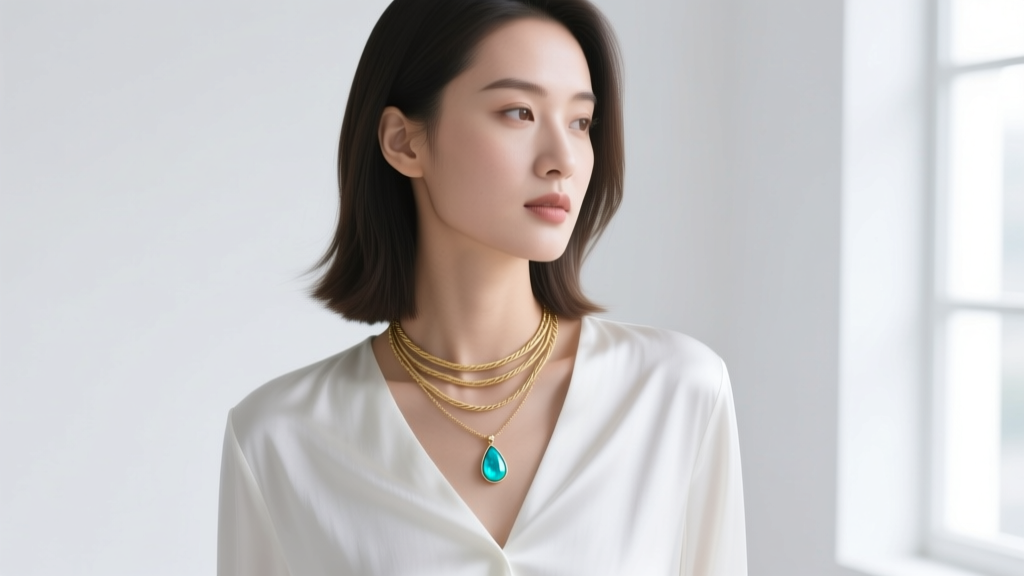
When layering your teardrop turquoise pendant with other chains, use the "Rule of Thirds" to prevent tangling and visual clutter. 1. Base Layer (16 inches): A simple, lightweight chain (like a 1.5mm box chain) or a small pearl strand. 2. Focal Layer (18 to 20 inches): Your teardrop turquoise necklace on a slightly heavier chain (like a 2mm rope or wheat chain). 3. Anchor Layer (22 to 24 inches): A longer, heavier chain featuring a simple geometric pendant or a solitary gold bead.
According to styling guidelines featured by Lang Antiques University, mixing metals in a layered stack is highly encouraged in contemporary fashion. Pairing an oxidized silver turquoise pendant with a polished yellow gold chain creates a curated, collected-over-time aesthetic that feels deeply personal.
Matching Necklines
For V-neck tops and wrap dresses, a teardrop pendant on an 18-inch chain perfectly mirrors the garment's geometry, elongating the torso. For crew necks and boat necks, opt for a longer 22-inch chain so the pendant rests below the collarbone, breaking up the solid block of fabric. Avoid wearing large, heavy teardrop pendants with high turtlenecks, as the friction from the thick fabric can wear down the silver bail and scratch the polished surface of the cabochon.
Care and Maintenance for Longevity
Even stabilized turquoise requires mindful care to maintain its polish and structural integrity. Turquoise is highly sensitive to sudden temperature changes and harsh chemicals.
Expert Care Tip: Never put a turquoise necklace in an ultrasonic cleaner or use commercial silver dips. The high-frequency vibrations can fracture the stone along its natural matrix lines, and the harsh chemicals in dips will strip the polish from the cabochon, leaving it dull and chalky.
To clean your teardrop turquoise necklace, use a soft, slightly damp microfiber cloth to gently wipe the stone after wearing it, removing skin oils and lotions. To clean the silver setting, use a dry, dedicated silver-polishing cloth, being careful to avoid rubbing the cloth aggressively against the turquoise itself. Always store your necklace in a soft pouch or a lined jewelry box, separate from harder gemstones like diamonds or sapphires, which can easily scratch the turquoise's relatively soft surface.
By understanding the origin, treatment, and structural requirements of the stone, you can invest in a teardrop turquoise necklace that is not only a stunning accessory but also a durable piece of wearable art that will last for generations.


