Anatomy of a Multistrand Pearl Necklace: Expert Stringing Guide
Discover the technical construction, clasp mechanics, and silk-stringing methods behind fine multistrand pearl necklaces in this expert guide.

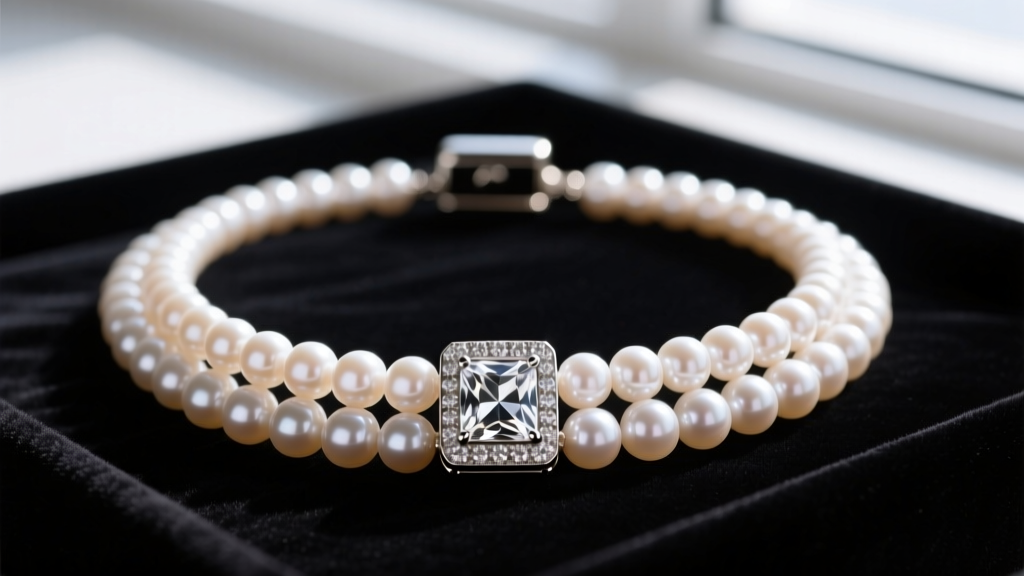
The Architecture of Multi-Strand Elegance
Constructing a flawless multistrand pearl necklace is an exercise in structural engineering, gemological matching, and tension management. Unlike a single-strand piece, a three- or five-strand design multiplies the physical stress on the stringing material and the clasp mechanism by a factor of three to five. As of 2026, with the rising scarcity of high-luster saltwater pearls, the technical execution of these pieces has become a defining marker of true luxury. This deep dive explores the precise mechanics, material grades, and mathematical calculations required to engineer a multistrand pearl necklace that drapes perfectly and endures decades of wear.
Pearl Selection: Graduation vs. Uniformity
The foundation of any multistrand piece is gemological harmony. When matching pearls across multiple strands, a master jeweler must account for luster, overtone, body color, and blemish rate. According to the Gemological Institute of America (GIA), even slight variations in nacre thickness can cause adjacent strands to reflect light differently, creating a disjointed visual effect.
Drill Hole Tolerances
A critical, often overlooked technical detail is the drill hole alignment. For high-end Akoya pearls, the standard drill hole diameter is 0.8mm, with a strict tolerance of +/- 0.05mm. South Sea pearls, being larger and heavier, typically require 0.9mm to 1.2mm holes. If the pearls are drilled at even a 2-degree angle off the central axis, the strand will naturally twist when suspended. In a multistrand configuration, this twisting causes the strands to braid around one another, ruining the drape and causing premature silk abrasion.
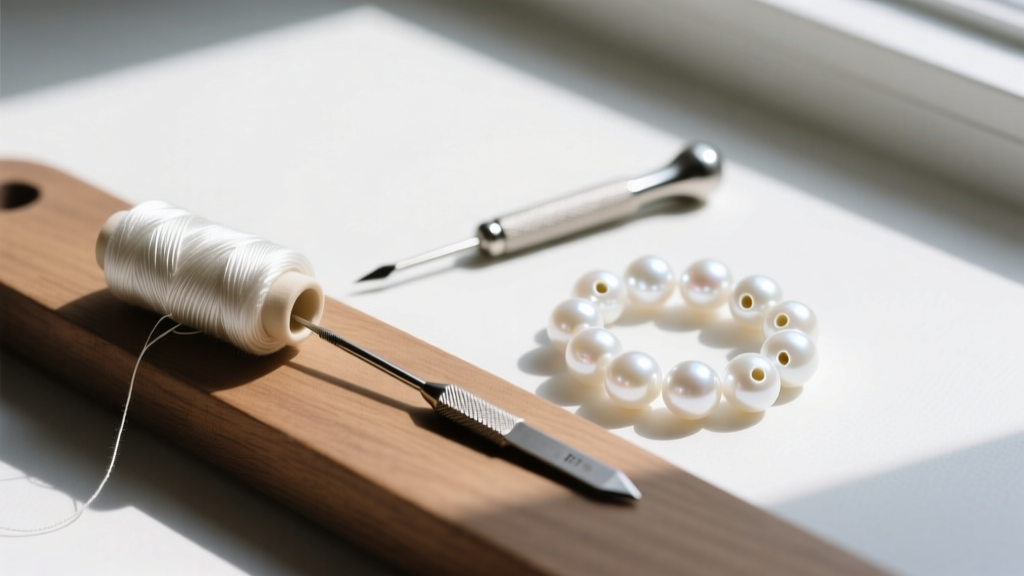
The Mathematics of Strand Graduation
The most common failure in poorly constructed multistrand pearl necklaces is tangling. This occurs when the length differential between strands is miscalculated. To ensure the strands lay flat against the clavicle and sternum without overlapping, jewelers rely on a strict mathematical progression.
- Strand 1 (Choker): 16.0 inches
- Strand 2 (Princess): 17.5 inches
- Strand 3 (Matinee): 19.0 inches
- Strand 4 (Opera): 20.5 inches
The golden rule is a minimum 1.5-inch differential between each consecutive strand. This accounts for the thickness of the pearls themselves (e.g., an 8mm pearl takes up more physical space on the curve of the neck than a 4mm pearl) and ensures that the inner strand does not ride up over the outer strand.
Stringing Mechanics: Silk, Knotting, and French Wire
While synthetic threads like PowerPro offer superior tensile strength, traditionalists and high-end houses still prefer pure silk for its unparalleled drape and knot-holding capability. For a 3-strand necklace featuring 8mm Akoya pearls, a Size #4 or #6 Griffin or Caron silk thread is standard.
The Art of the Awl and French Wire
Every pearl in a fine multistrand necklace must be individually knotted. This prevents total loss in the event of a break and maintains uniform flexibility. Master stringers use a beading awl to push the silk knot flush against the pearl, eliminating microscopic gaps. Furthermore, the ends of the silk must never pass directly through the metal clasp loop. The friction of gold against silk will sever the thread within months. Instead, a coil of French wire (gimp)—typically 0.6mm in diameter—is threaded onto the silk to act as a sacrificial metal-on-metal buffer before the wire is looped back through the final pearl and secured with a half-hitch knot and a micro-drop of cyanoacrylate adhesive.
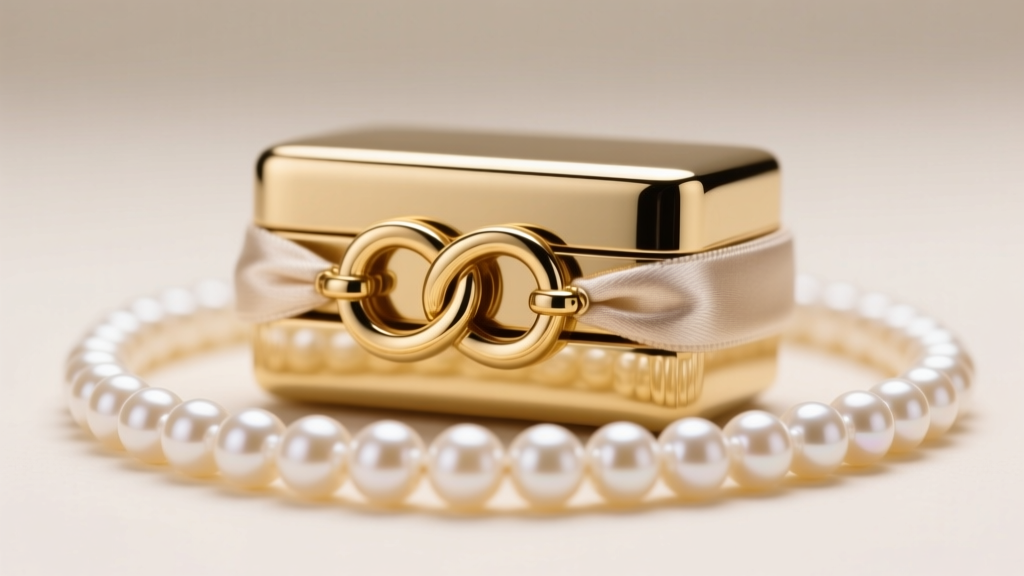
Clasp Engineering: The Linchpin of Multistrand Designs
A three-strand South Sea pearl necklace can easily exceed 150 grams in total weight. A standard spring-ring or lobster clasp will catastrophically fail under this load and the dynamic torque of neck movement. The industry standard for multistrand designs is the multi-loop box clasp with a tongue-and-groove mechanism.
For a 3-strand necklace, the clasp must feature three distinct entry loops, each with its own internal locking tongue. Crucially, the clasp must be forged from 14k or 18k gold and weigh a minimum of 8 to 12 grams to counterbalance the weight of the pearls at the front. Without adequate clasp weight, the necklace will constantly slide backward, forcing the wearer to adjust it. Additionally, every high-end box clasp must be fitted with double figure-8 safety catches on the exterior, providing a secondary fail-safe if the internal tongue mechanism wears down over decades of use.
2026 Material & Pricing Matrix
The cost of a multistrand pearl necklace is driven by the exponential difficulty of matching high-grade pearls across multiple strands. Below is a technical pricing and specification matrix reflecting current market realities for 3-strand configurations.
| Pearl Type | Size Range | Silk Grade | Clasp Requirement | Approx. Market Price (USD) |
|---|---|---|---|---|
| Hanadama Akoya | 7.5 - 8.0mm | Size #4 White Silk | 18k Gold, Diamond Accents | $12,000 - $18,500 |
| White South Sea | 11.0 - 13.0mm | Size #8 Heavy Silk | 18k Gold, Min. 15g Weight | $35,000 - $65,000 |
| AAA Freshwater | 8.0 - 9.0mm | Size #6 Silk or Synth | 14k Gold Box Clasp | $2,500 - $4,800 |
Maintenance and Failure Point Analysis
Even the most meticulously engineered multistrand pearl necklace requires rigorous maintenance. The primary failure points are silk stretching and clasp tongue deformation.
"A multistrand necklace should be inspected by a professional jeweler every 12 months. If you can slide a fingernail between the silk knot and the pearl, the structural integrity of the strand is already compromised."
Signs that immediate restringing is required include visible soiling of the silk (which indicates absorbed oils and sweat that degrade the protein fibers), stretching that causes the pearls to slide independently between knots, and a loose feeling when the clasp tongue clicks into the box groove. Never store a multistrand necklace hanging on a hook; the compounded weight of three to five strands will permanently stretch the silk. Always store the piece flat in a breathable cotton pouch, separated from harder gemstones that could scratch the nacre.


