Naja Necklace Troubleshooting: Repair & Authentication Guide
Learn how to authenticate, repair, and maintain your Naja necklace. Expert troubleshooting for turquoise damage, silver tarnish, and chain failures.

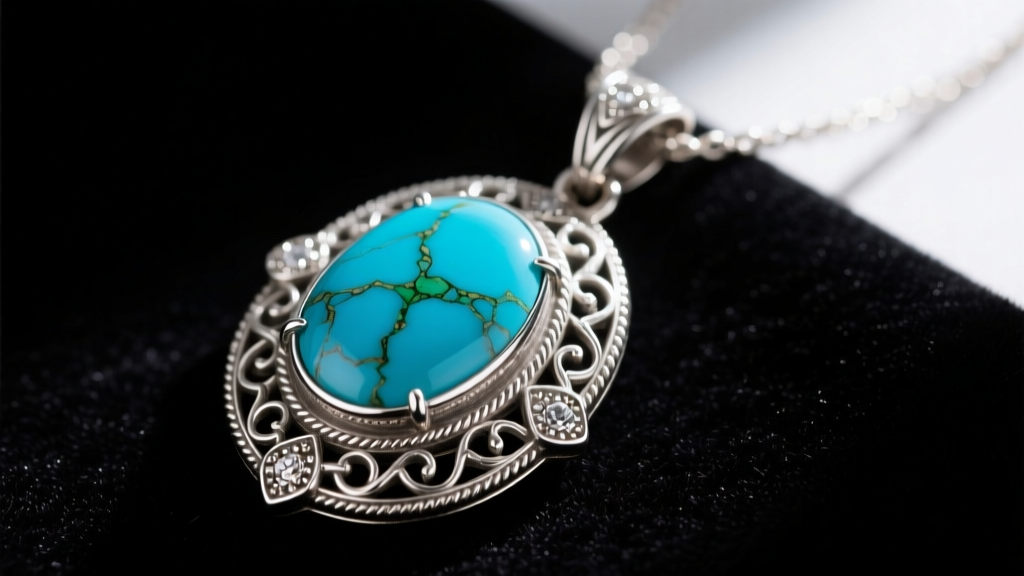
The Legacy and Anatomy of the Naja Pendant
The Naja necklace is far more than a striking piece of Southwestern jewelry; it is a historical artifact. Originally a Moorish crescent symbol used to ward off the evil eye, it was introduced to the Americas by Spanish conquistadors and subsequently adopted and transformed by Navajo silversmiths in the late 19th century. Today, the Naja serves as the dramatic centerpiece of the iconic squash blossom necklace or stands alone on a heavy silver chain or leather cord.
However, because of its distinct inverted crescent shape and the heavy, often oversized cabochon stones set in its center, the Naja is uniquely prone to specific structural failures. Whether you are troubleshooting a vintage 1920s coin silver piece or a contemporary 925 sterling silver pendant, understanding the mechanics of the Naja is critical for preservation and repair. This guide provides deep, actionable diagnostics for the most common issues plaguing these magnificent necklaces.
Diagnosing Bail Stress and Metal Fatigue
The most frequent point of catastrophic failure on any Naja necklace is the bail—the loop that connects the heavy crescent pendant to the chain. The Naja's weight distribution creates a pendulum effect, placing immense sheer stress on the bail and the jump ring.
Coin Silver vs. Sterling Silver Bails
Early Navajo pieces (pre-1930s) were frequently hammered from coin silver (approximately 90% silver, 10% copper). Coin silver is notably softer and more malleable than modern 925 sterling silver. If your vintage Naja has a coin silver bail, it will exhibit severe thinning at the apex of the loop where it rubs against the chain.
- The Fix: Do not attempt to solder a worn coin silver bail with standard hard silver solder. The high heat will melt the lower-temperature alloy. Instead, a master bench jeweler must fabricate a new bail from heavy-gauge (14-16 gauge) sterling silver wire and attach it using cold-connection techniques (riveting) or low-temperature easy solder, carefully shielding the rest of the pendant with a heat-absorbing gel.
- Preventative Measure: Never hang a heavy, large-scale Naja on a thin chain. The friction acts like a saw. Use a minimum 5mm wide bench-made chain or a reinforced leather cord with a sterling silver end cap.
Troubleshooting Turquoise: Stabilized, Natural, or Fake?
The central stone of a Naja, often referred to as the "belly button," is traditionally turquoise, though red coral and mother-of-pearl are also used. Turquoise is a porous, hydrous phosphate of copper and aluminum, making it highly susceptible to environmental damage and cosmetic treatments. According to the Gemological Institute of America (GIA), the vast majority of turquoise on the market is stabilized, but identifying the exact treatment is crucial for repair and maintenance.
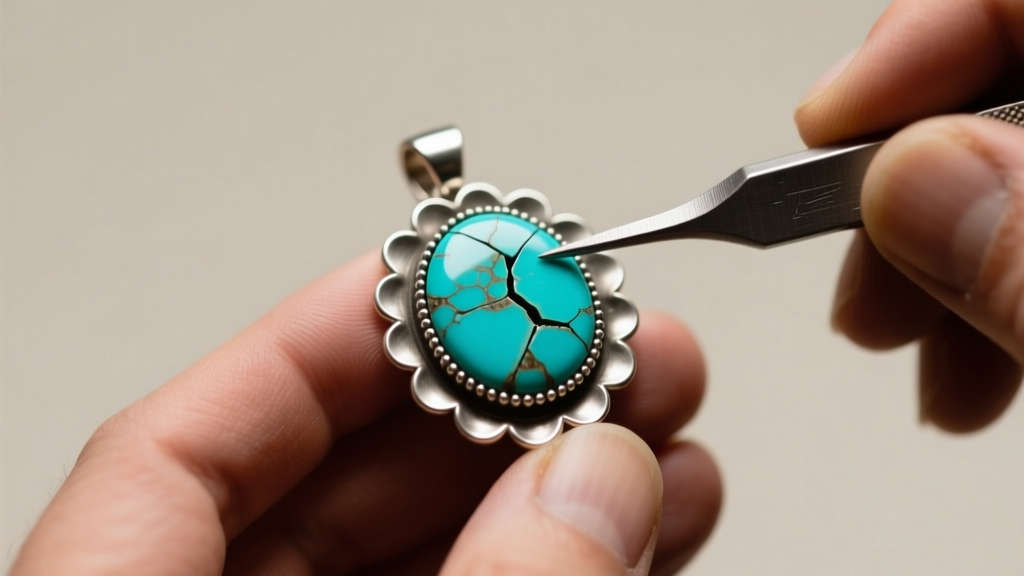
The Acetone and Hot Pin Diagnostics
If you suspect your Naja features dyed howlite or magnesite masquerading as turquoise, perform an acetone test. Apply a small amount of pure acetone to a cotton swab and rub an inconspicuous edge of the stone. If blue color transfers to the swab, the stone is dyed.
To test for heavy epoxy or plastic stabilization (common in lower-grade chalk turquoise), heat a sewing needle until it glows red and touch it to an unnoticeable part of the stone's matrix. If it melts into the stone and emits a plastic odor, it is heavily epoxy-treated. Natural or properly Zachery-treated turquoise will not melt or smell like burning plastic.
Repairing Loose Bezel Settings
Because turquoise is relatively soft (Mohs 5-6), the silver bezel wrapping the stone can easily pull away from the cabochon if the necklace is dropped. Never use cyanoacrylate (Super Glue) or jeweler's epoxy to secure a loose bezel. The adhesive will seep into the porous turquoise, permanently darkening and ruining the stone.
The Professional Fix: Use a polished steel bezel pusher or a bezel rocker. Place the Naja on a sandbag to absorb shock. Gently push the top edge of the silver bezel down over the stone, working in a star pattern (top, bottom, left, right) to distribute pressure evenly. If the stone is cracked, it must be removed, stabilized with Opticon resin, and recut by a lapidary before resetting.
Squash Blossom Chain Failures: Silk vs. Micro-Wire
When a Naja is integrated into a full squash blossom necklace, the chain itself becomes a major troubleshooting point. Traditional Navajo bench-made beads (the "blossoms" and the round silver beads) are hollow and feature a seam. Historically, these were strung on heavy silk thread or cotton cord.
The "Stretch and Snap" Syndrome
Silk degrades over time, stretching under the heavy weight of the silver beads and the Naja pendant. If your necklace has visible gaps between the beads, the internal cord is failing and imminent breakage is guaranteed.
- The Solution: Have the necklace professionally re-strung using 49-strand micro-braided stainless steel beading wire (minimum 0.024-inch diameter). The wire must be finished with heavy-duty sterling silver crimp beads and a secure lobster clasp. Do not use tiger tail (7-strand wire), as the sharp internal edges of handmade seamed silver beads will eventually saw through it.
Authentication Matrix: Hallmarks and Silver Purity
Authenticating a vintage Naja requires a keen eye for silversmithing techniques and hallmarking. The Indian Arts and Crafts Board (IACB) provides strict guidelines on the representation of Native American jewelry. Below is a diagnostic matrix to help you verify the origins and materials of your piece.
| Diagnostic Feature | Vintage Navajo (Pre-1950) | Mid-Century / Contemporary | Mass-Produced / Import |
|---|---|---|---|
| Silver Content | Coin Silver (90%), thick, uneven hammer marks, heavy oxidation in crevices. | 925 Sterling, uniform casting or precise fabrication, bright polish. | Silver-plated brass, magnetic core, stamped "925" but fails acid test. |
| Bezel Style | Hand-cut, often irregular scallops or smooth push-bezels with visible tool marks. | Precise saw-tooth bezels, machine-stamped or perfectly hand-finished. | Cast-in-place bezels (no seam), glued stones, bezel wire is too thick to push. |
| Hallmarks | Rarely hallmarked before 1930. Later pieces may have a simple initials stamp. | Full artist hallmarks, tribal affiliation stamps, "Sterling" stamp. | Fake hallmarks, stamped "Native Inspired" or no marks at all. |
| Stone Matrix | Natural, untreated, high-domed cabochons with deep, natural matrix webbing. | Stabilized turquoise (for durability), flat or low-dome cabs. | Dyed howlite, block turquoise (reconstituted dust and epoxy). |
Solving the "Pendulum Flip" and Sizing Issues
A common ergonomic complaint with standalone Naja pendants is the "pendulum flip." Because the Naja is top-heavy and wider at the bottom than at the bail, any slight movement can cause the pendant to flip upside down, resting awkwardly on the wearer's chest.
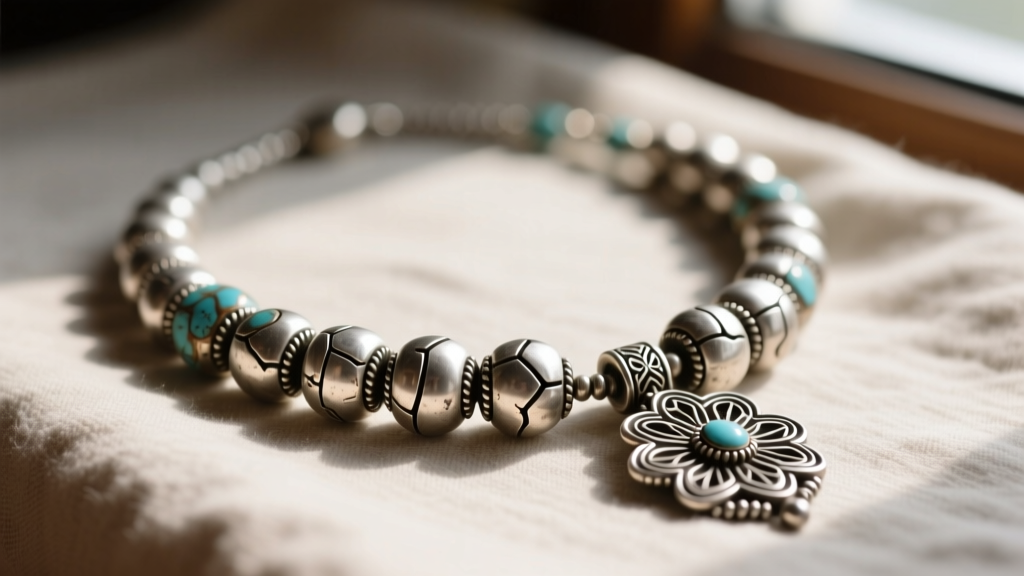
Counterweight and Chain Selection
If your Naja constantly flips, the issue is a mismatch between the pendant's mass and the chain's drape.
- Upgrade the Chain Weight: A flimsy 2mm rope chain will twist and allow the Naja to flip. Switch to a heavy, interlocking chain like a 6mm Figaro or a custom bench-made link chain. The rigidity of a heavier chain keeps the bail oriented forward.
- Add a Counterweight Clasp: If you prefer a lighter chain, have a jeweler attach a heavy, decorative sterling silver toggle clasp at the back of the neck. The weight of the clasp will pull the chain taut against the nape of your neck, forcing the Naja to hang flat against the sternum.
- Adjust the Drop Length: A Naja should ideally rest on the lower sternum (a 20 to 24-inch drop). If worn too high (16-18 inches), it hits the collarbone and flips. If worn too low (28+ inches), it swings wildly. Use a chain with multiple adjustment jump rings to find the exact gravitational sweet spot for your specific pendant.
Expert Maintenance: Cleaning Without Damaging Patina
Never use commercial liquid silver dips or ultrasonic cleaners on a Naja necklace. The harsh chemicals in silver dip will strip the natural oxidation (patina) from the hand-stamped crevices, ruining the antique value and depth of the piece. Furthermore, ultrasonic vibrations can easily shatter natural turquoise or shake loose the delicate bezel settings.
The Safe Cleaning Protocol: Use a dry, untreated silver polishing cloth to gently buff only the high-polish areas of the silver. Use a soft, dry makeup brush to gently dust the matrix of the turquoise and the intricate stamp-work. If the turquoise has accumulated skin oils and looks dull, wipe it gently with a barely damp microfiber cloth and dry it immediately. Store your Naja in an anti-tarnish flannel pouch, separated from harder gemstones that could scratch the silver or the stone.


