What Is the Name of the Titanic Necklace? The Heart of the Ocean
Discover the true name of the Titanic necklace, the Heart of the Ocean. Explore its history, real-life inspirations, and modern sapphire pendant trends.

The True Name of the Titanic Necklace: Unveiling the Heart of the Ocean
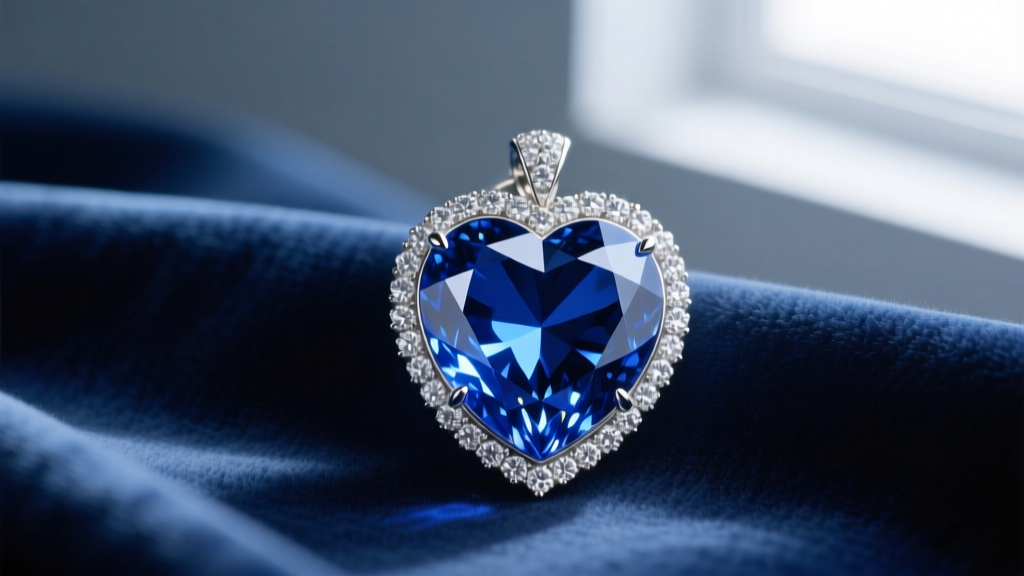
When jewelry enthusiasts and film buffs search for the name of the Titanic necklace, they are almost universally referring to the fictional masterpiece known as the Heart of the Ocean (or Le Cœur de la Mer in French). Introduced to the world in James Cameron’s 1997 cinematic blockbuster Titanic, this iconic piece of jewelry was portrayed as a legendary 56-carat blue diamond pendant surrounded by white diamonds, originally commissioned by Louis XVI and later cut into a heart shape after the French Revolution.
While the Heart of the Ocean was a fictional creation designed for the silver screen, its cultural impact on fine jewelry trends has been profoundly real. Over the decades, the necklace has inspired countless reproductions, high-jewelry masterpieces, and a lasting consumer fascination with large, blue, halo-set pendants. In this comprehensive style and trend analysis, we will explore the real-life jewelers behind the movie props, the historical diamonds that inspired the lore, and how you can authentically capture this cinematic aesthetic in 2026 using modern gemological standards.
Prop vs. Reality: The Three 'Hearts' of the Ocean
To truly understand the legacy of this pendant, we must separate Hollywood fiction from high jewelry reality. There are actually three distinct 'Hearts' associated with the film's legacy, each with vastly different material compositions and valuations.
| Version | Creator / Jeweler | Center Stone Material | Estimated Value |
|---|---|---|---|
| The Original Movie Prop | Asprey & Garrard | Blue Zirconia / Tanzanite | $10,000 (Original Commission) |
| The 1998 Oscars Masterpiece | Harry Winston | 15-Carat Blue Sapphire | $20,000,000+ |
| The Historical Inspiration | Unknown (Historical) | 45.52-Carat Fancy Blue Diamond | Priceless (Smithsonian) |
The Asprey & Garrard Movie Prop
James Cameron commissioned the historic London-based jewelry house Asprey & Garrard to create the principal prop necklace on a surprisingly modest budget of around $10,000. The jewelers crafted a piece using white gold and a center stone that is widely debated among gemologists—often cited as a large piece of blue cubic zirconia or a tanzanite, set in a heart-shaped cut with a delicate diamond halo. Because the film's production schedule was so secretive and rushed, Asprey & Garrard did not initially realize the global phenomenon the necklace would become. Following the film's release, they produced a limited run of authentic replicas using genuine blue sapphires, which sold out almost immediately.
The Harry Winston 1998 Oscars Masterpiece
The most famous real-world iteration of the necklace was created by Harry Winston. For the 1998 Academy Awards, the house crafted a breathtaking pendant featuring a 15-carat oval blue sapphire surrounded by over 100 carats of D-flawless white diamonds. Celine Dion famously wore this piece while performing 'My Heart Will Go On.' Interestingly, actress Gloria Stuart (who played the older Rose) also wore a $20 million Harry Winston sapphire necklace to the Oscars that night, cementing the 'Heart' aesthetic as a red-carpet staple.
The Historical Inspiration: The Hope Diamond
The fictional lore of the Heart of the Ocean—a cursed blue diamond worn by royalty and lost at sea—was heavily inspired by the Hope Diamond. Currently housed in the Smithsonian Institution, the Hope Diamond is a 45.52-carat fancy deep grayish-blue diamond. Its notorious history of 'cursed' owners and its striking blue hue provided the perfect narrative blueprint for Cameron's screenplay.
2026 Trend Analysis: The Cinematic Sapphire Revival
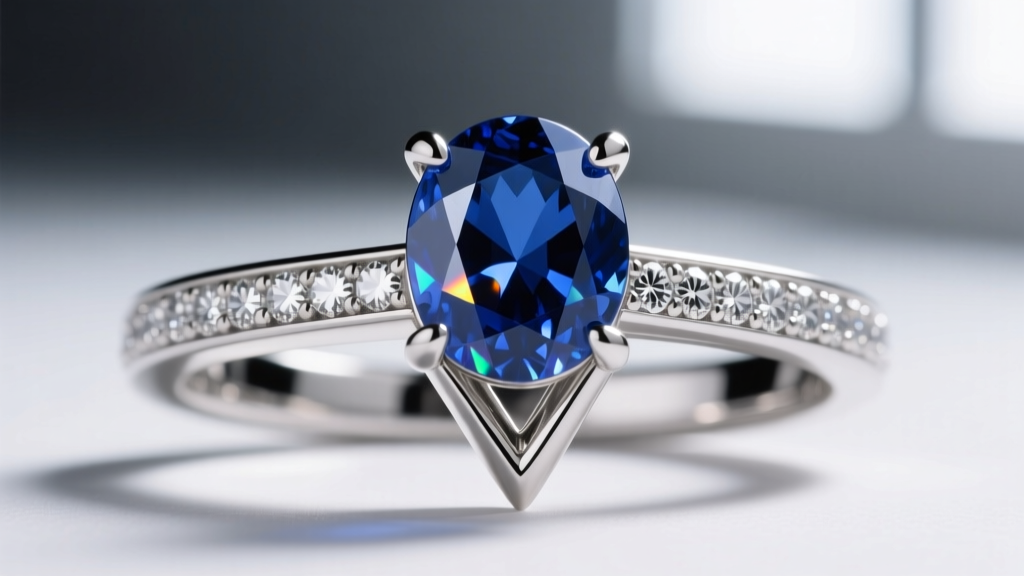
In 2026, the jewelry market is experiencing a massive revival of 'cinematic heritage' pieces, with the Heart of the Ocean serving as the ultimate blueprint for statement pendants. However, modern collectors and style enthusiasts are moving away from the literal heart-shaped cut, which is notoriously fragile due to the deep cleft at the top of the stone. Instead, the current trend favors oval and pear-cut blue sapphires encased in intricate diamond halos.
The Shift to Oval and Pear Cuts
Gemologists and master jewelers recommend oval or pear shapes for large center stones because they maximize carat weight visibility while maintaining structural integrity. A heart-shaped sapphire over 3 carats is highly susceptible to chipping at the bottom point or the top cleft. By utilizing an oval cut, jewelers can employ V-prong settings at the tips (if pear-shaped) or secure the stone with a continuous bezel or reinforced halo, ensuring the pendant survives daily wear.
The Rise of the 'Hidden Halo'
While the original Titanic necklace featured a prominent, face-up diamond halo, 2026 trends lean toward the 'hidden halo' or 'double halo' configuration. A hidden halo sits just beneath the girdle of the center sapphire, catching the light from side angles and creating a mesmerizing, multi-dimensional blue glow without overpowering the center stone. This technique allows for a more vintage, Art Deco-inspired profile that aligns with the 1912 aesthetic of the Titanic era.
Gemological Breakdown: Choosing Your Center Stone
If you are looking to commission or purchase a Heart of the Ocean-inspired pendant, selecting the right blue center stone is critical. The movie prop utilized various simulants, but modern buyers have access to incredible natural and lab-grown options. Below is a comparative guide to help you make an informed decision based on durability, color, and price.
- Natural Ceylon Sapphire: The gold standard for fine jewelry. Sourced primarily from Sri Lanka, these stones offer a vibrant, medium-light cornflower blue that perfectly mimics the movie prop. Sitting at a 9 on the Mohs hardness scale, they are exceptionally durable. Price Range: $4,000 - $15,000+ for a 5-carat stone.
- Lab-Grown Hydrothermal Sapphire: Chemically and optically identical to mined corundum, lab-grown sapphires offer flawless clarity and rich saturation at a fraction of the cost. They are the preferred choice for eco-conscious buyers wanting maximum visual impact. Price Range: $300 - $800 for a 5-carat stone.
- Natural Tanzanite: Known for its intense pleochroism (showing blue, violet, and burgundy flashes), tanzanite was rumored to be used in some early props. However, at 6.5 on the Mohs scale, it is too soft for a pendant that might swing and strike surfaces. It requires a heavy bezel setting. Price Range: $1,500 - $4,000 for a 5-carat stone.
- Blue Spinel: A fantastic, under-the-radar alternative. Natural blue spinel offers a slightly darker, more steely-blue hue than sapphire and boasts excellent durability (7.5 - 8 Mohs). Price Range: $800 - $3,000 for a 5-carat stone.
Buying Guide: Chain Selection and Hardware
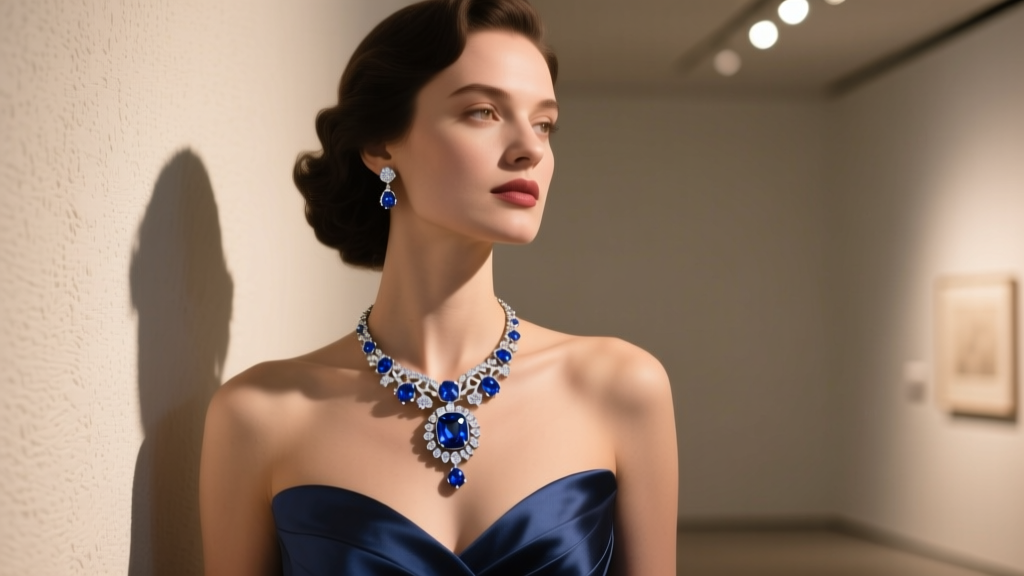
A common mistake buyers make when acquiring large, cinematic pendants is pairing them with inadequate chains. The Heart of the Ocean is a heavy, statement-making piece; a standard 1mm cable chain will snap under the weight of a 5-carat sapphire and diamond halo setting, which can easily weigh between 8 to 15 grams.
Chain Recommendations for Heavy Pendants
For pendants exceeding 10 grams, you must select a chain with high tensile strength. We recommend a solid 14k or 18k gold wheat chain or a reinforced rolo chain with a minimum width of 2.5mm to 3.0mm. Wheat chains, with their interlocking woven links, distribute weight evenly and resist kinking, making them ideal for heavy, smooth-backed pendants.
Clasp and Jump Ring Engineering
The hardware is just as important as the chain. Avoid standard spring-ring clasps, which are prone to mechanical failure under stress. Instead, insist on an oversized lobster clasp (12mm or larger) paired with a thick, soldered jump ring. Furthermore, the bail (the loop connecting the pendant to the chain) should be a 'hidden bail' or a diamond-encrusted European bail that is laser-welded directly to the pendant's basket, ensuring the heavy center of gravity keeps the stone facing outward rather than flipping upside down.
Conclusion
The search for the name of the Titanic necklace leads us down a fascinating rabbit hole of Hollywood magic, high jewelry craftsmanship, and historical lore. While the Heart of the Ocean may be a fictional creation born from the tragic romance of 1912, its influence on modern pendant design is undeniable. By understanding the gemological realities of blue sapphires, the structural necessities of heavy diamond halos, and the engineering required for durable chain pairings, you can confidently acquire or commission a piece that captures the cinematic grandeur of the original—built to last a lifetime, and perhaps even survive a voyage across the Atlantic.


