Necklace with Blade Pendants: Technical Guide to Metals and Styling
Discover the metallurgy, safety bevels, and styling mechanics behind the necklace with blade pendants. Expert tips on 316L steel, silver, and chain pairing.

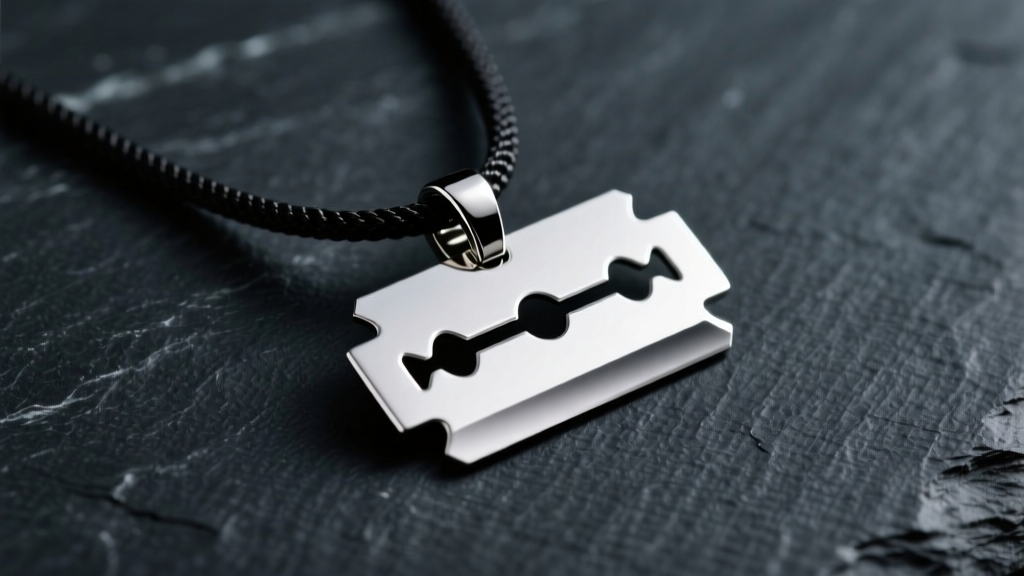
The evolution of the necklace with blade motifs has transitioned from cheap, stamped costume jewelry into a highly technical segment of the streetwear and contemporary fine jewelry markets. Whether the design features a classic straight razor, a tactical dagger, or an industrial utility blade, executing this aesthetic requires a rigorous understanding of metallurgy, weight distribution, and skin-safe engineering. In this technical deep dive, we deconstruct the anatomy of blade pendants, examining the precise manufacturing tolerances, alloy grades, and chain mechanics required to elevate this edgy silhouette into a durable, wearable asset.
The Anatomy of a Blade Pendant: Casting vs. CNC Machining
The manufacturing method dictates the structural integrity and edge safety of any blade pendant. Historically, jewelers relied on lost-wax casting to produce these shapes. While casting is excellent for organic, highly textured designs, it introduces microscopic porosity into the metal matrix. For a flat, geometric surface like a razor blade or sword, casting defects can result in pitting, requiring extensive hand-polishing that often ruins the intended sharp, linear geometry.
Edge Safety and Beveling Specifications
A critical failure mode in poorly engineered blade jewelry is the presence of micro-serrations or sharp 90-degree edges that lacerate the skin or snag on textiles. High-end manufacturers now utilize 5-axis CNC (Computer Numerical Control) machining to mill blade pendants from solid metal billets. CNC machining guarantees a uniform edge bevel. For a necklace with blade elements to be considered skin-safe for daily wear, the cutting edge must feature a minimum 0.5mm chamfer (blunted edge). This specific tolerance maintains the optical illusion of a razor-sharp edge while eliminating any risk of epidermal abrasion during high-movement activities.
Metallurgy Breakdown: 316L Steel vs. 925 Silver vs. Titanium
Selecting the correct alloy is paramount. Blade pendants often feature large, flat surface areas that are highly susceptible to visible scratching, oxidation, and nickel leaching. Below is a technical comparison of the three dominant metals used in premium blade jewelry.
| Material Grade | Vickers Hardness (HV) | Tarnish & Corrosion Resistance | Average Price Range (Pendant Only) | Best Application |
|---|---|---|---|---|
| 316L Surgical Steel | 150 - 190 HV | Exceptional (Molybdenum prevents pitting) | $45 - $120 | Heavy, industrial razor blades; daily streetwear |
| 925 Sterling Silver (Work-Hardened) | 90 - 110 HV | Poor (Requires Rhodium plating or frequent polishing) | $150 - $350 | Intricate dagger motifs; fine jewelry layering |
| Grade 5 Titanium (Ti-6Al-4V) | 330 - 360 HV | Flawless (Highly biocompatible, zero oxidation) | $200 - $500+ | Lightweight, hypoallergenic tactical blades |
For consumers with contact dermatitis, 316L stainless steel is often marketed as hypoallergenic, but it still contains trace amounts of nickel (typically 10-14%). According to the Mayo Clinic, prolonged skin contact with nickel alloys can trigger reactions in highly sensitive individuals. In such cases, Grade 5 Titanium is the only medically safe alternative. Conversely, if you prefer the prestige of precious metals, ensure your 925 silver blade is stamped with a proper hallmark, as verified by standards organizations like the UK Assay Office, and opt for a heavy rhodium flash to prevent sulfur-induced tarnishing on the wide, flat surfaces.
Chain Mechanics: Weight Distribution and Bail Hardware
A solid metal blade pendant carries significant mass. A standard 40mm x 15mm CNC-machined 316L steel razor blade pendant weighs between 18 and 24 grams. Suspending this concentrated weight requires a chain with adequate tensile strength and a bail system that prevents localized stress fractures.
Selecting the Right Chain Gauge and Link Type
Avoid hollow-curb or thin cable chains (under 2.0mm), as the pendulum swing of a heavy blade will eventually warp the links or snap the solder points. The optimal pairing for a 20g+ blade pendant is a 3.0mm to 4.5mm solid chain.
- Solid Rope Chains: Offer the highest tensile strength and a liquid-like drape that complements the rigid geometry of a blade.
- Figaro or Curb Chains: Provide a masculine, interlocking structure, but ensure the links are fully soldered and machine-pressed to withstand the shear force of the pendant's swing.
Styling Frameworks: Necklines and Layering Protocols
Integrating a necklace with blade elements into a wardrobe requires an understanding of geometric contrast and neckline architecture. The sharp, linear vectors of a blade pendant interact differently with various collar styles.
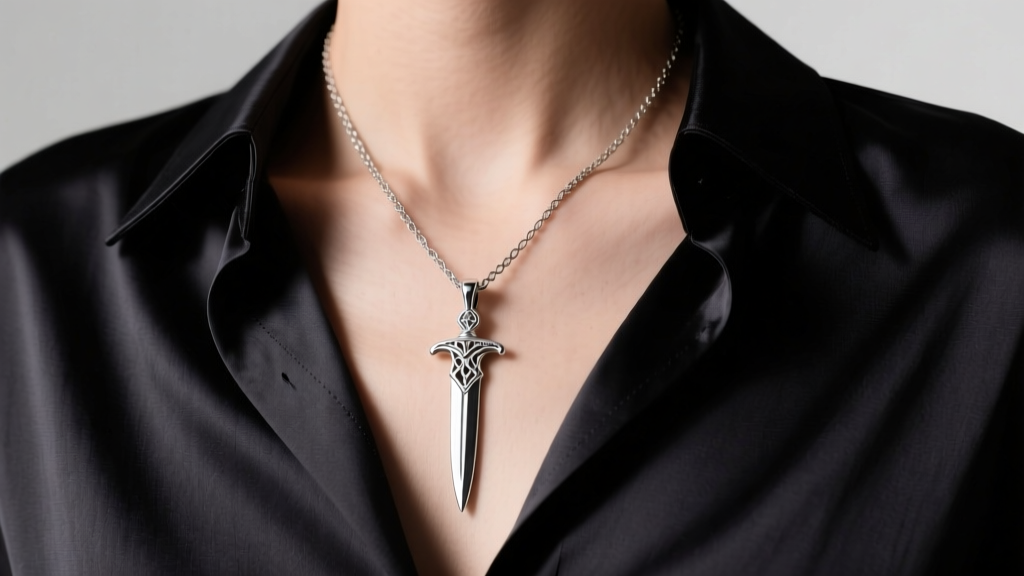
The V-Neck Protocol: Long, narrow blade motifs (such as stilettos or elongated daggers) are perfectly suited for V-necklines. The pendant should terminate exactly 1 inch above the apex of the V-neck, creating a continuous vertical line that elongates the torso. A 22-inch or 24-inch chain is typically required here.
The Crewneck Contrast: Wider, horizontal blade designs (like straight razors or utility box cutters) pair best with tight crewneck t-shirts or turtlenecks. The horizontal axis of the blade disrupts the circular geometry of the collar, creating a striking, punk-inspired focal point. Keep the chain length between 18 and 20 inches to ensure the blade rests squarely on the sternum.
"When layering a blade pendant, it must act as the anchor piece. Pair a 20-inch heavy steel razor blade with an 18-inch 2mm oxidized silver cable chain featuring a minimalist geometric charm. The contrast in weight, length, and texture prevents the look from becoming a chaotic costume." — Contemporary Jewelry Styling Frameworks
Maintenance and Oxidation Prevention
Because blade pendants often feature deep CNC-milled grooves, laser-engraved serial numbers, or intentional antiquing (blackened silver), standard polishing methods can ruin the design intent. Abrasive polishing cloths will strip intentional oxidation from the recessed areas, flattening the visual depth of the piece.
Cleaning Protocols for Textured Blades
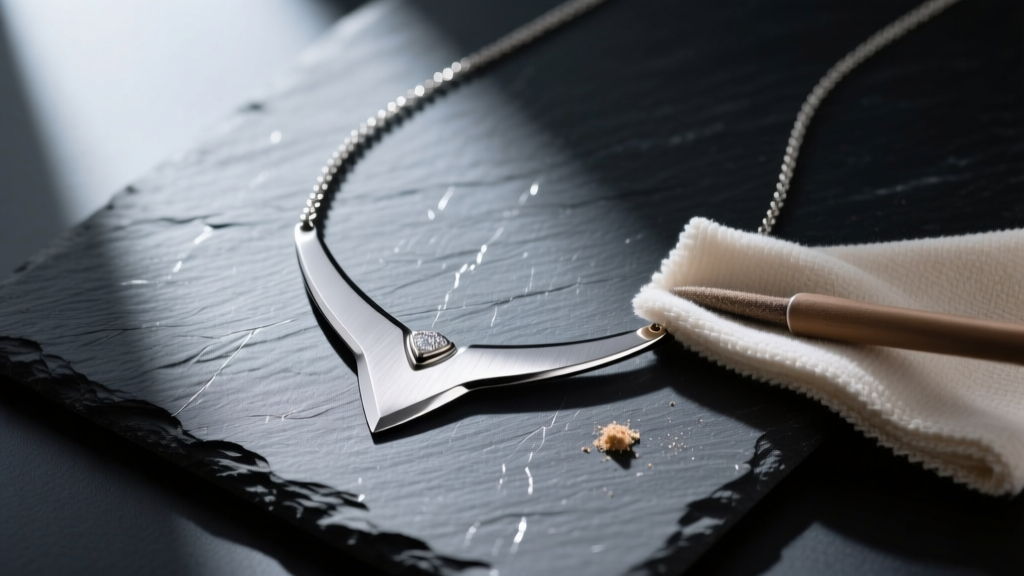
For routine maintenance of stainless steel or titanium blades, an ultrasonic jewelry cleaner using a mild alkaline solution (specifically formulated for metals, as noted by suppliers like Rio Grande) is highly effective. The high-frequency cavitation bubbles will dislodge sebum, dead skin cells, and environmental grit from the laser-engraved grooves without altering the surface finish. For oxidized sterling silver blades, avoid ultrasonic cleaners entirely, as the cavitation will strip the black patina. Instead, use a soft-bristled fiberglass scratch pen or a brass wire brush to gently clean the recessed textures, followed by a microfiber wipe on the high-polish, raised surfaces. Store the necklace flat in an anti-tarnish sulfur-free pouch to prevent the flat planes of the blade from developing uneven oxidation spots.
Final Verdict
Investing in a high-quality necklace with blade motifs is an exercise in appreciating industrial design and precise metallurgy. By prioritizing CNC-machined edges, selecting the appropriate alloy for your skin chemistry, and pairing the pendant with a structurally sound, solid-link chain, you ensure the piece remains a safe, durable, and striking component of your personal aesthetic for years to come.


