Anatomy of a Nantucket Basket Necklace: Materials & Craft
Explore the technical craft, material grades, and authentication details of the traditional Nantucket basket necklace in this expert guide.

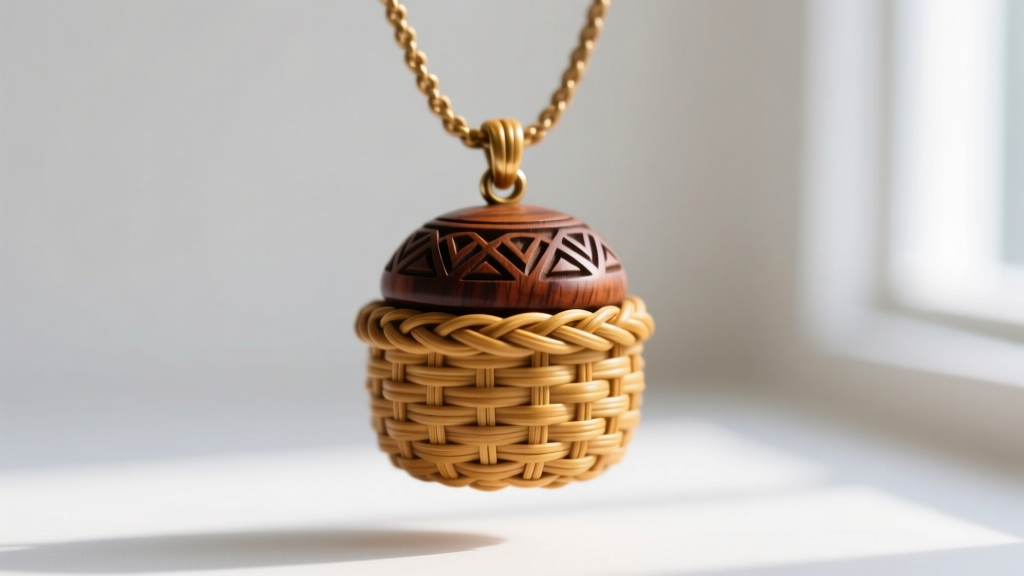
The Nantucket basket necklace represents a fascinating intersection of maritime heritage and micro-craftsmanship. Originally derived from the utilitarian lightship baskets woven by sailors aboard the Nantucket lightships in the mid-19th century, these miniature pendants require a mastery of tensile mechanics and organic material behavior. Today, a genuine Nantucket basket necklace is not merely a souvenir; it is a highly engineered piece of wearable art. In this technical deep dive, we examine the anatomical structure, material grades, and preservation metrics that define authentic pieces in the modern jewelry market.
The Architecture of the Miniature Basket
Translating a traditional 10-inch utility basket into a 1.5-inch necklace pendant introduces severe structural challenges. The core architecture relies on three components: the wooden base, the vertical stakes, and the horizontal weavers.
Cane Gauge and Tension Metrics
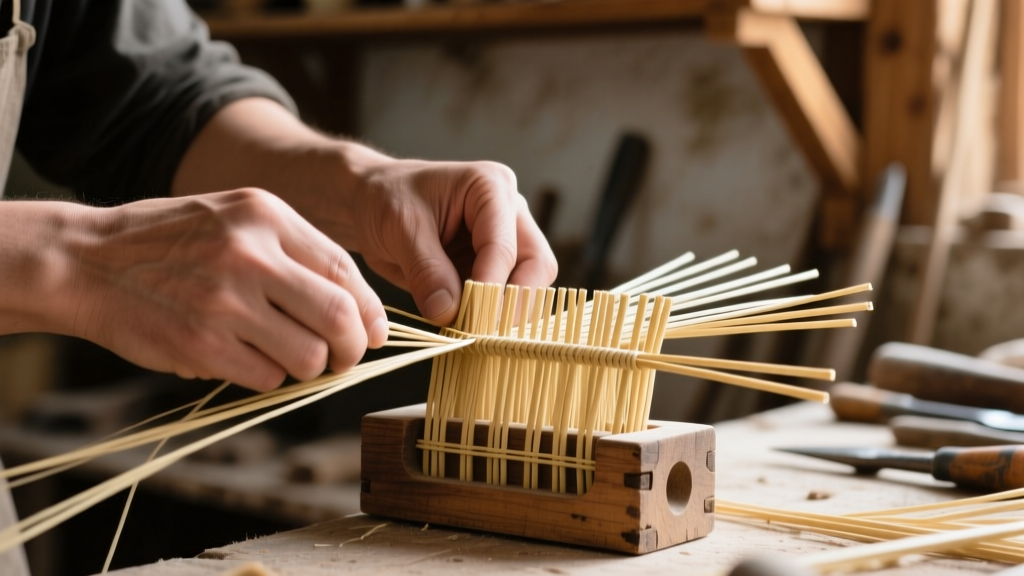
Full-sized baskets typically use #2 or #3 round cane. However, for a Nantucket basket necklace, artisans must utilize ultra-fine binder cane or custom-milled #1 half-round rattan. This material measures less than 1.5 millimeters in width. The cane must be soaked in warm water (approximately 95°F) for exactly 12 to 15 minutes. Under-soaking results in lignin fracture during the bending process, while over-soaking causes the cane to swell, leading to a loose weave once the material dries and contracts. The tension applied to the horizontal weavers must be uniform; a variance of even a few grams of pressure can warp the miniature cylindrical form.
Material Breakdown: Bases, Rims, and Tops
The longevity of a Nantucket basket necklace depends heavily on the stability of its wooden and organic components. Because these pieces are worn against the skin, they are exposed to sebum, sweat, and ambient humidity. Below is a technical comparison of the materials used in high-grade pendants.
| Component | Material Grade | Durability & Notes |
|---|---|---|
| Base | Eastern White Pine | Lightweight, porous. Requires sealing to prevent moisture absorption from skin contact. |
| Stakes & Weavers | #1 Half-Round Rattan | High tensile strength. Susceptible to UV fading and desiccation if not periodically oiled. |
| Rim | Quarter-Sawn Red Oak | Extremely rigid. Holds brass pins securely without splitting along the grain. |
| Carved Top | Tagua Nut (Vegetable Ivory) | Dense, polishes to a glass-like finish. Ethical alternative to historical ivory. |
The Rim and Pinning System
The rim of the basket is where the structural integrity is finalized. Authentic makers carve the rim from rigid hardwoods like red oak or ash, bending it over a hot pipe. The rim is secured to the woven body using tiny brass or sterling silver pins, driven in at precise 45-degree angles. In mass-produced imitations, these pins are often replaced with industrial adhesives, which degrade rapidly when exposed to the pH of human skin.
"The true test of a miniature basket is not just the tightness of the weave, but the invisible engineering of the rim joint. A pin driven at the wrong angle will split a 2-millimeter rim in seconds." — Master Basket Weaver
The Carved Top: Scrimshaw and Ethical Alternatives
Historically, the tops of Nantucket baskets—often referred to as "knots" or "buttons"—were carved from sperm whale ivory and decorated with scrimshaw. Due to international CITES regulations and modern ethical standards, the use of new whale or elephant ivory is strictly prohibited.
Modern Material Substitutes in 2026
Today, master carvers utilize several high-density alternatives to replicate the smooth, glass-like finish of historical ivory:
- Tagua Nut: Known as "vegetable ivory," this endosperm of the Phytelephas palm offers a density and grain structure nearly identical to animal ivory. It takes India ink beautifully for scrimshaw detailing.
- Fossilized Mammoth Ivory: Sourced from permafrost regions, this is the only legally traded animal ivory. It is highly prized but commands a premium price, often adding $800 to $1,500 to the final cost of a necklace.
- High-Density Casein Resin: A modern synthetic alternative that provides excellent carve-ability and moisture resistance, ideal for intricate floral or nautical motifs.
According to the Nantucket Historical Association, the transition to these ethical alternatives has not diminished the art form; rather, it has pushed carvers to develop new micro-engraving techniques suited to the unique grain of tagua and resin.
Authentication: Spotting Genuine Craftsmanship
The market is flooded with synthetic "basket weave" pendants manufactured via injection molding. To authenticate a true Nantucket basket necklace, examine the interior of the basket. A genuine piece will show the cut ends of the stakes tucked neatly inside the rim, often secured with a tiny drop of hide glue. Furthermore, the weave pattern should exhibit slight, natural asymmetries. Injection-molded fakes possess mathematically perfect weaves and lack the distinct, earthy scent of natural rattan and cedar.
While many authentic makers stamp the interior base with "Nantucket" or their personal hallmark, the absence of a stamp does not automatically denote a fake, as early 20th-century pieces were rarely signed. Instead, rely on the "light test." Hold the pendant up to a strong LED light. Genuine woven cane will exhibit a warm, semi-translucent glow with visible organic nodes, whereas synthetic polyurethane weaves will appear opaque and uniformly plastic. For deeper insights into regional craft authentication, the American Craft Council provides extensive resources on identifying traditional hand-woven textiles and woodworks.
Suspension Mechanics and Chain Pairing
A 1.5-inch woven basket pendant typically weighs between 8 and 14 grams. While lightweight, its cylindrical volume makes it susceptible to rotational torque.
The Swivel Bail Imperative
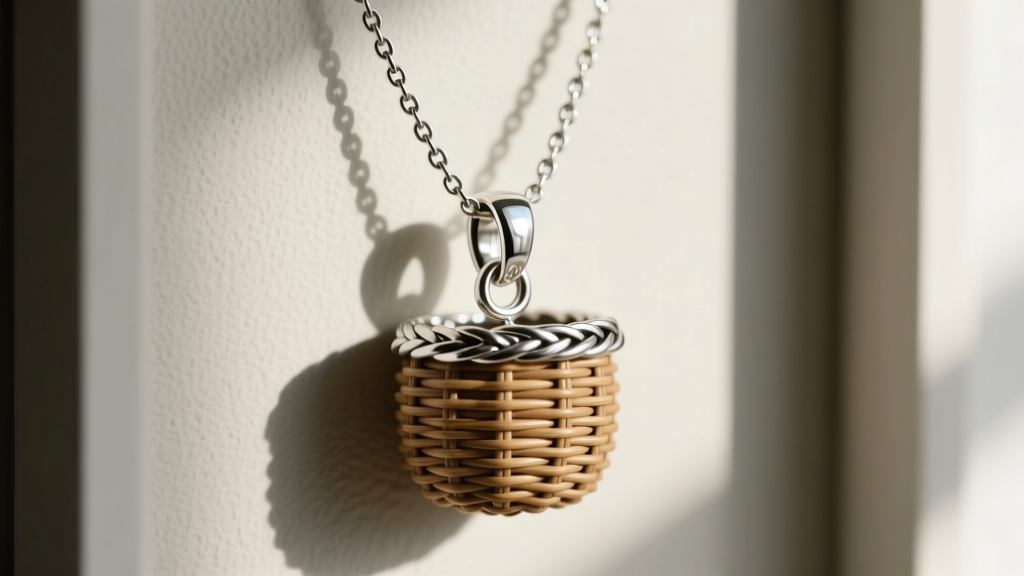
Never suspend a Nantucket basket necklace from a fixed, rigid bail. As the wearer moves, the pendant will twist, transferring torsional stress directly to the delicate cane weavers. Over time, this friction will fray and snap the rattan. Expert jewelers fit these pendants with a sterling silver or 14k gold swivel bail equipped with a micro-thrust bearing. This allows the pendant to rotate independently of the chain, neutralizing torque.
Chain Selection
Avoid snake chains or herringbone chains, as their interlocking links can easily catch on the microscopic splinters of the cane. A 2.0mm to 2.5mm sterling silver rolo chain or a classic cable chain provides the necessary structural support while ensuring the links glide smoothly over the silver bail without snagging. A standard lobster clasp is recommended over a spring ring, as the latter's internal spring mechanism is prone to failure from sweat and cosmetic lotions. For high-value pieces featuring fossilized mammoth ivory tops, a magnetic neodymium clasp with a secondary safety chain provides both ease of use and security.
Climate Control and Preservation
Rattan and wood are highly hygroscopic materials. They absorb and release moisture based on the ambient relative humidity (RH). If you live in an arid climate or use indoor heating during winter, the RH can drop below 30%, causing the cane to become brittle and the wooden base to shrink, potentially popping the rim pins.
Conversely, high humidity (above 65%) can cause the cane to swell and harbor microscopic mold spores. To preserve your Nantucket basket necklace, store it in a sealed display case or jewelry box with a two-way humidity control packet (such as Boveda) calibrated to 45% RH. Never wear the pendant in the shower or pool, as chlorine and harsh soaps will strip the natural oils from the rattan, leading to irreversible desiccation. With proper mechanical suspension and climate control, these micro-engineered maritime artifacts will easily outlast their full-sized counterparts.


