Nantucket Basket Necklace Materials: Wood, Cane & Metal Guide
Explore material properties of a Nantucket basket necklace. Compare cane weaves, wood bases, and metal caps to choose a durable, heirloom-quality piece.

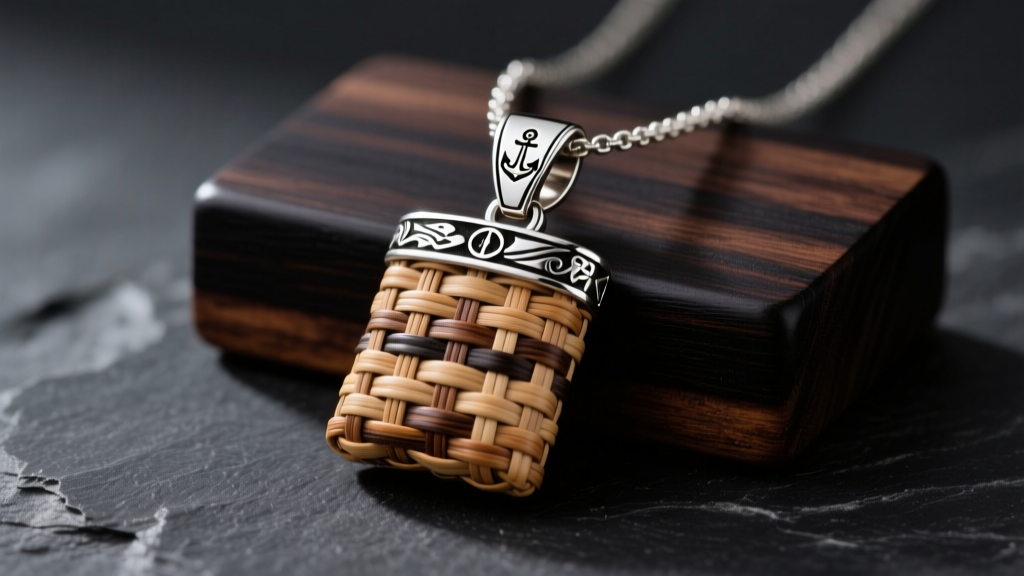
The Nantucket basket necklace is far more than a simple pendant; it is a miniature marvel of structural engineering and traditional craftsmanship. Originating from the utilitarian lightship baskets woven by sailors off the coast of Massachusetts in the 19th century, these pieces have evolved into highly sought-after luxury jewelry. However, because they are constructed from a hybrid of organic fibers, hardwoods, and precious metals, their longevity and aesthetic appeal are entirely dependent on the specific materials used. Understanding the material properties of a basket necklace Nantucket artisans craft is essential for collectors and buyers who want an heirloom-quality piece that withstands the test of time.
The Anatomy of a Nantucket Basket Pendant
Before diving into material comparisons, it is crucial to understand the structural components of the necklace pendant. A traditional piece consists of a turned wooden base, vertical wooden staves, horizontal woven weavers, a wooden or metal rim, a decorative metal cap (often featuring scrimshaw), and a bail that connects it to a chain or cord. Each of these components reacts differently to environmental stressors like humidity, skin oils, and mechanical friction.
Weaving Materials: Natural Cane vs. Rattan vs. Synthetic
The horizontal "weavers" give the basket necklace its iconic texture and structural tension. The choice of weaving material dictates the pendant's flexibility, sheen, and moisture resistance.
Natural Rattan Cane
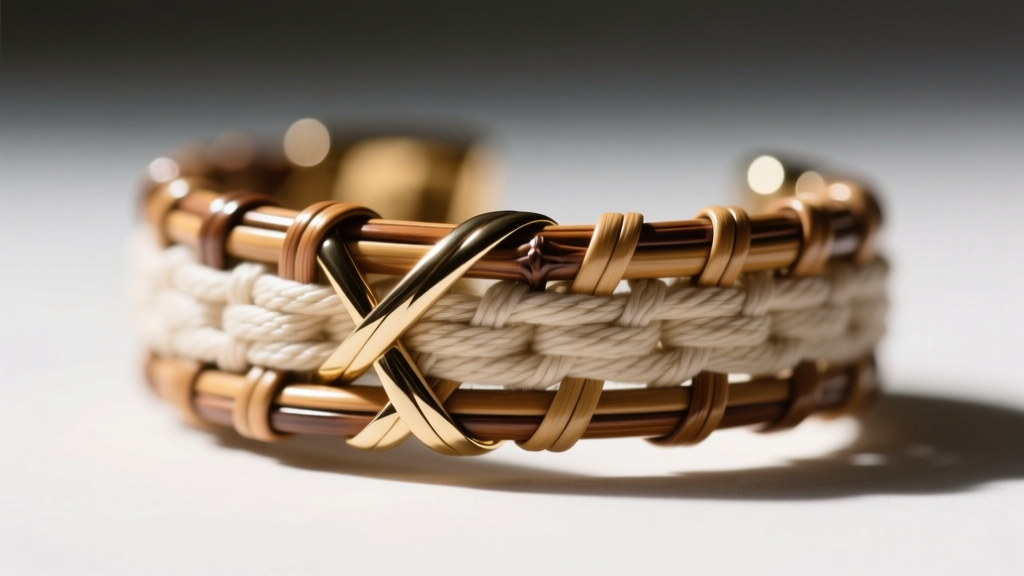
Authentic Nantucket baskets primarily use the outer bark of the rattan palm (Calamus rotang). Master weavers typically select 2.25mm to 2.5mm gauge cane for jewelry-scale pieces. Natural cane possesses a high tensile strength and develops a rich, amber-colored patina as it absorbs trace skin oils and oxidizes over decades. However, cane is highly hygroscopic. If ambient relative humidity (RH) drops below 30%, the cane can become brittle and snap under the tension of the weave.
Synthetic Dacron and Polyester
To combat the fragility of natural cane in dry climates, some modern artisans use synthetic Dacron or polyester fibers. These materials are impervious to humidity fluctuations and will not dry-rot. While synthetics offer superior structural stability, they lack the organic warmth, microscopic texture, and historical authenticity of natural cane, often appearing overly uniform and matte under direct lighting.
Base and Rim Woods: Hardness and Moisture Resistance
The wooden base and rim provide the rigid skeleton of the pendant. Because the wood is turned on a lathe to precise millimeter tolerances, it must be dimensionally stable to prevent warping, which would distort the woven cane and pop the staves out of alignment.
- Ebony (Diospyros ebenum): The gold standard for premium Nantucket jewelry. With a Janka hardness rating of approximately 3,220 lbf, ebony is incredibly dense, naturally resistant to moisture absorption, and heavy enough to give the pendant a luxurious, substantial drape.
- Rosewood (Dalbergia): Rating around 2,440 lbf on the Janka scale, rosewood contains natural oils that act as a built-in moisture barrier. Its deep, reddish-brown hue provides a striking contrast against bright silver caps.
- Maple (Acer saccharum): A pale, tight-grained hardwood (Janka 1,450 lbf). Maple is highly stable but porous, meaning it is frequently dyed or stained to mimic more expensive woods. It is an excellent, cost-effective choice for entry-level authentic pieces.
For a deeper understanding of how these specific timber species react to turning and environmental stress, consult the comprehensive data at The Wood Database.
Metal Caps and Hardware: Sterling Silver vs. Gold Alloys
The metal cap, or "lid," is the focal point of the necklace, often featuring intricate scrimshaw engravings of whaleships, compass roses, or local flora. The hardware must balance malleability for engraving with durability for daily wear.
| Material Grade | Composition | Tarnish Resistance | Engraving Quality | Price Tier |
|---|---|---|---|---|
| 925 Sterling Silver | 92.5% Ag, 7.5% Cu | Low (Requires polishing) | Excellent (Crisp lines) | Mid-Range |
| 14k Yellow Gold | 58.5% Au, Alloyed | High | Very Good | Premium |
| 18k Yellow Gold | 75.0% Au, Alloyed | Very High | Good (Softer metal) | Luxury |
Sterling silver is the most traditional choice, echoing the maritime history of the island. However, the copper content in 925 silver reacts with sulfur in the air to form silver sulfide (tarnish). For buyers seeking a low-maintenance alternative, 14k gold offers an optimal balance of hardness and corrosion resistance. To learn more about the metallurgical properties of precious jewelry alloys, refer to the Gemological Institute of America (GIA).
"True Nantucket scrimshaw is no longer carved on ivory due to international bans. Today's master artisans use Tagua nut (vegetable ivory) or high-density, UV-stable resins inlaid into the silver or gold caps to achieve the same microscopic detail without ecological harm."
Suspension Materials: Chain vs. Leather Cord
The way a basket pendant hangs affects both its visual presentation and its physical wear. Because a fully assembled ebony and silver basket pendant can weigh between 15 and 30 grams, the suspension material must support this load without stretching or snapping.
Precious Metal Chains
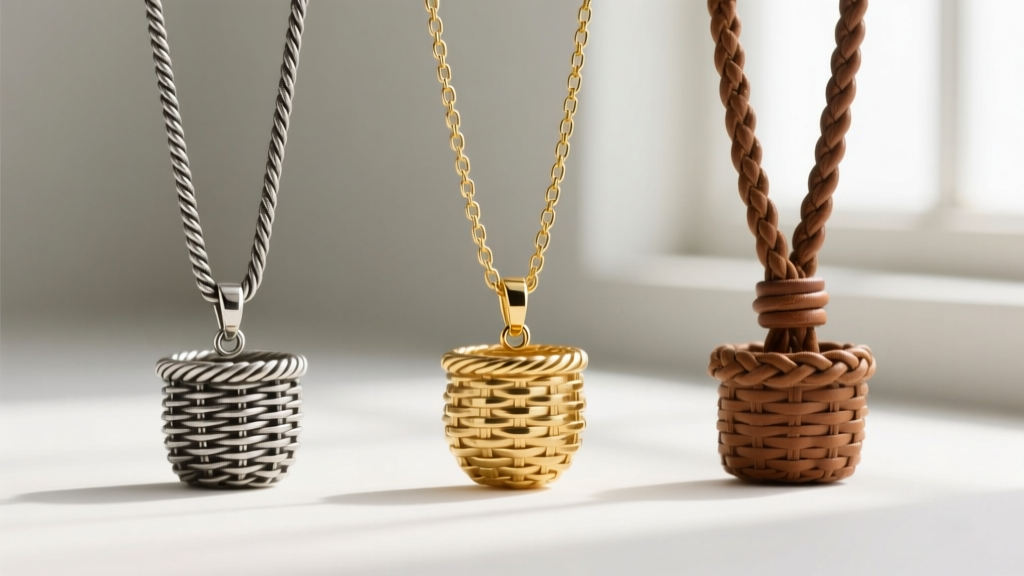
A 2.0mm to 2.5mm box chain or rope chain in sterling silver or 14k gold is the most secure option. Box chains are particularly recommended because their interlocking square links distribute the weight of the heavy wooden pendant evenly, preventing the kinking that plagues thinner snake chains. Always ensure the clasp is a sturdy lobster claw rather than a fragile spring ring.
Braided Leather and Waxed Cotton
For a more rustic, nautical aesthetic, artisans often pair basket pendants with 3mm braided leather or waxed cotton cords. While visually appropriate, leather is susceptible to degradation from sweat and UV exposure. Waxed cotton is a superior alternative for daily wear, as the wax coating repels moisture and prevents the fibers from fraying at the bail loop.
Environmental Vulnerabilities and Care Protocols
Owning a Nantucket basket necklace requires a proactive approach to environmental control. The intersection of organic wood/cane and inorganic metals creates a maintenance paradox: the metals require dry storage to prevent tarnish, while the cane requires ambient moisture to prevent cracking.
The Humidity Sweet Spot
Store your necklace in an environment with a relative humidity (RH) between 40% and 55%. If you live in an arid climate or use aggressive indoor heating during winter, store the pendant in a sealed acrylic display case alongside a small, calibrated humidification pack (like those used for acoustic guitars or cigars). Never submerge the pendant in water or use ultrasonic jewelry cleaners, as the high-frequency vibrations will shatter the tension-held wooden staves.
Polishing Without Damaging the Weave
When polishing the sterling silver cap, use a dry, treated silver-polishing cloth. Avoid liquid silver dips or pastes, which can seep into the microscopic gaps between the cane weavers and the metal rim, leaving a chalky, irreversible residue that ruins the organic patina of the basket.
Pricing Tiers and Authenticity Markers
The market for Nantucket basket jewelry is flooded with mass-produced imitations. Authentic, hand-woven pieces command a premium based on material grade and the artisan's reputation.
- Entry-Level ($150 - $350): Typically feature maple bases, standard natural cane weaves, and cast (rather than hand-engraved) sterling silver caps. Often strung on leather cords.
- Mid-Range ($400 - $900): Feature rosewood or entry-level ebony bases, tight 2.25mm cane weaves, and hand-finished sterling silver caps with basic scrimshaw motifs on Tagua nut.
- Heirloom / Master ($1,200 - $3,000+): Constructed with premium, sink-grade ebony, flawless synthetic or ultra-fine natural cane, and heavy 14k/18k gold caps featuring master-level, micro-engraved scrimshaw. These pieces are often signed by the artisan on the interior of the metal cap or the wooden base.
For historical context and to verify the lineage of traditional island craftsmanship, the Nantucket Historical Association maintains an excellent archive on the evolution of lightship basketry from utilitarian farm tools to high-end jewelry. By prioritizing material integrity over fleeting trends, you ensure your Nantucket basket necklace remains a structurally sound and visually stunning artifact for generations.


