Authentic Native American Choker Necklace: Materials & Craft Guide
Explore the technical details, authentic materials, and craftsmanship behind the traditional Native American choker necklace in this expert guide.

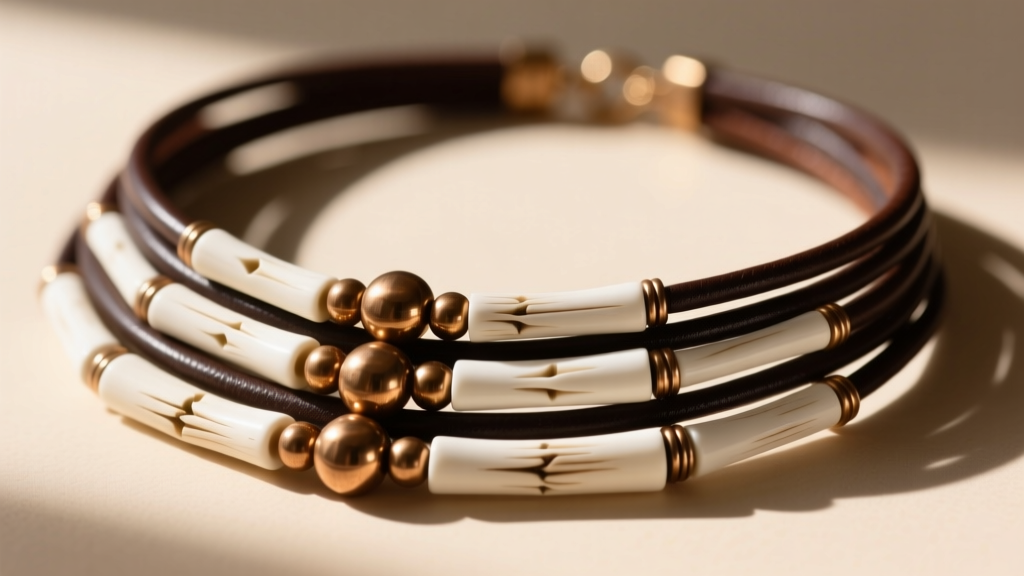
The Anatomy of a Traditional Hairpipe Choker
The native american choker necklace is far more than a stylistic accessory; it is a profound artifact of indigenous engineering, trade history, and lapidary mastery. Historically rooted in the adornment practices of Plains Indians, the traditional choker was designed not just for decoration, but as a protective garment and a display of wealth and status. Today, authentic pieces remain highly sought after by collectors and jewelry enthusiasts who appreciate the meticulous technical details required to craft them.
The foundational element of the classic choker is the 'hairpipe' bead. Originally crafted from conch shells obtained through coastal trade networks, modern hairpipes are predominantly carved from cattle bone, brass, or silver. A standard bone hairpipe measures exactly 2 inches in length with a 3/8-inch diameter, though master artisans also utilize 1.5-inch and 2.5-inch variations to create geometric tapering. The central hole is drilled using high-torque diamond core bits to ensure the channel is perfectly straight; even a 1-degree deviation in the drill path will cause a multi-strand choker to warp and bind when worn.
Material Grades and Sourcing Authenticity
Authenticity in Native American jewelry is governed by strict material standards and federal law. The Indian Arts and Crafts Board enforces the Indian Arts and Crafts Act of 1990, making it illegal to misrepresent goods as being Indian-produced. When evaluating a native american choker necklace, understanding the specific grades of turquoise, shell, and silver is critical for both collectors and casual buyers.
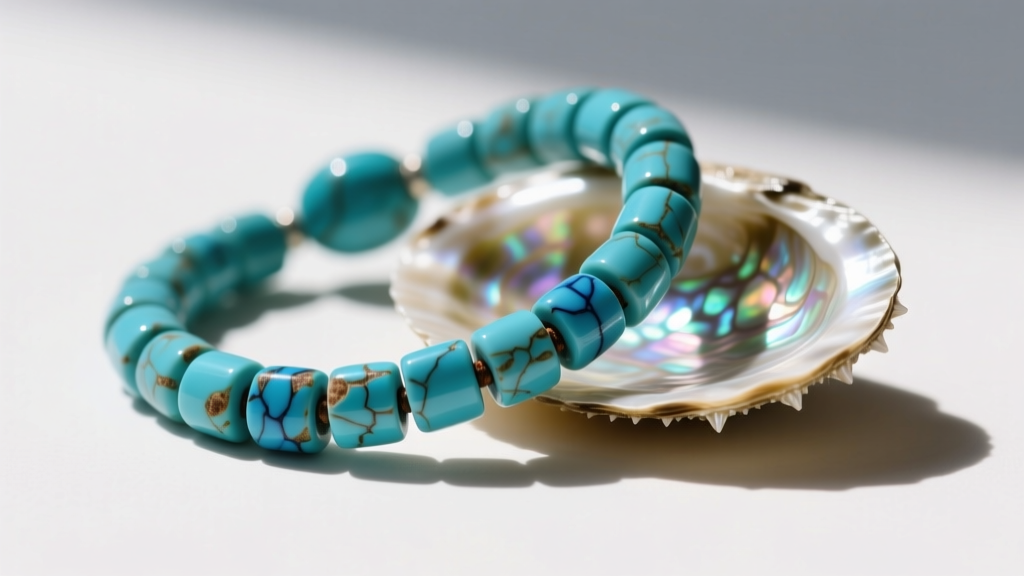
Turquoise: Natural vs. Stabilized
Turquoise is a hydrous phosphate of copper and aluminum, rating between 3 and 6 on the Mohs hardness scale. Because high-grade natural turquoise (such as Sleeping Beauty or Lander Blue) is increasingly rare and expensive, the majority of turquoise used in multi-strand chokers is 'stabilized.' Stabilization is not a synthetic process; it is a vital preservation technique. Soft, chalky turquoise is placed in a vacuum chamber and infused with a clear epoxy or cyanoacrylate resin. This process hardens the stone to a Mohs 7, preventing it from absorbing skin oils, fracturing during the lapidary grinding process, or changing color over time. According to the Gemological Institute of America (GIA), stabilization is an accepted industry practice, provided it is disclosed to the buyer.
| Material | Mohs Hardness | Typical Source | Avg. Price per Strand |
|---|---|---|---|
| Natural Turquoise | 3.0 - 6.0 | Kingman, Royston, Nevada | $150 - $800+ |
| Stabilized Turquoise | 6.5 - 7.0 | Various Southwest Mines | $40 - $120 |
| Spiny Oyster Shell | 3.5 | Sea of Cortez, Mexico | $80 - $250 |
| White Shell | 3.0 | Pacific Coast / Cultured | $30 - $90 |
Sterling Silver and Hallmarking
When silver conchos, tips, or beads are integrated into the choker, they must be genuine .925 sterling silver. Traditional Navajo silversmiths often utilize sandcasting, a technique where molten silver at 1,600°F is poured into molds carved from porous tufa stone. This leaves a distinct, slightly textured grain on the metal that cannot be replicated by modern CNC milling or 3D printing. Authentic pieces will bear the artist's hallmark—usually a stamped initial, symbol, or clan mark—on the back of the central concho or the silver end caps.
Construction Techniques: The Geometry of Multi-Strand Threading
The most complex technical challenge in crafting a multi-strand native american choker necklace is managing the geometry of the human neck. A common failure mode in mass-produced, imported imitation chokers is that all strands are cut to the exact same length. When fastened around the cylindrical shape of the neck, the outer strands buckle and gap outward, while the inner strands dig painfully into the collarbone.
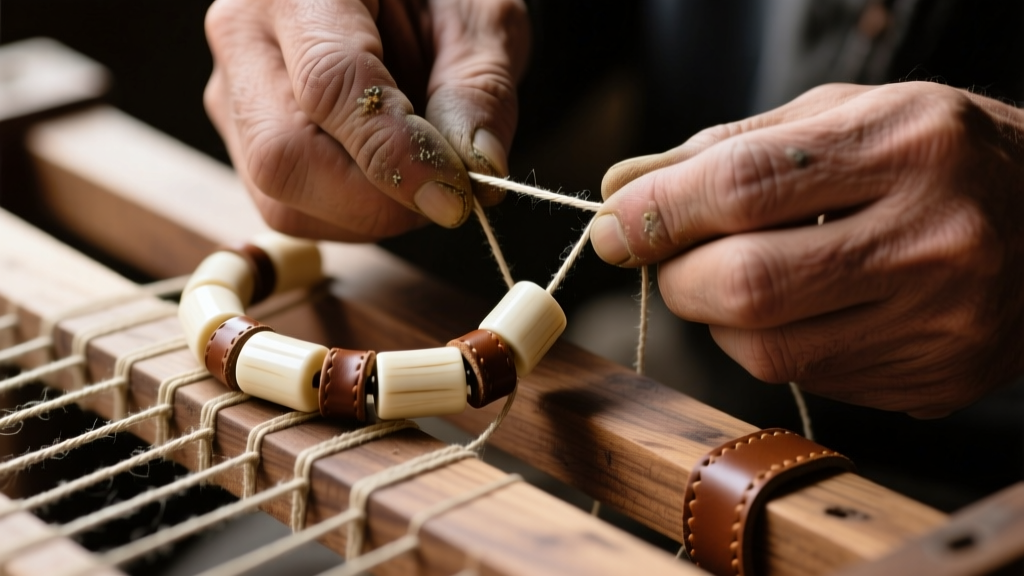
The Differential Length Formula
Master artisans employ a differential length formula to ensure the choker lays perfectly flush against the skin. For a standard 5-strand hairpipe choker designed for a 15-inch neck, the strands must graduate in length to account for the radius of the bead thickness and the leather spacers.
- Strand 1 (Inner): 14.5 inches
- Strand 2: 15.0 inches
- Strand 3 (Center): 15.5 inches
- Strand 4: 16.0 inches
- Strand 5 (Outer): 16.5 inches
This 2-inch total variance ensures that the cylindrical hairpipes align vertically without splaying. The threading material is equally critical. While historical pieces used animal sinew, modern master crafters utilize heavily waxed nylon or braided Dacron cord (typically 1.5mm to 2.0mm in diameter). The wax coating reduces friction, preventing the cord from fraying against the sharp internal edges of bone or turquoise beads during the tensioning process.
Santo Domingo Heishi and Zuni Petit Point Integration
Beyond the traditional bone hairpipe, the native american choker necklace frequently features intricate lapidary work from specific Pueblos. The Santo Domingo (Kewa) Pueblo is world-renowned for 'heishi' (pronounced hee-shee), which translates to 'shell bead.' Creating a heishi choker involves cutting shell or stone into tiny squares, drilling a central hole, stringing them on a wire, and then grinding the entire strand against a rotating stone wheel. This yields perfectly uniform, flat discs that feel like liquid silk against the skin. A high-quality turquoise heishi choker may contain over 2,000 individually ground discs, representing dozens of hours of manual labor.
Alternatively, Zuni artisans may incorporate 'petit point' or 'needle point' techniques into the central focal concho of a choker. Petit point involves setting dozens of tiny, teardrop-shaped turquoise cabochons (often measuring just 3mm by 5mm) into individual, hand-soldered sterling silver bezels. The precision required to cut stones this small without shattering them, and to solder the bezel wire without melting the delicate silver backplate (usually 22-gauge or 0.025 inches thick), requires decades of bench experience.
Sizing, Fit, and Clasp Mechanics
A true choker is designed to sit high on the neck, just below the Adam's apple or resting on the upper clavicle. Standard sizing ranges from 14 inches (petite) to 17 inches (large). Unlike chain necklaces that utilize spring-ring clasps, traditional multi-strand chokers rely on leather tie closures or silver toggle clasps. Leather ties allow for micro-adjustments of up to an inch, accommodating natural fluctuations in neck swelling due to hydration or temperature. When leather ties are used, the ends are often capped with sterling silver cones (crimp covers) that are soldered or glued with jeweler's epoxy to prevent the leather from fraying and pulling through the bead holes.
Maintenance and Preservation of Organic Materials
Proper care is essential to maintain the structural integrity of organic materials found in a native american choker necklace. Bone hairpipes are highly porous. If exposed to prolonged moisture, sweat, or commercial silver polishes, the bone can absorb the chemicals, leading to permanent yellowing or structural degradation. Clean bone and shell components only with a dry, microfiber cloth.
For the sterling silver components, avoid liquid dips. Instead, use a treated jeweler's polishing cloth, being incredibly careful not to rub the cloth against the turquoise or shell, as the mild abrasives in the cloth can dull the high-polish finish of the lapidary work. Store the choker flat in an anti-tarnish bag with a silica gel packet to control ambient humidity, ensuring the leather ties remain supple and the silver remains bright for generations.


