Cherry Amber Necklace Buying Guide: Spotting Fakes & Grading Beads
Discover how to authenticate, grade, and choose the perfect cherry amber necklace. Learn about bead sizing, heat treatments, and clasp security.

What Exactly is Cherry Amber? The Science of Succinite
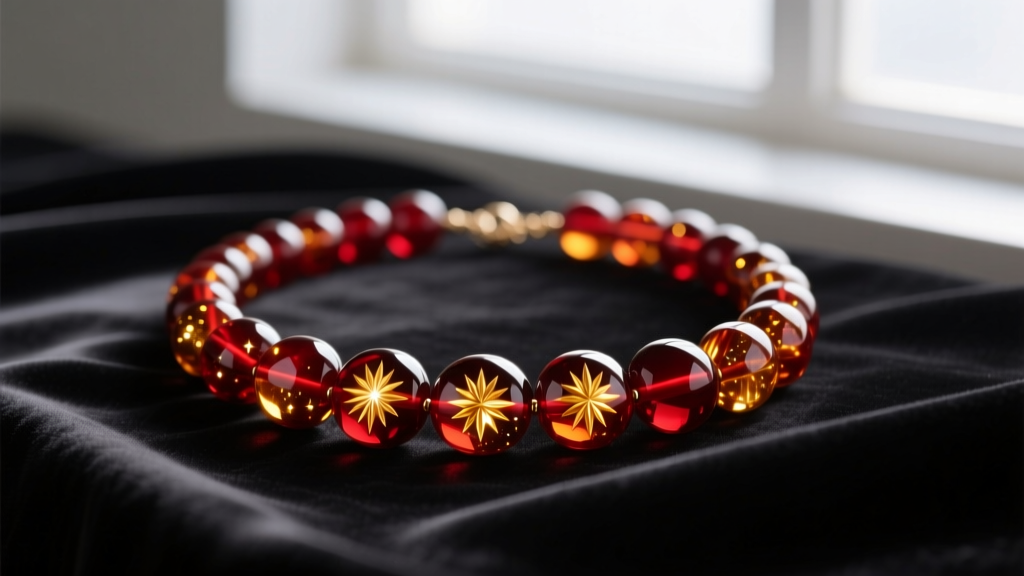
When browsing the market for a cherry amber necklace, you are looking at one of the most visually striking variations of fossilized tree resin. True amber, scientifically known as succinite, originated during the Eocene epoch approximately 34 to 38 million years ago. The vast majority of high-quality amber on the market is Baltic amber, harvested from the shores of the Baltic Sea or mined in the Kaliningrad region. According to gemological data from Mindat.org, Baltic succinite contains roughly 3% to 8% succinic acid, a compound that distinguishes it from other global amber deposits like Dominican or Mexican amber.
The term 'cherry' refers to the deep, translucent red-to-burgundy hue of the beads. However, it is a common misconception that cherry amber is found this color in nature. While natural oxidation over many decades can darken amber to a deep reddish-brown, 95% of the cherry amber necklaces sold today achieve their vibrant color through controlled heat treatments. Understanding this distinction is the first step in becoming an informed buyer and avoiding overpriced imitations.
Natural vs. Modified: Understanding Heat Treatments
The International Amber Association (IAA) classifies amber into several categories, with 'Natural' and 'Modified' being the most relevant for cherry amber. To achieve the highly sought-after cherry red color and the mesmerizing internal fractures known as 'sun spangles' (or lily pads), lapidaries use an autoclave. This machine heats the amber to roughly 200°C under high pressure in an oxygen-rich environment.
This process accelerates oxidation and causes microscopic stress fractures inside the resin, which reflect light and create the glittering lily-pad inclusions. It is vital to understand that modified amber is still 100% real amber. The Gemological Institute of America (GIA) recognizes heat treatment as a standard, acceptable practice in the gem trade, provided it is disclosed. However, unscrupulous sellers often market autoclaved cherry amber as 'rare natural red amber' to inflate prices. As a buyer, you should expect to pay for the beauty and size of the beads, not a false premise of natural, untreated origin.
The 3-Step Authenticity Protocol: Spotting Fakes
The market is flooded with cherry amber imitations, including glass, phenolic resins, and copal (immature resin that is only 1 to 5 million years old). Use this three-step testing protocol to verify your necklace before purchasing.
1. The Saturated Saltwater Test
True amber has a specific gravity of 1.05 to 1.10 g/cm³. If you mix a solution of one part table salt to two parts warm water, the density of the liquid increases to roughly 1.12 g/cm³. Genuine cherry amber will float in this solution, while glass, heavy plastics, and copal will typically sink. Note: You must remove any metal clasps or heavy pendants before testing, as their weight will drag the amber down.
2. The UV Fluorescence Test
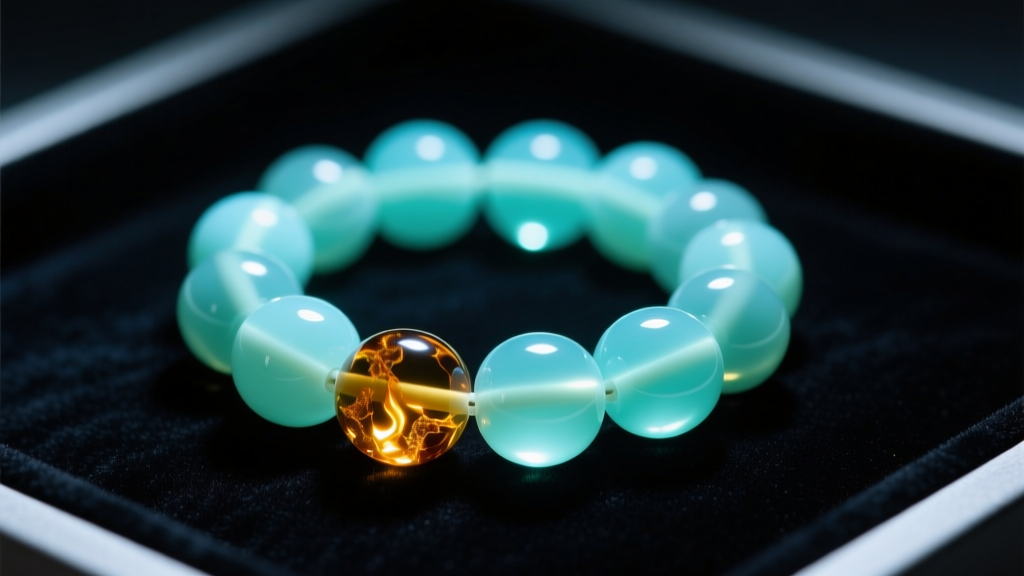
This is the most reliable non-destructive test. Under a 365nm UV flashlight, genuine Baltic amber exhibits a distinct pale blue or greenish-blue fluorescence. Copal, on the other hand, glows a chalky, dull white. Phenolic resins and dyed plastics will show virtually no fluorescence.
3. The Acetone Solvent Test
Copal is frequently dyed red to mimic cherry amber. Because copal has not fully polymerized, its surface is softer. If you place a single drop of acetone (nail polish remover) on an inconspicuous area of the bead and let it evaporate, copal will become tacky and sticky to the touch. True succinite is completely impervious to acetone and will remain smooth.
Grading and Pricing Matrix for 2026
Pricing for a cherry amber necklace is dictated primarily by bead diameter, clarity, and the uniformity of the color. Larger beads require larger, older pieces of rough amber, which are exponentially rarer. Below is a benchmark pricing guide for authentic, well-constructed cherry amber necklaces in the current market.
| Bead Diameter | Approx. Weight | Clarity & Inclusions | Estimated Price Range (USD) |
|---|---|---|---|
| 6mm - 8mm | 15g - 22g | Translucent, high sun spangle density | $45 - $85 |
| 9mm - 12mm | 25g - 40g | Deep cherry red, moderate lily pads | $110 - $190 |
| 13mm - 16mm | 45g - 65g | Gem-grade, uniform color, high clarity | $220 - $450 |
| 17mm+ | 70g+ | Collector grade, rare large-format beads | $550 - $1,200+ |
Buyer Beware: If you see a 14mm cherry amber necklace selling for $30, it is almost certainly dyed glass or plastic. Real amber of that size commands a premium.
Construction: Thread, Knots, and Clasps
A beautiful strand of cherry amber is only as good as its construction. Amber is relatively soft (2 to 2.5 on the Mohs hardness scale). If beads are strung tightly without space or knotting, they will grind against each other, eventually wearing down the drill holes and cracking the resin.
The Importance of Hand-Knotting
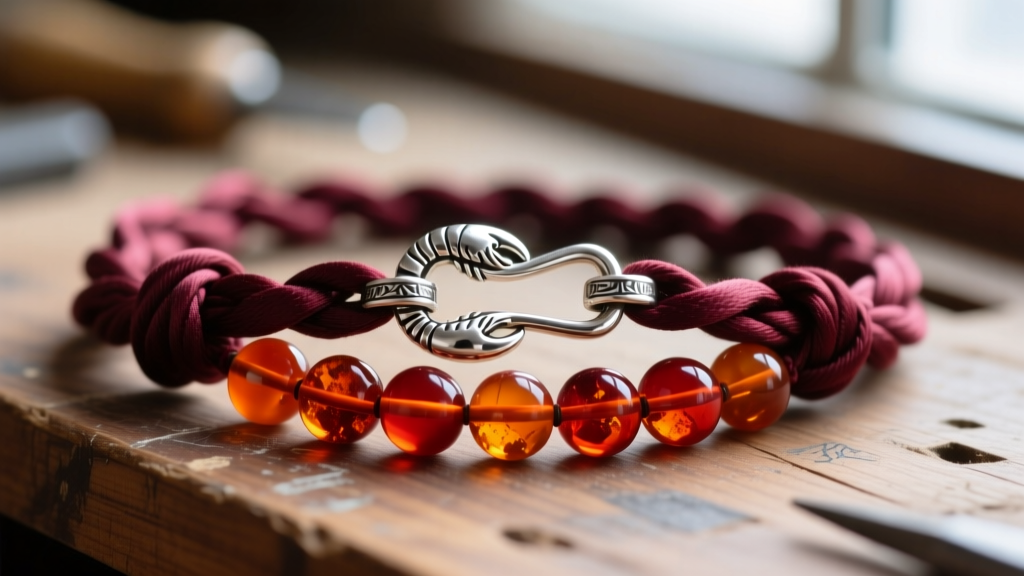
Always inspect the strand for individual knots between the beads. High-end manufacturers use French silk or bonded nylon bead cord, tying a hand-knot between every single bead. This serves two purposes: it prevents the beads from rubbing together, and if the necklace catches and snaps, you only lose one bead instead of the entire strand scattering across the floor.
Choosing the Right Clasp
The clasp is a frequent point of failure in amber jewelry. Avoid traditional barrel screw clasps. The threads on these clasps strip easily over time, and they are notorious for unspooling unexpectedly. Instead, look for:
- Lobster Clasps: Made of 925 sterling silver or 14k gold, paired with a secure jump ring. This is the most reliable and durable option.
- Magnetic Clasps: Excellent for ease of use, but ensure the magnetic cylinder is strong (neodymium) and features a secondary safety chain to prevent loss if the magnets pull apart.
- Toggle Clasps: Secure and easy to fasten, provided the 'T' bar is long enough to pass completely through the receiving loop.
Styling, Care, and Safety Warnings
Cherry amber is incredibly versatile. A 6mm to 8mm strand offers a subtle, elegant pop of burgundy that pairs beautifully with cream, navy, or olive-toned garments. Larger, 14mm+ beads make a bold, statement piece best worn over solid-colored turtlenecks or V-neck blouses where the resin can catch the light and showcase its internal sun spangles.
Proper Care and Maintenance
Amber is highly sensitive to chemicals. Never wear your necklace while applying perfume, hairspray, or lotions, as the alcohols and solvents can dull the polish and cause the surface to craze (develop tiny micro-cracks). Clean your necklace only with a soft, damp microfiber cloth. Never use ultrasonic jewelry cleaners or steamers, as the high-frequency vibrations and heat will shatter the beads.
A Critical Note on Teething Necklaces
While amber necklaces are heavily marketed as 'teething necklaces' for infants, the American Academy of Pediatrics (AAP) strongly advises against them. The risks of strangulation and choking from broken beads far outweigh any unproven topical benefits of succinic acid. If you are buying a cherry amber necklace, buy it for adult fashion and collector appreciation, and keep it safely out of reach of children.
Final Thoughts
Investing in a cherry amber necklace is an exercise in appreciating ancient natural history. By prioritizing authentic Baltic succinite, verifying the bead construction, and understanding the reality of heat treatments, you can confidently acquire a piece of jewelry that will retain its deep, fiery brilliance for generations.


