Olympic Rings Necklace Value Guide 2026: Worth the Price?
Is an Olympic rings necklace worth the cost? We break down 2026 pricing tiers, material grades, and official IOC licensing to help you assess true value.

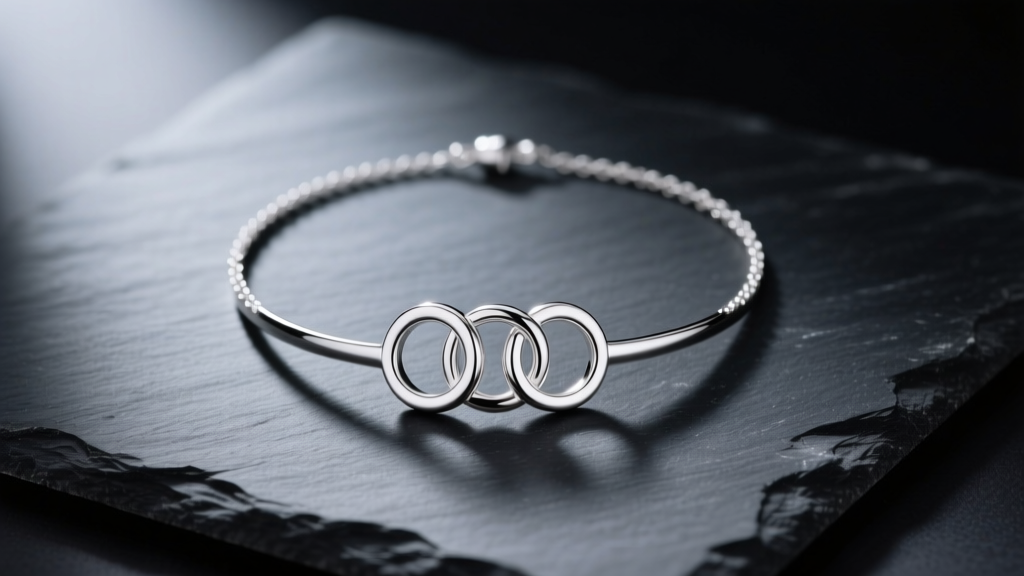
The five interlocking rings of the Olympic motif represent a timeless symbol of global unity, athletic excellence, and personal achievement. As we move through the post-Milano-Cortina 2026 jewelry market, the demand for an olympic rings necklace continues to surge among sports enthusiasts, collectors, and fashion-forward individuals. However, the market is heavily saturated with everything from $15 gas-station trinkets to $1,500 solid gold heirloom pieces. For the discerning buyer, the challenge lies in separating genuine horological and metallurgical value from overpriced, mass-produced souvenirs.
At Jewel Style Radar, we believe that every jewelry purchase should be evaluated through a lens of material integrity, structural engineering, and brand authenticity. In this comprehensive budget and value assessment, we will dissect the pricing tiers, expose common manufacturing flaws in interlocking ring designs, and provide a definitive framework to help you determine if an Olympic rings pendant is truly worth your hard-earned money in 2026.
The True Cost of Olympic Rings Jewelry in 2026
The pricing landscape for Olympic-themed jewelry has shifted dramatically over the last few years. Driven by fluctuations in precious metal markets and stricter enforcement of intellectual property rights, the gap between budget replicas and premium licensed merchandise has widened. According to the World Gold Council, the baseline cost of raw gold and silver has forced manufacturers to either reduce the gram weight of their pendants or raise retail prices to maintain margins.
When evaluating an olympic rings necklace, you are not just paying for the metal; you are paying for the complexity of the soldering, the quality of the plating (if applicable), and the legal licensing fees. A pendant that seems like a bargain at $30 often cuts corners on the jump ring gauge or uses highly toxic nickel alloys beneath a micro-thin layer of gold flash plating. Understanding these hidden costs is the first step in making a financially sound jewelry investment.
Material Breakdown and Pricing Tiers
To accurately assess value, we must categorize the market into three distinct tiers based on material composition and manufacturing standards. The table below outlines what you should expect to pay and the longevity you can realistically demand from each tier.
| Tier | Material Composition | 2026 Price Range | Longevity & Value Assessment |
|---|---|---|---|
| Budget / Replica | Zinc alloy or brass core with electroplated gold/silver finish. | $15 - $45 | Poor. High risk of skin irritation (nickel). Plating wears off at friction points within 3-6 months. Zero resale value. |
| Mid-Range / Licensed | Solid 925 Sterling Silver, often with rhodium or PVD gold plating. | $65 - $160 | Good. Hypoallergenic and durable. PVD plating lasts years. Holds sentimental and moderate scrap value. |
| Premium / Heirloom | Solid 14k or 18k Yellow/White Gold, laser-welded joints. | $450 - $1,200+ | Excellent. Will not tarnish or wear through. Can be passed down through generations. Retains intrinsic metal value. |
Official IOC Licensing vs. Generic Replicas
One of the most critical factors in the value assessment of an olympic rings necklace is intellectual property. The International Olympic Committee (IOC) fiercely protects its trademarks. According to the IOC Brand Protection Guidelines, the five interlocking rings are exclusively owned by the IOC, and any commercial use requires a strict, heavily audited licensing agreement.
When you buy an officially licensed piece from an authorized retailer (such as the official Olympic store or a partnered jeweler like Pandora or Swarovski during specific campaigns), a portion of your purchase supports the global athletic community. More importantly for the buyer, licensed jewelry is subject to rigorous quality control standards mandated by the IOC's corporate partners. Generic replicas, often found on drop-shipping sites or unverified marketplaces, bypass these quality checks. They may look identical in a low-resolution product photo, but they frequently suffer from asymmetrical rings, weak solder joints, and unverified metal stamps that violate FTC Jewelry Guides regarding precious metal marking.
Engineering Flaws: Common Failure Points in Interlocking Designs
From a bench jeweler's perspective, the Olympic rings motif is a structural nightmare. Interlocking rings are in a constant state of kinetic friction against one another. Every time you move, the rings rub together. This design creates specific failure modes that you must inspect before purchasing.
The Friction and Plating Problem
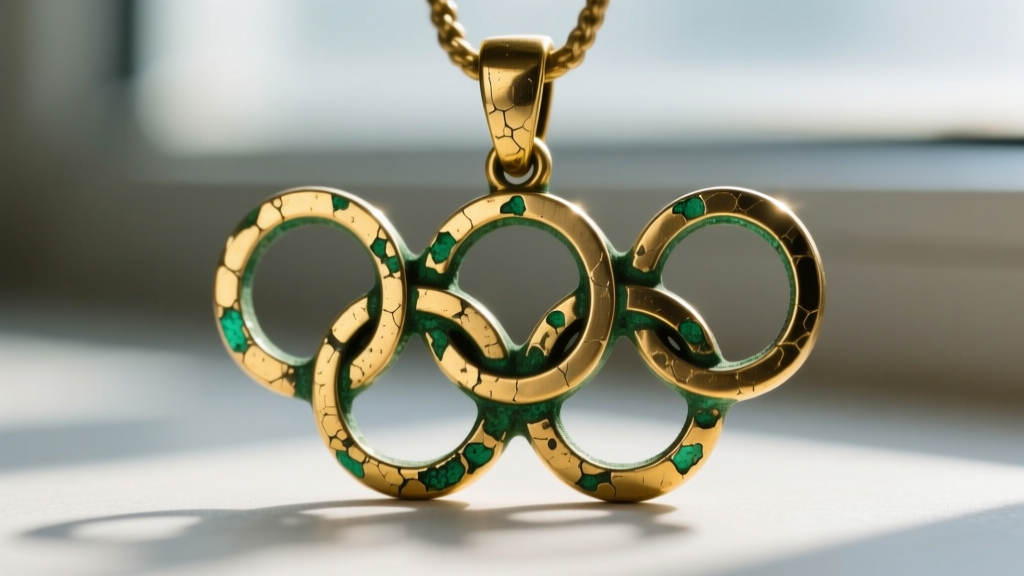
If you are buying a gold-plated sterling silver or base-metal olympic rings necklace, the friction between the rings will act like fine sandpaper. Within weeks, the inner edges of the rings where they overlap will lose their plating, exposing the base metal beneath. If the core is brass or copper, this exposed area will rapidly oxidize, leaving a green or black residue on your skin. To mitigate this, only buy plated interlocking rings if the manufacturer specifies PVD (Physical Vapor Deposition) coating, which is up to five times more resistant to friction wear than traditional electroplating.
Solder Joint Integrity
In cheaper manufacturing, the five rings are not actually free-floating; they are soldered together in a flat, static position to save on assembly time and prevent tangling. If a jeweler uses too much solder, it creates ugly, bulbous joints that ruin the aesthetic. If they use too little, the rigid structure becomes brittle, and a simple drop onto a hard surface will snap the rings apart. Premium necklaces feature free-floating rings with meticulously laser-welded seams, allowing natural movement without structural compromise.
Beyond the Pendant: Evaluating the Chain and Clasp
A common mistake buyers make is obsessing over the pendant while ignoring the chain and clasp. A $100 sterling silver Olympic pendant is entirely devalued if it is hung on a fragile, hollow chain with a defective clasp.
Chain Weave Compatibility
Because the Olympic pendant features moving, overlapping parts, it is highly prone to catching on complex chain weaves. Avoid rope chains and snake chains, as the tiny links or smooth scales will inevitably get caught in the gaps between the rings, causing frustrating tangles and potential damage to the chain. Instead, opt for a Wheat chain or a Box chain. These weaves offer a smooth, uniform surface that allows the pendant bail to glide freely without snagging.
Clasp Mechanics and Gauge Sizing
The jump ring connecting the pendant to the chain must be at least 18-gauge (1.0mm) in thickness to support the weight of five metal rings. Furthermore, insist on a lobster claw clasp. Spring ring clasps, which are standard on budget necklaces, contain a tiny internal spring that frequently fails, leading to the loss of the pendant. A well-constructed lobster clasp with a sturdy tension spring is a non-negotiable hallmark of a high-value necklace.
How to Assess Value Before Purchasing
When you are ready to buy, use this actionable checklist to ensure you are getting exactly what you pay for.
The Smart Buyer Checklist
- Verify the Hallmark: Look for a crisp "925", "14k", or "18k" stamp on the back of the pendant and on the clasp. If it reads "18KGP" (Gold Plated) or has no stamp, you are looking at budget-tier jewelry.
- Check the Bail: The bail (the loop the chain passes through) should be soldered closed. If it is a pinched bail with a visible seam, it can easily be pried open by a snagged shirt, dropping your pendant.
- Test the Ring Movement: Gently manipulate the rings. They should move smoothly without grinding or catching. If they are soldered flat, ensure the solder lines are clean and not overflowing onto the face of the rings.
- Demand Authenticity Documentation: If the seller claims the piece is officially licensed IOC merchandise, ask for the certificate of authenticity or verify the retailer on the official Olympic partner list.
Final Verdict: Is It Worth the Investment?
So, is an olympic rings necklace worth the price in 2026? The answer depends entirely on which tier you choose to invest in. Budget replicas under $40 are strictly costume jewelry; they are fun for a fleeting moment of sports fandom but offer zero long-term value and will inevitably tarnish and break.
However, if you allocate a budget of $80 to $150 for a licensed, PVD-plated 925 sterling silver piece, or $500+ for a solid 14k gold heirloom, the value proposition is exceptionally strong. These mid-to-high-tier pieces offer excellent material longevity, structural reliability, and the profound emotional resonance that comes with wearing a globally recognized symbol of human achievement. By prioritizing free-floating ring engineering, robust chain weaves, and verified precious metal hallmarks, you can secure an Olympic necklace that will proudly endure for decades.


