Native American Red Coral Necklace: Authentication & Technical Guide
Master the technical details of buying a Native American red coral necklace. Learn to authenticate stones, evaluate silverwork, and spot dyed fakes.

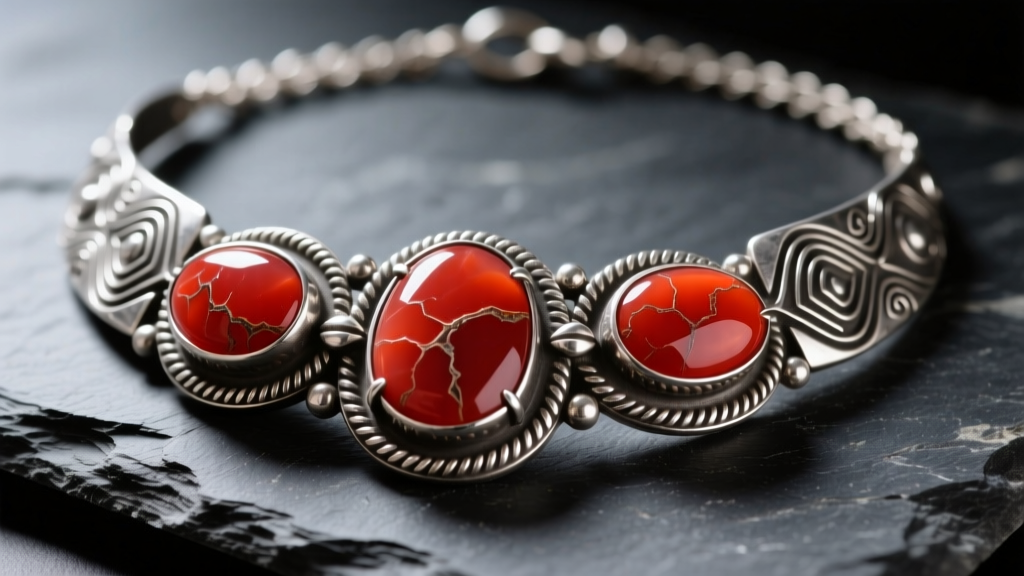
The market for a genuine Native American red coral necklace is a complex intersection of gemology, metallurgy, and indigenous art history. As of 2026, tightening CITES regulations on precious coral harvesting and a surge in sophisticated imitations have made technical authentication more critical than ever. Whether you are evaluating a mid-century Navajo squash blossom, a Zuni petit point collar, or a Santo Domingo heishi strand, understanding the exact material grades, silver purities, and structural hallmarks is essential for serious collectors and investors.
The Anatomy of Authentic Red Coral in Native American Jewelry
Not all red coral is created equal. The value of a Native American red coral necklace is heavily dictated by the biological origin of the coral and its structural integrity. Genuine precious coral belongs to the genus Corallium, characterized by a dense, calcite-based skeleton that takes a high polish. According to the Gemological Institute of America (GIA), true precious coral exhibits a specific gravity between 2.60 and 2.70, and a Mohs hardness of 3.5 to 4.0.
Mediterranean vs. Asian vs. Bamboo Coral
Historically, the most prized material used by Navajo and Zuni silversmiths was Mediterranean red coral (Corallium rubrum), traded into the American Southwest via European and Mexican merchants. Today, due to severe Mediterranean overharvesting, much of the high-grade coral entering the market is Asian Corallium japonicum (often called 'blood coral'). Both are authentic precious corals. However, the market is flooded with dyed bamboo coral (Keratoisis), a porous, jointed sea organism that lacks the natural red pigmentation of Corallium.
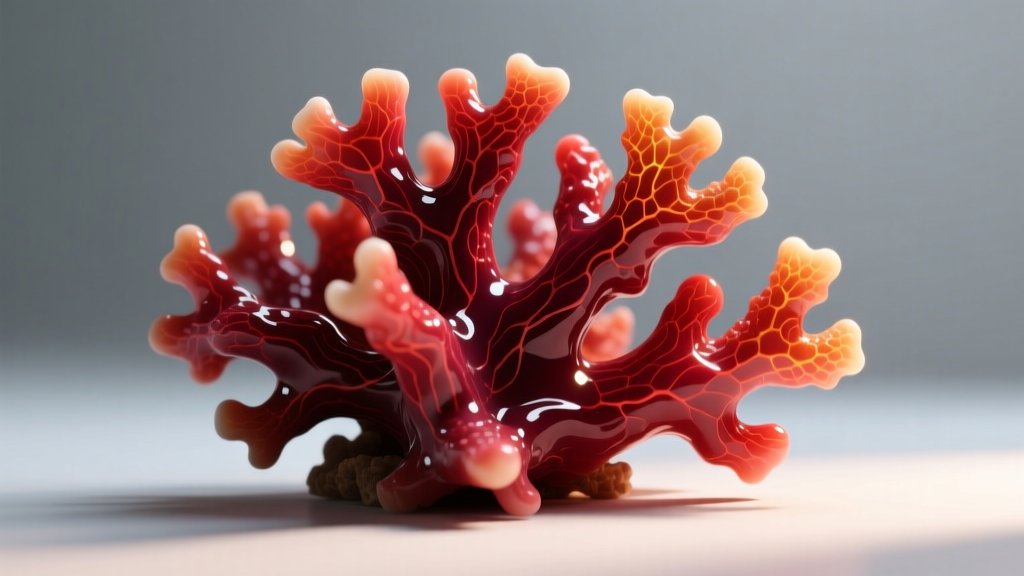
| Coral Variety | Scientific Classification | Visual & Gemological Markers | 2026 Market Status |
|---|---|---|---|
| Mediterranean | Corallium rubrum | Oxblood to salmon hues; subtle organic grain lines; SG ~2.65. | Highest premium; mostly found in vintage/antique pieces. |
| Asian / Blood | Corallium japonicum | Deep uniform red; highly vitreous luster; SG ~2.68. | Standard for high-end contemporary Zuni and Navajo work. |
| Bamboo (Dyed) | Keratoisis spp. | Chalky texture; dye concentrates in pores; SG ~1.40; fails acetone test. | Ubiquitous in tourist-grade jewelry; virtually no collector value. |
Expert Authentication Test: To identify dyed bamboo coral, apply a small drop of acetone (nail polish remover) to a cotton swab and rub an inconspicuous area of the bead or cabochon. If the swab turns red, the stone is dyed. Precious coral's color is intrinsic and will not bleed.
Technical Evaluation of Sterling Silver Settings
The silverwork in a Native American red coral necklace is just as critical as the stones. Evaluating the metallurgy and construction techniques can accurately date a piece and confirm its tribal origin.
Coin Silver vs. Sterling Silver
Pieces crafted prior to the 1930s were frequently made from 'coin silver.' Silversmiths melted down US silver coins, which possessed a .900 purity (90% silver, 10% copper), compared to modern .925 sterling silver. Coin silver oxidizes at a slightly different rate, often developing a deeper, richer black patina in the recesses of the metal. If a purported 1920s Navajo necklace tests at exactly .925 purity via X-ray fluorescence (XRF), it is likely a later reproduction or has been heavily restored.
Tufa Casting vs. Stamped Silverwork
Navajo silversmiths frequently utilize tufa casting, a technique where molten silver is poured into a carved mold made of volcanic tufa stone. This leaves a distinct, slightly pitted texture on the reverse or edges of the silver components, which is highly prized by collectors. Conversely, stamped silverwork involves striking cold silver with hardened steel dies. Authentic hand-stamping shows slight variations in depth and alignment, whereas machine-stamped tourist jewelry exhibits unnatural, laser-perfect uniformity.
Tribal Signatures and Construction Methodologies
Different Pueblo and Navajo nations have developed highly specific, technically demanding methods for setting and displaying red coral.
- Navajo (Diné): Known for heavy silverwork and large, domed cabochons. The 'squash blossom' necklace is the quintessential Navajo coral piece. Authentic vintage examples feature thick, hand-drawn silver wire and heavy bezel walls that are filed smooth, not perfectly machined.
- Zuni: Masters of lapidary work. Zuni silversmiths create 'petit point' (tiny, round or oval cabochons) and 'needle point' (elongated, sharply pointed stones) clusters. A high-quality Zuni coral necklace may contain hundreds of individually bezel-set stones, each measuring less than 4mm. The silver acts merely as a structural matrix, entirely eclipsed by the stonework.
- Santo Domingo (Kewa Pueblo): Famous for 'heishi' (shell and stone beads). Crafting coral heishi involves slicing coral branches into discs, drilling them, and grinding them against a rotating wheel. Premium 2026 Santo Domingo strands feature beads with a diameter variance of less than 0.1mm, creating a fluid, liquid-like drape.
Hallmarks, Provenance, and Authentication Frameworks
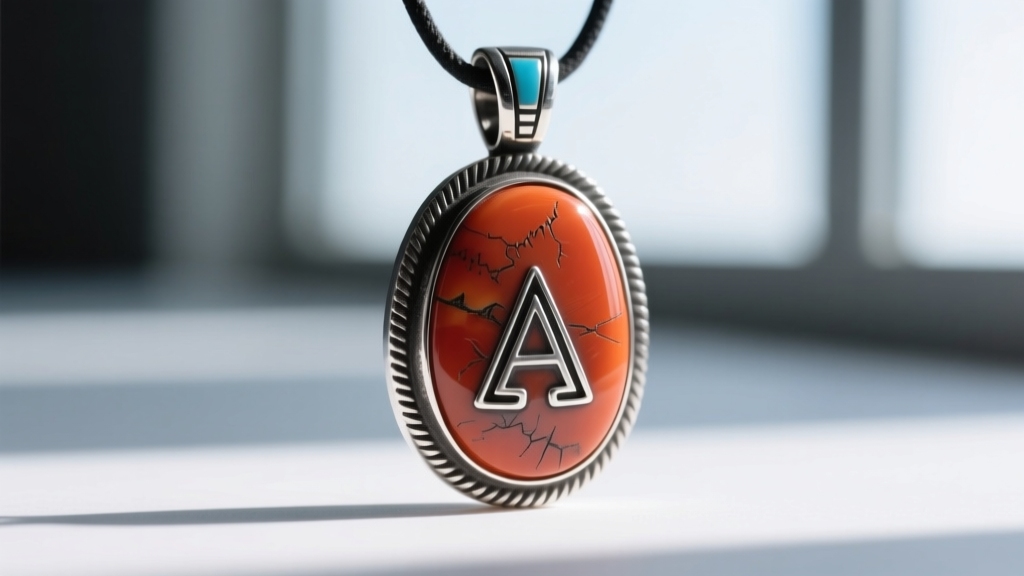
The Indian Arts and Crafts Board (IACB) strictly enforces the Indian Arts and Crafts Act, making it illegal to sell non-Native made jewelry as authentic. However, the secondary and vintage market is rife with forged hallmarks.
Never rely solely on a stamped hallmark to authenticate a vintage Native American red coral necklace. Hallmarks were not widely adopted until the 1960s and 1970s. A pre-1950s piece bearing a crisp, deeply struck initial hallmark is highly suspect and warrants metallurgical and stylistic scrutiny.
When evaluating hallmarks, look for the 'shadow' of the stamp. Authentic hand-struck hallmarks on vintage sterling often show slight ghosting or double-striking due to the hammer blow. Furthermore, the Smithsonian National Museum of the American Indian notes that provenance—such as original trading post receipts, documented exhibition history, or photographic evidence of the artist wearing the piece—often supersedes physical hallmarks in establishing value for museum-grade artifacts.
Pricing Tiers and Market Realities in 2026
The valuation of a Native American red coral necklace is bifurcated by age, silver weight, and coral origin. Here is a realistic pricing framework for the current market:
- Tourist / Imitation Grade (Dyed Bamboo, Lightweight Silver): $50 – $200. Mass-produced overseas; lacks structural integrity.
- Contemporary Zuni Petit Point (Sterling, Asian Coral): $1,200 – $4,500. Priced based on the number of stones and the complexity of the silver matrix.
- Contemporary Santo Domingo Coral Heishi (6mm, Natural): $3,500 – $9,000. Large-diameter, natural red coral beads are exceptionally rare due to CITES restrictions.
- Vintage Navajo Squash Blossom (Coin Silver, Mediterranean Coral): $8,000 – $35,000+. The pinnacle of the market. Pricing scales exponentially with documented provenance and the presence of unbroken, original coral cabochons without epoxy repairs.
Care, Maintenance, and Structural Vulnerabilities
Red coral is an organic gemstone, highly susceptible to environmental degradation. With a Mohs hardness of only 3.5, it is easily scratched by quartz dust or harder gemstones. Never store a coral necklace loosely in a jewelry box where it can abrade against silver or turquoise.
Chemically, coral is calcium carbonate. It will effervesce and degrade if exposed to acids, including the natural lactic acid in human sweat, perfumes, and commercial silver dips. When cleaning the silver components of a Native American red coral necklace, use a dry, untreated microfiber cloth. Never submerge the piece in liquid silver cleaners, as the chemicals will penetrate the porous coral, causing permanent discoloration and structural weakening of the stone's calcium matrix.


