Native Beadwork Necklace Value Guide: Pricing & Authenticity
Learn how to assess the true value of a native beadwork necklace. We break down pricing tiers, authentic materials, and how to spot mass-produced fakes.

The True Cost of Authenticity: Understanding the Market
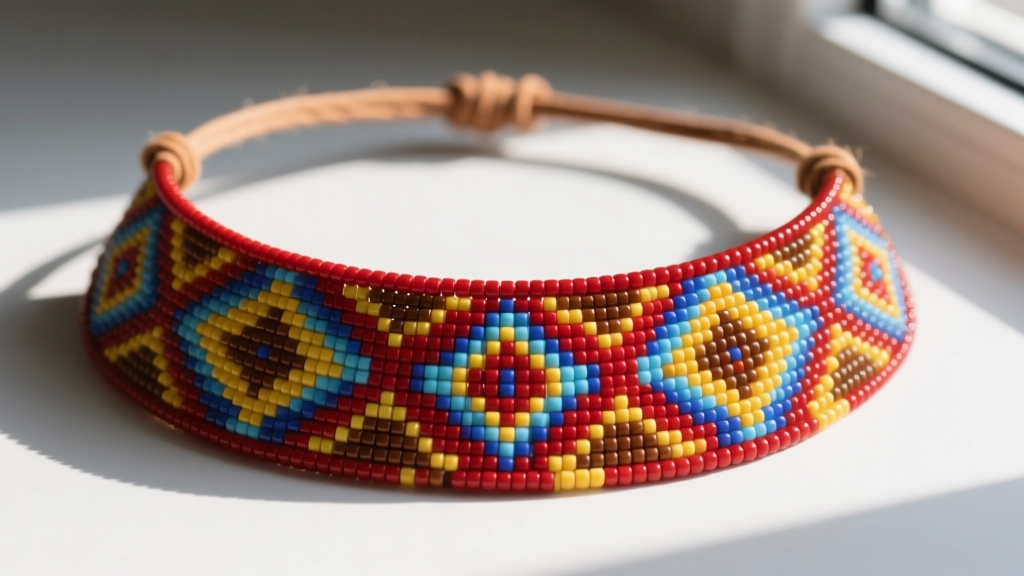
When shopping for a native beadwork necklace, the price disparity in the market can be jarring. A consumer might encounter a mass-produced, "tribal-inspired" choker for $25, while an authentic, hand-woven Indigenous necklace crafted by a master weaver commands $850 or more. Understanding this massive gap requires looking past the superficial aesthetic and evaluating the structural integrity, material sourcing, and labor intensity of the piece. In 2026, the market for Indigenous jewelry is more saturated with overseas imitations than ever before, making a rigorous value assessment essential for serious collectors and culturally conscious buyers alike.
True value in this niche is not merely about the visual appeal of the beadwork; it is intrinsically tied to cultural heritage, legal protections, and the survival of traditional artisan economies. To accurately assess a piece, you must deconstruct it into its core components: the beads, the backing, the thread, and the stitching technique.
Material Breakdown: What You Are Actually Paying For
Bead Quality, Sizing, and Sourcing
The foundation of any high-value beadwork piece is the bead itself. Authentic, high-tier native beadwork necklaces predominantly utilize premium glass seed beads. The gold standard for contemporary traditional loom work is the size 11/0 or 13/0 Czech glass seed bead, specifically the "Charlotte cut" (a single-faceted bead). This single facet catches the light brilliantly, giving the necklace a subtle, organic shimmer that flat beads cannot replicate. Conversely, mass-produced knockoffs frequently use cheap, injection-molded plastic beads or uniformly machine-cut acrylics that lack depth and degrade under UV exposure.
For intricate appliqué or peyote-stitch medallions, artisans often turn to Japanese cylinder beads, such as Miyuki Delicas (size 11/0). While highly uniform and excellent for structural integrity in complex geometric patterns, they offer a more modern, matte finish compared to the traditional Czech glass. A genuine artisan will select bead types deliberately based on the historical region and style they are replicating, whereas factories simply use whatever bulk material is cheapest.
Backing Materials and Thread Integrity
The backing material is often the most telling indicator of a necklace's true value tier. Premium, museum-quality pieces are frequently backed with brain-tanned deer hide or elk hide. Brain-tanning is a labor-intensive, traditional smoking and tanning process that yields leather which remains supple for decades, resists water damage, and does not rot. At current market rates, genuine brain-tanned hide costs upwards of $60 to $90 per square foot.
Mid-tier authentic pieces may use high-grade, commercially chrome-tanned garment leather, which is durable but lacks the historical prestige and specific drape of brain-tan. Budget imitations, however, rely on stiff, cardboard-like interfacing, synthetic pleather, or cheap craft felt. If a beaded necklace feels rigid, cracks when bent, or has a distinct chemical odor, it is almost certainly a low-value import.
Thread selection is equally critical. Master weavers use high-tensile, abrasion-resistant threads like 6lb or 8lb Fireline (a braided gel-spun polyethylene) or heavily waxed Nymo D (a flat nylon thread). Fireline is virtually unbreakable under normal wear conditions. Imitation pieces are often strung on cheap cotton or low-grade monofilament that degrades, snaps, and sheds beads within months of wear.
Stitching Techniques and Labor Investment
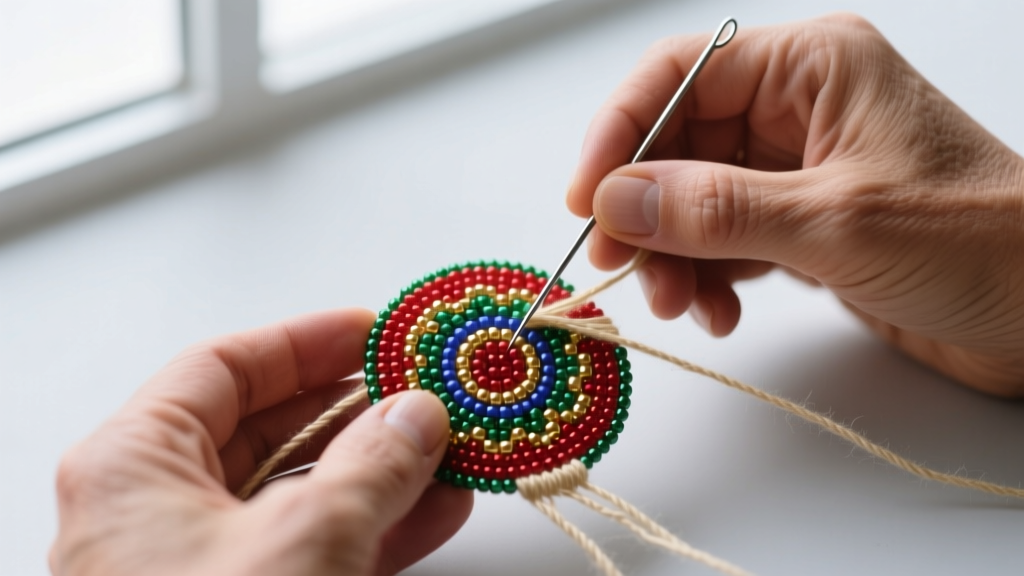
The technique used to construct the necklace dictates the labor hours, which directly influences the price. Understanding these methods helps justify the cost of authentic pieces.
- Loom Weaving: This technique involves warping a specialized loom with strong base threads and weaving the beads in a continuous over-under pattern. It creates flat, highly flexible bands ideal for chokers and long lariats. A complex, 24-inch loomed necklace with a detailed geometric pattern can take an experienced weaver 40 to 80 hours of continuous labor to complete, not including the time spent designing the pattern and warping the loom.
- Appliqué (Spot Stitch and Lazy Stitch):strong> Traditional to the Woodlands and Plains tribes respectively, this involves stitching beads directly onto a leather or cloth backing. The "Lazy Stitch" uses rows of beads tacked down at intervals, creating a distinct ribbed texture. The "Spot Stitch" uses overlapping loops to fill intricate, curvilinear floral designs. Both require immense tactile skill to maintain even tension without puckering the backing.
- Brick Stitch and Peyote Stitch: Often used for creating rigid, structured medallions, rosettes, and fringe caps. These off-loom techniques require the artisan to build the piece one bead at a time, interlocking them in a staggered formation. A fully beaded, 4-inch brick-stitch medallion alone can represent 15 hours of meticulous, eye-straining work.
Pricing Tiers: From Souvenir to Masterpiece
To help you benchmark the market, we have categorized native beadwork necklaces into three distinct value tiers based on current 2026 market data, material grades, and artisan reputation.
| Value Tier | Price Range | Backing Material | Bead Type & Quality | Estimated Labor Time |
|---|---|---|---|---|
| Tier 1: Mass-Produced / Imitation | $15 - $65 | Craft felt, stiff interfacing, or synthetic PU leather | Plastic, acrylic, or low-grade uniform glass | Machine-assisted or < 2 hours (glued) |
| Tier 2: Emerging Indigenous Artisan | $150 - $450 | Commercial chrome-tanned garment leather or deer hide | Czech glass seed beads, standard Miyuki | 15 - 40 hours (hand-stitched/loomed) |
| Tier 3: Master Weaver / Heritage Piece | $600 - $3,500+ | Brain-tanned deer/elk hide, antique trade cloth | Premium Charlotte-cut Czech glass, antique trade beads, dentalium shell | 60 - 150+ hours (complex off-loom or loom) |
The Legal Framework: The Indian Arts and Crafts Act
When assessing value, legality and ethics are inseparable. In the United States, the sale of Indigenous art is governed by the Indian Arts and Crafts Act of 1990. This truth-in-advertising law makes it illegal to offer or display for sale any art or craft product in a manner that falsely suggests it is Indian-produced, an Indian product, or the product of a particular Indian or Indian Tribe or Indian arts and crafts organization.
A high-value, authentic necklace will often be accompanied by documentation, a certificate of authenticity, or the artisan's specific tribal enrollment number. Reputable galleries and cultural institutions, such as those affiliated with the Smithsonian National Museum of the American Indian, rigorously vet their artisans to ensure compliance. If a vendor uses vague terminology like "Native-style," "Southwestern tribal," or "reservation inspired," they are actively signaling that the piece is an imported imitation, rendering it virtually worthless from a collector's standpoint.
Red Flags: How to Spot Mass-Produced Imitations
Even without a background in Indigenous art history, you can perform a physical inspection to determine if a native beadwork necklace holds genuine value. Look out for these critical failure modes and red flags:
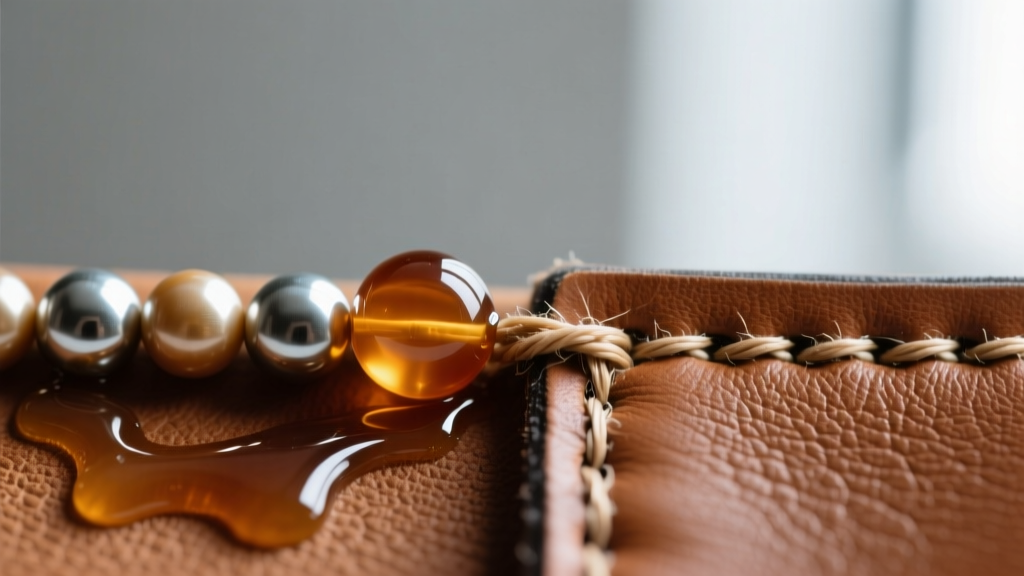
- The Glue Test: Flip the necklace over. If you see dried adhesive residue, hot glue strings, or if the beads appear to be fused to a stiff felt backing rather than stitched through it, walk away. Authentic beadwork is entirely structural; the thread holds the tension, not glue.
- Edge Finishing: Examine the perimeter of the beadwork. Master weavers finish their edges with meticulous whip-stitching, beaded edge trims, or cleanly folded and stitched leather bindings. Imitations often have raw, frayed edges hidden under a thin strip of cheap ribbon glued to the back.
- Hardware and Findings: High-value necklaces utilize solid sterling silver cones, handmade bead tips, or traditional leather tie-closures. Mass-produced pieces rely on flimsy, nickel-plated alloy clasps that tarnish green within weeks and feature poorly crimped bead tips that easily pull through the thread.
- Suspicious Symmetry in Appliqué: While loom-woven bands are naturally symmetrical due to the warp threads, hand-appliquéd floral or curvilinear designs should have microscopic, organic variations. If a complex floral spot-stitch design is mathematically perfect down to the millimeter on both sides, it is likely a digitized, machine-embroidered patch with beads glued on top.
Final Verdict: Investing in Heritage
Evaluating the budget and value of a native beadwork necklace requires a shift in perspective. You are not merely purchasing an accessory; you are evaluating a textile artifact that represents dozens, if not hundreds, of hours of specialized, generational knowledge. By demanding transparency in materials—insisting on glass over plastic, stitched over glued, and documented over vague—you protect yourself from overpaying for mass-produced fakes. More importantly, you ensure that your financial investment directly supports the living Indigenous artisans who are actively keeping these profound cultural traditions alive in the modern era.


