The Ultimate Natural Puka Shell Necklace Buying Guide
Discover how to authenticate, evaluate, and buy a genuine natural puka shell necklace. Expert tips on cone shells, knotting, and avoiding fakes.

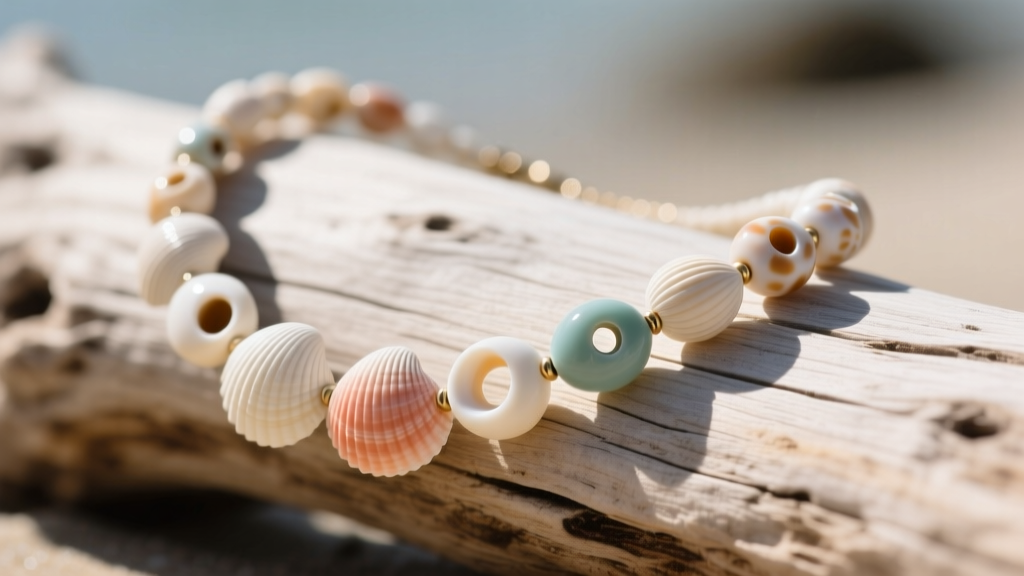
The term "puka" translates directly to "hole" in the Hawaiian language. Historically, authentic puka shells were harvested from the shores of Hawaii, created by the ocean's relentless tumbling of the cone snail (Conus millepunctatus). As the snail's apex naturally erodes, it leaves behind a small, domed bead with a naturally occurring hole. Today, the natural puka shell necklace has transcended its 1970s surf-culture cliché, returning as a highly sought-after organic gemstone in contemporary jewelry. However, the modern market is heavily saturated with mass-produced imitations, dyed howlite, and stamped clam shells.
As a buyer in 2026, navigating the organic jewelry market requires a discerning eye and an understanding of marine biology, lapidary techniques, and jewelry construction. According to the Bernice Pauahi Bishop Museum, true Hawaiian puka is exceptionally rare today due to overharvesting and environmental shifts, making genuine vintage or sustainably sourced cone shell strands a premium collector's item. This guide provides the exact framework you need to authenticate, evaluate, and invest in a genuine natural puka shell necklace.
The Anatomy of Authenticity: True Puka vs. Market Imitations
To buy confidently, you must first understand the biological reality of the cone shell. A true puka bead is not a flat disc; it is the apex cap of a cone snail. This means it possesses a distinct three-dimensional geometry that machines struggle to replicate perfectly. The Gemological Institute of America (GIA) classifies shell as an organic gem material, noting that its calcium carbonate structure reacts uniquely to environmental stressors compared to synthetic resins or dyed stones.
The Buyer's Matrix: Identifying Your Shell Type
| Characteristic | True Cone Shell Puka | Heishi (Often Mislabeled) | Howlite / Plastic Fakes |
|---|---|---|---|
| Profile | Convex (domed) top, concave bottom | Flat on both sides | Uniformly flat or molded |
| The Hole | Off-center, naturally tapered, smooth | Dead center, machine-drilled | Perfectly centered, sharp edges |
| Symmetry | Highly asymmetrical, unique sizes | Uniform discs | Identical shapes and sizes |
| Material | Natural calcium carbonate | Shell, coral, or stone | Dyed magnesite or resin |
| Market Value | $250 - $1,500+ | $40 - $120 | $10 - $30 |
The 4-Point Authentication Checklist
When evaluating a natural puka shell necklace, whether from a vintage dealer, an online artisan, or a boutique, put the piece through this rigorous four-point physical inspection.
1. The Profile and Geometry Test
Hold a single bead up to the light and examine its edge. A genuine cone shell puka will always feature a convex, rounded top and a slightly concave or hollowed bottom where it once attached to the main body of the snail shell. If the beads are perfectly flat on both sides, you are looking at "chip" puka (irregular fragments of other shells) or heishi (flat discs), not true puka.
2. The Hole Inspection
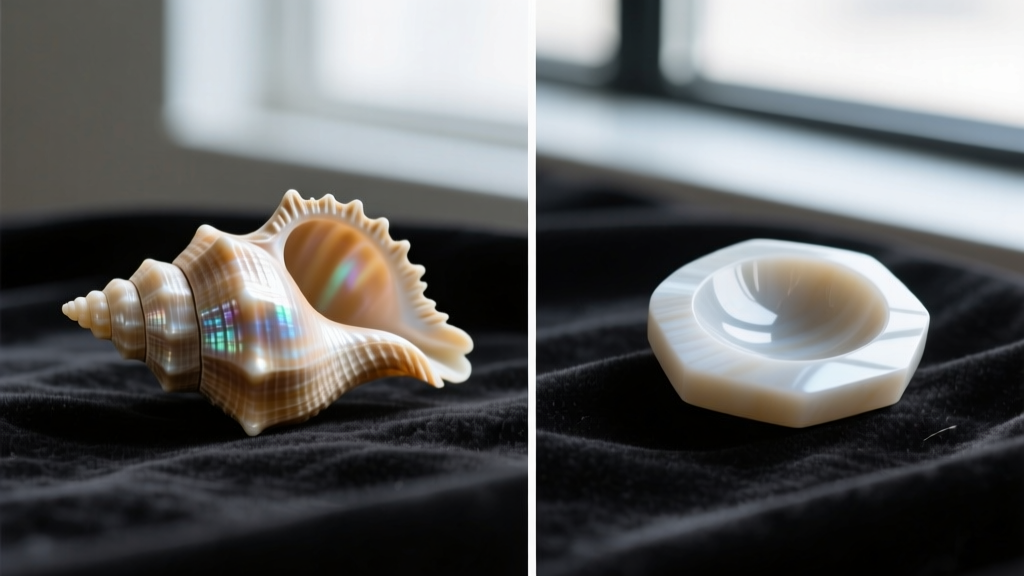 The most critical identifier is the hole itself. In nature, the ocean wears away the apex of the shell unevenly. Therefore, the hole on a real puka shell is rarely perfectly centered. Furthermore, the hole should feel smooth and slightly tapered, resembling a tiny crater. Machine-drilled fakes will have perfectly centered, cylindrical holes with sharp, uniform edges that lack the organic weathering of the sea.
3. The Asymmetry Factor
Nature does not produce identical clones. Run your fingers along the strand. You should feel variations in the diameter, the height of the dome, and the spacing of the holes. If every bead is exactly 8mm wide and 4mm tall with mathematical precision, it is a manufactured imitation. High-end jewelers may sort natural puka by size for a graduated necklace, but micro-variations will always remain visible under close inspection.
4. The Temperature and Acoustic Test
Organic calcium carbonate retains temperature differently than plastic or resin. When you press genuine puka against your cheek or wrist, it should feel cool to the touch and take a moment to warm up, whereas plastic will feel room-temperature immediately. Additionally, gently tap two beads together. Real shell produces a dense, high-pitched "clack," while plastic yields a dull, hollow thud.
Construction Details: Stringing, Knotting, and Hardware
The authenticity of the shell is only half the battle; the construction of the necklace dictates its longevity, drape, and ultimate value. A premium natural puka shell necklace requires specialized stringing techniques to accommodate the irregular shapes of the beads.
The Necessity of Hand-Knotting
Because genuine puka shells have naturally tapered, sometimes abrasive holes, they can easily saw through standard stringing materials over time. Furthermore, the irregular shapes of the shells mean they do not sit flush against one another. Look for strands that are hand-knotted between every single bead using high-grade silk or marine-braided nylon (such as Serafil). Knotting serves three purposes:
- Friction Prevention: It stops the abrasive edges of the shell holes from grinding against each other and wearing down the calcium carbonate.
- Security: If the strand snaps, you lose only one bead rather than the entire necklace.
- Drape and Flexibility: Knotting forces the irregular beads to articulate properly, allowing the necklace to drape fluidly across the collarbone rather than jutting out awkwardly.
Evaluating the Hardware
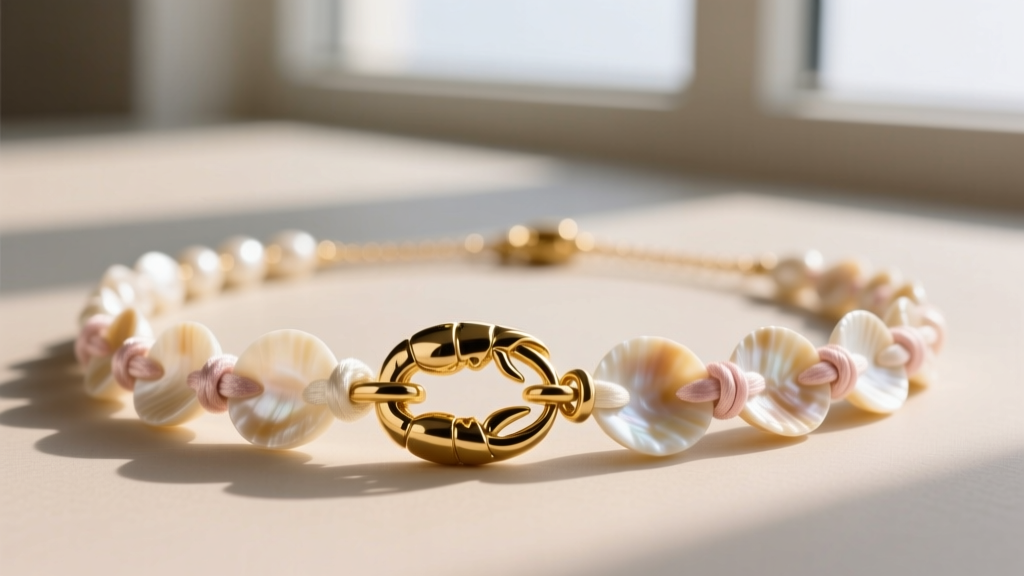 Puka shells are porous and can be stained by oxidizing base metals. Avoid necklaces finished with cheap brass, copper, or unsealed alloy clasps, which will leave green or black oxidation marks on the adjacent shells. Insist on hardware made from solid 14k/18k gold, sterling silver, platinum, or high-grade titanium. A secure lobster clasp or a well-machined toggle is preferred over fragile spring rings, especially for heavier, vintage cone shell strands.
2026 Market Pricing: What You Should Actually Pay
Understanding current market valuations prevents you from overpaying for mislabeled merchandise or underestimating the value of a genuine artifact. Pricing in the organic jewelry sector has shifted significantly due to stricter marine conservation laws and the dwindling supply of harvestable cone shells.
- Tier 1: True Vintage Cone Shell ($400 - $1,500+)
Sourced from mid-century Hawaiian collections. These feature large, highly domed beads (10mm-15mm), deep natural patinas, and extreme asymmetry. Often strung on heavy silk with gold hardware. - Tier 2: Modern Sustainable Cone Shell ($200 - $500)
Harvested under strict modern ecological guidelines. Beads may be slightly smaller (6mm-10mm) but retain the convex/concave profile and off-center holes. Usually hand-knotted on nylon. - Tier 3: Shell Chip Puka ($60 - $150)
Made from genuine ocean-tumbled shell fragments, but not the cone snail apex. They are irregular, flat-ish chips with drilled holes. A great entry-level option for the organic aesthetic. - Tier 4: Heishi and Howlite Imitations ($15 - $45)
Flat discs of clam shell, bone, or dyed howlite. While attractive in their own right, they possess zero collector value and should not be marketed or priced as true puka.
Sizing and Neckline Integration
The irregular texture of a natural puka shell necklace makes it a powerful styling tool, but length dictates its versatility.
- The Choker (15 - 16 inches): Sits tightly at the base of the neck. Ideal for deep V-necks, boat necks, and off-the-shoulder tops. The chunky texture of true puka draws the eye upward, framing the face.
- The Princess (18 inches): The most versatile length, resting perfectly on the collarbone. It pairs effortlessly with crisp white linen button-downs, casual tees, and summer dresses, providing a refined contrast to structured fabrics.
- The Matinee (20 - 24 inches): Falls at or just above the bust. This length is excellent for layering over a longer gold chain pendant or a delicate pearl strand, creating a mixed-material, bohemian-chic aesthetic popular in contemporary resort wear.
Care and Maintenance for Longevity
As an organic gem, puka shell is highly susceptible to chemical damage. The calcium carbonate structure will dissolve or etch if exposed to harsh acids, chlorine, or prolonged contact with synthetic chemicals.
What to Avoid: Never wear your puka necklace in chlorinated pools or hot tubs. Apply all perfumes, sunscreens, and hairsprays at least 15 minutes before putting the necklace on, as the alcohol and oils can seep into the porous shell and cause permanent yellowing or degradation of the stringing silk.
How to Clean: Never use ultrasonic cleaners or commercial jewelry dips. Simply wipe the shells gently with a slightly damp, untreated microfiber cloth after wearing to remove skin oils and environmental dust. Allow the strand to air dry completely in a shaded area before storing it flat in a soft cotton pouch to prevent the silk from stretching under the weight of the shells.


