Expert Guide: Evaluating a Natural Salmon Coral Necklace
Discover the gemological traits, authentication methods, and market pricing for natural salmon coral necklaces in this expert technical guide.

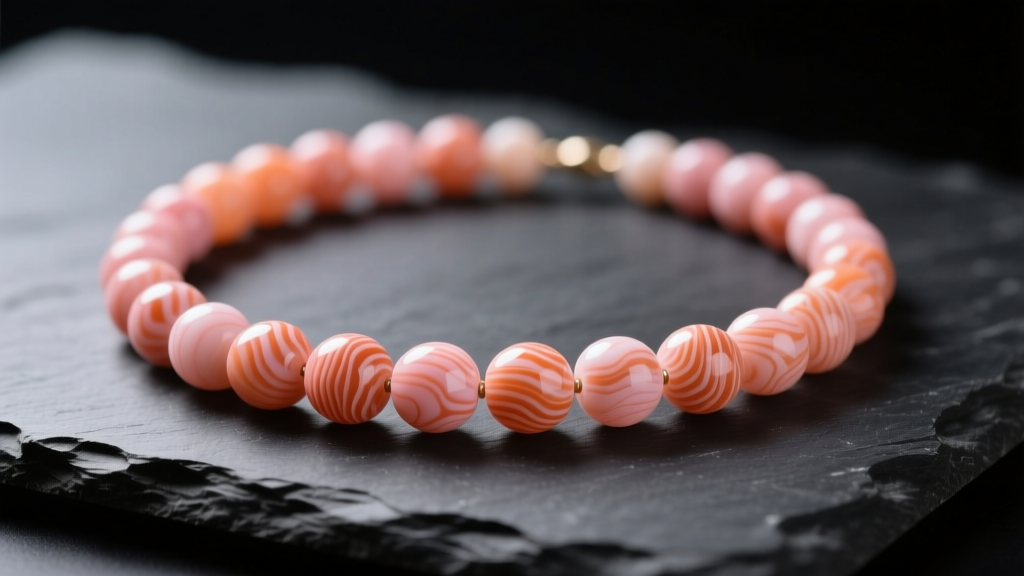
The Gemological Profile of Salmon Coral
When evaluating a salmon coral necklace, it is imperative to understand the exact mineralogical and biological composition of the material. Unlike faceted gemstones formed through geological crystallization, coral is an organic gemstone secreted by marine polyps. The specific 'salmon' hue—a highly prized pinkish-orange to peachy-pink saturation—occurs primarily in deep-sea species of the Corallium genus, most notably Corallium elatius (often referred to in the trade as Momo or Midway coral) and select variants of Corallium rubrum.
From a gemological standpoint, natural salmon coral is composed primarily of microcrystalline calcium carbonate (CaCO3) interspersed with an organic protein matrix called conchiolin. The distinctive salmon coloration is derived from trace amounts of carotenoid pigments deposited during the polyp's growth cycle. On the Mohs scale of mineral hardness, salmon coral registers between 3.5 and 4.0, making it significantly softer than quartz or beryl. Its specific gravity (SG) typically ranges from 2.65 to 2.70, and it exhibits a refractive index (RI) of approximately 1.486 to 1.658, which is largely unmeasurable on a standard refractometer due to its opaque to semi-translucent nature.
Authentication: Natural vs. Treated and Imitations
The market for organic gemstones is heavily saturated with imitations and treated materials. Because untreated, high-quality salmon coral commands a premium, jewelers and collectors must employ rigorous authentication protocols. The most common simulants include dyed howlite, dyed calcite, glass, and modern polymers.
To distinguish a genuine salmon coral necklace from a dyed simulant, gemologists rely on magnification and chemical spot testing. Under 10x to 30x magnification, natural coral exhibits distinct structural features: parallel growth striations (often compared to the grain of wood or tree rings) and tiny, pinpoint pits or tunnels left by symbiotic organisms. Dyed howlite, conversely, will show a web-like matrix of grayish-black veins that absorb dye heavily, creating concentrated color pooling in the cracks.
| Characteristic | Natural Salmon Coral | Dyed Howlite/Calcite | Glass/Plastic Imitation |
|---|---|---|---|
| Surface Texture | Subtle grain, organic pits | Web-like matrix, dye pooling | Perfectly smooth, mold marks |
| Acetone Swab Test | No color transfer | Color may transfer to swab | No color transfer |
| Specific Gravity | 2.65 - 2.70 | 2.53 - 2.71 | Varies widely (often heavier) |
| Thermal Conductivity | Warm to touch quickly | Warm to touch quickly | Cold to touch (Glass) |
Furthermore, the acetone swab test is a standard non-destructive method. Rubbing a cotton swab lightly dampened with acetone over an inconspicuous area of a dyed bead will often lift the artificial aniline or Bombay dyes, leaving a pink or orange residue on the cotton. For definitive laboratory grading, Raman spectroscopy can identify the specific carotenoid pigments in natural coral versus synthetic dyes. For a deeper understanding of organic gem testing, refer to the GIA's comprehensive coral guide.
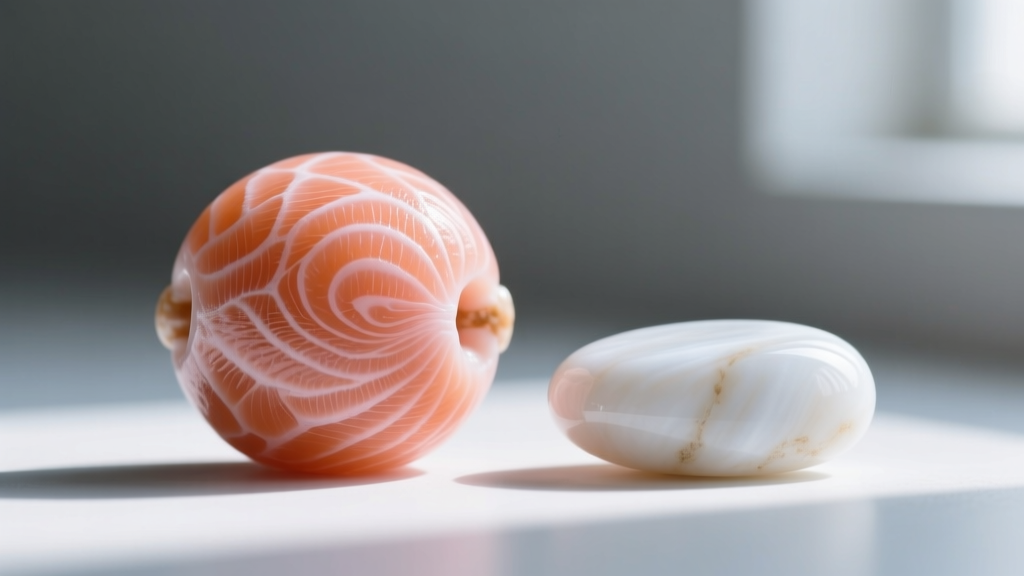
Evaluating Quality: Color Saturation and Cut
Not all salmon coral is created equal. The value of a salmon coral necklace is dictated by three primary factors: color uniformity, saturation, and the precision of the lapidary cut. In the trade, the color spectrum is generally divided into 'Angel Skin' (a pale, delicate pink), 'Salmon' (a vibrant, medium pinkish-orange), and 'Oxblood' or 'Mediterranean Red' (a deep, saturated crimson). True salmon coral sits perfectly between Angel Skin and deep red, offering a warm, peachy-orange glow that is highly sought after in contemporary jewelry design.
When assessing a beaded necklace, look for 'color matching.' Because coral branches are relatively small and exhibit color zoning (lighter on the outside, darker near the core), cutting a perfectly matched strand of 8mm to 10mm spherical beads requires an enormous amount of raw rough. A high-quality salmon coral necklace will exhibit uniform saturation from the clasp to the center bead. Cabochons used in pendant necklaces should feature a high, smooth dome with an excellent polish, free of chalky patches, white inclusions, or surface-reaching fractures.
Stringing Techniques and Hardware Specifications
The structural integrity of a coral necklace relies heavily on the stringing materials and hardware. Due to its low Mohs hardness (3.5-4.0), coral is highly susceptible to abrasion. Therefore, stringing a salmon coral necklace on synthetic beading wire (like nylon-coated stainless steel) is a critical error that will lead to internal drilling wear and eventual bead degradation.
Expert bench jewelers exclusively use pure, high-grade silk thread (such as Griffin No. 4 or No. 6, depending on the drill hole diameter) for knotting coral. Each bead must be individually hand-knotted to prevent bead-on-bead friction and to ensure that if the strand breaks, only a single bead is lost. Furthermore, the transition point between the silk thread and the metal clasp must be protected using 'French wire' (also known as bullion or gimp). This delicate, coiled wire guard prevents the metal clasp ring from sawing through the silk thread over time.
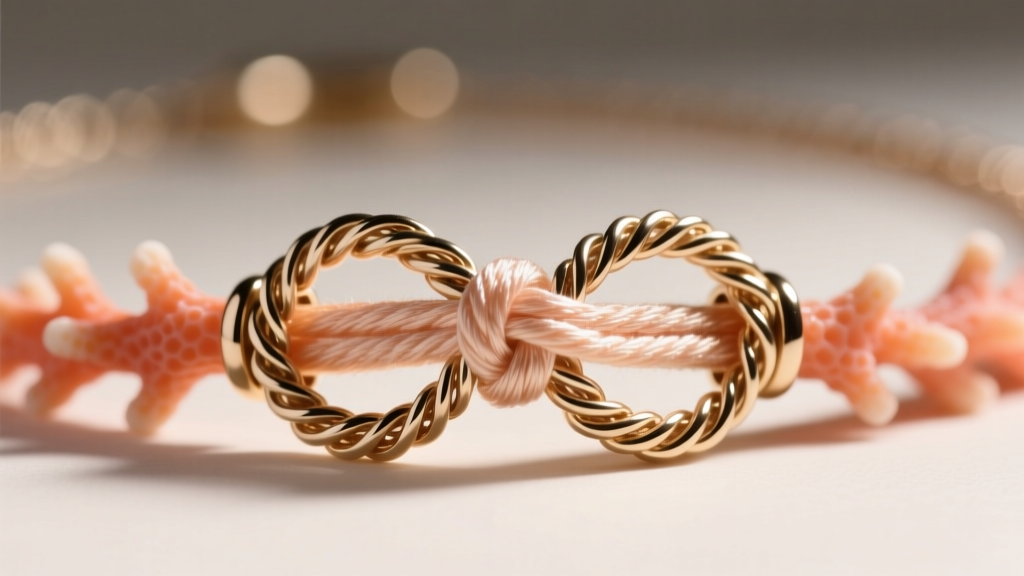
The clasp itself should be crafted from 14k or 18k gold, or platinum. Base metals or low-karat alloys can tarnish and transfer metallic salts into the porous calcium carbonate structure of the coral beads located near the clasp, causing permanent gray or green staining.
Market Pricing and Investment Value
The pricing of natural salmon coral has shifted dramatically over the last decade. Due to stringent environmental regulations and the depletion of shallow-water beds, the supply of gem-grade rough has contracted. As of the current market, a high-quality, untreated salmon coral bead necklace (8mm - 10mm, perfectly matched) can command anywhere from $1,500 to over $8,000, depending on the provenance and color saturation. By contrast, dyed howlite or shell imitations sell for under $50. Vintage pieces from the mid-20th century, particularly those originating from the renowned coral workshops of Torre del Greco, Italy, carry an additional historical premium and are highly favored by collectors seeking ethically sourced, pre-regulation materials.
Conservation, CITES, and Ethical Sourcing
Ethical sourcing is the most critical consideration when purchasing organic marine gemstones today. Overharvesting and destructive bottom-trawling have severely impacted deep-sea coral ecosystems. In response, international bodies have implemented strict trade regulations. While not all coral species are listed under the Convention on International Trade in Endangered Species (CITES), many regional governments have enacted total bans on the harvesting of Corallium species. For precise regulatory statuses, collectors should consult the CITES species database and local wildlife import laws.
Responsible jewelers now prioritize vintage coral, salvaged dead-harvested branches, or fully documented, sustainably managed deep-sea yields. Always request a certificate of origin or a gemological report that explicitly states the material is natural and untreated.
Advanced Care and Maintenance Protocols
Salmon coral is highly porous and chemically sensitive. The calcium carbonate structure will readily react with weak acids, meaning everyday exposures to perspiration, citrus, vinegar, and even the lactic acid on human skin can slowly etch the polish, leaving the beads dull and chalky over time. To maintain the luster of a salmon coral necklace, it must be the last item put on and the first item taken off, ensuring it never comes into contact with perfumes, hairsprays, or cosmetic lotions.
Cleaning must be done with extreme caution. Never use ultrasonic or steam cleaners, as the high-frequency vibrations and heat will cause internal fractures and destroy the organic conchiolin matrix. Instead, gently wipe the beads with a soft, slightly damp microfiber cloth after wearing, and allow them to air dry completely before storing them in a soft pouch, separate from harder gemstones like diamonds or sapphires that could easily scratch the coral's surface.


