Navajo Pearl Lariat Necklace: A Material & Silver Grade Guide
Discover how silver grades, stringing materials, and patina techniques impact the drape, durability, and value of your Navajo pearl lariat necklace.

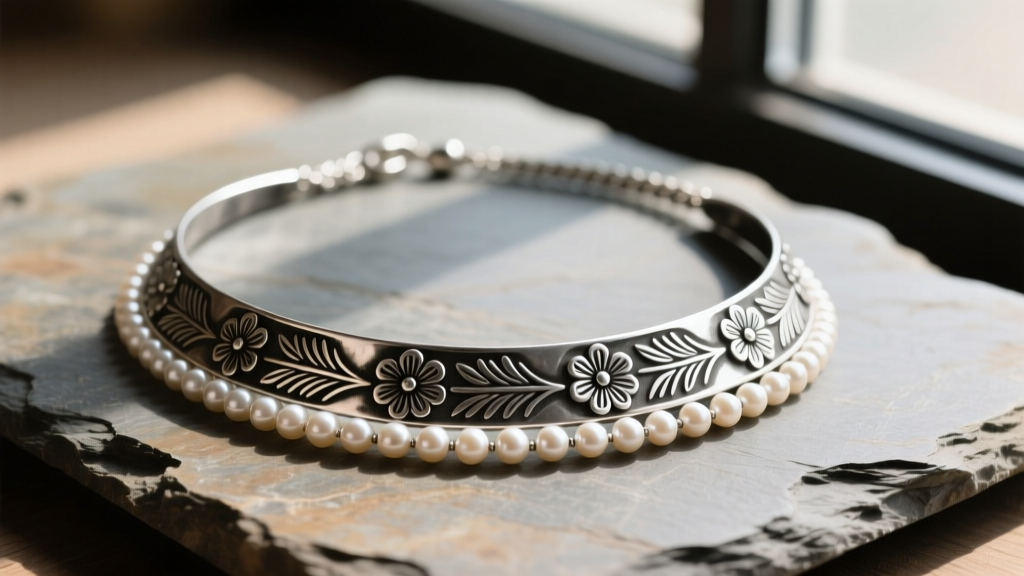
The Anatomy of a Genuine Navajo Pearl Lariat Necklace
The navajo pearl lariat necklace represents a masterful intersection of indigenous silversmithing traditions and fluid, modern jewelry design. Historically referred to as "bench beads," genuine Navajo pearls are not cast in molds. Instead, they are meticulously hand-stamped, domed, and soldered from flat sheets of sterling silver. When configured into a lariat silhouette—typically featuring a continuous strand that loops through a sliding O-ring or terminates in a Y-shaped drop—the material properties of both the silver and the stringing medium become critical to the piece's structural integrity and drape.
Unlike standard clasp-fastened necklaces, a lariat design subjects the central drop zone to continuous friction and tensile stress. Understanding the metallurgical choices and stringing materials used in these pieces is essential for collectors and buyers seeking heirloom-quality Native American jewelry.
Silver Alloys: .925 Sterling vs. .999 Fine Silver
The foundation of any authentic Navajo pearl is the silver alloy. Artisans almost exclusively utilize .925 sterling silver (92.5% pure silver, 7.5% copper) rather than .999 fine silver. This is not a cost-cutting measure, but a metallurgical necessity.
The Mechanics of Stamping and Doming
Creating the deep, intricate floral and geometric motifs characteristic of Navajo pearls requires striking the metal with heavy steel stamps. Fine silver (.999) has a Vickers hardness of roughly 25 HV, making it far too malleable; it would collapse, warp, or tear under the force of the stamping tools. The 7.5% copper content in .925 sterling silver raises the hardness to approximately 60-70 HV (when annealed), providing the exact tensile strength needed to hold crisp, deep impressions without compromising the structural dome of the bead.
However, this copper content introduces a specific failure mode: oxidation and tarnish. While pure silver does not react with oxygen, the copper in sterling silver readily reacts with sulfur and moisture in the air, creating silver sulfide tarnish. In a lariat design, where the pearls constantly rub against one another at the Y-drop junction, this tarnish can accelerate if not properly managed.
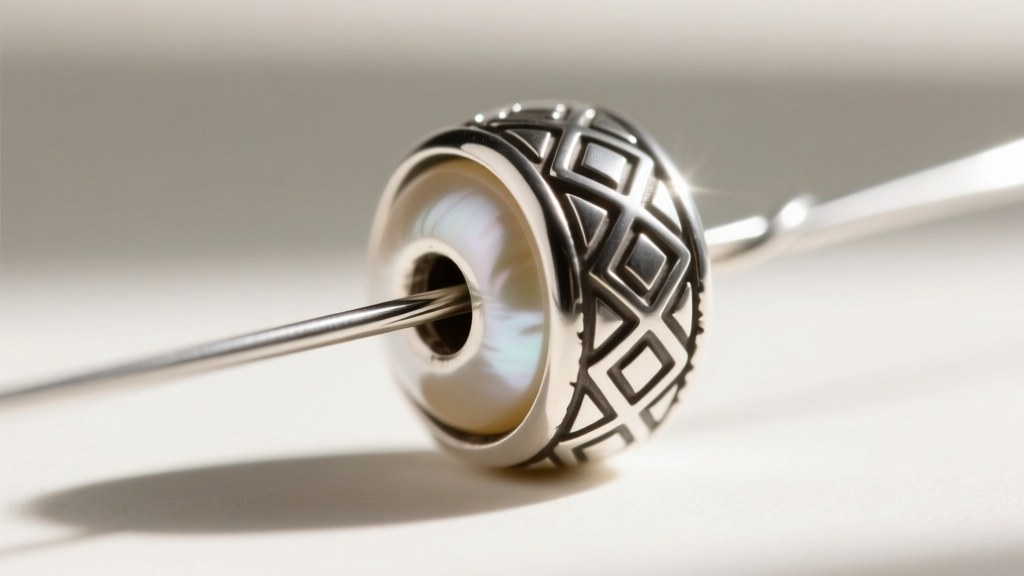
Stringing vs. Wire-Wrapping: The Lariat Drape Factor
The defining feature of a lariat necklace is its fluid, unstructured drape. The stringing material must support the significant weight of solid silver beads (a single 12mm hand-stamped bench bead can weigh up to 4 grams) while remaining flexible enough to slide smoothly through the lariat's O-ring or loop mechanism.
| Stringing Material | Diameter / Gauge | Drape Quality | Durability & Friction Resistance | Verdict for Lariats |
|---|---|---|---|---|
| 49-Strand Micro-Wire (Nylon-Coated Stainless Steel) | 0.015" - 0.018" | Fluid, heavy drape | Exceptional; resists kinking and abrasion | Best Overall for heavy, large-diameter pearls |
| Size F or G Silk Thread | 0.6mm - 0.8mm | Soft, traditional | Poor; frays against sharp drilled silver edges | Avoid for lariats due to high friction at the slide |
| Waxed Cotton Cord | 1.0mm - 1.5mm | Stiff, rustic | Moderate; degrades with skin oils and moisture | Suitable only for lightweight, small (6mm) pearls |
| Solid Sterling Wire (Dead Soft) | 20 - 18 Gauge | Rigid, sculptural | High, but work-hardens and snaps if bent repeatedly | Not recommended for sliding lariat mechanisms |
For a premium navajo pearl lariat necklace, 49-strand nylon-coated stainless steel wire is the industry standard. The multiple micro-strands prevent the "kinking" that occurs when a heavier necklace is taken off and dropped, while the nylon coating protects the interior of the silver beads from internal abrasion. According to jewelry fabrication guidelines detailed by Ganoksin, using a wire diameter that fills at least 70% of the bead's drill hole prevents excessive movement that can lead to metal fatigue at the crimp beads.
The Patina Process: Oxidation and Material Longevity
The visual depth of a Navajo pearl relies heavily on its patina. Artisans achieve this high-contrast look through forced oxidation, typically using a liver of sulfur (potassium sulfide) solution. When the heated sterling silver is submerged in the solution, the copper alloy reacts to form a layer of black copper sulfide on the surface.
The bead is then polished with a rotary tumbler or a polishing cloth, removing the black oxidation from the raised, domed surfaces while leaving it trapped in the deep stamped recesses. This creates a striking three-dimensional effect. However, the chemical nature of this patina dictates strict maintenance rules:
- Never use ultrasonic cleaners: The high-frequency vibrations can fracture the delicate solder seams where the two domed halves of the bench bead meet.
- Avoid liquid silver dips: Chemical dip cleaners contain thiourea, which will strip the forced oxidation entirely, leaving the pearls flat and uniformly bright, destroying the artisan's intended contrast.
- Use a treated polishing cloth: Gently rubbing only the high points with a Sunshine cloth preserves the dark recesses while keeping the outer surface bright.
Pricing Tiers and Authenticity Markers
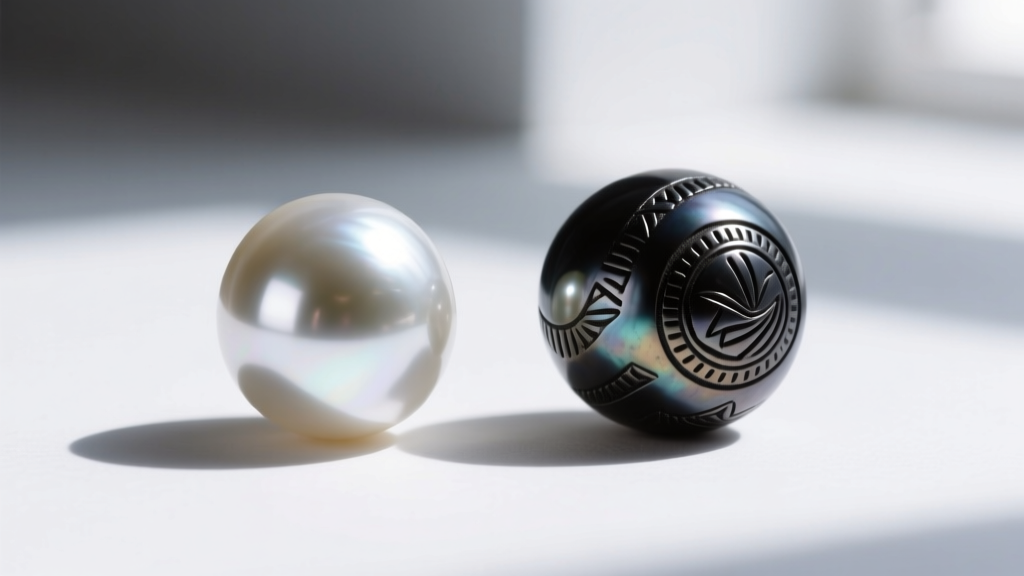
The market is currently saturated with mass-produced, die-cast imitations marketed as "Southwestern style." Understanding the material and construction markers of genuine Native American craftsmanship is vital. Under the Indian Arts and Crafts Act, it is illegal to falsely market jewelry as Native American-made. When evaluating a navajo pearl lariat necklace, look for these authenticity indicators:
1. The Solder Seam
Genuine bench beads are made from two separate domed discs. If you look closely at the equator of the bead, you should see a microscopic, perfectly smooth solder seam. Cast imitations are made in a single piece and will lack this seam, or worse, feature a faint "mold line" indicative of rubber mold casting.
2. Stamp Depth and Variance
Hand-stamping requires a human striking the tool with a hammer. Consequently, the depth of the floral or geometric motifs will vary slightly from bead to bead, and even across the surface of a single bead. Die-struck factory beads will have uniform, sterile impressions with perfectly identical depths.
3. Pricing Framework
- $40 - $120 (Mass-Produced / Cast): Often made overseas, lightweight, thin silver walls, uniform stamping, strung on cheap nylon.
- $250 - $600 (Genuine Hand-Stamped, Mid-Size): Authentic Navajo or Zuni artisans, 8mm-10mm beads, .925 sterling, strung on micro-wire, featuring a distinct artist hallmark on the slide ring or end cone.
- $800 - $2,500+ (Master Artisan / Heavyweight): Large 12mm-16mm pearls, exceptional stamp depth, heavy gram weight, often incorporating secondary materials like turquoise or coral spacers at the lariat drop.
Care and Maintenance for Textured Silver Lariats
Because the lariat design requires the necklace to be pulled through a slide or loop to adjust the length, the friction at the Y-junction is unavoidable. Over time, the pearls in this specific zone will naturally polish themselves against one another, losing their dark patina faster than the pearls resting against the collarbone.
Expert Tip: To maintain an even patina across your lariat, periodically remove the necklace and manually apply a gentle polishing cloth to the pearls resting on the upper chest. This ensures the entire strand ages uniformly, rather than developing a bright, over-polished patch exclusively at the sliding drop zone.
By prioritizing .925 sterling silver construction, 49-strand micro-wire stringing, and proper chemical maintenance, a genuine navajo pearl lariat necklace transcends mere accessory status, functioning as a durable, wearable archive of indigenous metallurgical expertise.


