Navajo Turquoise Nugget Necklace Value & Pricing Guide 2026
Discover how to assess the true value of a Navajo turquoise nugget necklace in 2026. Learn pricing tiers, authenticity markers, and stone grading.

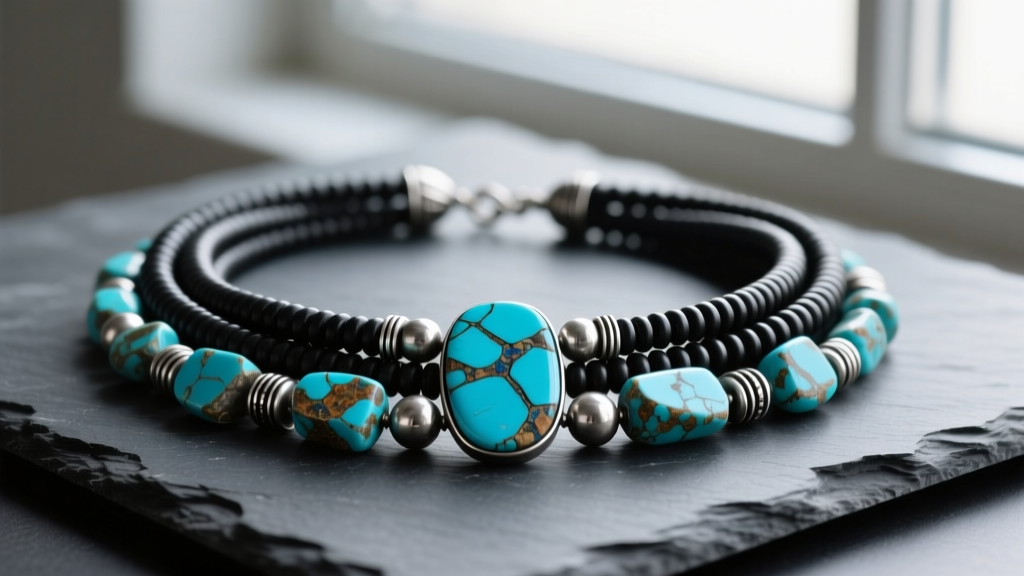
The 2026 Market Landscape for Native American Silver and Stone
The market for authentic Native American jewelry has undergone a massive correction over the last decade, culminating in the 2026 landscape where a genuine Navajo turquoise nugget necklace is as much a hard asset as it is a wearable art piece. With the permanent closure of legendary American turquoise mines and the steady climb of spot silver prices, buyers can no longer rely on superficial aesthetics to judge value. Assessing the true worth of these pieces requires a deep understanding of metallurgy, gemological treatments, and federal authenticity laws.
When evaluating a Navajo turquoise nugget necklace, you are essentially looking at three distinct value pillars: the provenance and treatment of the turquoise, the weight and purity of the silver, and the verifiable identity of the Diné (Navajo) silversmith. Mass-produced 'Southwest-style' imports have flooded the mid-tier market, making it critical for serious collectors and budget-conscious buyers alike to know exactly what they are paying for.
Decoding the Stones: Natural vs. Stabilized vs. Imitation
Turquoise is a porous, hydrous phosphate of copper and aluminum. In its natural, untreated state, high-grade turquoise is incredibly rare and commands a massive premium. However, up to 90% of the turquoise mined today is too soft or chalky to be cut into nuggets without treatment. Understanding the difference between these categories is the first step in your budget assessment.
- Natural (Untreated): Stones that are cut and polished without any chemical hardening. They are highly porous and will change color over time as they absorb skin oils and environmental elements. This 'living' quality is prized by purists but requires careful maintenance.
- Stabilized: The industry standard for durable jewelry. Soft turquoise is placed in a vacuum chamber and infused with a clear epoxy or resin (and sometimes the Zachery treatment, which uses a proprietary non-polymer method to harden the stone without adding plastics). Stabilization preserves the stone's natural color and prevents cracking. A stabilized Navajo turquoise nugget necklace is still highly valuable, provided the base stone is genuine.
- Dyed and Reconstituted: Howlite, magnesite, or chalk turquoise dust mixed with resin and dyed blue. These have virtually zero intrinsic value and are the primary materials used in counterfeit Native American jewelry.
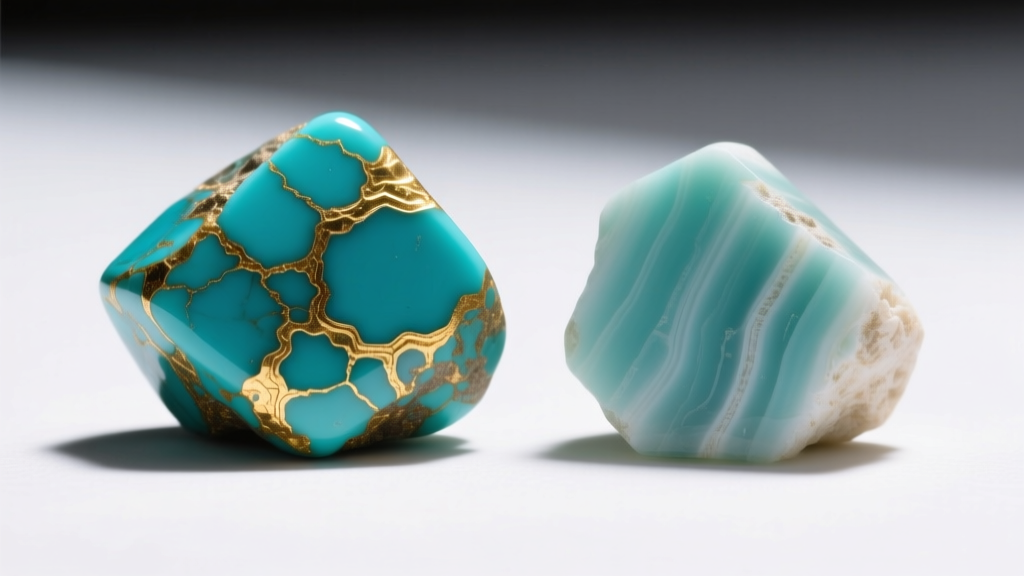
The Big Three: Kingman, Sleeping Beauty, and Royston
The mine of origin drastically alters the price point of a necklace. According to the Gemological Institute of America (GIA), the geographic origin of turquoise can often be identified by its unique matrix (the host rock webbing within the stone).
- Sleeping Beauty (Arizona): Known for its pure, robin's-egg blue color with little to no matrix. The mine closed in 2012, making genuine, verified Sleeping Beauty nuggets exceptionally rare and expensive. Expect to pay a 40% to 60% premium for verified stones.
- Kingman (Arizona): Famous for its deep blue stones with striking black or golden-brown pyrite matrix. Kingman is still producing, making it a reliable, high-value choice for contemporary Navajo silversmiths.
- Royston (Nevada): Produces stones ranging from deep emerald green to light blue, often with a heavy, dramatic brown matrix. Highly sought after for rustic, heavy nugget styles.
Silver Weight, Purity, and the Hallmark Premium
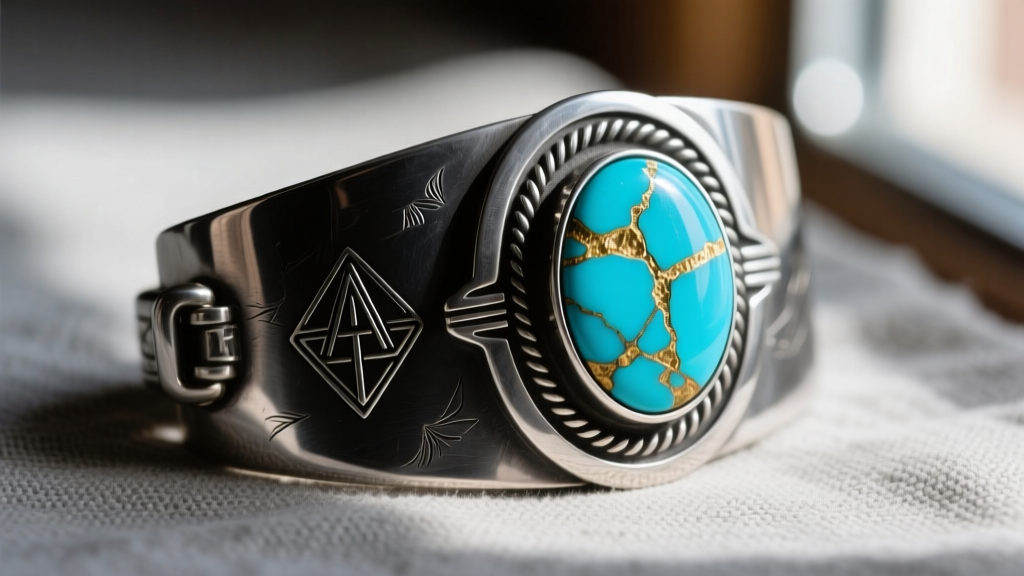
A traditional Navajo turquoise nugget necklace, particularly the multi-strand variations or those featuring a central Naja pendant (often referred to as a Squash Blossom style), requires a massive amount of silver. The melt value of the metal forms the absolute baseline of the necklace's worth, but the artistry dictates the actual market price.
Authentic pieces are crafted in either Sterling Silver (.925 purity) or traditional Coin Silver (.900 purity, often melted down from vintage coins). A heavy, museum-quality multi-strand nugget necklace can weigh anywhere from 150 grams to over 300 grams. At 2026 silver commodity rates, the raw material cost of a 250-gram necklace is substantial, but a recognized master silversmith's hallmark can multiply that baseline value by five to ten times.
2026 Value Assessment Matrix
The following table provides a realistic pricing framework for authentic, Native-made Navajo turquoise nugget necklaces based on current market conditions, silver weight, and stone grade.
| Tier / Category | Stone Type & Treatment | Average Silver Weight | Estimated Price Range (USD) |
|---|---|---|---|
| Entry / Contemporary | Stabilized Kingman or Royston | 80g - 120g | $800 - $1,500 |
| Mid-Tier / Vintage | Natural or High-Grade Stabilized | 120g - 180g | $1,800 - $3,500 |
| Collector / Master | Natural Sleeping Beauty or Bisbee | 180g - 300g+ | $5,000 - $15,000+ |
| 'Southwest Style' Import | Dyed Howlite / Block Turquoise | 40g - 80g (often plated) | $50 - $250 |
Authenticity Verification and Federal Law
The most critical factor in your budget assessment is ensuring the piece is legally and ethically represented. The Indian Arts and Crafts Board (IACB) enforces the Indian Arts and Crafts Act of 1990, a truth-in-advertising law that prohibits misrepresentation in marketing of American Indian or Alaska Native arts and crafts. It is illegal to sell, offer, or display for sale any good in a manner that falsely suggests it is Indian-produced.
'If a piece of jewelry is marketed as Navajo, Hopi, or Zuni, it must be made by a member of a state or federally recognized tribe. Always ask for the artist's name and tribal affiliation in writing.' — Guidelines adapted from the Indian Arts and Crafts Board.
Unscrupulous vendors bypass this law by using vague terminology like 'Native Inspired,' 'Southwest Style,' or 'Tribal Turquoise.' If the seller cannot provide the specific name of the Navajo artist and their chapter or enrollment status, you are likely looking at an imported factory-made item, regardless of how rustic or 'authentic' the turquoise nuggets appear.
At-Home Testing Protocols for Buyers
Before finalizing a high-ticket purchase, utilize these non-destructive testing methods to verify the materials:
- The Acetone Test: Dip a cotton swab in pure acetone (nail polish remover) and rub it vigorously on an inconspicuous part of a turquoise nugget. If the cotton turns blue, the stone is dyed howlite or magnesite. Genuine turquoise, even if stabilized with clear epoxy, will not bleed dye.
- The Magnet Test: Bring a strong neodymium magnet close to the silver beads and clasp. Sterling and coin silver are non-magnetic. If the clasp or beads attract the magnet, the piece is made of a base ferrous metal and merely silver-plated.
- The Hot Pin Test (Use with Caution): Heating a pin until red hot and touching it to an inconspicuous area of the stone will melt plastic or resin reconstituted 'block' turquoise, emitting a harsh chemical smell. *Note: This is a destructive test and should only be used on raw material or with the explicit permission of the seller.*
Final Verdict: Budgeting for Your Investment
If your budget is under $500, you are highly unlikely to find a genuine, full-length Navajo turquoise nugget necklace made with real silver and natural stones. In this price bracket, pivot your strategy: look for single-strand authentic Native-made pendant necklaces, or vintage sterling silver bead necklaces (liquid silver) without the turquoise.
For budgets between $1,000 and $3,000, focus on contemporary Navajo artists using high-quality stabilized Kingman turquoise and heavy .925 sterling silver. Stabilized stones are not a 'cheat'—they are a practical necessity for jewelry that will be worn regularly, as they resist cracking and color-shifting from cosmetics and sweat. Always demand a written receipt that explicitly states the artist's name, tribal affiliation, silver purity, and stone origin. In the 2026 market, documentation is just as valuable as the silver and stone itself.


