Your Necklace Navy Collection: Cleaning Lapis, Enamel & Silk
Learn expert care and cleaning tips for your necklace navy pieces. Discover how to safely clean lapis lazuli, blue enamel, and silk cords.

The Unique Challenges of Navy Blue Jewelry Materials
When curating your necklace navy wardrobe—whether it features deep blue gemstones, rich enamel work, or dyed silk cords—you are investing in some of the most visually striking but chemically sensitive materials in fine jewelry. The deep, moody tones of navy blue are incredibly versatile, bridging the gap between casual daytime wear and formal evening elegance. However, the very properties that give these materials their intense color often make them highly susceptible to environmental damage, chemical degradation, and improper cleaning techniques.
In 2026, jewelry care has moved far beyond generic polishing cloths and harsh commercial dips. Modern collectors understand that a one-size-fits-all approach will ruin porous stones and melt delicate resins. To maintain the structural integrity and vivid saturation of your navy blue necklaces, you must tailor your maintenance routine to the specific material profile of each piece. This guide breaks down the exact chemistry, failure modes, and cleaning protocols for the most popular navy blue jewelry components.
Cleaning Navy Gemstones: Lapis Lazuli, Sodalite, and Dyed Howlite
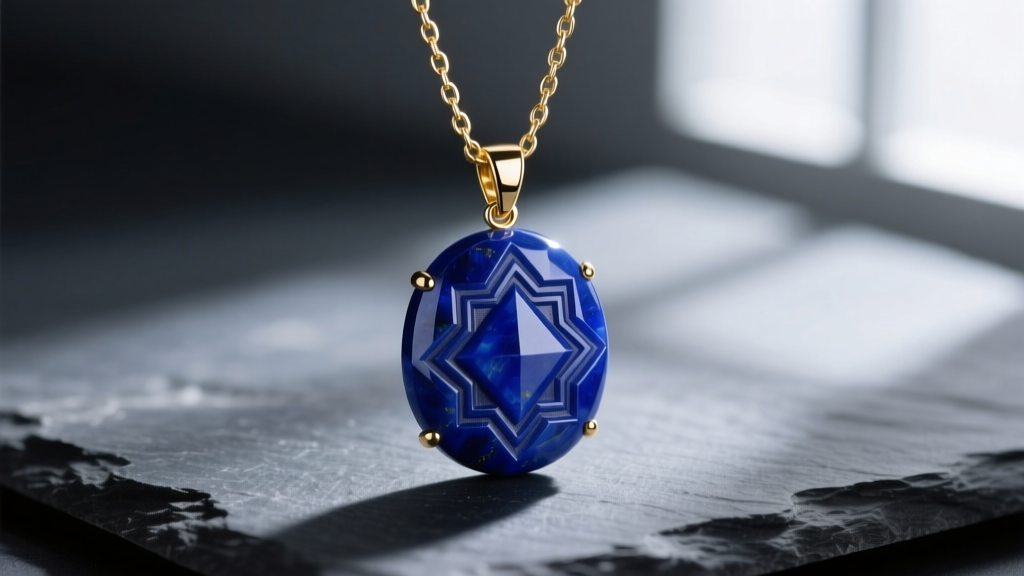
Navy blue gemstones are rarely uniform in their mineral composition. The most iconic navy stone, lapis lazuli, is actually a metamorphic rock composed of multiple minerals: lazurite (which provides the blue color), calcite (white streaks), and pyrite (metallic gold flecks). This complex matrix requires a highly specific cleaning approach. According to the Gemological Institute of America (GIA), lapis lazuli ranks between 5.0 and 5.5 on the Mohs hardness scale, making it softer than quartz and highly vulnerable to scratching.
The Mohs Scale and Porosity Risks
The greatest threat to navy gemstones is not physical impact, but chemical exposure. The calcite inclusions in lapis lazuli are highly reactive to acids. If you use a commercial jewelry cleaner containing mild acids, or even expose the stone to citrus-based soaps, the calcite will dissolve, leaving microscopic pits on the surface of your pendant. Furthermore, the pyrite (iron sulfide) flecks can oxidize and rust if left wet for extended periods, turning your beautiful gold accents into dull brown spots.
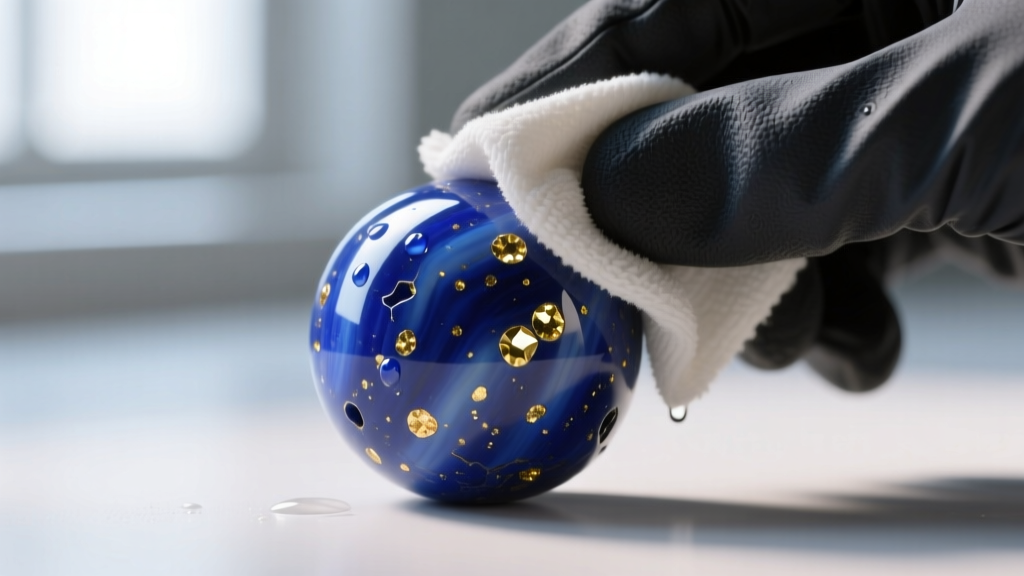
Sodalite, another popular navy blue stone often used in beaded necklaces, shares similar vulnerabilities. With a Mohs hardness of 5.5 to 6.0, it can easily be scratched by dust particles (which contain quartz, ranking at 7.0). To safely clean these stones, follow this strict protocol:
- Never use ultrasonic cleaners: The high-frequency vibrations will fracture the porous stone and loosen the pyrite inclusions.
- Never use steam cleaners: Thermal shock can cause internal fracturing.
- The Damp Cloth Method: Use a lint-free microfiber cloth lightly dampened with distilled water. Gently wipe the surface to remove skin oils and cosmetics, then immediately dry it with a separate soft cloth.
- The Dye Test: Many cheaper navy necklaces are made from dyed howlite or magnesite. Before applying any moisture, test an inconspicuous area near the drill hole with a cotton swab dipped in a tiny amount of acetone. If blue transfers to the swab, the stone is dyed and must only be cleaned with a completely dry cloth.
Preserving Navy Enamel and Resin Pendants
Navy blue enamel pendants offer a brilliant, glass-like finish that captures light beautifully. However, the care required depends entirely on whether your piece features traditional vitreous enamel or modern cold enamel (epoxy resin). Vitreous enamel is essentially glass fused to metal at extremely high temperatures. While it is highly resistant to chemicals and UV fading, it is incredibly brittle. A minor drop onto a tile floor can cause micro-fractures or completely shatter the navy finish.
Preventing Micro-Fractures and UV Fading
Cold enamel, on the other hand, is a two-part epoxy resin poured into metal recesses. While it is more impact-resistant than glass, it is highly vulnerable to chemical solvents and ultraviolet light. Prolonged exposure to direct sunlight will cause navy blue resin to yellow or turn chalky over time. Furthermore, exposing resin to alcohol-based cleaners, perfumes, or hand sanitizers will break down the polymer chains, resulting in a sticky, degraded surface.
| Material | Mohs / Durability | Ultrasonic Safe? | Primary Failure Mode | Best Cleaning Method |
|---|---|---|---|---|
| Lapis Lazuli | 5.0 - 5.5 (Porous) | NO | Calcite dissolution, Pyrite rust | Damp microfiber only |
| Vitreous Enamel | 5.5 - 6.0 (Brittle) | NO | Thermal shock, chipping | Mild dish soap, soft cloth |
| Cold Enamel (Resin) | N/A (Soft Polymer) | NO | UV yellowing, solvent melting | Dry polishing cloth |
| Navy Silk Cord | High Tensile | NO | Fiber rot, dye bleeding | Spot clean, air dry flat |
For vitreous enamel, you can use a drop of pH-neutral dish soap in lukewarm water. Use a baby toothbrush with ultra-soft bristles to gently dislodge dirt from the metal bezels surrounding the enamel, but avoid scrubbing the enamel itself to prevent micro-scratches. For resin pieces, stick to dry polishing with a clean, untreated jeweler's cloth.
Caring for Navy Silk, Leather, and Cord Chains
The chain or cord holding your navy pendant is just as critical to the piece's longevity as the focal point itself. Navy blue silk cords and braided leather offer a sophisticated, organic alternative to metal chains, but they are highly susceptible to biological degradation and structural failure if improperly maintained.
Spot Cleaning vs. Full Immersion
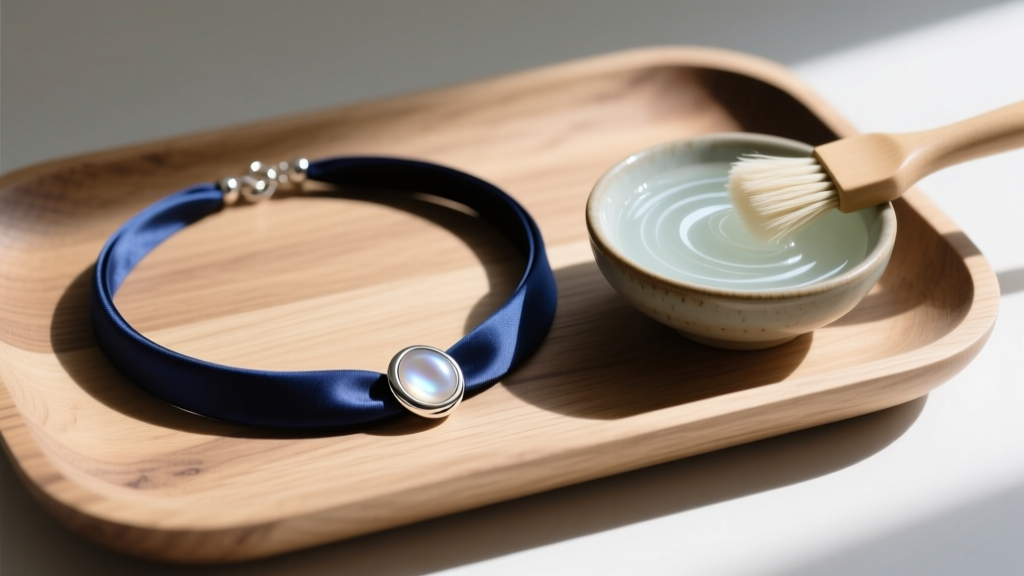
Silk is a natural protein fiber. When exposed to the acidic pH of human sweat, silk fibers gradually weaken, losing their tensile strength and eventually snapping under the weight of a heavy pendant. You should never fully immerse a silk cord in water, as this can cause the navy dye to bleed and the inner core of the cord to harbor mildew. Instead, use a targeted spot-cleaning technique. Mix a single drop of gentle, pH-neutral baby shampoo into a cup of distilled water. Dip a cotton swab into the solution, wring it out until it is barely damp, and roll it gently along the silk cord to lift body oils and cosmetic residue. Allow the cord to air dry completely flat, away from direct heat sources, before storing.
Leather cords require an entirely different regimen. Navy dyed leather is prone to dry rot and cracking when stripped of its natural oils. Once a month, apply a microscopic amount of specialized leather balm or mink oil to a soft cloth and buff it into the cord. This replenishes the lipids in the hide, maintaining its flexibility and preventing the navy dye from flaking off onto your clothing. Be highly cautious around the metal clasps; oils can attract dust and grime into the spring mechanisms of lobster clasps, causing them to fail.
Storage and Environmental Controls
How you store your necklace navy collection when it is not being worn dictates its lifespan. Never toss multiple pieces into a single jewelry box drawer. The metal findings of one necklace can easily scratch the polished surface of a lapis lazuli or vitreous enamel pendant on another. Each piece should be stored individually in an anti-tarnish flannel pouch or a soft-lined compartment.
For necklaces featuring silk or leather cords, hanging them on a jewelry tree for extended periods is a critical error. Gravity will stretch the fibers over time, creating permanent memory kinks and weakening the structural integrity near the clasp knots. Always lay corded necklaces flat in a drawer or roll them loosely into a circle. Finally, while silica gel packets are excellent for preventing silver tarnish, keep them away from porous gemstones like lapis lazuli, which can become overly desiccated and prone to internal cracking in extremely arid micro-environments. By respecting the unique material science behind your navy blue jewelry, you ensure these deep, captivating pieces remain vibrant and structurally sound for decades.
For further reading on specific gemstone care, refer to the GIA Sodalite Care Guide and consult with a certified gemologist if your vintage navy pieces require professional restringing or bezel tightening.


