Necklace 32-Inch Length: Material Durability Guide
Discover the best metals for a necklace 32 inches long. Compare weight, tensile strength, and durability for extra-long opera and rope chains.

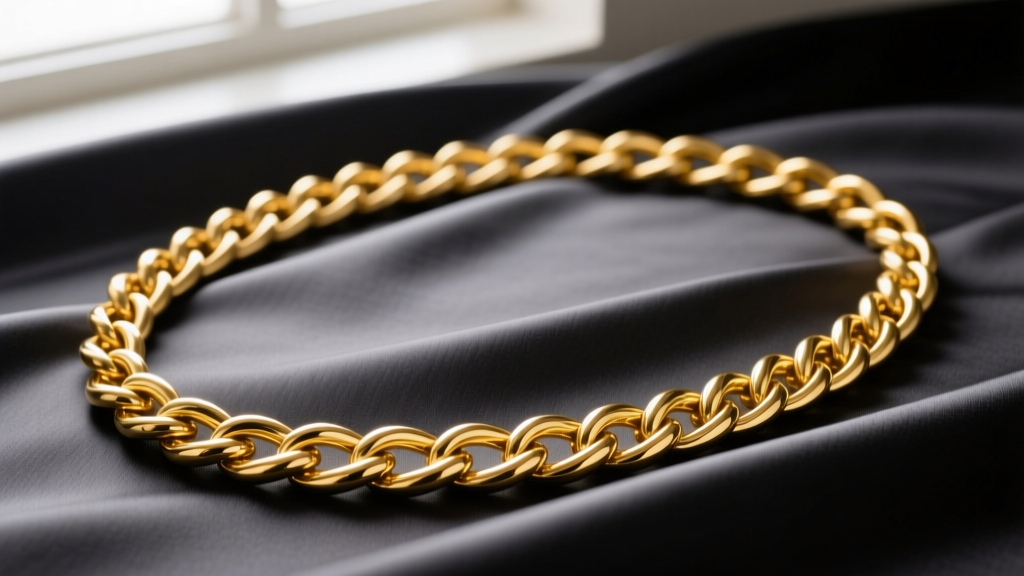
When selecting a necklace 32 inches in length, the rules of jewelry durability fundamentally change. Often categorized as an opera or rope length, a 32-inch chain drapes elegantly below the bust, offering incredible versatility for layering and pendant suspension. However, this extended length introduces unique mechanical stresses that shorter 16-inch or 18-inch chains simply do not face. The cumulative weight of the metal, the "pendulum effect" of a swinging chain, and the increased likelihood of snagging mean that your choice of material is not just an aesthetic decision—it is a structural necessity.
In 2026, advancements in metallurgical alloys and laser-welding techniques have expanded the options for extra-long chains, but the core physics of tensile strength and metal creep remain unchanged. This guide provides a deep-dive material comparison to help you choose the right metal for a 32-inch necklace, ensuring it survives the rigors of daily wear without stretching, snapping, or warping.
The Physics of Extra-Long Chains
Before comparing specific metals, it is crucial to understand the mechanical forces acting on a 32-inch chain. The primary enemy of long necklaces is the pendulum effect. When you walk, bend, or move, a 32-inch chain swings with significantly more kinetic energy than a choker. If the chain catches on a doorknob, a zipper, or even the edge of a table, that kinetic energy instantly converts into tensile shock, transferring massive force to the weakest structural point—usually the jump ring or the clasp.
Furthermore, long chains are highly susceptible to metal creep, which is the slow, permanent deformation of a material under constant mechanical stress. Even the sheer weight of a 32-inch sterling silver chain pulling down on its own links over 12 hours of wear can cause the bottom curve of the chain to permanently stretch and ovalize. Therefore, the yield strength and work-hardening properties of your chosen metal are paramount.
Material Comparison Chart: Weight & Tensile Strength
The table below compares the most common jewelry metals used for 32-inch chains. The estimated weight is based on a standard 32-inch, 2.0mm cable chain. Note how density drastically affects the wearing experience of an opera-length piece.
| Metal Alloy | Density (g/cm³) | Yield Strength (MPa) | Est. Weight (32" x 2mm) | Snag & Creep Resistance |
|---|---|---|---|---|
| Sterling Silver (925) | 10.36 | 125 - 300 (Hardened) | ~38 grams | Low (Prone to stretching) |
| 14k Yellow Gold | 13.50 | 250 - 350 | ~49 grams | High (Excellent durability) |
| 18k Yellow Gold | 15.60 | 180 - 250 | ~57 grams | Medium (Softer, heavier) |
| Platinum (950/50 Ru) | 21.45 | 300 - 400 | ~78 grams | Very High (But heavy on neck) |
| Grade 5 Titanium | 4.43 | 880+ | ~16 grams | Extreme (Virtually indestructible) |
Metallurgical Deep Dive: How Specific Metals Perform at 32 Inches
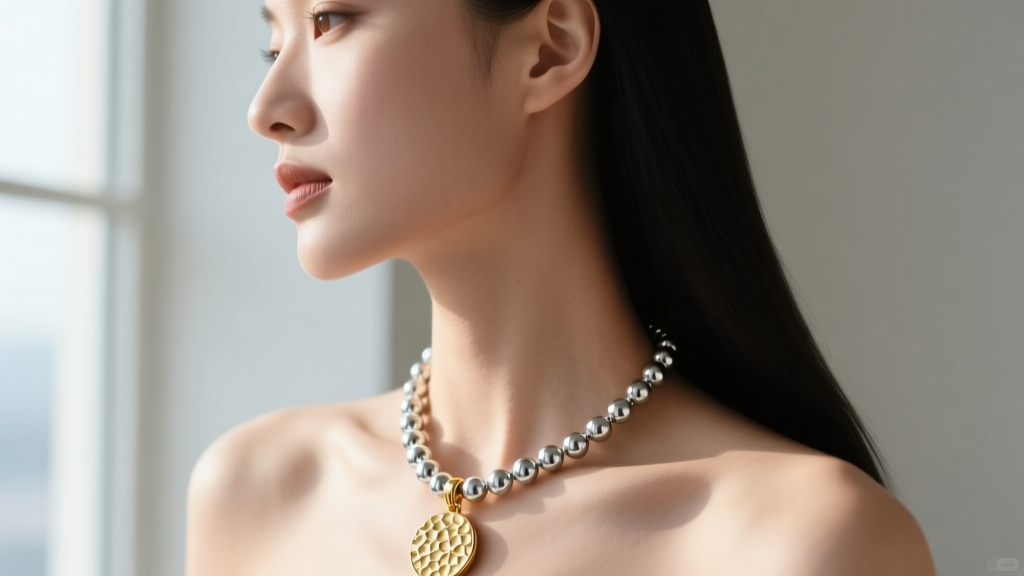
Sterling Silver (925) & The Creep Factor
Sterling silver is the most accessible and popular choice for long layering chains, but it requires careful handling. Pure silver is too soft for jewelry, so it is alloyed with 7.5% copper to create 925 silver. However, even with this copper content, sterling silver has a relatively low yield strength in its annealed (soft) state. If you purchase a 32-inch silver chain, ensure it has been work-hardened or drawn through a die to increase its tensile strength. According to hallmarking standards verified by The London Assay Office, a proper 925 stamp guarantees the alloy mix, but not the hardness. For a 32-inch silver chain, avoid delicate weaves like the serpent or omega; opt for interlocking weaves like the wheat or rope chain, which distribute tensile stress across multiple contact points.
14k vs. 18k Gold: The Alloy Advantage
When it comes to gold, the karat weight dictates both color and structural integrity. 18k gold (75% pure gold) is highly prized for its rich, buttery yellow hue, but the high pure-gold content makes it softer and more prone to link deformation over a 32-inch span. 14k gold (58.3% pure gold), on the other hand, is alloyed with higher percentages of copper, silver, and zinc. As noted in the metallurgical guides provided by the Gemological Institute of America (GIA), these alloying metals significantly increase the hardness and tensile strength of the final product. For a 32-inch chain that will be worn daily and subjected to the pendulum effect, 14k gold is objectively the superior choice for longevity and snag resistance.
Platinum & Titanium: The Heavyweight and the Featherweight
Platinum (specifically 950 Platinum alloyed with 5% Ruthenium) is incredibly dense and durable. It does not lose metal when scratched; rather, the metal displaces, forming a desirable patina. However, a 32-inch platinum cable chain can easily weigh upwards of 75 to 80 grams. This immense weight can cause cervical fatigue if worn for 10+ hours a day, and the heavy mass exacerbates the kinetic shock if the chain is suddenly yanked.
Conversely, Grade 5 Titanium (Ti-6Al-4V) is the ultimate 2026 solution for those who want an ultra-lightweight, indestructible 32-inch chain. With a yield strength nearly triple that of steel and a fraction of the weight, titanium will never stretch or succumb to creep. The drawback? Titanium cannot be soldered with a traditional jeweler's torch. If a link breaks, it requires specialized laser welding, making repairs difficult and expensive.
Hardware and Clasp Mechanics in Long Chains
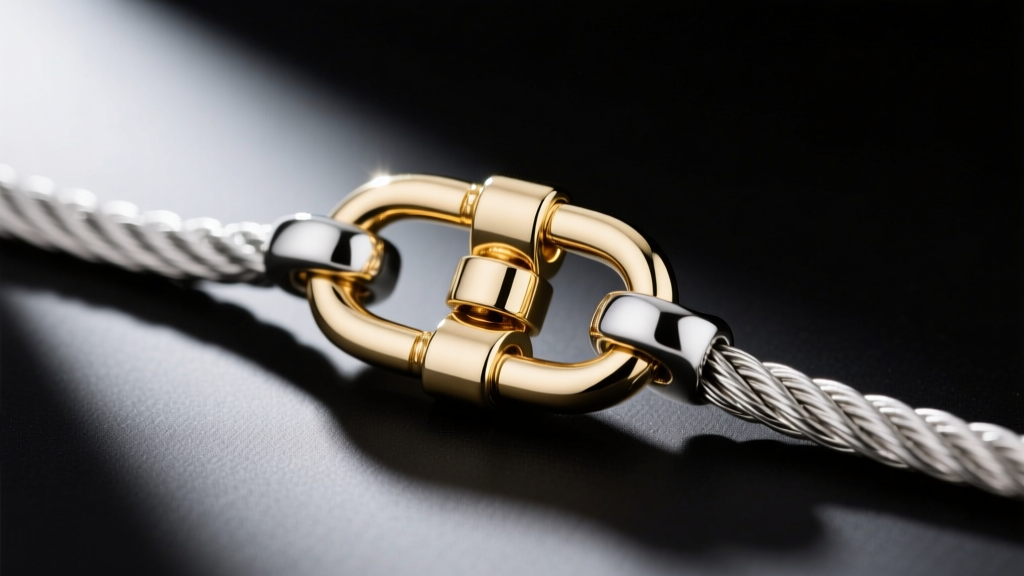
The material of the chain is only half the battle; the hardware is where 90% of 32-inch necklaces fail. Because of the leverage generated by a long chain, standard 5mm spring-ring clasps are a massive liability. The internal steel spring inside a silver or gold spring ring will eventually fatigue, or the tiny lever will bend outward when subjected to the swinging weight of an opera-length chain.
The 2026 Hardware Standard for 32-Inch Chains:
- Clasp Type: Always opt for a solid-cast lobster clasp (minimum 12mm in length) or a hidden box clasp with a secondary figure-8 safety catch.
- Jump Rings: The jump ring connecting the clasp to the chain must be soldered closed. An open, unsoldered jump ring will inevitably pull apart under the pendulum stress of a 32-inch drop.
- Galvanic Corrosion: Ensure the clasp is the exact same metal alloy as the chain. Attaching a 14k gold clasp to a sterling silver chain can cause galvanic corrosion at the connection point when exposed to sweat and humidity, weakening the jump ring over time.
Actionable Buying Framework for Extra-Long Chains
To ensure your 32-inch necklace withstands the test of time, use this checklist when evaluating pieces from jewelers or vintage dealers:
- The Gauge-to-Length Ratio: For a 32-inch chain, never go below a 1.2mm thickness (gauge) for cable chains, and 1.5mm for box chains. Thinner chains lack the structural memory to resist kinking.
- The Drape Test: Hold the chain by the clasp and let it hang. Spin it gently. A high-quality, well-manufactured 32-inch rope or wheat chain will spin freely without tangling. If it immediately twists into a bird's nest, the links were stamped and assembled with poor tolerances, creating microscopic burrs that catch on one another.
- Pendant Bail Sizing: If you plan to slide a pendant onto a 32-inch chain, remember that thicker chains (2.5mm+) require pendants with oversized, soldered bails. The constant friction of a heavy pendant sliding up and down a 32-inch track will act like a saw, slowly cutting through the top of the pendant's bail if the metal is too soft.
Ultimately, choosing the right material for a 32-inch necklace requires balancing the desired aesthetic weight against the unforgiving laws of physics. By prioritizing high-yield-strength alloys like 14k gold or work-hardened silver, and demanding soldered hardware, your extra-long chain will remain a staple of your layering wardrobe for decades to come.


