Expert Guide to Matching a Necklace and Rings: Metals and Gemstones
Discover the metallurgy and gemology behind matching a necklace and rings. Learn about Vickers hardness, refractive index, and durability.

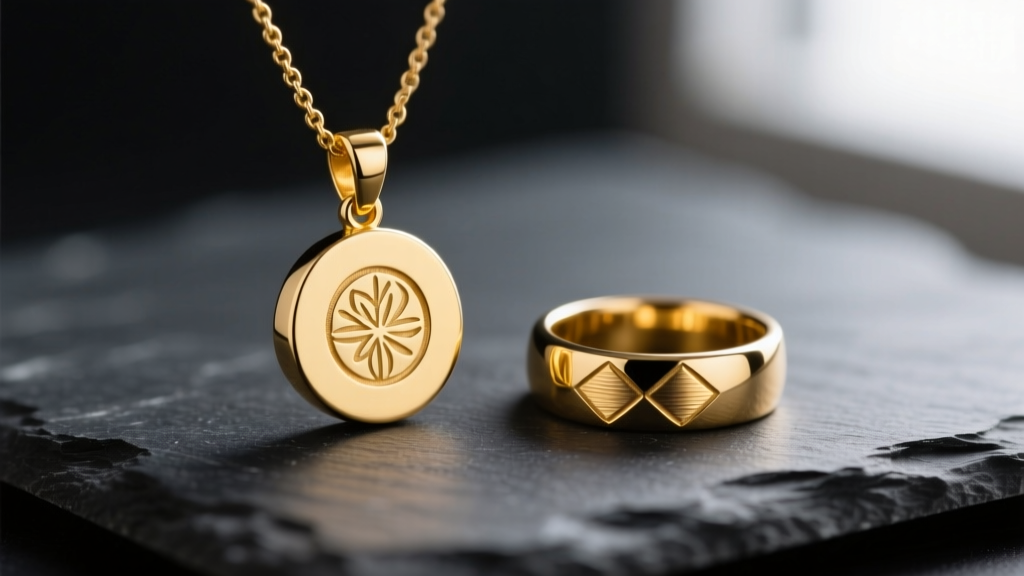
When curating a cohesive jewelry wardrobe, the aesthetic synergy between a necklace and rings is often the primary focus. However, from a gemological and metallurgical perspective, pairing these pieces requires a deep understanding of material science. A mismatched set is not just visually discordant; it can lead to accelerated wear, galvanic corrosion, and structural failure. In this technical deep dive, we explore the precise specifications—ranging from Vickers hardness to refractive indices—required to engineer a flawless, enduring necklace and rings combination.
The Metallurgy of Matching: Vickers Hardness and Alloy Composition
The most common mistake consumers make when building a coordinated set is assuming that all gold colors are metallurgically identical. Gold purity drastically alters the Vickers Hardness (HV) of the alloy, which dictates how the metal will scratch, dent, and polish over time. For instance, 18k yellow gold (75% pure gold) typically registers between 120 and 130 HV. In contrast, 14k yellow gold (58.3% pure gold) is alloyed with higher concentrations of copper and zinc, pushing its hardness to 140–160 HV.
If your primary ring is crafted from 18k gold and your everyday necklace chain is 14k gold, the ring will accumulate micro-scratches and lose its polish at a significantly faster rate. Within 12 to 18 months of daily wear, the surface textures will visually diverge, breaking the uniformity of the set. To maintain a cohesive patina, ensure both the necklace findings and the ring shanks share the exact same karatage and alloy base.
White gold presents an even more complex challenge. Nickel-based white gold is harder (approx. 135 HV) but requires periodic rhodium plating to maintain its bright white appearance. Palladium-based white gold is slightly softer but maintains its natural gray-white hue without plating. Mixing a nickel-based white gold ring with a palladium-based white gold necklace chain results in a jarring color discrepancy as the rhodium plating wears off the ring's high-friction areas while the necklace remains unchanged.
Galvanic Corrosion and Storage Protocols for Sets
How you store your necklace and rings when not in use is just as critical as how you wear them. When dissimilar metals are stored in direct physical contact in a high-humidity environment, micro-galvanic cells can form. This is particularly problematic when storing a sterling silver chain (92.5% silver, 7.5% copper) intertwined with a platinum or high-karat gold ring.
The copper in the sterling silver acts as an anode in the presence of ambient moisture and sulfur compounds. Over time, this galvanic reaction accelerates copper oxidation, leaving black copper oxide spots on the chain and potentially transferring tarnish to the crevices of the ring's setting. According to the Jewelers of America, proper storage requires isolating pieces in individual anti-tarnish cloth pouchs or utilizing silica gel desiccants in your jewelry box to drop the ambient humidity below 40%, effectively halting the electrochemical corrosion process.
Gemstone Refractive Index (RI) and Visual Cohesion
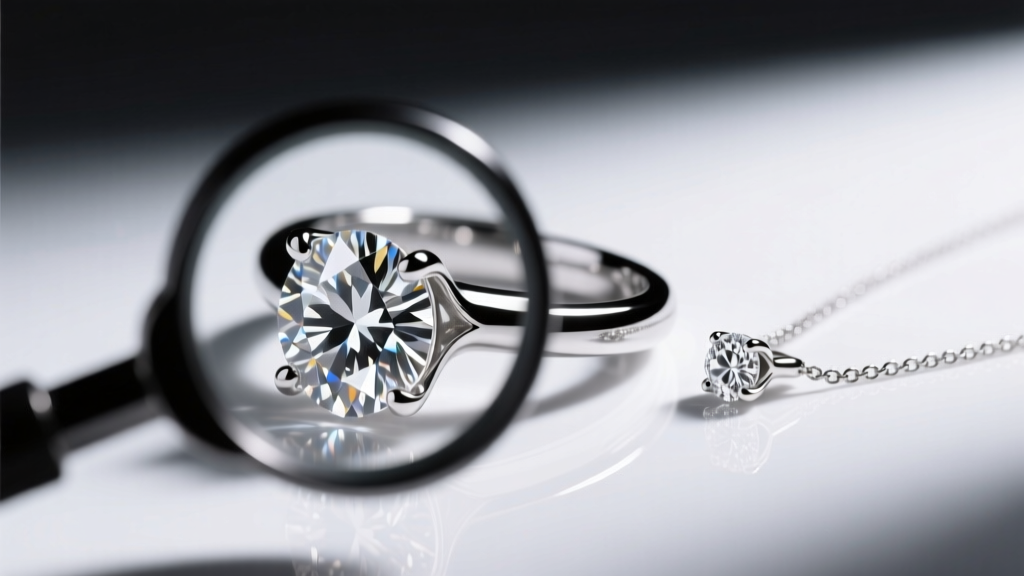
Beyond metals, the optical properties of the gemstones used in your pendant and rings must be scientifically compatible. The Refractive Index (RI) measures how much a gemstone bends light, directly correlating to its brilliance and fire. If your necklace pendant features an emerald (RI 1.57) and your ring features a brilliant-cut diamond (RI 2.42), the optical disconnect is visually jarring under indoor lighting.
The human eye is naturally drawn to higher RI stones. A diamond ring will completely overpower an emerald pendant, making the necklace look dull and lifeless by comparison. For a harmonious set, pair gemstones with similar refractive indices and dispersion values. For example, pairing a sapphire ring (RI 1.76) with a sapphire or spinel pendant (RI 1.71) creates a balanced distribution of light return across the entire silhouette. The Gemological Institute of America (GIA) provides comprehensive RI data that jewelers use to match stones not just by color, but by their fundamental optical behavior.
Technical Data: Metal Hardness and Gemstone Optics
| Material / Gemstone | Hardness (HV / Mohs) | Refractive Index (RI) | Best Pairing Application |
|---|---|---|---|
| 14k Yellow Gold | 140-160 HV | N/A | High-wear rings, durable everyday chains |
| 18k Yellow Gold | 120-130 HV | N/A | Pendants, low-impact bands, luxury sets |
| 950 Platinum | 110-130 HV (Work Hardens) | N/A | Prongs, heavy pendants, wedding bands |
| Diamond | 10 Mohs (10,000+ HV) | 2.417 | Center stones, high-impact accent sets |
| Sapphire | 9 Mohs (~2,000 HV) | 1.76 - 1.77 | Everyday rings, durable pendant centers |
| Emerald | 7.5-8 Mohs (~1,500 HV) | 1.57 - 1.58 | Pendants, low-wear cocktail rings |
Clasp and Shank Engineering: Where Sets Fail
The mechanical stress points of a necklace and rings are vastly different, yet they must be engineered to support the overall weight and design intent of the set. A heavy gemstone pendant, such as a 15-carat cabochon, exerts dynamic tensile stress on the chain and clasp. A standard 5mm spring ring clasp has a failure point of roughly 3 to 4 lbs of tensile force. If the pendant exceeds 8 grams, a spring ring is a structural liability.
Heavy pendants require a forged lobster clasp or a custom box clasp equipped with a safety figure-8 catch, which can withstand upwards of 15 lbs of tensile stress. Conversely, the ring shank must be engineered to resist deformation. A 1.5mm wide 18k gold shank will inevitably ovalize under the repetitive grip pressure of daily hand use. To ensure the ring survives as long as the heavy-duty necklace chain, the shank should be cast at a minimum of 2.0mm width and 1.8mm thickness, or feature a hidden European shank (a squared-off interior) that resists bending and prevents the ring from spinning on the finger.
Conclusion: Engineering the Perfect Set
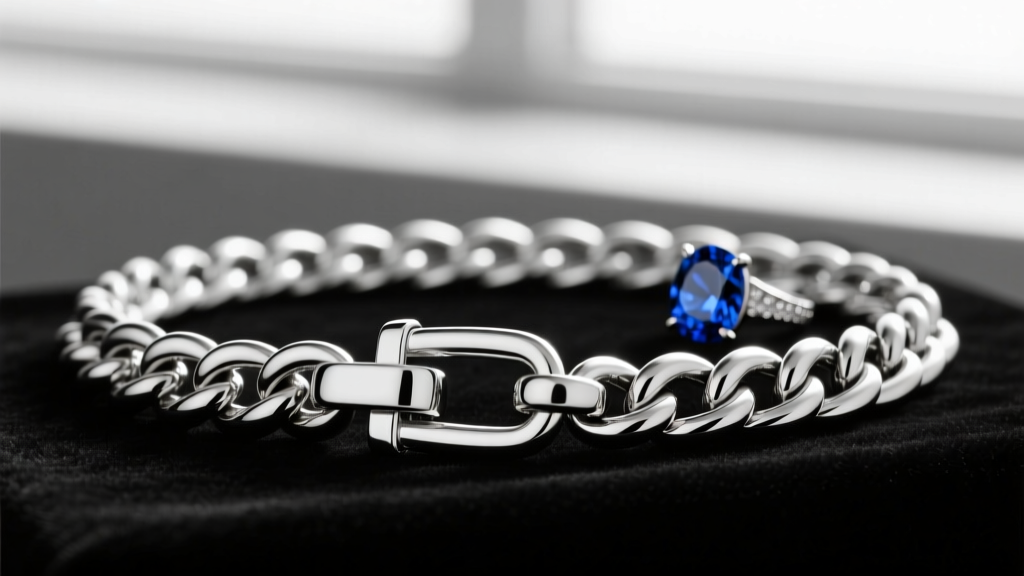
Matching a necklace and rings is an exercise in applied materials science. By aligning the Vickers hardness of your alloys, respecting the galvanic boundaries during storage, balancing the refractive indices of your gemstones, and engineering the clasps and shanks for their specific load-bearing requirements, you elevate your jewelry from mere accessories to a masterclass in structural design. Always request the exact alloy composition and gemological data from your jeweler before commissioning a custom set to ensure lifelong durability and optical harmony.


