How to Clean and Care for a Vintage Agate Bead Necklace
Learn expert techniques to clean, maintain, and store your vintage agate bead necklace safely without damaging stones or stringing.

The Allure and Fragility of Vintage Agate
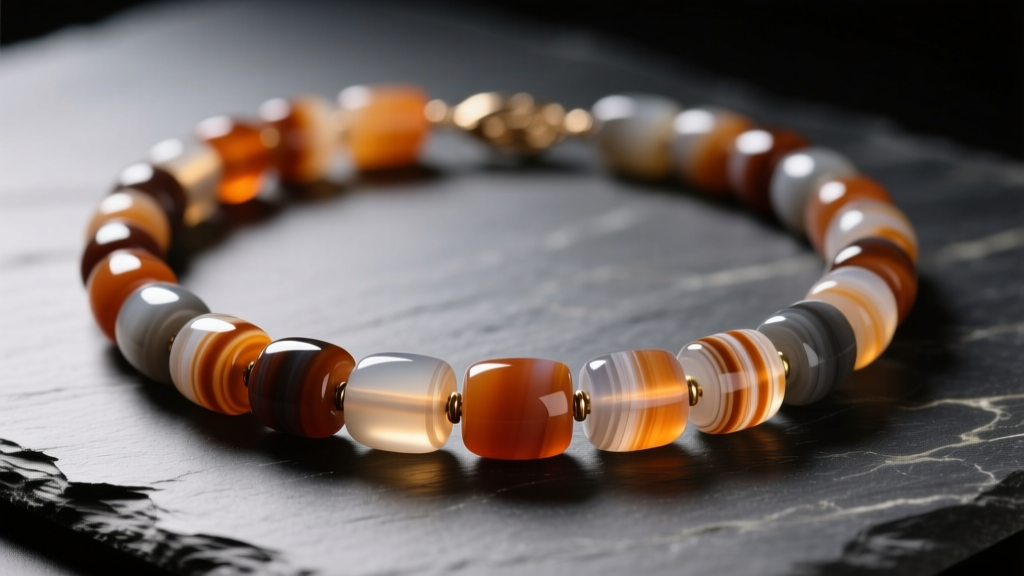
Owning a vintage agate bead necklace is akin to holding a piece of geological and artistic history. Agate, a cryptocrystalline variety of silica (chalcedony), is prized for its striking banding, translucency, and rich color palettes. However, caring for vintage jewelry requires a fundamentally different approach than maintaining modern, mass-produced pieces. The age of the necklace, the historical treatments applied to the stones, and the degradation of the stringing material all introduce unique vulnerabilities.
While the Gemological Institute of America (GIA) rates agate at a durable 6.5 to 7 on the Mohs hardness scale, this metric only measures scratch resistance. It does not account for the chemical sensitivity of historical dyes, the porosity of micro-fractures, or the structural integrity of antique silk thread. To preserve the provenance and physical beauty of your vintage agate bead necklace, you must adopt a conservation-minded approach to cleaning and maintenance.
Understanding Historical Dye Treatments
Before applying any moisture or cleaning agents to your necklace, you must understand how vintage agates were colored. Historically, particularly from the 19th century onward in gem-cutting hubs like Idar-Oberstein, Germany, agates were frequently dyed to enhance their natural, often muted, gray or brown banding.
The Chemistry of Vintage Dyes
Traditional dyeing involved soaking the porous agate in sugar solutions or honey, followed by immersion in warm sulfuric acid. The acid carbonized the sugar, creating deep, permanent black or brown bands. Later, in the early-to-mid 20th century, aniline dyes and metal salts (like iron nitrate for reds and yellows, or chromium for greens) became prevalent. Unlike the carbonized sugar treatments, these later chemical dyes can be highly unstable. Exposure to harsh chemicals, prolonged UV light, or even prolonged moisture can cause these vintage dyes to bleed, fade, or "chalk" on the surface of the beads.
The Step-by-Step Safe Cleaning Protocol
Forget ultrasonic cleaners, steamers, and commercial jewelry dips. These will destroy the stringing material and potentially strip historical dyes. Follow this meticulous, low-impact cleaning protocol.
Step 1: Dry Particulate Removal
Always begin with dry cleaning. Use a clean, ultra-soft makeup brush or a specialized jewelry dusting brush to gently sweep away surface dust, dead skin cells, and cosmetic residue from between the beads. Avoid using compressed air, as the propellants can leave chemical residues or force moisture into micro-cracks.
Step 2: Targeted Damp Wiping
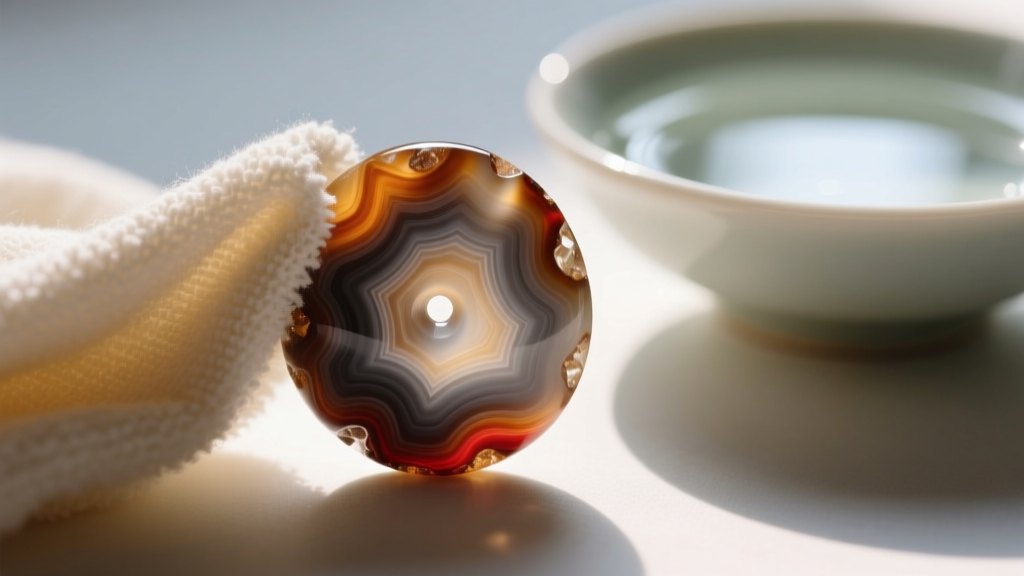
If the beads require deeper cleaning, prepare a solution of distilled water and a single drop of pH-neutral, phosphate-free dish soap (such as Dawn or a dedicated conservation-grade surfactant).
- Do not submerge the necklace. Submersion will saturate the stringing material, leading to rot and stretching.
- Dampen a lint-free microfiber cloth in the solution and wring it out until it is barely moist.
- Gently wipe each individual agate bead, rotating the bead to clean the entire circumference.
- Immediately follow with a second, dry microfiber cloth to buff the bead and remove any residual moisture.
Step 3: Cleaning the Vintage Clasp
Vintage necklaces often feature brass, silver, or low-karat gold clasps. If the clasp is heavily tarnished, use a dry, treated silver-polishing cloth specifically on the metal components. Take extreme care not to let the polishing compound transfer onto the adjacent agate beads, as the mild abrasives in the cloth can dull the stone's polish over time.
Evaluating and Maintaining the Stringing Material
The most critical point of failure on any vintage agate bead necklace is not the stone, but the string. According to guidelines from Antique Jewelry University, organic stringing materials degrade rapidly when exposed to the natural acids in human sweat, cosmetics, and environmental humidity.
| Stringing Material | Water Resistance | Typical Lifespan | Maintenance & Warning Signs |
|---|---|---|---|
| Antique Silk | Poor | 3–5 Years | Stretches when wet; rots if trapped in humidity. Look for fraying near the clasp or "gapping" between beads. |
| Cotton Thread | Moderate | 5–10 Years | Brittle when dry; susceptible to mold. Snaps suddenly without much stretching warning. |
| Early Nylon (Mid-Century) | High | 15–20 Years | Degrades under UV light. Becomes stiff and yellowed over decades; loses tensile flexibility. |
| Beading Wire (Modern Restrings) | Excellent | 20+ Years | Check for kinking or fraying at the crimp beads. Does not rot, but metal fatigue can cause sudden breaks. |
If you notice any gapping (where the thread between beads is visible and loose), discoloration of the thread, or stiffness, the necklace must be professionally restrung immediately. For authentic vintage pieces, a master stringer will typically use French wire (gimp) at the clasp connection points to protect the thread from metal abrasion.
Proper Storage to Prevent Micro-Abrasions and Fading
How you store your vintage agate bead necklace when it is not being worn is just as important as how you clean it. Agate is harder than silver and gold, meaning it will easily scratch metal pendants or softer gemstones if stored in a communal jewelry box.
Environmental Controls
1. Light Exposure: Store the necklace in complete darkness. Prolonged exposure to direct sunlight or even strong ambient indoor lighting can cause the aniline dyes in mid-century agates to fade or shift in color.
2. Humidity Regulation: Maintain a storage environment with a relative humidity (RH) between 40% and 50%. High humidity promotes mold growth on organic threads and tarnishing of the metal clasp, while excessively dry conditions can make vintage cotton or silk threads brittle.
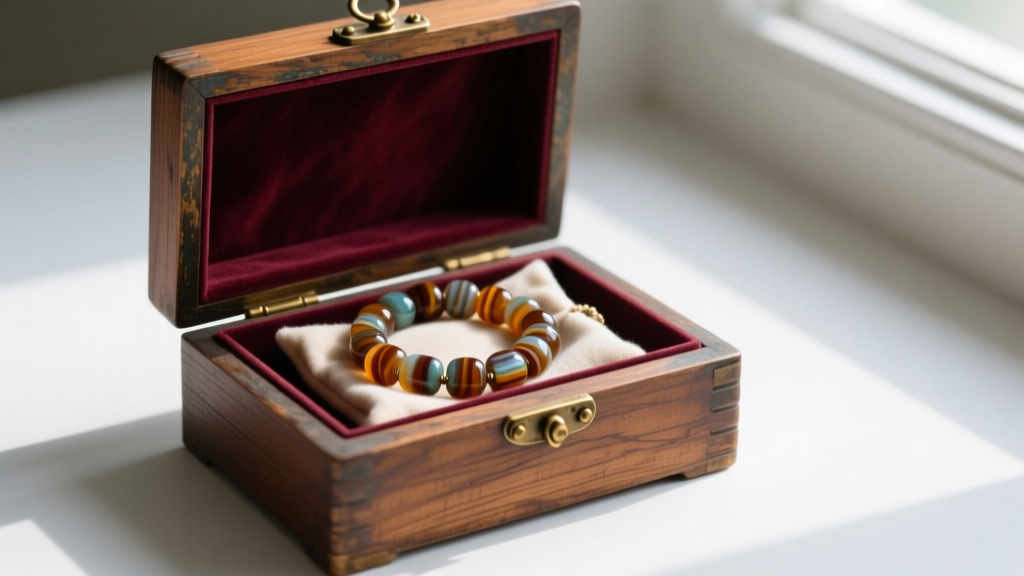
3. Physical Isolation: Never hang a heavy vintage agate bead necklace on a jewelry tree. The constant gravitational pull will permanently stretch the thread and distort the necklace's drape. Instead, lay the necklace flat in an individual, acid-free flannel pouch or a compartment lined with unbleached cotton.
Troubleshooting Common Vintage Agate Issues
Surface Chalking or Haze
If your agate beads develop a white, chalky haze, this is often a sign of dye degradation or a reaction to acidic skin oils. Do not attempt to scrub this off. A professional lapidary can sometimes apply a microscopic layer of Renaissance Wax (a microcrystalline wax used in museum conservation) to stabilize the surface and restore a gentle luster without altering the stone's chemistry.
Dye Bleeding onto Skin or Clothing
If you notice color transferring to your neck or collar, the dye is actively leaching. Stop wearing the piece immediately. Wipe the beads gently with a dry, soft cloth to remove surface residue, and store the piece in a low-humidity environment. This issue is common with poorly sealed, mid-century dyed agates and usually requires professional stabilization.
Clasp Mechanism Failure
Vintage barrel clasps and push-in box clasps frequently suffer from worn internal tension springs. If your clasp opens too easily, do not rely on a safety chain alone. Take the piece to a bench jeweler who specializes in antique restoration to have the internal tension mechanism carefully tightened or replaced with a period-appropriate modern equivalent.
Final Thoughts on Preservation
Caring for a vintage agate bead necklace is an exercise in restraint and observation. By avoiding harsh modern cleaning technologies, respecting the chemical history of the stones, and proactively managing the stringing material, you ensure that the piece remains structurally sound and visually captivating for the next generation of collectors.