Looking for a Necklace? Another Word Might Describe Your True Style
Searching for a necklace? Another word like sautoir, torc, or rivière might be the key to finding your perfect piece. Explore our expert terminology guide.


The Limits of the Word 'Necklace' in Fine Jewelry Shopping
When you type 'necklace another word' into a search engine, you are likely experiencing a common buyer's frustration: the term 'necklace' is simply too broad. In the fine jewelry industry, relying solely on this generic catch-all can lead to algorithmic fatigue, serving you thousands of basic cable chains while hiding the exact, specialized artisan piece you actually want. Whether you are hunting for a rigid metal collar or a sweeping, tassel-terminated chain, knowing the precise terminology is your ultimate buying advantage.
Understanding historical and bench-jeweler terminology not only refines your search results but also signals to sellers that you are an educated buyer. This guide decodes the specific terms you should be using instead of 'necklace,' complete with material grades, structural integrity checks, and pricing frameworks for 2026.
The Sautoir: Buying the Ultimate Long Layering Piece
If you are looking for a sweeping, opera-length or longer piece, the word you want is sautoir. Originating in the Edwardian era, a true sautoir measures between 30 and 36 inches (or longer) and traditionally terminates in a detachable pendant, tassel, or specialized dog-clip clasp that allows it to be doubled.
What to Look For:
- Material Grades: For daily wear, insist on 18k gold vermeil (which requires a minimum of 2.5 microns of gold over a sterling silver base) or solid 14k gold. Avoid standard gold-plated brass, which will oxidize and turn your skin green within months of friction-heavy, long-chain wear.
- Clasp Mechanics: Because sautoirs are heavy, standard lobster clasps often fail under the pendulum-like swing of a 36-inch chain. Look for artisan pieces featuring a secure dog-clip or a reinforced spring-ring with a welded jump ring.
- Pricing: Expect to pay $150–$300 for high-quality vermeil sautoirs, and $800–$2,500 for solid 14k/18k gold iterations from independent jewelers.
The Torc: Investing in Rigid Neck Rings
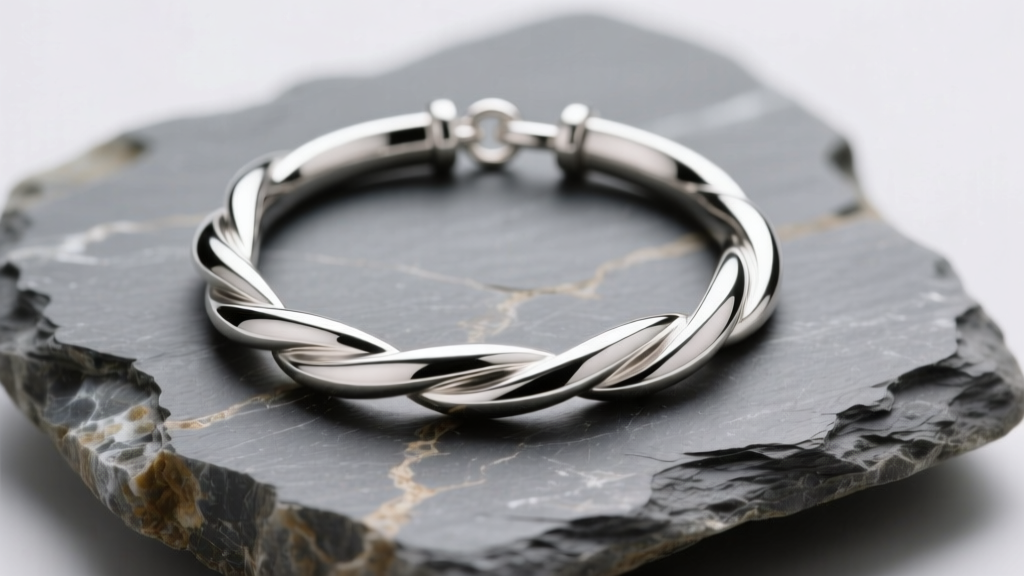
A torc (or torque) is a rigid, open-ended neck ring. Unlike flexible chains, a torc relies on structural tension and the natural anatomy of the collarbone to stay in place. They are statement pieces that demand specific metallurgical standards to prevent snapping.
Buying Framework for Torcs:
- Gauge and Thickness: A high-quality torc should have a wire or forged thickness of at least 4mm to 6mm. Anything thinner risks permanent deformation when you bend it to put it on.
- Closure Types: Avoid simple tension-gap torcs for daily wear. Repeatedly bending the metal to open the gap causes metal fatigue, eventually leading to a catastrophic snap at the midpoint. Instead, invest in a hinged-back torc with a secure pin-and-clasp mechanism at the rear, which preserves the structural integrity of the front-facing metal.
- Metals: Sterling silver (925) and bronze are traditional, but for skin sensitivity, look for forged titanium or surgical-grade stainless steel (316L).
The Rivière: A Buyer’s Guide to Continuous Gemstone Lines
If your search for 'necklace another word' is driven by a desire for a continuous line of gemstones, you are looking for a rivière. French for 'river,' this style features gemstones of the same or gradually increasing size set in individual mounts, with no visible chain linking them.
According to the Gemological Institute of America (GIA), evaluating a rivière requires looking beyond individual stone quality to the overall color harmony and cut consistency across the entire piece. Because the stones sit directly against the skin, the setting mechanics are paramount.
Expert Purchasing Tips:
- Setting Style: Bezel settings offer superior security for active wearers, protecting the girdle of the stone. However, shared-prong settings maximize light return and brilliance. Ensure prongs are at least 0.8mm thick and properly burnished.
- Alternatives to Diamond: In 2026, lab-grown diamonds have made high-carat rivière necklaces accessible, dropping prices by 40-60% compared to mined equivalents. For budget-conscious buyers, consider white sapphire or moissanite, but verify the Mohs hardness (sapphire is a 9, making it excellent for daily wear).
Terminology Comparison Chart: Matching Style to Neckline
Use this quick-reference table to match the correct jewelry term to your wardrobe and occasion.
| Term | Length / Structure | Best Neckline Pairing | Average Price Range (Fine) |
|---|---|---|---|
| Sautoir | 30" - 40"+ (Flexible) | Deep V-neck, Turtleneck | $400 - $2,500 |
| Torc | 14" - 16" (Rigid) | Boat neck, Off-the-shoulder | $250 - $1,200 |
| Rivière | 16" - 18" (Gemstone line) | Scoop neck, Strapless | $2,000 - $15,000+ |
| Lariat | Y-shape, 24"+ (No clasp) | Open collar, Wrap dresses | $150 - $800 |
| Festoon | Draped, multi-chain | Sweetheart, Square neck | $300 - $1,500 |
The Lariat and Festoon: Niche Terms for Statement Buyers
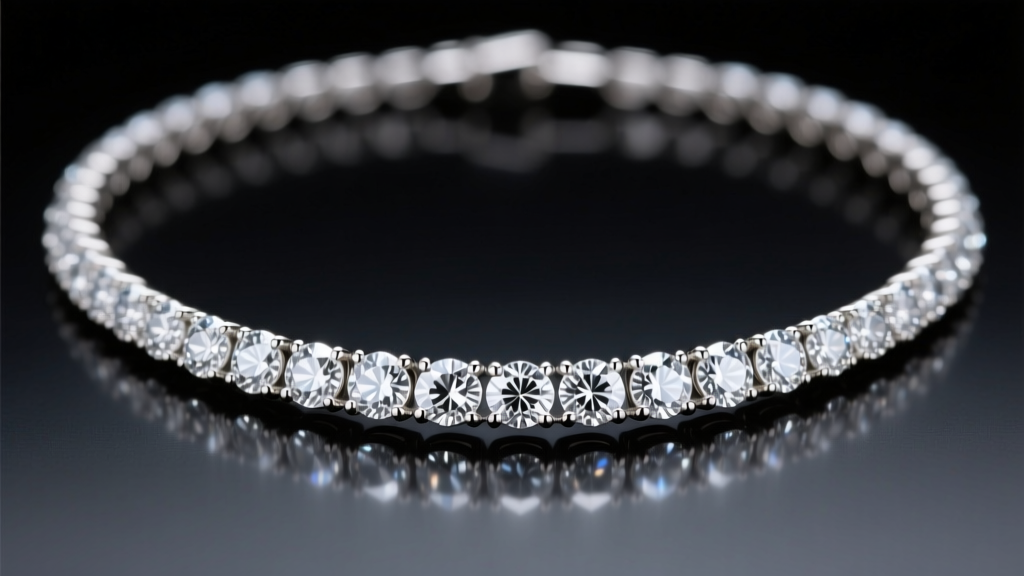
When standard chains fail to provide the architectural drama you need, two highly specific terms will yield vastly superior search results:
The Lariat
A lariat is a Y-shaped necklace that lacks a traditional clasp. Instead, it relies on a sliding mechanism, a toggle, or simply threading one end of the chain through a decorative loop. Buying advice: Look for lariats with a silicone-lined slide bead. This prevents the heavy bottom tassel from dragging the chain down and choking the wearer throughout the day.
The Festoon
Popularized during the Georgian and Edwardian eras, a festoon consists of multiple draped chains or gemstone drops suspended between central stations. The Victoria and Albert Museum notes that historical festoons were designed to mimic the draped garlands of classical architecture. When buying vintage or reproduction festoons, check the soldering on the central station rings; the weight of the draped chains puts immense shear stress on these specific jump rings.
Expert Buying Checklist: What to Verify Before Checkout
Regardless of whether you are buying a sautoir, torc, or rivière, run through this bench-jeweler checklist before finalizing your purchase:
- Hallmark Verification: Ensure the piece is stamped (e.g., 925, 14K, 750). For online artisan purchases, request a macro photo of the hallmark.
- Link Soldering: If buying a chain-based piece, inspect the links. They should be fully soldered shut. Open 'C' links will inevitably pull apart under the weight of a pendant or the friction of daily wear.
- Clasp Spring Tension: A high-quality lobster or spring-ring clasp should snap back instantly and flush. If the lever feels mushy or leaves a gap, the internal spring is compromised.
- Stone Security (for Rivière/Festoon): Run a piece of silk fabric lightly over the gemstone settings. If the fabric snags, the prongs are too sharp or lifted, indicating poor finishing and a high risk of stone loss.
By replacing the generic search term 'necklace' with the precise vocabulary of the jewelry trade, you bypass mass-produced filler and connect directly with the heritage, craftsmanship, and specific structural designs that define true fine jewelry.


