Necklace Chain Size Guide: Matching Gauge to Metal Type
Master our necklace chain size guide to match metal types with the perfect gauge and length for ultimate durability, weight, and everyday style.

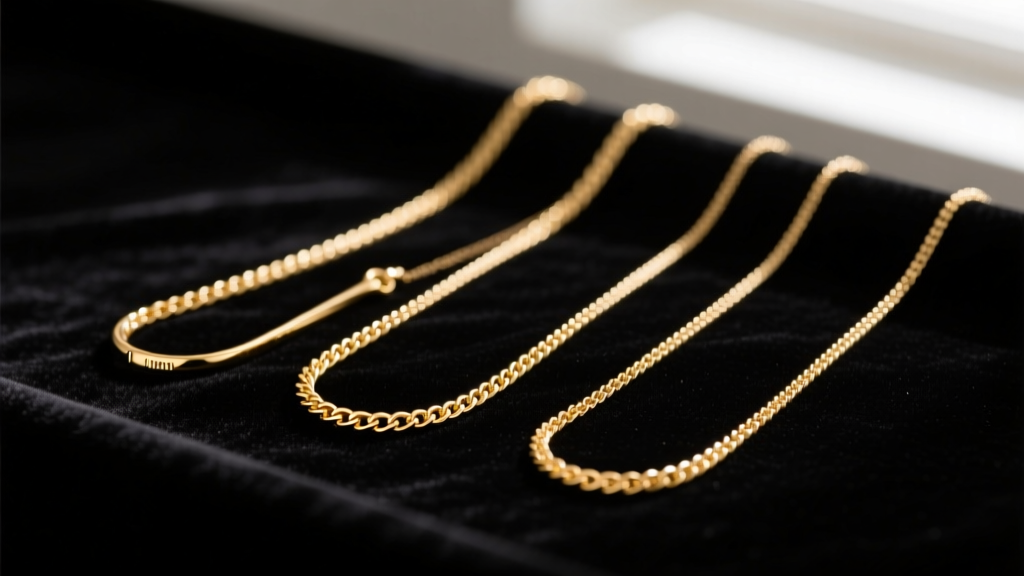
The Physics of Jewelry: Why Material Dictates Chain Size
When most shoppers look for a necklace chain size guide, they focus entirely on length and visual thickness. However, as a senior jewelry stylist, I can tell you that ignoring the metallurgical properties of the chain is the fastest way to end up with a snapped pendant and a lost gemstone. The physical dimensions of a chain—its gauge, width, and link architecture—are inextricably linked to the tensile strength, malleability, and density of the metal it is forged from.
As of 2026, modern jewelry manufacturing has introduced advanced alloys and precision laser-welding techniques, but the fundamental physics of precious metals remain unchanged. A 1-millimeter chain in 14-karat gold will behave entirely differently than a 1-millimeter chain in platinum or sterling silver. This comprehensive guide breaks down how to match your chain's physical size to its material properties to ensure lifelong durability.
Decoding the Measurements: Gauge vs. Millimeters
The jewelry industry uses two primary measurement systems for chain thickness: the American Wire Gauge (AWG) and the metric system (millimeters). Understanding the conversion is critical because tensile strength scales exponentially with the cross-sectional area of the wire, not just the diameter.
| AWG Size | Metric (mm) | Visual Profile | Best Use Case & Material Caveats |
|---|---|---|---|
| 22 AWG | 0.64 mm | Ultra-Fine / Thread-like | Layering only. Avoid for pendants. High break risk in soft metals like 24k or 18k gold. |
| 20 AWG | 0.81 mm | Delicate / Subtle | Lightweight pendants (under 3g). Requires soldered links. Platinum excels here; silver will stretch. |
| 18 AWG | 1.02 mm | Standard Delicate | Everyday wear for small charms. The minimum safe threshold for 18k gold cable chains. |
| 16 AWG | 1.29 mm | Medium / Versatile | Ideal for standard pendants (5g-10g). Excellent structural integrity across all precious metals. |
| 14 AWG | 1.63 mm | Heavy / Statement | Heavy gemstone pendants and lockets. Highly resistant to pendulum stress and snapping. |
Material Properties Dictating Minimum Chain Sizes
According to the Gemological Institute of America (GIA), the alloy composition of precious metals drastically alters their yield strength. You cannot apply a universal 'safe size' across different metals.
Gold: The Karat Conundrum
Pure 24-karat gold is incredibly malleable and entirely unsuitable for load-bearing chains. Therefore, we look to 14k and 18k gold. 14k gold (58.5% pure gold) is alloyed with copper, silver, and zinc, giving it a significantly higher tensile strength than 18k gold (75% pure gold).
The Sizing Rule: An 18k gold chain needs to be roughly 15% to 20% thicker in gauge than a 14k gold chain to support the exact same pendant weight without suffering from link elongation (stretching) over time. If you are buying an 18k gold chain for a 10-gram pendant, do not go below 1.4mm (approx. 15 AWG), whereas a 1.2mm (16 AWG) 14k gold chain will hold it securely.
Platinum: The Density and Strength Powerhouse
Platinum is dense, heavy, and possesses superior structural memory compared to gold. When a platinum link is stressed, it tends to bend or displace metal rather than snap or stretch permanently. Furthermore, modern Pt950 alloys utilizing Ruthenium (Ru) offer vastly superior Vickers hardness compared to older Iridium (Ir) blends.
Because of its immense tensile strength, you can safely size down with platinum. A 0.9mm platinum cable chain can easily support a pendant that would require a 1.3mm chain in sterling silver. However, be mindful of the weight; platinum is roughly 60% denser than 14k gold, meaning a thick 3mm platinum chain will feel incredibly heavy on the cervical spine.
Sterling Silver & Argentium: The Creep Factor
Sterling silver (92.5% silver, 7.5% copper) is notorious in metallurgy for 'creep'—the tendency of a material to slowly deform under constant mechanical stress. If you hang a heavy pendant on a thin sterling silver chain, the links will slowly elongate into oval shapes over a few months.
Always size up when choosing sterling silver. For everyday pendant wear, never drop below 1.5mm in a round cable or rolo link. Alternatively, seek out Argentium silver, a modern alloy containing germanium that offers higher tarnish resistance and slightly improved structural rigidity, though it still requires conservative sizing for heavy loads.
Chain Link Styles and Structural Weak Points
The physical shape of the link alters the effective thickness and vulnerability of the chain. A 2mm rope chain is not as strong as a 2mm solid curb chain. Here is how structural integrity ranks across popular styles:
- Solid Curb & Cuban Links: The highest structural integrity. The flat, interlocking links distribute weight evenly and resist twisting. Excellent for heavy pendants in softer metals like 18k gold.
- Box Chains: High tensile strength but vulnerable to crushing. If a box chain link gets bent, it loses its structural geometry and becomes a weak point. Avoid for wearers who sleep in their jewelry.
- Rope Chains: Visually thick but structurally deceptive. The twisted links create a lot of surface area but rely on tiny connection points. A 2mm rope chain is weaker than a 1.5mm solid cable chain.
- Wheat (Spiga) Chains: Exceptional flexibility and high resistance to snapping due to the multi-directional weaving of the links. A fantastic choice for mid-weight pendants in 14k gold.
Expert Insight: The clasp ring (the jump ring connecting the chain to the pendant) is the single most common failure point in jewelry. Always ensure the jump ring is soldered shut. An unsoldered 18-gauge jump ring will eventually pull apart under the pendulum motion of a pendant, regardless of how thick the chain itself is.
The Weight-to-Pendant Ratio Framework
To guarantee longevity, jewelry bench professionals use a weight-to-pendant ratio. The chain must not only support the static weight of the pendant but also the dynamic kinetic energy generated when the wearer walks, bends, or moves suddenly.
Recommended Ratios by Metal Type
- 14k Gold & Platinum: The chain's total weight should be at least 1.5x to 2x the weight of the pendant. (e.g., A 5g pendant requires a chain weighing 7.5g to 10g).
- 18k Gold: The chain's total weight should be at least 2.5x the weight of the pendant to compensate for the softer alloy.
- Sterling Silver: The chain's total weight should be at least 3x the weight of the pendant to prevent link elongation and creep.
Length, Drop, and Material Stress
The final variable in our necklace chain size guide is length. The longer the chain, the more kinetic energy it generates. A 24-inch chain swinging against the chest creates significantly more 'whip-stress' on the clasp and the top three links than an 18-inch choker-style chain resting on the collarbone.
If you prefer longer, opera-length chains (28 to 32 inches) for layering or wearing over garments, you must increase your gauge size by at least 0.2mm to 0.3mm to account for the increased pendulum effect. For long chains in sterling silver or 22k gold, it is highly recommended to use a thicker, more robust link style like a solid curb or a soldered rolo to withstand the dynamic tension.
Final Thoughts on Sizing and Longevity
Choosing the right necklace chain is an exercise in balancing aesthetics with metallurgical reality. By cross-referencing your desired visual thickness with the specific tensile properties of your chosen metal, you can build a jewelry collection that is not only beautiful but engineered to last generations. Always prioritize soldered links, respect the weight-to-pendant ratios, and remember that when it comes to softer metals, sizing up is the ultimate insurance policy for your most cherished pendants.


