Mastering Necklace Chain Sizes: 2026 Trends & Fit Guide
Discover the ultimate guide to necklace chain sizes for 2026. Learn exact widths, lengths, and layering trends to perfectly match your neckline and pendants.


When it comes to curating a timeless yet contemporary jewelry wardrobe, understanding the nuances of necklace chain sizes is non-negotiable. In 2026, the jewelry industry has shifted away from haphazard, cluttered layering toward what stylists call 'architectural proportion.' This means every millimeter of width and every inch of length is chosen with deliberate intent. Whether you are selecting a delicate cable chain for a minimalist diamond solitaire or a heavy curb chain for a standalone streetwear statement, the dimensions of your chain dictate not only the visual weight of the piece but also its structural longevity. In this comprehensive style and trend analysis, we break down the exact measurements, material tolerances, and styling frameworks you need to master necklace chain sizes this year.
The Evolution of Necklace Chain Sizes in 2026
Over the past decade, the market was dominated by the 'more is more' layering trend, where dozens of ultra-thin, nearly identical chains were piled onto the neck. However, 2026 has ushered in a renaissance of contrast and intentionality. Today's trendsetters and high jewelry houses are focusing on stark juxtapositions in necklace chain sizes. We are seeing a massive spike in demand for mixed-width layering—pairing a sub-millimeter thread chain with a chunky, 5mm hollow-tube or paperclip chain. This evolution requires a deeper understanding of how different chain widths interact with light, skin tone, and clothing necklines. According to recent market analyses featured in Vogue's fashion trend reports, the modern consumer is investing in fewer, but highly specific, chain dimensions that serve distinct stylistic purposes rather than buying bulk packs of generic 18-inch cables.
Decoding Chain Widths: Millimeters vs. Visual Weight
The width of a chain, measured in millimeters (mm), is the primary driver of its visual weight and tensile strength. However, not all chain styles carry the same visual mass at the same millimeter width. For instance, a 3mm Figaro chain will look significantly heavier and wider than a 3mm box chain due to the flattened surface area of its links. When evaluating necklace chain sizes, you must consider both the caliper measurement and the link geometry.
| Width (mm) | Category | Max Pendant Weight | Best Use Case & Styles |
|---|---|---|---|
| 0.8mm - 1.0mm | Thread / Delicate | 2g - 3g | Solitaire diamonds, micro-charms, base layers for complex stacks. |
| 1.2mm - 2.0mm | Standard / Versatile | 5g - 8g | Everyday birthstones, medium lockets, cable and rolo chains. |
| 2.5mm - 4.0mm | Statement / Anchor | 10g - 20g | Heavy gemstone pendants, signet carriers, rope and curb chains. |
| 5.0mm+ | Bold / Standalone | N/A (Worn alone) | Streetwear, hip-hop aesthetics, standalone Figaro or Cuban links. |
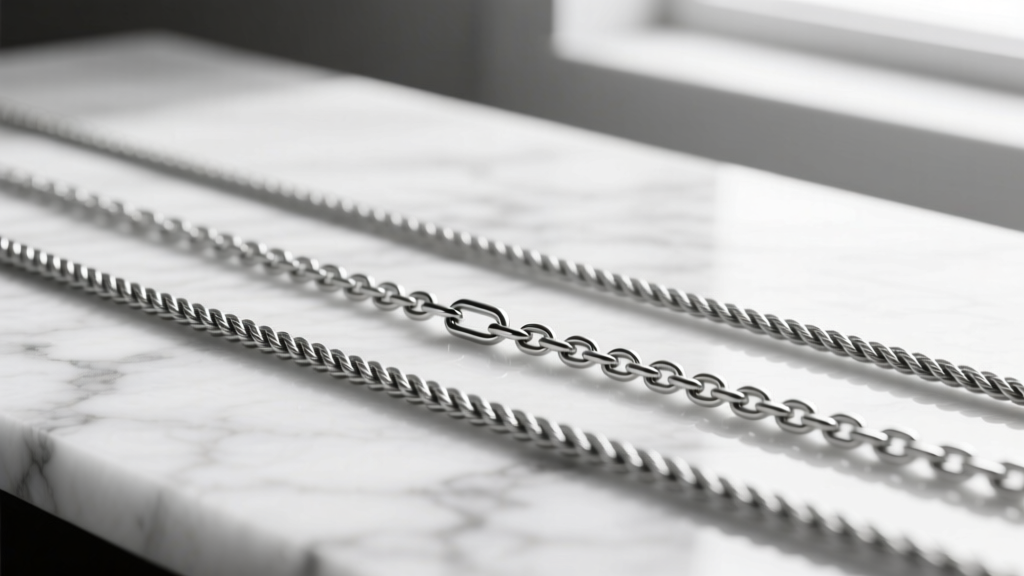
Length Proportions: Mapping the Collarbone to the Sternum
While width dictates the 'heaviness' of the piece, length determines its relationship with your anatomy and wardrobe. The standardization of necklace chain sizes typically falls into five distinct tiers, each serving a unique stylistic function. As highlighted by the jewelry educators at the Gemological Institute of America (GIA), the way a metal rests against the skin can also affect how its color and polish are perceived, making length a critical component of overall design.
The 14 to 16 Inch Sweet Spot: Collar and Collarbone
Chokers (14 inches) and collarbone-length chains (16 inches) remain the undisputed champions of the V-neck and scoop-neck wardrobe. In 2026, the 15-inch 'princess' length has emerged as a highly sought-after middle ground, offering the close-to-the-neck elegance of a choker without the restrictive feeling. A 1.5mm rope chain at 15 inches perfectly frames the clavicle, drawing the eye upward and highlighting the neckline. This length is strictly reserved for lightweight pendants or bare, textured chains like the beaded or popcorn styles.
The 18 to 24 Inch Range: The Chest and Sternum
The 18-inch chain is the industry standard for a reason: it rests just below the collarbone, making it universally flattering and compatible with almost any pendant up to 8 grams. However, the true trend for 2026 lies in the 22-to-24-inch 'matinee' length. This longer dimension is currently dominating the layering scene, acting as the foundational anchor for a three-chain stack. When wearing a 24-inch chain, opt for widths between 2.5mm and 4mm; anything thinner will visually disappear against the chest, while anything thicker risks looking cumbersome over knitwear or silk blouses.
Opera and Rope Lengths: The 28 to 36 Inch Revival
Once relegated to vintage pearl strands, opera-length chains (28-36 inches) have been reclaimed by modern streetwear and high-fashion avant-garde stylists. A 30-inch, 3mm hollow-paperclip chain worn over a tailored blazer or a simple white tee creates an elongating, vertical line that is incredibly chic. These lengths are rarely used for pendants; instead, they rely on the chain's intrinsic texture and the way it drapes and swings with the wearer's movement.
Structural Integrity: Gauge, Clasps, and Failure Points
A beautiful chain is useless if it snaps under the weight of its pendant. When analyzing necklace chain sizes, we must discuss the engineering of the links and the hardware. The most common failure point in fine jewelry is not the chain itself, but the jump ring connecting the clasp to the links.
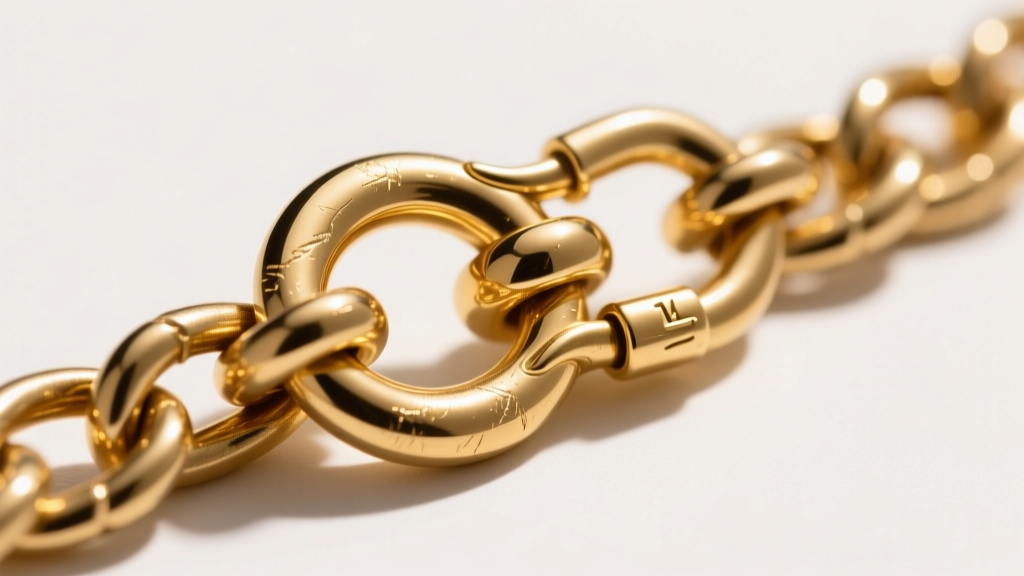
For chains under 1.5mm, spring-ring clasps are standard, but they are notorious for slipping open when caught on clothing. For any chain exceeding 2.0mm, or any chain holding a pendant over 5 grams, a lobster clasp is mandatory. Furthermore, the alloy of the gold plays a massive role in structural integrity. An 18k gold chain is softer and more malleable than a 14k gold chain. A 1.2mm 18k cable chain will stretch and eventually snap under a 7-gram pendant due to the unsoldered links pulling apart. Conversely, a 1.2mm 14k box chain will hold the same weight effortlessly because the box links are structurally geometric and the 14k alloy offers higher tensile strength. For ultimate security, always look for chains with laser-welded jump rings and soldered links, especially in delicate sizes.
2026 Trend Forecast: What’s Dominating the Layering Scene
If you want to style your necklace chain sizes like a contemporary editor, abandon the 'cluttered' look and adopt the 'Rule of Three with High Contrast.' This 2026 styling framework relies on precise mathematical gaps in both length and width.
- Layer 1 (The Anchor): 16 inches, 0.9mm cable chain. Worn bare or with a micro-bezel diamond.
- Layer 2 (The Bridge): 18.5 inches, 2.5mm paperclip chain. The elongated links provide a modern, industrial texture that contrasts with the traditional cable.
- Layer 3 (The Statement): 22 inches, 4.5mm hollow-tube or Figaro chain. This provides the visual weight at the bottom of the stack, grounding the entire look.
This specific combination ensures that no chain tangles with the other, and the varying widths catch the light differently, creating a dynamic, multi-dimensional aesthetic that feels curated rather than accidental.
Final Sizing Framework for Pendants
Matching a pendant to a chain is an exercise in proportional balance. A common mistake is pairing a massive, heavy gemstone pendant with a thick, dominant chain. The chain should support the pendant, not compete with it. As a general rule, the bail (the loop that attaches the pendant to the chain) dictates the maximum width of the chain. If your pendant has a delicate 3mm bail, forcing a 4mm chain through it will cause friction, wear down the metal, and eventually compromise the bail's integrity.
The Golden Ratio of Pendants: The visual weight of the chain should be roughly 20% to 30% of the visual weight of the pendant. If you are wearing a bold, 20mm signet pendant, a 2.0mm to 2.5mm rope or box chain provides the perfect structural support while allowing the pendant to remain the undisputed focal point.
Mastering necklace chain sizes is about understanding the intersection of metallurgy, geometry, and personal style. By paying close attention to millimeter widths, exact lengths, and the structural realities of different alloys and link styles, you can build a jewelry collection in 2026 that is not only visually stunning but engineered to last a lifetime. For further reading on how to measure and care for your fine jewelry, consult the comprehensive guides at The Knot's jewelry education hub.


