Necklace Christmas Gift Guide 2026: Metals, Lengths & Budgets
Your ultimate necklace Christmas gift guide for 2026. Learn to choose hypoallergenic metals, ideal lengths, and fine pendants for every holiday budget.

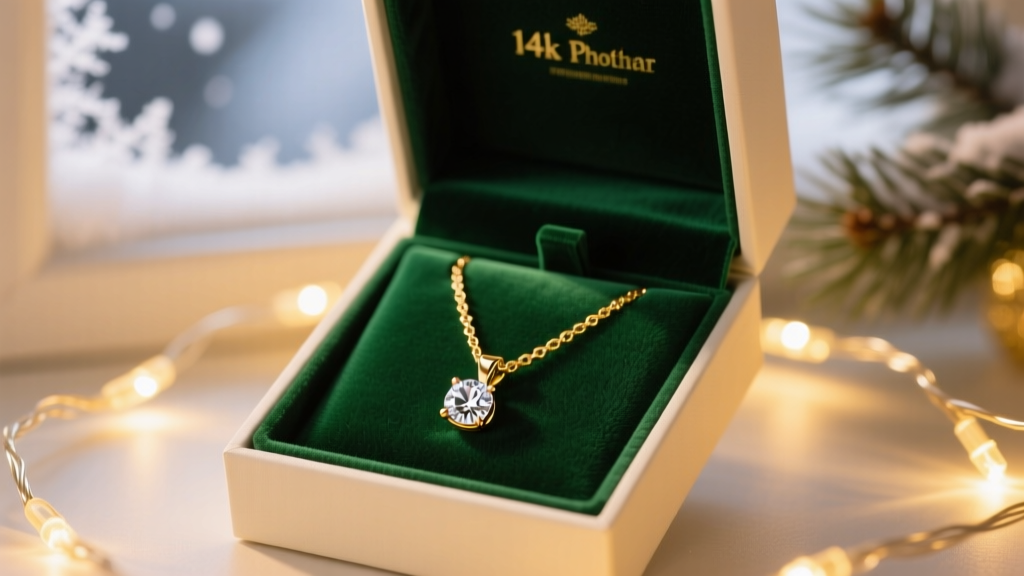
The holiday season is notorious for aggressive jewelry marketing, but finding a truly meaningful, high-quality piece requires looking past the glittering mall displays. As we navigate the 2026 holiday shopping season, the market is flooded with flash-plated brass disguised as fine jewelry. Whether you are shopping for a partner, a mother, or treating yourself, choosing the right necklace Christmas gift means understanding metal grades, chain architecture, and how winter wardrobes dictate jewelry proportions.
This comprehensive buying guide strips away the holiday fluff. We will break down exact metal thicknesses, structural chain vulnerabilities, and gemstone durability metrics so you can invest in a piece that survives far beyond the holiday season.
The Hidden Trap of Holiday Jewelry Marketing
Every November, major retailers roll out "holiday fine jewelry" collections that are anything but fine. The most common trap is the "gold dipped" or "waterproof" marketing terminology applied to brass or copper bases. While these pieces look stunning under showroom halogens, the reality of daily wear tells a different story. The acidity of human skin, combined with winter lotions and friction from heavy scarves, will strip ultra-thin gold plating in a matter of weeks, leaving the wearer with a green-stained neckline and a ruined gift.
To avoid the dreaded post-Christmas tarnish, you must look for specific hallmark stamps and plating thickness metrics, which we detail below.
Decoding Metal Grades: What to Actually Buy
When selecting a necklace Christmas gift, the base metal and the thickness of any gold overlay are the primary determinants of longevity and price. According to the Gemological Institute of America (GIA), understanding karatage and alloy composition is essential for avoiding allergic reactions and premature wear.
| Metal Classification | Composition & Thickness | Estimated Price Range | Longevity & Wearability |
|---|---|---|---|
| Flash Gold Plated | Brass base, 0.175 microns gold | $30 - $80 | Poor. Tarnishes in weeks; high allergy risk. |
| Gold Vermeil | .925 Sterling Silver base, minimum 2.5 microns gold | $90 - $250 | Good. Lasts 1-3 years with careful wear; hypoallergenic base. |
| Gold Filled | Brass base, 5% solid gold by weight (mechanically bonded) | $60 - $150 | Excellent. Can last decades, but limited chain style options. |
| Solid 14k Gold | 58.5% pure gold alloyed with silver/copper/zinc | $350 - $1,200+ | Lifetime. Waterproof, tarnish-resistant, and heirloom quality. |
The Federal Trade Commission (FTC) Jewelry Guides strictly regulate the use of the term "Vermeil." For a piece to be legally sold as vermeil in the US, it must have a sterling silver base and a gold overlay of at least 2.5 microns. If a brand cannot provide the micron thickness, assume it is standard flash plating.
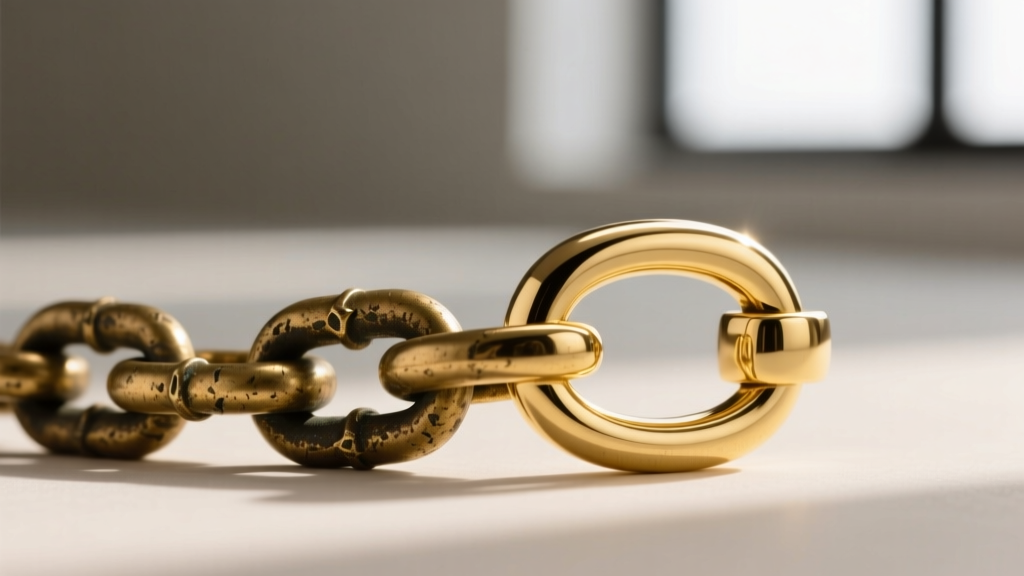
Chain Architecture: Avoiding the Tangled Mess
A beautiful pendant is useless if the chain it hangs from is structurally flawed. Winter clothing—think thick wool sweaters, scarves, and high-collared coats—creates immense friction and snagging hazards. Here is how common chain styles hold up to daily winter wear:
- Cable & Curb Chains: The gold standard for durability. Their simple, interlocking oval links lie flat, resist tangling, and are easily repaired by any jeweler if a link pulls apart. Ideal for holding moderate-weight pendants.
- Box Chains: Popular for their modern, geometric look. However, thin box chains (under 1.2mm) are highly susceptible to denting and crushing. Once a box link is crushed, it cannot be un-dented and must be replaced.
- Snake Chains: Often sold in holiday sets because they look sleek and tubular. Avoid these for daily wear. Snake chains kink permanently if bent, trap skin oils and lotions in their microscopic seams, and frequently snap at the solder point near the clasp.
- Rope Chains: Excellent for heavy pendants due to their twisted, multi-link structure. They are incredibly strong but require regular cleaning with a soft brush to remove winter lotion buildup from the crevices.
The Winter Wardrobe Matrix: Matching Lengths to Necklines
A necklace that looks perfect on a bare collarbone in July might completely disappear under a January wardrobe. When buying a necklace Christmas gift, consider the recipient's winter clothing staples.
16-Inch (Choker / Collar)
Sits tightly at the base of the neck. This length is easily swallowed by turtlenecks and thick scarves. It is best suited for recipients who frequently wear V-necks, scoop necks, or open-collar blouses, allowing the piece to rest directly on the skin.
18-Inch (Princess)
The most versatile and universally flattering length. It rests just below the collarbone. An 18-inch chain with a 10mm to 15mm pendant is the safest bet for a holiday gift, as it transitions well from office blouses to moderate-knit sweaters.
20 to 24-Inch (Matinée)
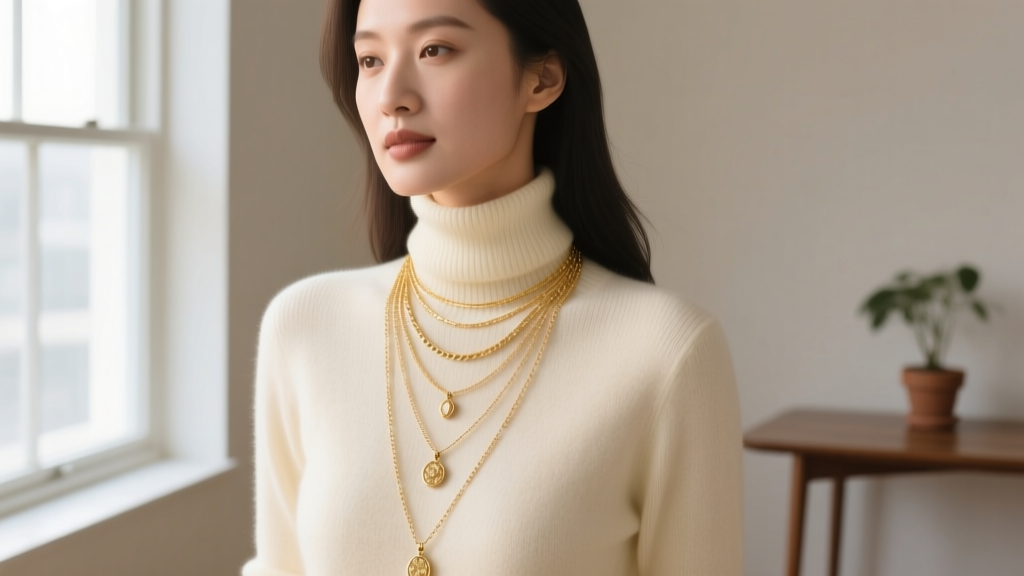
Essential for the turtleneck wearer. If your recipient favors high-neck winter knits, a 20-inch or 24-inch chain with a bold, structural pendant is mandatory. The longer length creates a vertical line that breaks up the visual bulk of heavy winter fabrics.
Pendant Gemstones: A Mohs Scale Reality Check
If your necklace Christmas gift includes a gemstone pendant, you must consider the Mohs Hardness Scale. Pendants swing freely and are constantly subjected to micro-impacts against desks, steering wheels, and winter zippers.
- Pearls (2.5 - 4.5) & Opals (5.5 - 6.5): Highly vulnerable. Pearls can be easily scratched by metal zippers, and opals are prone to cracking in the dry, artificially heated environments of winter homes. Buy these only for recipients who treat their jewelry as occasional-wear art pieces.
- Amethyst & Citrine (7): The minimum threshold for safe, everyday pendant wear. Quartz-family stones resist scratching from common dust (which contains quartz particles) and hold up well against winter fabrics.
- Sapphires (9), Rubies (9), & Diamonds (10): Virtually indestructible in a daily-wear pendant scenario. If budget permits, a solid 14k gold chain with a bezel-set sapphire or diamond is the ultimate heirloom holiday gift.
Final Pre-Purchase Checklist
Before you finalize your holiday order, run the piece through this quick quality-assurance checklist:
- The Clasp Test: Ensure the chain features a lobster clasp rather than a spring-ring clasp. Lobster clasps are significantly more durable, and their larger lever is much easier to manipulate with cold, stiff fingers during the winter months.
- The Jump Ring: Look closely at the small ring connecting the pendant to the chain. Is it soldered shut? An unsoldered jump ring will eventually pull apart under the weight of winter scarves, resulting in a lost pendant.
- The Hallmark: Verify the presence of a "925" stamp for sterling silver/vermeil, or "14k"/"585" for solid gold. If there is no stamp, walk away.
By prioritizing structural integrity and material transparency over flashy holiday packaging, you ensure your necklace Christmas gift remains a cherished, wearable staple for years to come.


