Mastering the Necklace GIF Hunt: Material Drape Guide
Learn how to master the necklace gif hunt by evaluating material drape, specific gravity, and light reflection in motion for smarter jewelry buys.

The Evolution of Online Jewelry Evaluation
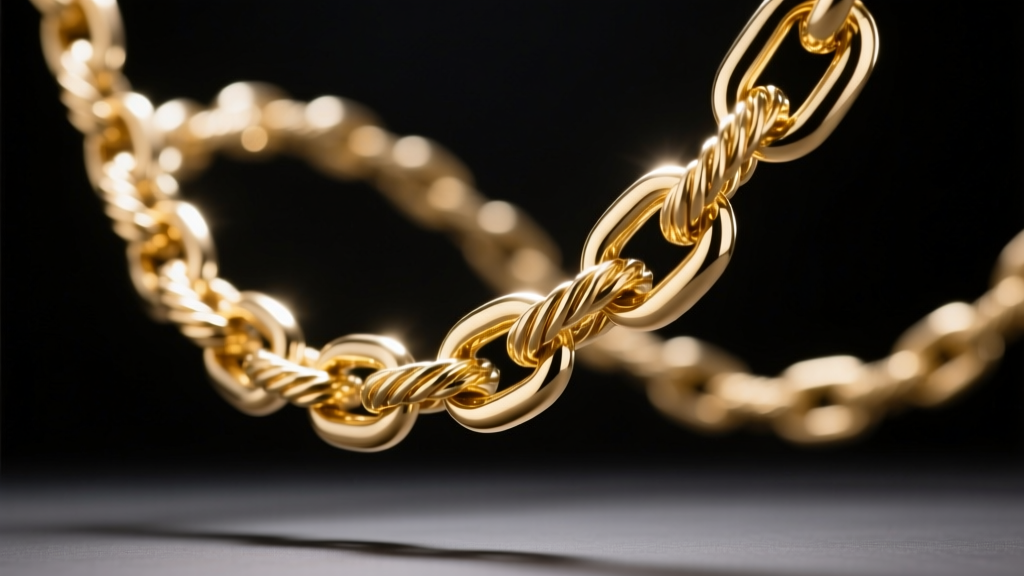
Welcome to the 2026 era of digital jewelry acquisition. High-resolution static images, while beautiful, fail to capture the most critical aspect of a necklace: its kinetic behavior. Enter the necklace gif hunt—a modern colloquialism among stylists, collectors, and savvy buyers for the meticulous process of scouring the web for high-framerate, looping micro-videos (GIFs or WebP loops) to assess how a piece moves, drapes, and interacts with light. A necklace is not a static sculpture; it is a dynamic accessory governed by physics. Understanding material properties is the key to winning the necklace gif hunt and predicting how a chain will behave when it leaves the display case and meets your collarbone.
When you analyze a looping animation of a necklace, you are essentially observing a real-time stress test of metallurgy, specific gravity, and link articulation. This guide will break down the exact material properties that dictate chain movement, allowing you to evaluate digital media with the eye of a master jeweler.
The Physics of Chain Drape: Density and Specific Gravity
The most prominent visual cue in any necklace gif hunt is the 'drape'—the way the chain falls and settles against the body. This is primarily governed by the material's Specific Gravity (SG), which dictates its density and, consequently, its weight-to-volume ratio. A heavier chain will pull tauter and exhibit a pendulum-like fluidity, while a lighter chain may float, kink, or fail to lay flat.
Comparing the Heavyweights and the Featherweights
- Platinum (SG ~21.45): The undisputed heavyweight of fine jewelry. In a GIF loop, a platinum chain will exhibit a luxurious, heavy drape. It pulls the pendant downward with authority, creating a deep, elegant U-shape at the décolletage. However, its density means that thicker platinum chains can become uncomfortably heavy for all-day wear.
- 18k Yellow Gold (SG ~15.5): Offering a near-perfect balance of luxury and wearability, 18k gold provides a substantial drape without the neck fatigue of platinum. According to the Gemological Institute of America (GIA), the alloy mix in 18k gold (75% pure gold mixed with copper and silver) not only provides structural integrity but also contributes to its warm, heavy swing in motion.
- Grade 5 Titanium (SG ~4.43): Titanium is exceptionally light. In a necklace gif hunt, titanium chains often appear stiff or 'floaty' because they lack the gravitational pull to articulate smoothly through tight link tolerances. While ideal for massive, oversized statement chains where weight is a concern, it lacks the liquid drape of precious metals.
Material Light Reflection in Motion
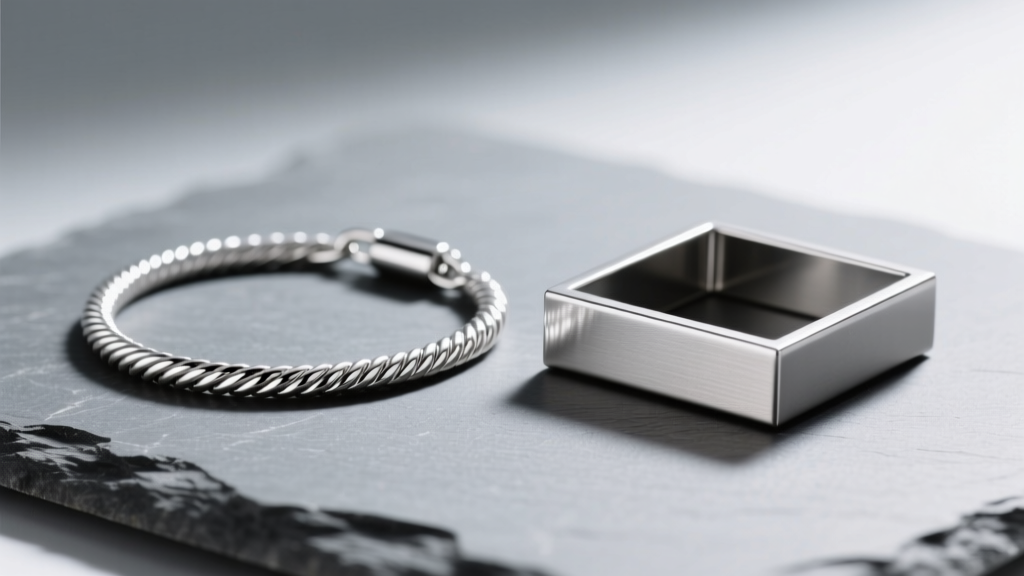
Static photos can be heavily edited to enhance sparkle, but a looping GIF reveals the true albedo and light-reflective properties of a metal in motion. The way a material catches and disperses light as it shifts is a dead giveaway of its composition and finishing quality.
The Albedo Effect and Patina
White metals, in particular, behave vastly differently in motion. Platinum, while highly reflective, is prone to developing a patina—a microscopic shifting of the metal surface that scatters light, giving it a softer, more diffused glow in looping videos. In contrast, 14k or 18k white gold is typically rhodium-plated. In a GIF, rhodium-plated white gold will exhibit sharp, mirror-like flashes of light, almost mimicking the scintillation of a diamond.
'When conducting a necklace gif hunt, pay close attention to the shadows cast by the links. High-karat gold absorbs and warms light, casting soft, amber-tinted shadows, while stainless steel reflects harsh, cool, and high-contrast light rays.'
Sterling silver, unless treated, will often show microscopic oxidation in the crevices of the links, creating a high-contrast 'chiaroscuro' effect in motion. Modern Argentium silver, however, contains germanium, which drastically reduces tarnish and maintains a uniform, bright reflection even in the deepest link joints.
Link Articulation, Friction, and Failure Modes
A common frustration during a necklace gif hunt is spotting a chain that looks like a rigid garden hose rather than a fluid piece of jewelry. This stiffness is a byproduct of manufacturing tolerances, link geometry, and metallurgical friction.
Why Some Chains Look Stiff in Motion
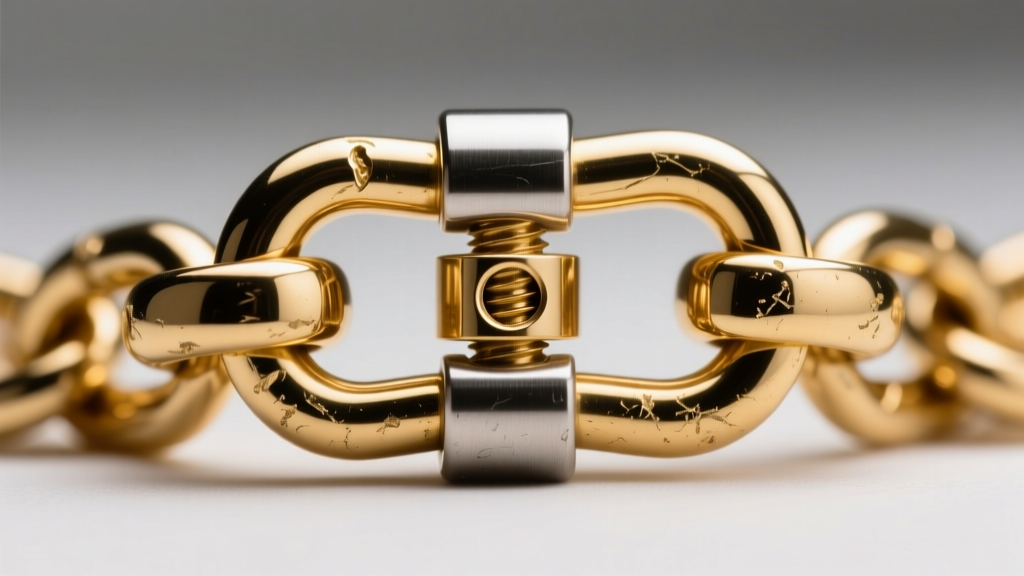
The fluidity of a chain is dictated by the 'play' or micro-millimeter gap between interlocking links. CNC-machined links in harder metals like 316L stainless steel or titanium often have tighter tolerances. Furthermore, titanium is notorious for galling—a form of wear caused by adhesion between sliding surfaces. If a titanium chain is not properly polished and lubricated during assembly, the links will bind, resulting in a jerky, stuttering movement that is immediately obvious in a high-framerate GIF.
Conversely, high-karat gold (22k or 24k) is incredibly soft (Vickers Hardness ~60-90 HV). While it drapes like liquid silk, it is highly susceptible to work hardening and stretching. If you see a gold chain in a looping video where the links appear slightly elongated or asymmetrical, you are witnessing the early stages of structural failure caused by the metal's low yield strength.
The Ultimate Material Comparison Chart
To systematize your necklace gif hunt, use this metallurgical reference table to predict how a material will perform based on its physical properties.
| Material | Specific Gravity (SG) | Vickers Hardness (HV) | Drape Fluidity | Light Reflection | Common Failure Mode |
|---|---|---|---|---|---|
| Platinum 950 | 21.45 | 125 - 140 | Heavy, luxurious | Diffused, patinas over time | Link stretching under heavy pendants |
| 18k Yellow Gold | 15.50 | 120 - 150 | Fluid, substantial | Warm, high-flash | Clasp ring wear, link thinning |
| 14k White Gold | 13.50 | 130 - 160 | Moderate, crisp | Mirror-like (Rhodium plated) | Rhodium wear revealing yellow undertones |
| 316L Stainless Steel | 8.00 | 150 - 200 | Stiff, structured | Cool, harsh, high-contrast | Clasp spring fatigue, link binding |
| Grade 5 Titanium | 4.43 | 330 - 350 | Floaty, rigid | Muted, matte or brushed | Galling, impossible to resize/solder |
How to Conduct Your Own Necklace GIF Hunt: A 4-Step Framework
Armed with metallurgical knowledge, you can now approach the necklace gif hunt with a critical, analytical eye. Follow this four-step framework when evaluating looping videos from online retailers or independent jewelers.
1. Analyze the Pendulum Swing
Pause the GIF and observe the lowest point of the chain. Does it form a sharp, tight 'V' or a wide, relaxed 'U'? A tight 'V' on a thick chain indicates a lack of articulation or a material that is too stiff (like steel or titanium). A relaxed 'U' indicates proper link play and a material with adequate density to pull the chain into a natural curve.
2. Check the Clasp Equilibrium
The clasp should remain hidden at the nape of the neck. In the GIF, look at the ratio of the clasp weight to the chain weight. If the model in the video is constantly adjusting the necklace, or if the clasp is visibly creeping toward the collarbone, the material density of the chain is too low to counterbalance the clasp—a common issue with hollow-core gold or titanium chains.
3. Look for Micro-Kinking
Play the loop at 0.5x speed. Watch the chain as it transitions from the model's shoulder to the chest. If you see microscopic 'kinks' or zig-zag patterns forming in the links, the chain has likely suffered from work hardening or poor manufacturing tolerances. According to the World Gold Council, proper annealing during the manufacturing process is vital to ensure gold chains remain pliable; kinking in a GIF is a red flag for skipped annealing steps.
4. Evaluate the Shadow Play
Turn your attention to the shadows cast on the model's skin. Sharp, defined shadows indicate deep, well-stamped links with high-precision polishing (common in luxury Figaro or Mariner chains). Muddy or blurred shadows suggest cast links that have been mass-tumbled rather than individually polished, resulting in rounded edges that fail to catch light dynamically.
Final Thoughts on Kinetic Jewelry Evaluation
The necklace gif hunt is more than just a trendy way to shop; it is a vital due diligence process that bridges the gap between digital browsing and physical reality. By understanding the specific gravity, hardness, and articulation properties of different metals, you can look past the marketing hype and accurately predict how a necklace will feel, drape, and perform in the real world. The next time you find yourself scrolling through looping videos of fine jewelry, remember: you aren't just looking at a chain; you are watching physics and metallurgy in action.


