Necklace Guitar Pick Buying Guide: Metals, Gauges & Chains
Discover how to choose the perfect necklace guitar pick. Compare metals, gauges, and chains for gigging musicians and everyday wear in our expert guide.

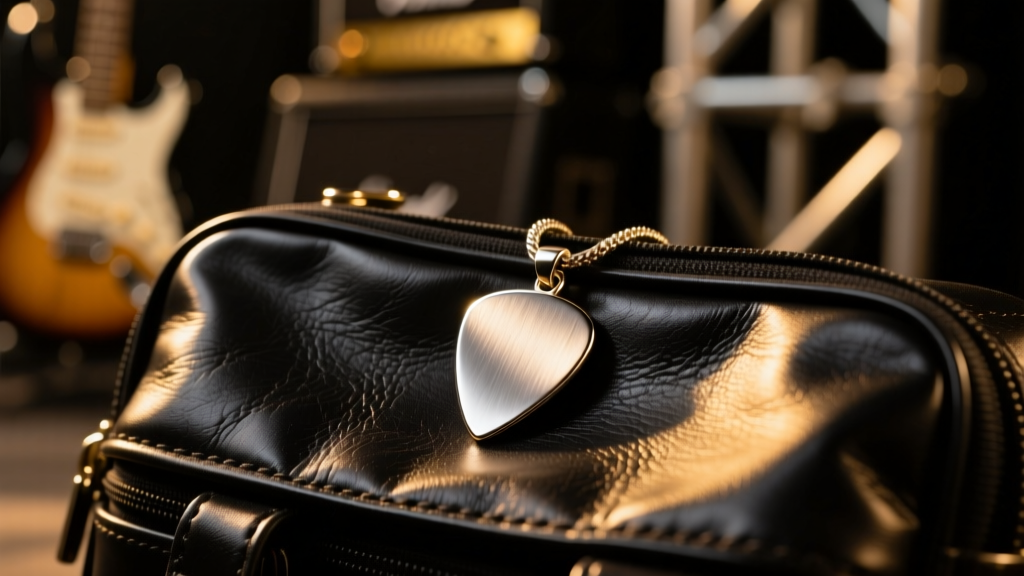
Why Material Dictates Both Sound and Style
When shopping for a necklace guitar pick, the intersection of musical functionality and jewelry craftsmanship is where most buyers make critical mistakes. A guitar pick pendant is not just a piece of memorabilia; it is an accessory subjected to the harsh realities of a musician's lifestyle, including acidic sweat, constant friction, and accidental impacts. According to Sweetwater's comprehensive pick guide, the material of a pick fundamentally alters its attack, flexibility, and tone. However, when translated into jewelry, those same material properties dictate the pendant's longevity, tarnish resistance, and skin safety.
The most common mistake buyers make is opting for standard 925 sterling silver without considering the environment. Sterling silver contains 7.5% copper, which reacts rapidly with the sulfur and salts found in human sweat. For a gigging musician wearing their pick pendant under hot stage lights, a sterling silver necklace guitar pick will oxidize, turning black and potentially leaving a green residue on the chest within weeks. Instead, domain experts recommend 316L surgical stainless steel or Grade 5 Titanium for active musicians. These alloys are virtually impervious to sweat corrosion and maintain their structural integrity despite daily wear and tear.
Gauge Thickness: Playability vs. Pendant Durability
In the guitar world, pick thickness (gauge) is measured in millimeters and dictates playing style. A thin pick (0.46mm) flexes for strumming, while a heavy pick (1.14mm) provides rigidity for lead playing. However, in the realm of jewelry, these standard gauges are far too fragile. If you purchase a metal necklace guitar pick that is only 0.73mm thick, it will easily bend out of shape if snagged on clothing or dropped.
For a metal pendant to survive daily wear without warping, it must be stamped or cast at a minimum thickness of 1.5mm, with 2.0mm being the ideal standard for a premium feel. While a 2.0mm stainless steel pick is virtually unplayable on steel acoustic strings due to its lack of flex and harsh attack, it serves as an indestructible, heavy-duty fashion statement. If you require a pendant that can actually be removed and used for playing, you must look for hybrid designs or specific acrylic materials.
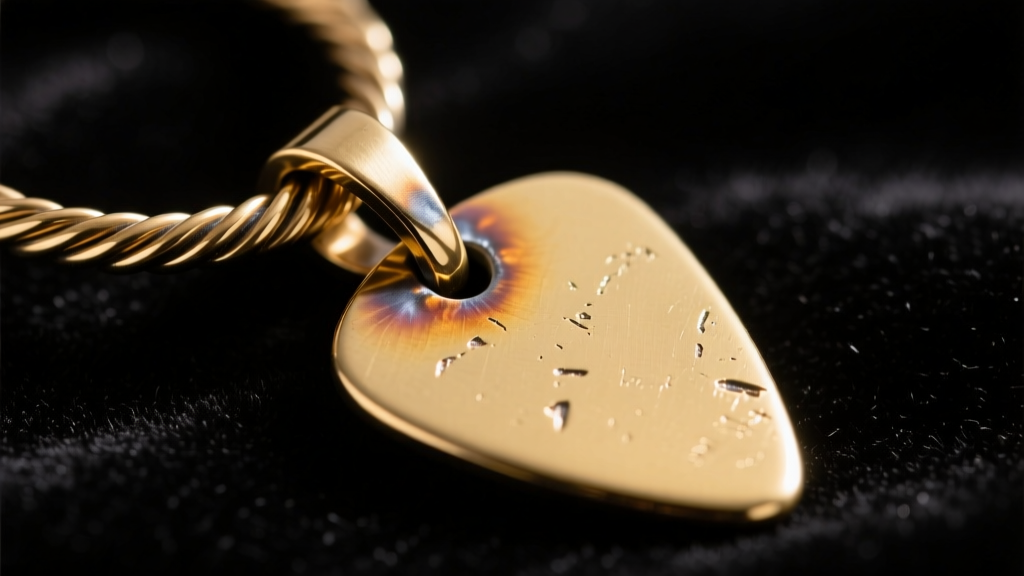
The Bail Connection: Drilled vs. Soldered
How the chain attaches to the pick is just as important as the pick itself. There are three primary bail types used in pick necklaces:
- Drilled Hole: A simple hole punched near the top of the pick. While cost-effective, drilling compromises the structural integrity of thin metal picks, creating a stress point that can lead to tearing over time.
- Soldered Bail: A metal loop soldered onto the surface of a thick (1.5mm+) metal pick. This is the gold standard for metal pendants, distributing the weight of the chain evenly without weakening the pick's body.
- Bezel Wrap: Used for non-metal picks (like acrylic, Delrin, or genuine tortoiseshell). A metal frame wraps around the edges, protecting the fragile playing material while providing a secure loop for the chain.
Choosing the Right Chain for a Guitar Pick Pendant
A heavy 2.0mm metal pick requires a chain with adequate tensile strength and a clasp that won't fail mid-set. Flimsy 1.0mm cable chains are prone to snapping under the pendulum effect of a heavy pick bouncing against the chest during energetic performances.
For a necklace guitar pick, the optimal chain thickness is between 2.0mm and 3.0mm. The Box Chain is widely considered the best pairing for guitar picks. Its geometric, interlocking links lay flat against the skin, resist kinking, and most importantly, do not pull chest hair—a common complaint among musicians wearing rope or cable chains. Alternatively, a Wheat Chain offers a braided, textured look that complements the industrial vibe of a metal pick while providing excellent multi-directional strength.
Always inspect the clasp. Avoid spring-ring clasps, which are notoriously difficult to operate with one hand and prone to internal spring failure. A high-quality Lobster Clasp or a Toggle Clasp ensures the necklace stays secure, even if it gets snagged on a guitar strap or microphone cable.
Material Comparison Chart
To help you navigate the market, we have compiled a data table comparing the most common materials used in guitar pick necklaces based on durability, sweat resistance, and price.
| Material | Sweat & Tarnish Resistance | Ideal Gauge (Thickness) | Playability | Average Price Range |
|---|---|---|---|---|
| 316L Stainless Steel | Excellent (Hypoallergenic) | 1.5mm - 2.5mm | Poor (Too rigid/harsh) | $25 - $65 |
| 925 Sterling Silver | Poor (Requires Rhodium plating) | 1.2mm - 2.0mm | Fair (Smooth attack) | $45 - $120 |
| Grade 5 Titanium | Excellent (Ultra-lightweight) | 1.5mm - 3.0mm | Poor (Too rigid) | $70 - $150 |
| Delrin / Acrylic (Bezel) | Excellent (Synthetic) | 0.73mm - 1.14mm | Excellent (Standard feel) | $35 - $80 |
| Solid Brass | Moderate (Develops patina) | 1.5mm - 2.0mm | Fair (Warm tone) | $20 - $50 |
Functional vs. Fashion: Can You Actually Play With It?
A frequent question we receive at Jewel Style Radar is whether a metal necklace guitar pick can be used for actual playing. The short answer, supported by Fender's gear experts, is that metal picks are generally discouraged for everyday playing on standard nickel-wound or bronze strings. Metal-on-metal contact accelerates string wear, damages the pickguard, and produces an overly bright, scratching tone that sound engineers often struggle to EQ out in a live mix.
However, if the novelty of playing a riff with your necklace is a must-have feature, you should seek out a bezel-set Delrin or Ultem pick pendant. Delrin is a highly durable acetal resin used by brands like Tortex. When set in a sterling silver or stainless steel bezel with a removable bail or a long enough chain to reach the strumming hand, it functions as a legitimate, high-quality playing tool that won't destroy your guitar strings.

Price Tiers and What to Expect
Understanding the pricing landscape prevents overpaying for mass-produced items or underpaying for brittle, low-quality alloys.
- Under $30 (Entry Level): Expect thin, stamped brass or low-grade stainless steel with drilled holes and flimsy cable chains. These are fine for occasional fashion wear but will not survive the rigors of touring.
- $30 - $80 (Mid-Tier / Professional): The sweet spot for gigging musicians. You will find CNC-machined 316L steel, solid soldered bails, and high-quality box chains with lobster clasps. Custom laser engraving (like band logos or song lyrics) is often included in this tier.
- $80 - $200+ (Premium / Artisan): Hand-forged titanium, solid 14k or 18k gold, or artisan-crafted bezel settings featuring exotic materials like abalone shell, mammoth ivory, or carbon fiber inlays.
Final Pre-Purchase Checklist
Before adding a necklace guitar pick to your cart, run through this quick E-E-A-T verified checklist to ensure you are getting a piece that matches your lifestyle:
- Verify the Alloy: Ensure the listing specifies "316L Stainless Steel" or "Surgical Steel" rather than generic "metal" or "silver tone" to avoid nickel allergies and rapid tarnishing.
- Check the Thickness: Confirm the pendant is at least 1.5mm thick if it is solid metal, ensuring it won't bend when caught on a guitar strap.
- Inspect the Bail: Look for a soldered bail on metal picks or a secure bezel wrap on acrylic picks to prevent the chain from tearing through the material.
- Evaluate the Chain: Opt for a 2.0mm to 3.0mm box or wheat chain with a secure lobster clasp for optimal durability and comfort.
By prioritizing material science and structural jewelry design over mere aesthetics, you can secure a guitar pick necklace that honors your musical passion while standing up to the physical demands of the stage and everyday life.


