Finding a Necklace Handmade to Last: Material Comparison
Compare metals and materials for your next necklace handmade piece. Explore durability, tarnish rates, and metallurgical properties of artisan jewelry.

The Renaissance of Artisan Metallurgy
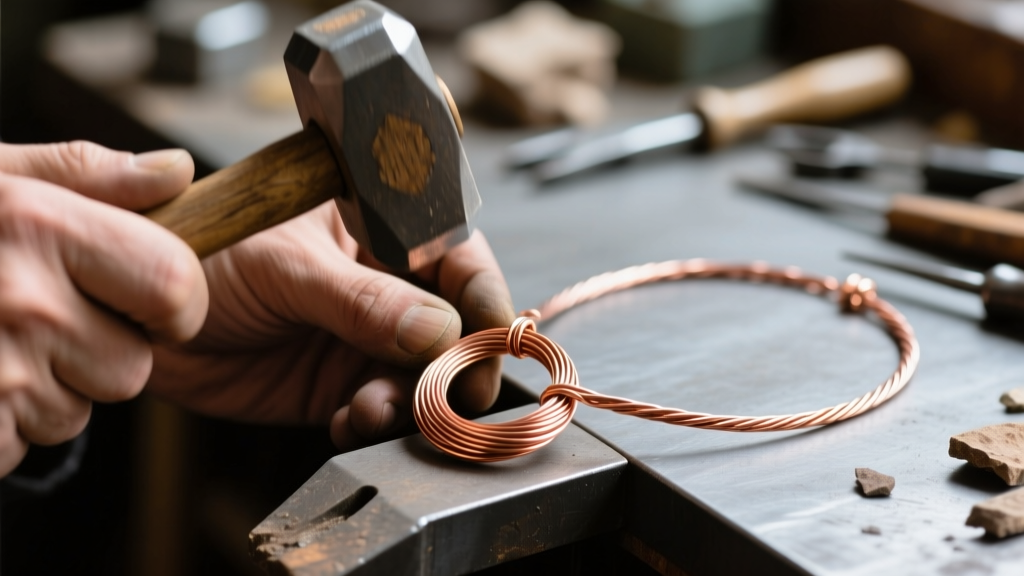
The modern jewelry market is saturated with mass-produced, cast-alloy pieces that prioritize speed over structural integrity. However, when you seek a necklace handmade by skilled metalsmiths, you are investing in a piece with superior metallurgical character. Handmade necklaces are typically forged, drawn, and work-hardened by hand, resulting in a denser crystal lattice structure than porous cast jewelry. Understanding the specific material properties—from Vickers hardness to oxidation rates—is critical for collectors and everyday wearers alike. This guide breaks down the physical and chemical properties of the most common materials used in artisan necklace crafting, providing a decision framework for your next purchase.
The Metallurgy of Artisan Base Metals
Base metals are the backbone of many artisan wire-wrapped and forged necklaces. The most prevalent are copper, brass, and bronze. While they lack the intrinsic monetary value of precious metals, their malleability and chemical reactivity make them favorites for complex weaving techniques.
Copper and Its Alloys
Pure, annealed copper sits at approximately 45 on the Vickers Hardness (HV) scale, making it incredibly soft and ideal for intricate wire weaving. However, as an artisan hammers or bends the copper, it undergoes work-hardening (strain hardening), where dislocation multiplication within the metal's crystal structure increases its hardness up to 110 HV. This makes the final necklace highly durable but brittle if overworked. To combat this, master jewelers frequently anneal the metal—heating it to a dull cherry red (approx. 700°F) and quenching it in water to restore its malleability.
Brass, an alloy of copper and zinc, offers greater tensile strength. Artisans typically prefer red brass (85% copper, 15% zinc) over yellow brass for necklaces, as its warmer, rose-gold hue mimics precious metals and it responds exceptionally well to chemical patinas like liver of sulfur. According to material guides from Rio Grande, red brass maintains a brilliant polish but requires a protective lacquer or wax coating to prevent the zinc from oxidizing into a dull, mottled gray.
Precious Alloys: Sterling vs. Argentium Silver
Silver remains the undisputed king of handmade fine jewelry. However, not all silver is created equal. Pure silver (.999) is too soft for functional necklace chains and clasps, necessitating the addition of alloying metals.
Traditional Sterling Silver (.925)
Sterling silver consists of 92.5% pure silver and 7.5% copper. The copper provides the necessary structural rigidity for wire drawing and chainmaille weaving. The primary failure mode of sterling silver is tarnish—specifically, the copper content reacting with atmospheric sulfur to form black copper sulfide. Furthermore, when artisans solder sterling silver, the copper migrates to the surface, creating a stubborn purple-gray stain known as firescale.
The Argentium Advantage (.935 and .960)
For a premium necklace handmade to resist tarnish, Argentium silver is the superior choice. Argentium replaces a portion of the copper with the metalloid germanium (typically 1.2% to 2.0%). When exposed to oxygen, the germanium forms a transparent, self-healing layer of germanium dioxide on the surface. This effectively blocks sulfur from reaching the copper atoms, making Argentium up to seven times more tarnish-resistant than traditional sterling. It is also highly ductile, allowing artisans to fuse the metal without solder, eliminating visible seam lines on jump rings.
Hypoallergenic Reactive Metals: Niobium and Titanium
For individuals with contact dermatitis or severe metal allergies, reactive metals offer a biocompatible alternative. These metals are entirely nickel-free and are the same grades used in surgical implants.
Niobium: The Color-Changing Canvas
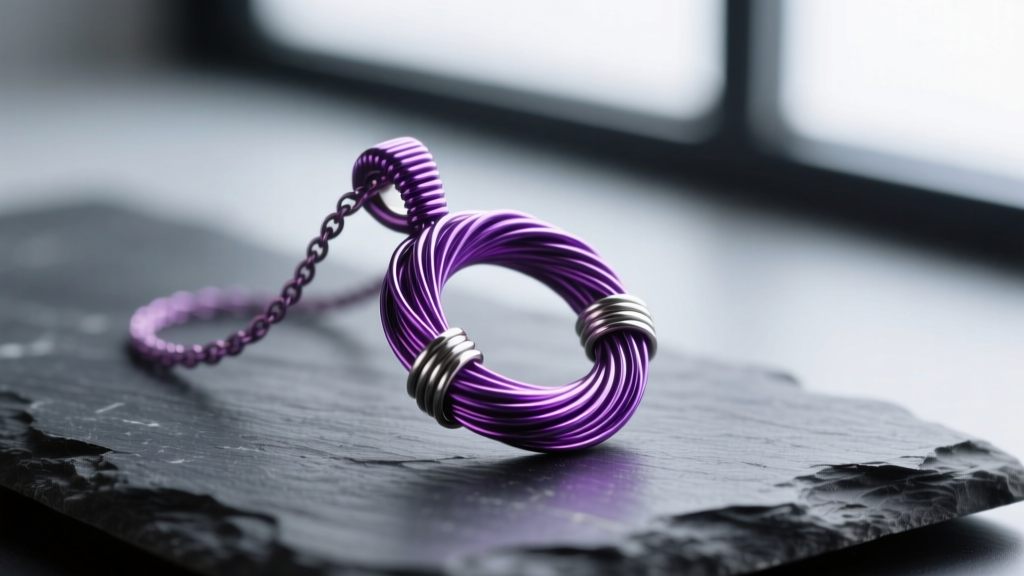
Niobium is a soft, highly malleable reactive metal. Its most striking property is its ability to be anodized. By submerging the niobium necklace in an electrolyte bath and applying a specific DC voltage, artisans can alter the thickness of the transparent oxide layer on the surface, which refracts light to produce vivid, permanent colors without using dyes or plating. For instance, 18 volts yields a brilliant blue, while 95 volts produces a vibrant green. The Gemological Institute of America (GIA) frequently notes that anodized niobium is exceptionally stable, though the surface oxide layer can be scratched if subjected to heavy abrasion.
Titanium: Unyielding Strength
Titanium (specifically ASTM F136 Grade 23 ELI) is renowned for its incredible strength-to-weight ratio. A titanium handmade necklace will weigh roughly 45% less than an identical steel piece. However, its extreme hardness and high melting point (over 3,000°F) make it notoriously difficult for artisans to work with. It cannot be easily soldered with standard jeweler's torches, meaning titanium chains are usually assembled using mechanical cold connections or specialized laser welding.
Material Comparison Chart
| Material | Hardness (Vickers) | Tarnish / Oxidation Rate | Skin Reactivity | Best Artisan Application |
|---|---|---|---|---|
| Copper (Annealed) | ~45 HV | High (Rapid patina) | Moderate (Can turn skin green) | Intricate wire weaving, Viking knit |
| Red Brass | ~75 HV | Moderate | Moderate | Forged pendants, structural links |
| Sterling Silver (.925) | ~65 HV | Moderate (Sulfur tarnish) | Low (Contains copper) | Chainmaille, soldered chains |
| Argentium (.935) | ~60 HV | Very Low (Germanium shield) | Very Low | Fused jump rings, high-end pendants |
| Niobium | ~60 HV | None (Stable oxide layer) | None (Hypoallergenic) | Anodized wire wrapping, colorful accents |
| Titanium (Gr 23) | ~320 HV | None | None (Implant grade) | Lightweight, heavy-duty structural chains |
Alternative Mediums: Resin and Polymer Clay
Not all handmade necklaces rely on metal. Artisan resin and polymer clay pendants require a different set of material considerations, primarily focusing on UV stability and durometer hardness.
Epoxy Resin: High-end artisans use two-part epoxy resins that cure via an exothermic chemical reaction. The critical flaw of standard epoxy is its susceptibility to photo-oxidation, which causes severe yellowing over time. When commissioning a resin pendant, verify that the artist uses a formula containing HALS (Hindered Amine Light Stabilizers) and UV absorbers to maintain optical clarity.
Polymer Clay: Unlike air-dry clay, professional polymer clay (a PVC-based medium) is heat-cured at exactly 130°C (265°F). If under-baked, the polymer chains fail to cross-link properly, resulting in a brittle pendant that will snap under the tension of a necklace chain. Properly cured polymer clay is remarkably flexible and durable, but it must be sealed with a polyurethane varnish to prevent plasticizer migration, which can degrade adjacent materials or irritate sensitive skin.
Structural Failure Modes in Handmade Chains
The longevity of a necklace handmade by an artisan is rarely determined by the pendant itself; rather, it is dictated by the structural integrity of the chain and clasp connections. Understanding common failure modes will help you inspect and evaluate handmade pieces accurately.
Wire Fatigue and Stress Corrosion
When an artisan creates a wire-wrapped bail or a forged clasp hook, the metal is bent repeatedly. If the artisan fails to anneal the metal after heavy manipulation, the wire becomes work-hardened and brittle. Over months of wear, the micro-fractures in the crystal lattice propagate, leading to sudden, catastrophic snapping—a phenomenon known as metal fatigue. Always check the thinnest points of a handmade clasp for visible stress lines or excessive thinning.
Inspecting Jump Rings and Solder Joints
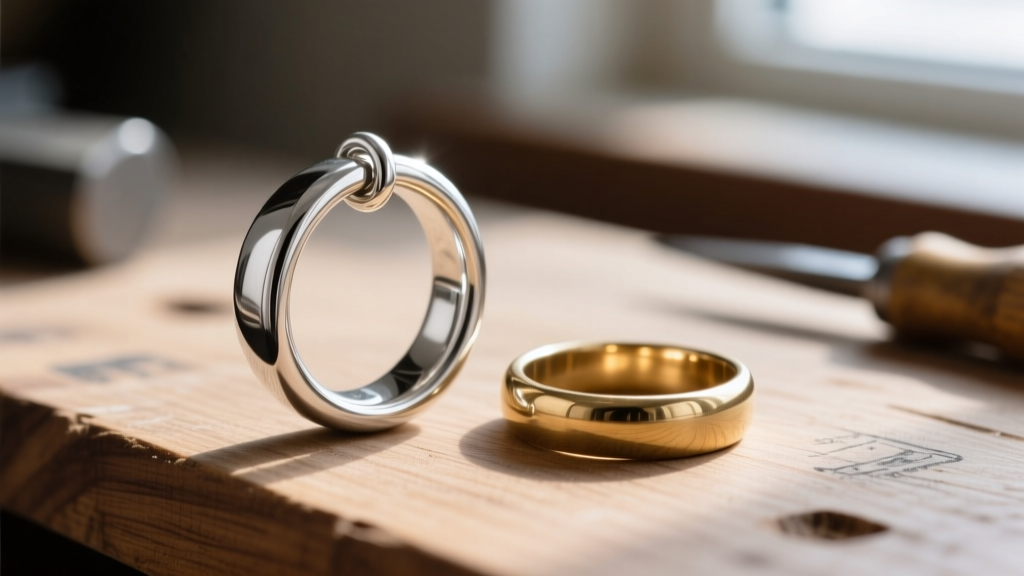
The jump ring is the most critical structural component of any necklace. In mass-produced jewelry, jump rings are simply squeezed shut, leaving a microscopic gap. If a heavy artisan pendant (over 15 grams) is attached to an unsoldered jump ring, the tension of wearing the necklace will eventually pull the gap open, dropping the pendant.
According to structural guidelines referenced by ASTM International for jewelry safety and durability, high-stress connection points must be permanently closed. When inspecting a handmade necklace, look closely at the jump rings connecting the clasp and the pendant bail. A master metalsmith will use silver solder to permanently fuse the gap shut. A soldered joint will appear as a seamless, continuous circle with a slightly different coloration at the seam, whereas a mechanically closed ring will show a visible, albeit tight, slit. For heavy, solid-metal artisan pendants, insist on soldered jump rings or heavy-gauge (16-gauge or thicker) continuous rings.
Final Thoughts on Artisan Material Selection
Choosing the right material for a handmade necklace requires balancing aesthetic desires with metallurgical realities. If you prioritize intricate, colorful wire work and do not mind occasional maintenance, anodized niobium or oxidized copper offer unparalleled artisan expression. For a legacy piece meant to be worn daily in the shower and at the gym without tarnishing, an Argentium silver or implant-grade titanium chain is worth the premium investment. By understanding the Vickers hardness, oxidation rates, and structural failure points of these materials, you can confidently commission or purchase a handmade necklace that will endure for generations.


