Best Necklace Hanger Materials: Wood vs Metal vs Acrylic Compared
Discover how different necklace hanger materials impact your jewelry. Compare wood, metal, and acrylic properties to prevent tarnish and tangling.

The Hidden Chemistry of Jewelry Storage
When curating a fine jewelry collection, enthusiasts obsess over carat weights, gold purity, and gemstone clarity. Yet, the object that supports these precious pieces for 23 hours a day—the necklace hanger—is rarely scrutinized for its material properties. The reality of jewelry preservation is that prolonged contact with the wrong substrate can trigger chemical reactions, micro-abrasions, and structural fatigue in delicate chains. A necklace hanger is not merely an organizational tool; it is an active participant in the micro-environment of your jewelry box or closet.
Understanding the material science behind hangers is critical for preventing accelerated tarnishing, acid hydrolysis in organic gems, and static-induced dust accumulation. This guide dissects the physical and chemical properties of the most common necklace hanger materials, providing a definitive framework for collectors, boutique owners, and everyday wearers.
Solid Wood & MDF: Porosity and Acid Hydrolysis
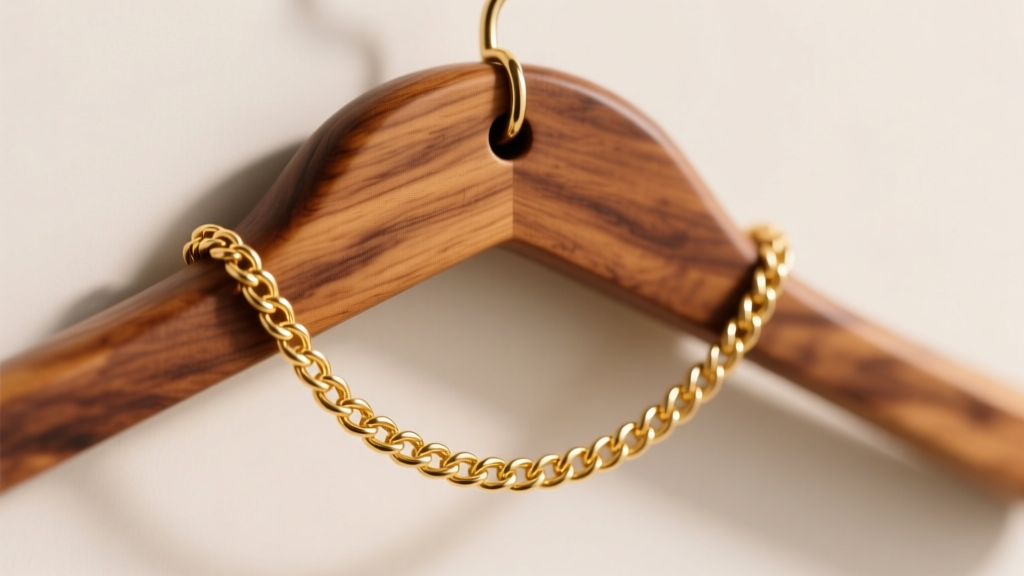
Wooden hangers are the traditional standard, prized for their aesthetic warmth and high weight-bearing capacity. However, wood is a hygroscopic and biologically active material. Unsealed or poorly sealed woods, particularly oak and cedar, contain high levels of tannins and natural acids. When stored in environments with fluctuating humidity, these woods can off-gas acidic vapors. According to the Gemological Institute of America (GIA), organic gemstones like pearls, coral, and amber are highly susceptible to acid hydrolysis, which manifests as surface pitting, loss of luster, and structural degradation.
Furthermore, Medium-Density Fiberboard (MDF) hangers, often sold as budget-friendly alternatives, utilize urea-formaldehyde resins in their binding process. Over time, these resins can off-gas formaldehyde and sulfur compounds, which aggressively accelerate the formation of silver sulfide (tarnish) on sterling silver chains.
The Janka Hardness Factor
Beyond chemistry, the physical hardness of the wood dictates its longevity and safety for fine chains. The Janka hardness test measures the force required to embed a steel ball into the wood.
- Softwoods (Pine, Cedar): Janka rating below 900 lbf. These dent easily under the concentrated pressure of heavy pendant bails, creating microscopic splinters that can snag and unravel delicate box chains.
- Hardwoods (Maple, Walnut): Janka rating between 1000 and 1500 lbf. When properly sealed with a non-reactive polyurethane or water-based lacquer, these provide a smooth, non-porous glide surface that protects chain links from friction wear.
Metal Hangers: Galvanic Corrosion and Tensile Strength
Metal hangers offer unparalleled tensile strength and a slim profile, making them ideal for maximizing closet space and supporting heavy, multi-strand statement necklaces. However, the metallurgical composition of the hanger dictates its safety. Bare copper, brass, or low-grade carbon steel hangers pose a severe risk of galvanic corrosion when placed in direct contact with precious metals in high-humidity environments (above 60% Relative Humidity).
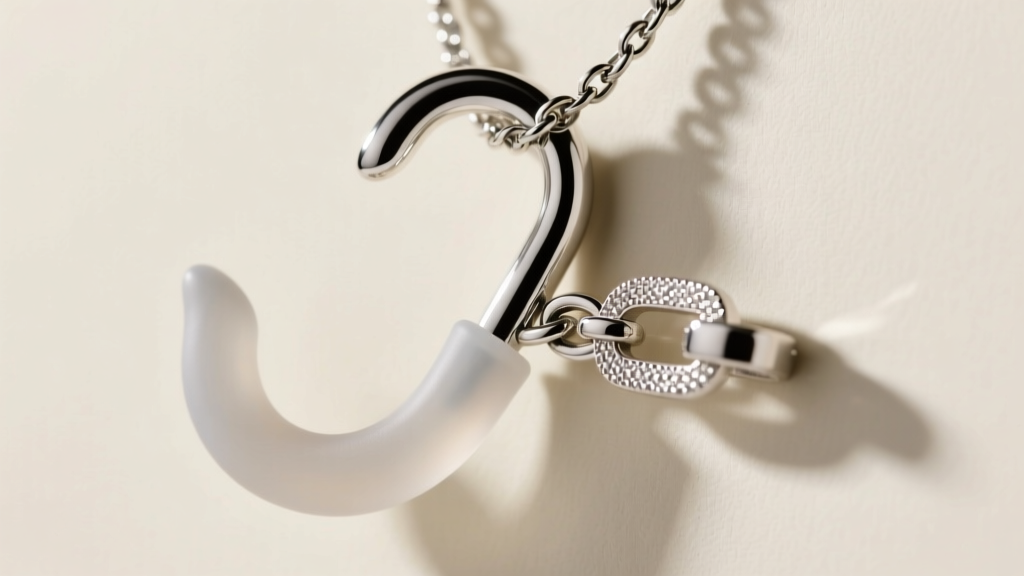
The Smithsonian Museum Conservation Institute notes that dissimilar metals in the presence of an electrolyte (ambient moisture) create a galvanic cell, leading to rapid localized corrosion. To mitigate this, premium metal hangers utilize 304 or 316 marine-grade stainless steel. While stainless steel is highly resistant to oxidation, the friction between a hard steel hook and a softer 18k gold or silver chain can still cause micro-scratches over years of sliding.
Expert Solution: Look for metal hangers featuring a PVD (Physical Vapor Deposition) coating or a clear, food-grade silicone dip on the contact points. This creates a chemically inert, high-friction barrier that prevents both galvanic reactions and mechanical abrasion.
Acrylic & Polycarbonate: The Triboelectric Effect
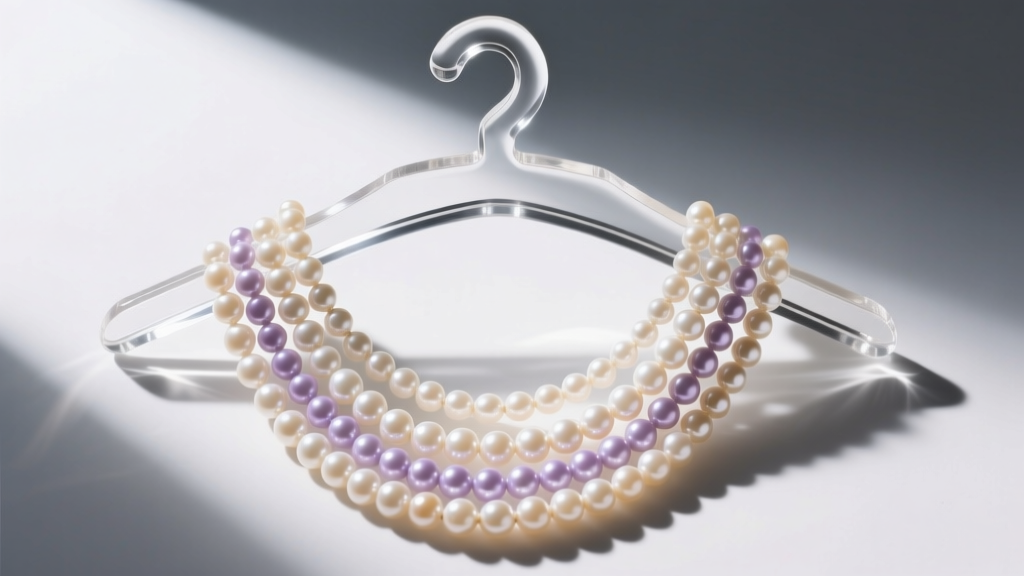
Acrylic (PMMA) and polycarbonate hangers have surged in popularity for their modern, transparent aesthetic and resistance to moisture and off-gassing. Cast acrylic is chemically stable and will not yellow or degrade under standard indoor UV exposure, making it a safe choice for long-term storage of diamonds and hard gemstones (Mohs 8+).
However, acrylics possess a significant hidden flaw: they are highly susceptible to the triboelectric effect. When a metal chain is slid across an acrylic surface, the friction generates a static electrical charge. This static acts as a magnet for microscopic dust, silica, and textile fibers. If you are storing porous, low-hardness stones like turquoise, opal, or malachite, this static-induced dust can become impacted in the crevices of the stone settings, requiring professional ultrasonic or steam cleaning to remove.
Conservation Tip: If you prefer acrylic hangers for their visual appeal, wipe the surface with an anti-static ionizing brush or a specialized acrylic cleaner containing an anti-static agent before hanging porous gemstone necklaces.
The Hidden Dangers of Velvet Flocking
Many premium wooden and plastic hangers are coated in a velvet or flocked finish to prevent chains from slipping. While the nylon or rayon fibers themselves are generally safe, the adhesive used to bind the flocking to the substrate is a frequent culprit in jewelry damage. Cheap manufacturing processes often utilize sulfur-based or acidic rubber adhesives. In enclosed jewelry armoires, these adhesives off-gas sulfur dioxide, which reacts with the copper alloy in sterling silver (which is 7.5% copper) to create a rapid, stubborn black tarnish. Always verify that flocked hangers use water-based, acid-free adhesives, or opt for un-flocked, highly polished surfaces.
Material Comparison Matrix
| Material | Surface Hardness | Tarnish / Off-Gas Risk | Static Risk | Best Application |
|---|---|---|---|---|
| Sealed Maple Wood | High (1450 lbf) | None (if water-sealed) | Low | Heavy gold chains, pearls |
| Unsealed Oak | High (1290 lbf) | High (Tannic acid) | Low | Avoid for fine jewelry |
| 304 Stainless Steel | Very High | Low (Galvanic risk) | None | Heavy statement pieces |
| Cast Acrylic | Low (Mohs 3) | None | High (Triboelectric) | Diamonds, hard gemstones |
| Flocked Plastic | Variable | High (Adhesive sulfur) | Medium | Costume jewelry only |
Expert Decision Framework: Matching Hanger to Chain Type
Selecting the right necklace hanger requires matching the hanger's physical profile and material to the specific structural vulnerabilities of the chain weave.
Snake Chains & Omega Chains
These chains rely on a continuous, fluid surface and are highly prone to permanent kinking if bent at sharp angles. Recommendation: Use wide-shouldered, smoothly contoured wooden or padded hangers with a minimum 1-inch shoulder width to distribute the weight and maintain the chain's natural drape. Avoid thin wire or acrylic hangers that create a sharp fulcrum point.
Rope & Cable Chains
With deep crevices and interlocking links, these chains are susceptible to snagging on rough surfaces and trapping dust. Recommendation: Highly polished 316 stainless steel hangers with silicone-tipped hooks. The low-friction metal allows the chain to slide freely without catching individual links, while the silicone prevents the clasp from scratching against the steel hook.
Delicate Box Chains (Under 1.5mm)
Thin box chains are notoriously fragile and can easily stretch or snap under their own weight if hung improperly, especially when bearing a pendant. Recommendation: Flat-profile acrylic or sealed wood hangers with a velvet-lined groove (using verified acid-free adhesive). The groove keeps the chain centered and prevents the pendant from swinging and creating lateral torque on the weakest link near the clasp.
Final Verdict on Hanger Selection
The ideal necklace hanger material does not exist in a vacuum; it must be chosen in direct relation to the jewelry it supports. For collectors of organic gems and soft metals, sealed hardwoods and silicone-dipped stainless steel remain the gold standard for preservation. For modern boutiques prioritizing visual merchandising, cast acrylic offers unmatched clarity, provided static-mitigation protocols are followed. By treating your necklace hangers as an integral component of your jewelry's conservation strategy, you ensure that your chains remain untangled, untarnished, and structurally sound for generations.


