Mastering Necklace Hanging: A Buyer's Guide to Chain Drape and Bails
Discover the secrets of perfect necklace hanging. Learn how to match chain gauges, pendant weights, and bail types for a flawless, tangle-free drape.

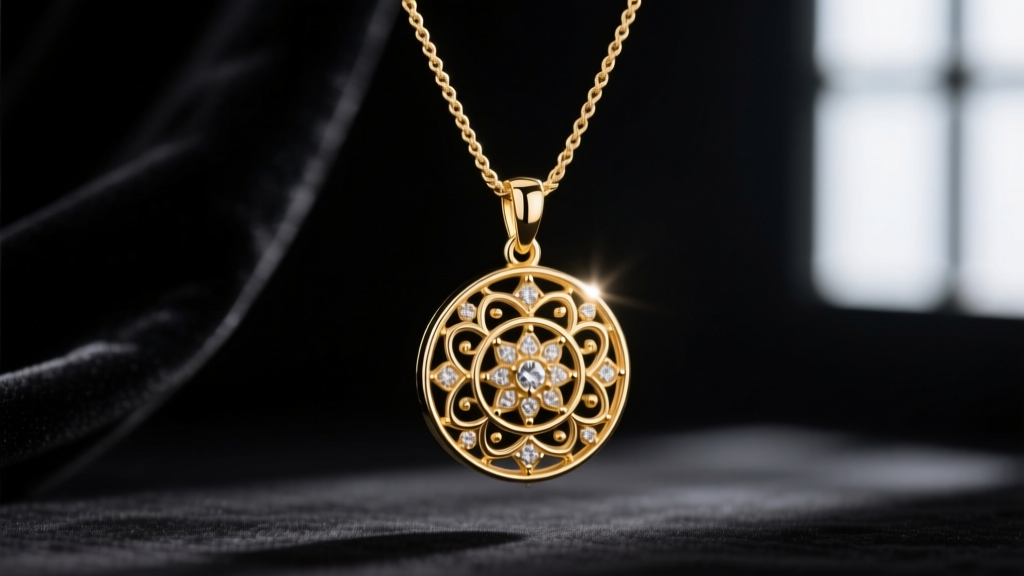
When master jewelers and serious collectors discuss necklace hanging, they are rarely talking about velvet busts, acrylic stands, or wall-mounted organizers. Instead, they are referring to the dynamic physics of how a piece suspends, drapes, and centers on the human body. A poorly engineered necklace will constantly flip its pendant upside down, snap under the stress of a heavy gemstone, or suffer from the dreaded "sliding clasp" that migrates from the nape of the neck to the collarbone. Understanding the mechanics of necklace hanging is the difference between buying a frustrating trinket and investing in a flawless, wearable heirloom.
This comprehensive buying guide breaks down the exact metallurgy, weight ratios, and structural components you must evaluate before purchasing your next pendant or chain necklace.
The Science Behind the Drape: Why Pendants Flip
The most common complaint in pendant necklaces is the "floating" or "flipping" gemstone. This occurs when the center of mass is misaligned with the bail's pivot point. If the hole or bail loop is too tight against the chain, the pendant cannot swing freely, causing it to torque and flip upside down as the wearer moves. Conversely, if the chain is too thick for the bail, the metal-on-metal friction locks the pendant in place. For optimal necklace hanging, the inner diameter (ID) of the bail must be at least 1.5mm larger than the thickness of the chain to allow a full 360-degree rotation.
Chain Gauge vs. Pendant Weight: The Golden Ratio
A frequent failure mode in jewelry is chain stretch or snap due to improper weight distribution. According to technical manufacturing guidelines from Rio Grande, a chain's tensile strength is dictated by its gauge, alloy composition, and whether it has been work-hardened. Dead-soft sterling silver will stretch under a 5-gram pendant, whereas work-hardened 14k gold can support significantly more mass. When evaluating a piece, use the following structural matrix to ensure the chain can support the pendant's carat-to-gram weight (remember, as the Gemological Institute of America (GIA) notes, 1 carat equals exactly 0.2 grams).
| Chain Gauge (mm) | Chain Style | Max Pendant Weight | Ideal Bail Type |
|---|---|---|---|
| 0.8mm - 1.0mm | Cable / Thread | 1g - 3g (Up to 15ct) | Micro Loop Bail |
| 1.2mm - 1.5mm | Box / Rolo | 4g - 8g (Up to 40ct) | Standard Loop / Pinch |
| 2.0mm - 2.5mm | Rope / Wheat | 10g - 20g | Heavy Duty Tube Bail |
| 3.0mm+ | Curb / Figaro | 25g+ (Statement Pieces) | Custom Soldered Bail |
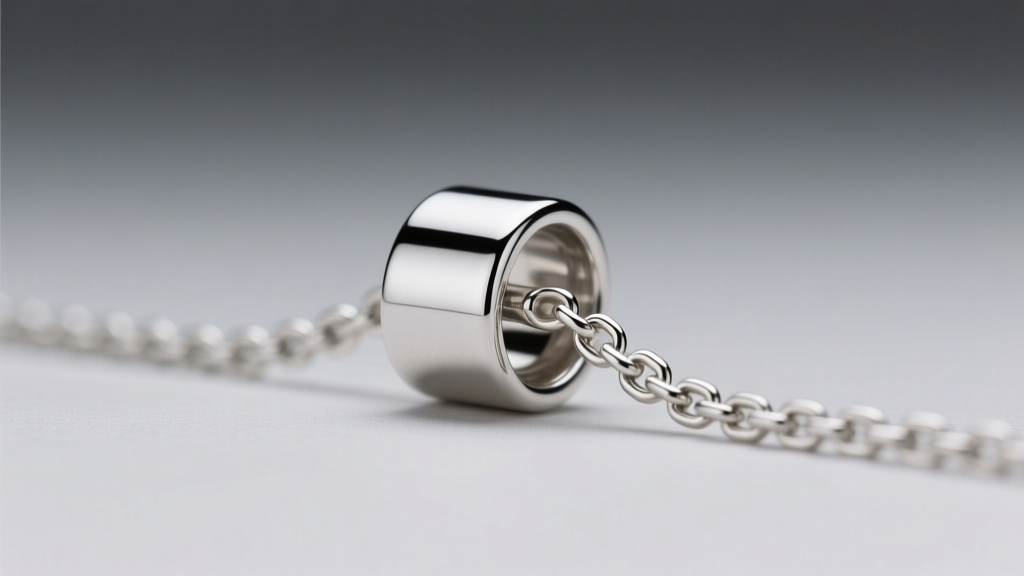
Selecting the Right Bail for Seamless Suspension
The bail is the unsung hero of necklace hanging. It acts as the articulation joint between the static chain and the kinetic pendant. Choosing the wrong bail type compromises both the aesthetic drape and the structural integrity of the piece.
1. Loop Bails (The Standard)
Loop bails feature a simple ring that the chain threads through. They offer the most fluid movement, allowing the pendant to lay flat against the sternum. However, ensure the loop is soldered closed; open jump rings will eventually pull apart under the pendulum stress of a heavy stone.
2. Pinch Bails (For Faceted Drops)
Pinch bails use two tiny metal prongs that insert into the pre-drilled holes of a top-drilled gemstone (like a briolette or teardrop sapphire). While elegant, they rely entirely on friction and tension. If you are buying a piece with a pinch bail, check that the prongs are crafted from a rigid metal like 14k or 18k gold, as sterling silver prongs can bend outward over time, dropping the stone.
3. Tube Bails (For Beads and Pearls)
Tube bails are cylindrical and slide directly onto the chain, with the pendant glued or pinned to the bottom. They provide a highly structured, rigid hang that prevents the pendant from twisting. This is the preferred bail for heavy South Sea pearls or large cabochons where a swinging motion could cause the adhesive to fail.
Solving the Sliding Clasp Dilemma
Nothing ruins the elegance of a necklace faster than a lightweight spring-ring clasp sliding around to the front of the neck. This happens when the clasp outweighs the bail, or when the chain's friction against the skin pulls the lighter component forward. To achieve perfect necklace hanging balance, jewelers employ counterweighting techniques:
- The Heavy Clasp Method: Upgrading from a 0.5g spring ring to a 2.5g solid lobster claw or decorative toggle clasp anchors the back of the neck.
- Counterweight Beads: Adding a small, dense metal bead (often a 3mm 14k gold sphere) directly adjacent to the clasp provides the necessary gravitational anchor without altering the clasp mechanism.
- Leather and Suede Cords: High-friction materials naturally grip the skin and hair at the nape, inherently preventing the clasp from migrating forward, making them ideal for heavy, front-loaded pendants.
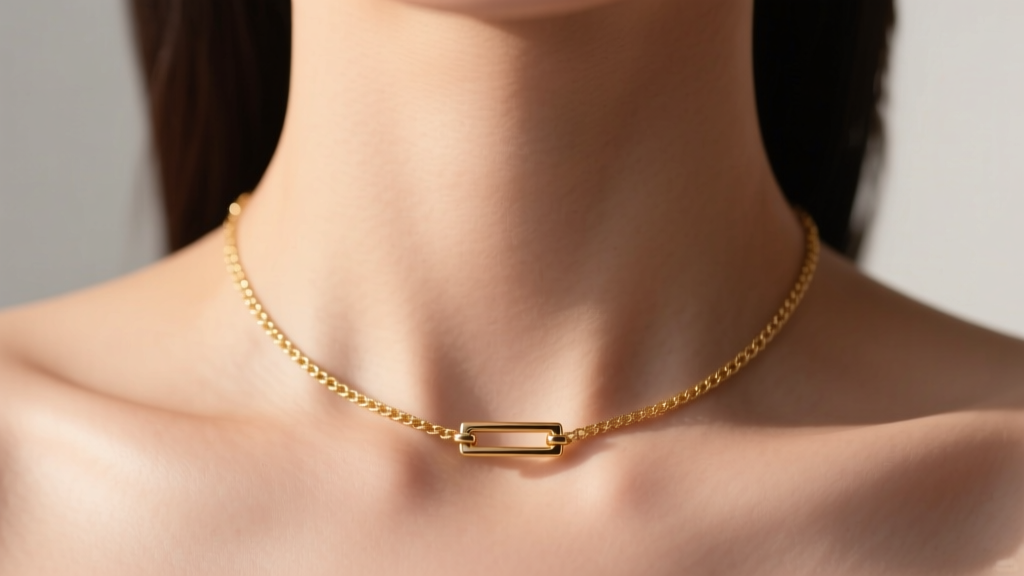
Drop Length and Neckline Interaction
The physics of the hang changes drastically depending on the chain length and the wearer's anatomy. Gravity pulls a 24-inch opera-length necklace into a tight, narrow V-shape, concentrating the pendant's weight on a small area of the chest. Conversely, a 16-inch choker wraps tightly around the collarbone, distributing the chain's weight evenly across the shoulders but forcing the pendant to sit at a steep, outward angle. When buying a heavy pendant (over 15 grams), opt for an 18-inch "Princess" length. This length rests in the natural hollow of the collarbone, providing a structural shelf that supports the pendant's mass and prevents the chain from cutting into the back of the neck.
"A master jeweler doesn't just design a pendant; they engineer the entire suspension system. The chain, the bail, and the clasp must operate as a single, balanced kinetic sculpture." — Master Bench Jeweler Adage
Final Pre-Purchase Checklist
Before finalizing your next jewelry investment, run the piece through this rapid diagnostic checklist to ensure flawless necklace hanging:
- The Swing Test: Hold the chain by the clasp and let the pendant hang. Does it immediately face forward, or does it require manual adjustment? (It should face forward naturally).
- The Bail Clearance: Can you easily slide a toothpick between the chain and the inside of the bail? If not, the fit is too tight and will cause flipping.
- The Clasp Weight: Does the clasp feel substantially lighter than the pendant? If so, request a counterweight bead or a heavier clasp upgrade.
- The Link Inspection: Examine the link directly attached to the bail. Is it soldered shut? If it is an open jump ring, factor in the cost of having a jeweler laser-weld it shut to prevent future loss.
By prioritizing the mechanical realities of suspension, weight distribution, and bail articulation, you elevate your jewelry buying from a purely visual exercise to an appreciation of functional, wearable engineering.


