What Length Necklace for a Woman Flatters Every Neckline?
Unsure what length necklace for a woman flatters her neckline? Our expert guide breaks down choker, princess, and matinee fits for every body type.

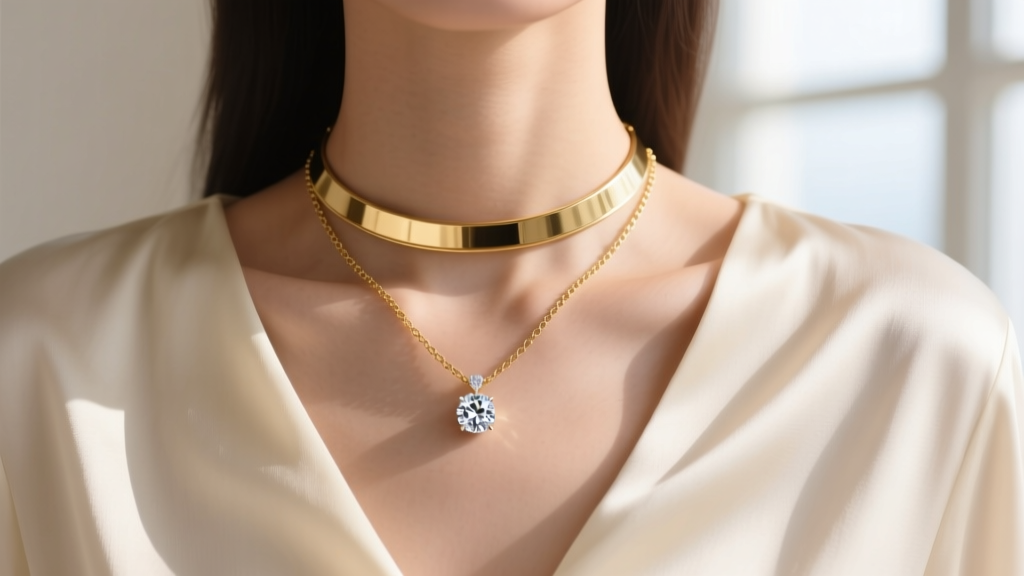
Determining what length necklace for a woman is the most flattering requires looking far beyond a simple measuring tape. While standard jewelry guides often reduce necklace sizing to basic height charts, true style analysis demands a multidimensional approach. The perfect chain length is a calculated intersection of neck circumference, torso proportions, the specific neckline of the garment, and the tensile mechanics of the metal itself. As we navigate the styling landscape of 2026, the rigid rules of the past have given way to intentional, proportion-driven layering and structural asymmetry. Whether you are selecting a delicate 1.0mm cable chain or a heavy 4.5mm Cuban link, understanding the geometry of necklace lengths is the cornerstone of elevated personal style.
The Anatomy of Necklace Lengths: A Precise Breakdown
Before matching jewelry to fabric, we must establish the baseline terminology and mechanical realities of standard chain lengths. The fall point of a necklace dictates not only its visual impact but also its physical vulnerability to snagging and tension.
| Length | Style Name | Standard Fall Point | Recommended Chain Gauge | Best Clasp Type |
|---|---|---|---|---|
| 14" - 15" | Choker / Collar | Snug at the base of the neck | 1.2mm - 3.0mm | Lobster or Magnetic |
| 16" - 18" | Princess | Collarbone to upper bust | 0.9mm - 2.5mm | Spring Ring or Lobster |
| 20" - 24" | Matinee | Center bust to top of torso | 1.5mm - 4.0mm | Lobster or Toggle |
| 28" - 36" | Opera / Rope | Sternum to navel | 2.0mm - 5.0mm+ | Toggle or Magnetic |
A critical detail often overlooked by mass-market retailers is the relationship between length and chain gauge. A 24-inch matinee chain experiences significantly more pendulum swing and kinetic torque than a 16-inch princess chain. If a 24-inch chain is crafted in a delicate 0.8mm gauge, the continuous friction against clothing and the weight of the chain itself will inevitably lead to micro-fractures in the links, particularly near the clasp. For lengths exceeding 20 inches, always opt for a minimum gauge of 1.5mm to ensure structural longevity.
Decoding Necklines: What Length Necklace for a Woman Wearing...
The interplay between the metal and the neckline is where styling mastery truly shines. The goal is either to mirror the geometry of the garment for a harmonious look, or to sharply contrast it for editorial tension.
V-Necks and Plunging Necklines
For V-necks, the objective is to follow the natural vector of the fabric without crossing it awkwardly. An 18-inch to 22-inch princess or short matinee chain with a Y-drop or a teardrop pendant perfectly mirrors the V-shape, elongating the neck. Avoid chokers with V-necks, as they visually "chop" the neck and create a boxed-in silhouette that contradicts the garment's elongating intent.
Crew Necks and Boat Necks
High, horizontal necklines like crew and boat necks demand a binary approach. You can either lean into the high neckline with a tight 14-inch or 15-inch choker (preferably a textured curb or rope chain to add depth to the fabric), or you can completely ignore the collarbone and drop a 28-inch opera-length chain with a heavy geometric pendant over the fabric. The mid-range 18-inch chain is the "danger zone" here; it will tangle with the crew neck hem and look like a styling mistake.
Off-the-Shoulder and Strapless
Bare shoulders provide a blank canvas, but they also expose the clavicle and upper chest. A 16-inch collar chain that rests precisely on the collarbone is universally flattering. According to style analysts featured in Brides, layering a 14-inch velvet choker with a 16-inch delicate gold chain creates a luxurious, multi-textural look that anchors bare skin without overwhelming the wearer's frame.
2026 Trend Analysis: The "Anti-Perfection" Layering Rule
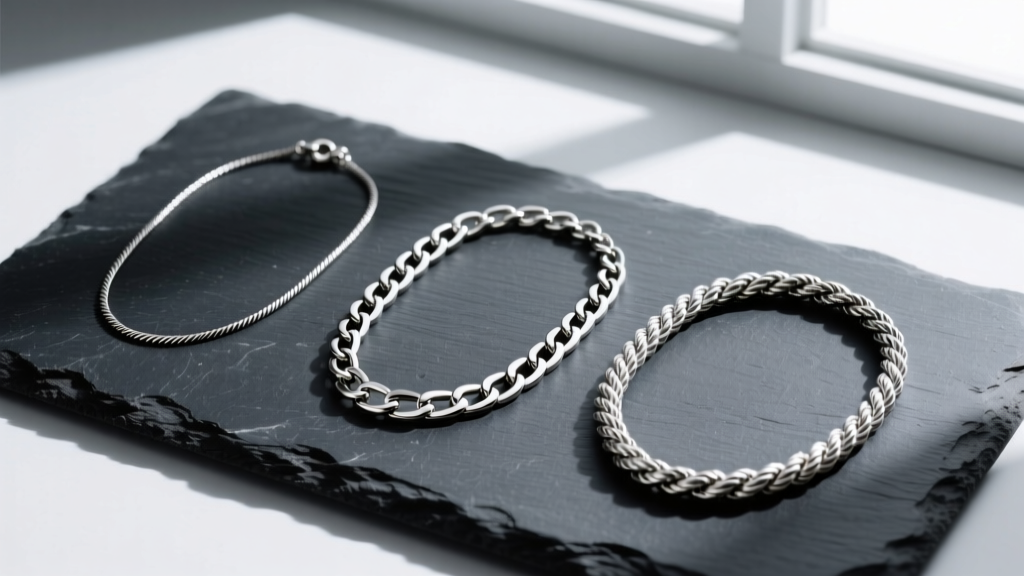
If the early 2020s were defined by the "curated ear" and symmetrical, perfectly spaced necklace stacks, 2026 has introduced the Anti-Perfection Layering Rule. Modern styling favors intentional dissonance. Instead of stacking three gold chains of varying lengths but identical textures, the current trend radar highlights the mixing of metal tones, link styles, and even materials.
"The modern necklace stack is no longer a uniform staircase of gold. It is a conversation between a vintage 14-inch oxidized silver choker, an 18-inch mixed-metal paperclip chain, and a 22-inch raw-stone pendant. The friction between the pieces is what creates the style."
Another dominant trend is the "Floating Tension" pendant. This involves a single, bezel-set diamond or sapphire suspended on an ultra-fine 0.6mm invisible nylon or white gold chain at exactly 16.5 inches. The chain disappears against the skin, making the gemstone appear as though it is levitating at the hollow of the throat. This requires precise custom sizing, as even a half-inch deviation will ruin the optical illusion.
Body Proportions and Pendant Scaling
When asking what length necklace for a woman is best, one must account for torso length and bust volume. Standard jewelry sizing assumes a 5'4" woman with a B-cup bust. If a woman is 5'9" or has a larger bust, a standard 18-inch chain will sit much higher, effectively functioning as a 16-inch collar. Conversely, on a petite frame, that same 18-inch chain will drop into a 20-inch matinee territory.
The Pendant-to-Chain Ratio
The scale of the pendant must be mathematically balanced with the chain length and the wearer's frame. A heavy 15-gram solid gold cross or medallion requires a chain that can physically support it without warping the bail. A 1.2mm box chain is ideal for pendants up to 4 grams. For pendants weighing 5 to 12 grams, you must upgrade to a 2.5mm to 3.5mm curb or Figaro chain. The inner diameter of the pendant's bail must also be checked; a standard 4mm bail will not slide onto a 3.5mm rope chain, leading to frustrating friction and eventual wear on the gold.
Material Durability and Hardware Mechanics by Length
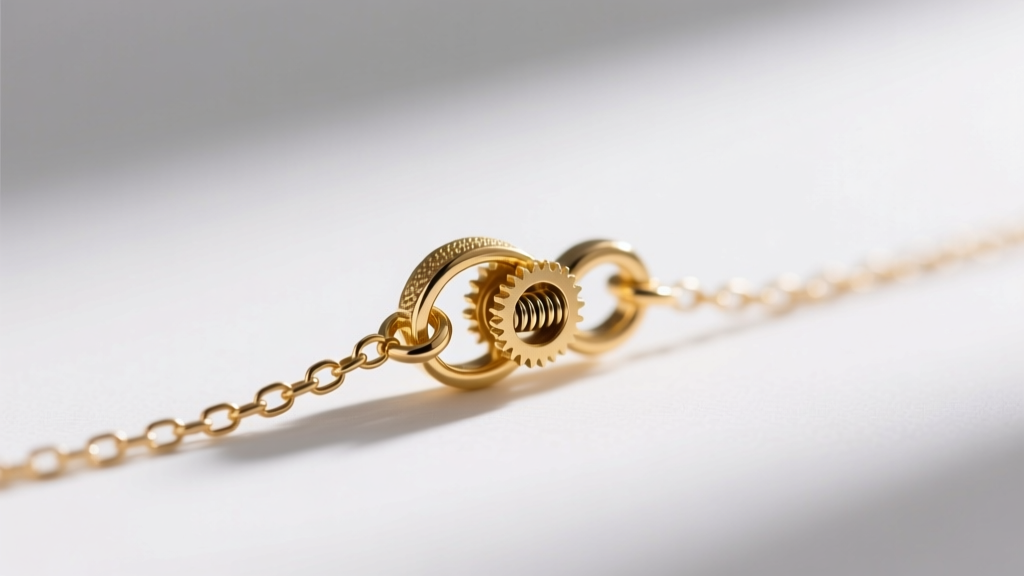
The longevity of a necklace is inextricably linked to its hardware, which must be scaled to the chain's length and weight. The Gemological Institute of America (GIA) frequently notes that the majority of jewelry repairs stem from clasp failures and link stretching, not gemstone damage.
- Spring Ring Clasps: Suitable only for lightweight chains under 18 inches. The internal spring mechanism is prone to failure when subjected to the lateral torque of a heavy, swinging 24-inch chain.
- Lobster Clasps: The industry standard for chains ranging from 16 to 22 inches. They offer a secure, locking lever mechanism that resists accidental snagging on knitwear and silk.
- Toggle Clasps: Essential for opera lengths (28"+) and heavy link bracelets. The T-bar mechanism relies on gravity and tension to stay closed, making it ideal for long chains that can be slipped over the head without unfastening.
- Magnetic Clasps: A rising trend in 2026 for accessibility and ease of use, particularly for 14-inch chokers where reaching the back of the neck is cumbersome. Ensure the magnets are encased in 14k or 18k gold to prevent skin irritation and corrosion.
Furthermore, consider the metal alloy. 18k yellow gold is softer and more prone to link stretching on long, heavy chains compared to 14k gold, which contains a higher percentage of strengthening alloys like zinc and copper. For a 30-inch opera chain that will be wrapped or swung, 14k gold or platinum offers vastly superior tensile strength.
Final Verdict: Building a Modular Necklace Wardrobe
Ultimately, answering what length necklace for a woman requires building a modular wardrobe rather than searching for a single "perfect" piece. A well-curated collection should include a structural 14-inch choker for high-neck tailoring, a versatile 16-to-18-inch adjustable cable chain for daily V-necks and button-downs, and a substantial 24-inch link chain to anchor winter knits and evening wear. By prioritizing correct chain gauges, matching clasp mechanics to kinetic tension, and embracing the textured, asymmetrical layering trends of 2026, you transform a simple accessory into a masterclass of proportional styling.


