Necklace Length Trends 2026: Proportion & Neckline Guide
Discover 2026 necklace length trends, from collarbone-grazing chokers to dramatic opera drops. Master proportion, gauge sizes, and neckline pairing.

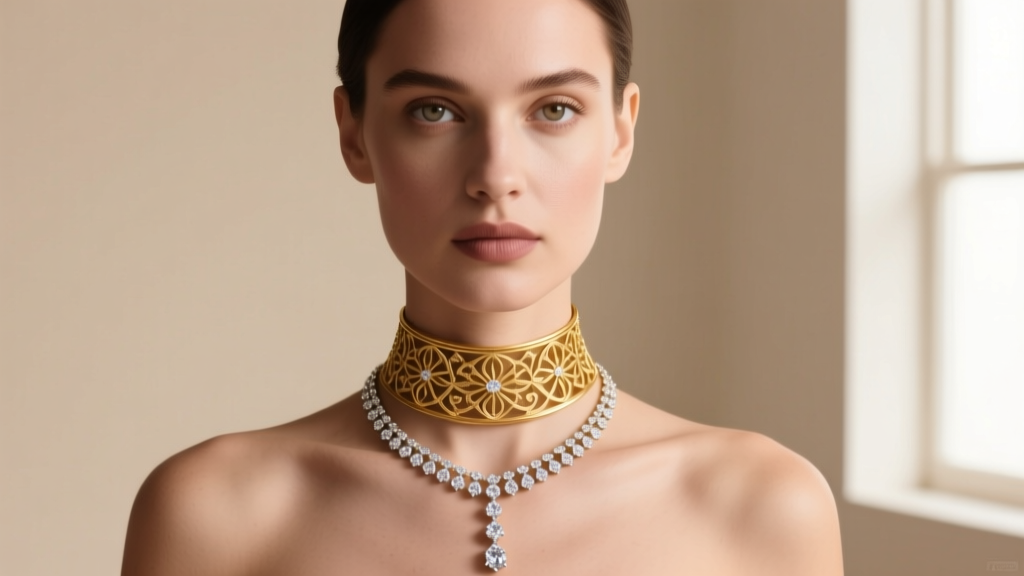
The 2026 Shift: Beyond the Standard 18-Inch Princess
For decades, the 18-inch princess chain was the undisputed default of the fine jewelry industry—a safe, middle-of-the-road necklace length designed to sit just below the collarbone. However, as we navigate the 2026 style landscape, the homogenization of jewelry proportions is officially over. According to recent market analyses by JCK Online, consumer demand has bifurcated into two distinct extremes: the hyper-fitted 14-to-15-inch collarbone skimmer and the dramatic, kinetic 28-to-36-inch opera and rope lengths. The standard 18-inch chain is increasingly being relegated to a mere layering anchor rather than a standalone statement piece.
This shift is deeply tied to the evolution of modern garment architecture. With the resurgence of deep plunge necklines, asymmetrical one-shoulder gowns, and structured high-neck blazers, a one-size-fits-all approach to jewelry fails to complement contemporary silhouettes. Mastering necklace length in 2026 requires an understanding of tensile physics, visual weight, and precise anatomical mapping. Below, we break down the technical and stylistic frameworks necessary to navigate this year's most prominent neckwear trends.
The Architecture of Proportion: Mapping Length to Necklines
Selecting the correct necklace length is not merely a matter of personal preference; it is an exercise in geometric proportion. The distance between the jewelry and the garment's hemline dictates the visual flow of the torso. Here is the definitive 2026 framework for matching chain lengths to neckline architecture.
| Length (Inches / cm) | Style Classification | Ideal Neckline Architecture | 2026 Trend Status |
|---|---|---|---|
| 14" - 15" (35 - 38 cm) | Choker / Collar | Off-the-shoulder, sweetheart, deep V-neck | Highly Trending (Mixed Metals) |
| 16" (40 cm) | Princess (High) | Scoop neck, boat neck, casual button-down | Staple (Layering Base) |
| 18" (45 cm) | Princess (Standard) | Crew neck, square neck, everyday tees | Declining as Solo Piece |
| 20" - 24" (50 - 60 cm) | Matinee | High necklines, turtlenecks, blazers | Moderate (Pendant Focus) |
| 28" - 36" (71 - 91 cm) | Opera / Rope | Plunge necks, minimalist sheaths, evening wear | Surging (Statement Layering) |
Material & Gauge Considerations for Extreme Lengths
As the necklace length increases, so does the kinetic energy and mechanical stress placed on the chain. A 30-inch opera necklace generates significant momentum when the wearer walks or moves. If this chain is fitted with a heavy gemstone pendant—say, a 6-gram solid gold talisman—the centripetal force at the apex of the chain's swing can exert up to 15 pounds of momentary tensile stress on the weakest link, which is typically the jump ring connecting the clasp.
Why 24-Gauge Chains Fail at Opera Lengths
Many mass-market jewelers utilize 24-gauge (0.5mm) or 22-gauge (0.6mm) chains for long-form necklaces to save on precious metal costs. This is a critical structural failure point. According to metallurgical guidelines referenced by the Gemological Institute of America (GIA), softer metals like 18k and 22k yellow gold are highly susceptible to metal fatigue when subjected to repetitive micro-bending and high tensile loads. For any necklace length exceeding 24 inches, you must upgrade your structural specifications:
- Minimum Gauge: Use 20-gauge (0.8mm) or 18-gauge (1.0mm) chains for lengths over 24 inches, especially if suspending pendants heavier than 3 grams.
- Link Construction: Avoid unsoldered cable chains. The open seams of unsoldered links will pull apart under the pendulum effect of a long chain. Opt for fully soldered links, box chains, or solid rolo chains.
- Metal Hardness: Platinum and 14k white gold offer higher tensile strength and yield points compared to high-karat yellow gold, making them superior choices for heavy, long-form station necklaces.
The Clasp Mechanics of Long-Form Necklaces
The clasp is the most vulnerable component of any jewelry piece, and its importance scales exponentially with necklace length. Standard spring-ring clasps are entirely inadequate for 28-inch+ chains; their internal springs degrade quickly under heavy loads, and their small surface area makes them difficult to manipulate.
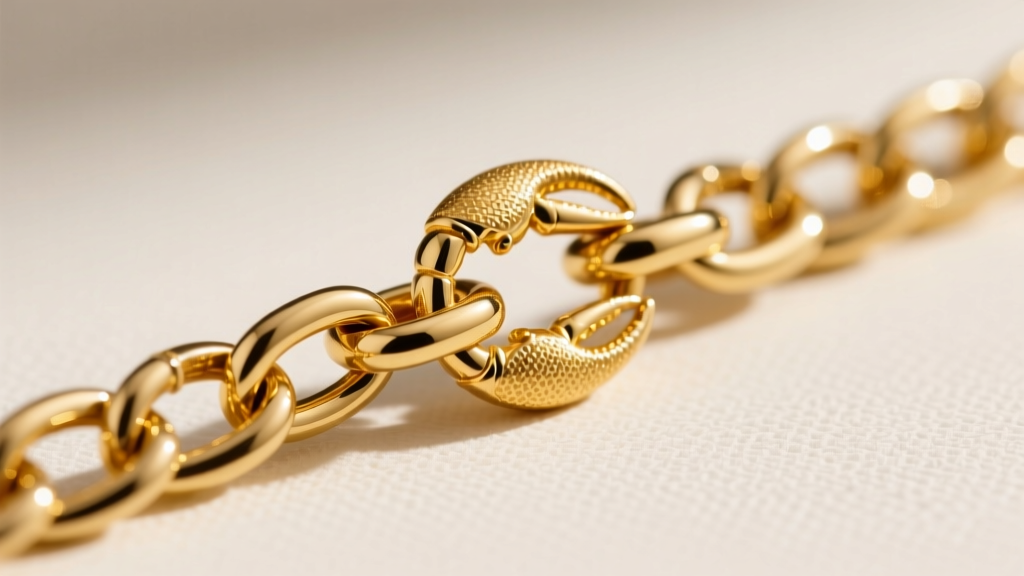
In 2026, the industry standard for long-form and opera necklaces has shifted toward hidden neodymium magnetic clasps and double-locking lobster claws. Magnetic clasps, encased in 14k or 18k gold sleeves, provide a seamless visual flow for station necklaces while offering sheer-force holding power that easily exceeds the weight of the chain itself. For traditional chains, a heavy-duty lobster clasp paired with a soldered, oversized jump ring (minimum 4mm diameter) is non-negotiable to prevent the clasp from slipping through the end link during wear.
Visual Weight: Cable vs. Rolo vs. Figaro at 24+ Inches
When analyzing long necklace length trends, the physical style of the chain link dictates how light interacts with the metal across a larger surface area of the torso.
- Cable Chains: At 30 inches, a standard cable chain can look wiry and fragile. It absorbs light poorly and often tangles with garments due to its high-friction, elongated oval links.
- Rolo Chains: The symmetrical, round links of a rolo chain catch light uniformly from all angles. A 20-gauge rolo chain at opera length provides a luxurious, substantial visual weight that anchors minimalist silk or cashmere garments beautifully.
- Figaro Chains: The alternating long and short links of a Figaro chain create a stroboscopic, high-contrast visual effect. In 2026, mixing oxidized silver Figaro chains with bright white gold stations is a dominant trend for adding edge to formal evening wear.
Layering Frameworks: The 2-4-8 Drop Rule
Layering remains a dominant styling technique, but haphazard stacking leads to severe mechanical damage. When chains of similar lengths rub against one another, the harder metal acts as an abrasive file against the softer metal. Diamond-cut chains, which feature faceted edges designed to maximize sparkle, are particularly notorious for causing micro-abrasions on high-polish chains worn in close proximity.
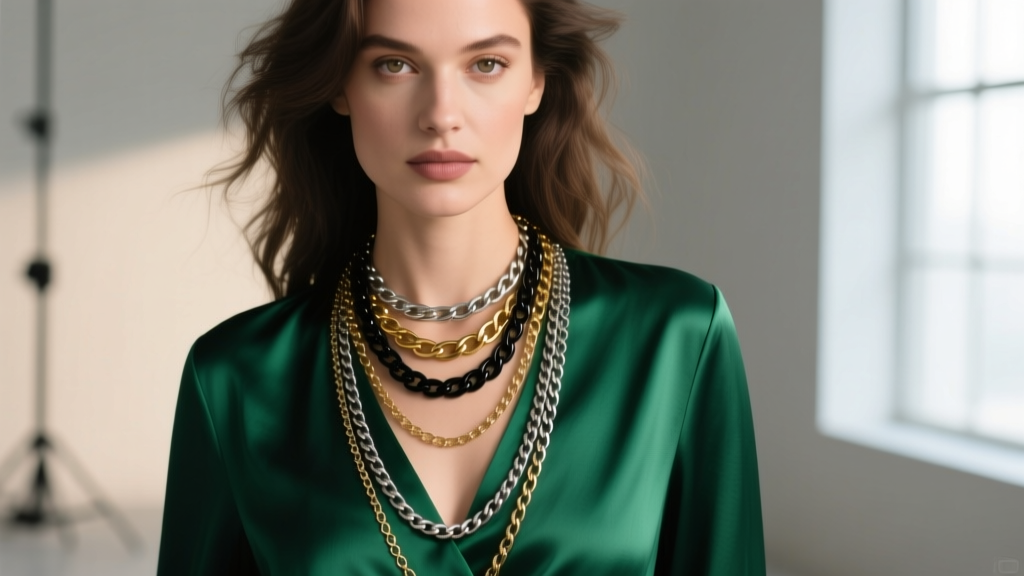
To prevent tangling and friction damage while maintaining optimal visual proportion, master the 2-4-8 Drop Rule for your necklace length combinations:
- The Anchor (15" - 16"): A lightweight, high-polish choker or collar that sits flush against the skin. This frames the face and establishes the baseline.
- The Bridge (18" - 20"): A medium-weight chain featuring a solitary, structural pendant (such as a geometric bezel-set diamond or a solid gold cylinder). The minimum 2-to-4-inch drop from the anchor prevents the pendants from colliding.
- The Statement (24" - 28"): A heavier, textural chain (like a thick rolo or paperclip link) that rests on the mid-chest. This piece should not have a pendant; its visual interest comes from the link architecture and the way it drapes over the garment.
Final Styling Verdict for the 2026 Season
The era of the generic, one-size-fits-all chain is behind us. The 2026 jewelry landscape demands intentionality. Whether you are opting for the severe, architectural elegance of a 14-inch solid gold collar or the sweeping, kinetic drama of a 32-inch diamond station rope, understanding the structural and proportional nuances of necklace length is paramount. By paying close attention to chain gauge, link soldering, clasp mechanics, and precise neckline mapping, you elevate your jewelry from mere accessories to masterclasses in personal styling and structural integrity.


