Necklace Lights 2026: Budget & Value Assessment Guide
Evaluate the true cost of necklace lights in 2026. We compare battery life, LED durability, and skin-safe materials to find the best value.

The Evolution of Illuminated Jewelry: Beyond Novelty
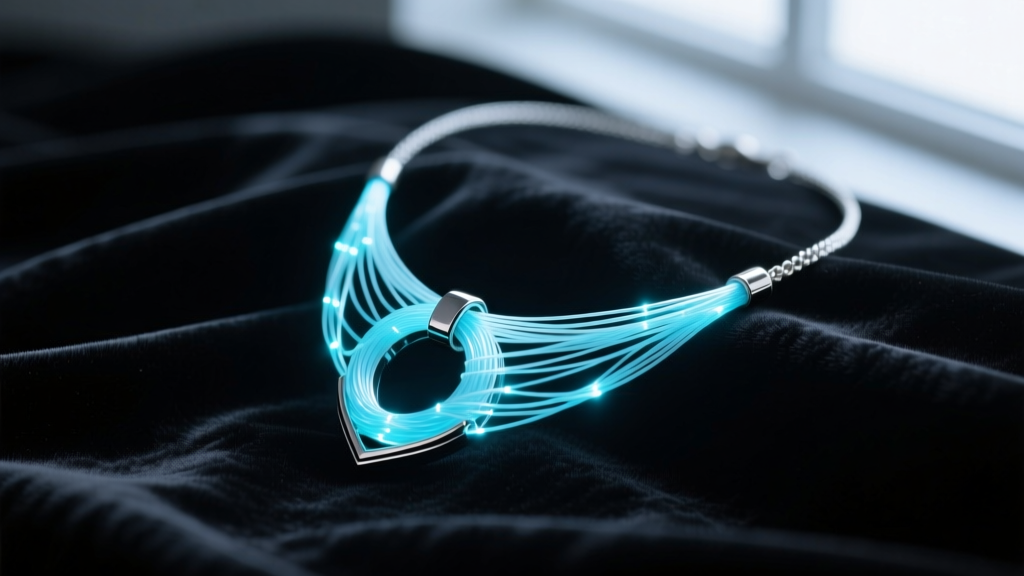
Once relegated to cheap festival giveaways and novelty party favors, necklace lights have undergone a massive technological and aesthetic transformation. In 2026, illuminated pendants and LED chokers are sophisticated pieces of wearable tech, blending high-lumen output with minimalist jewelry design. However, the market is heavily saturated with varying quality tiers, making a proper budget and value assessment critical for consumers. Are you paying for genuine engineering, or simply a markup on fragile copper wire and toxic plastics?
This guide deconstructs the true cost of light-up necklaces, evaluating battery chemistry, material safety, and LED chip efficiency to help you determine where your money is best spent.
Deconstructing the Cost: Materials and Component Grades
The price gap between a $12 Amazon basic light-up pendant and an $85 boutique LED choker comes down to three core components: the wire core, the casing material, and the LED chips themselves.
The Wire Core: Bare Copper vs. FPCB
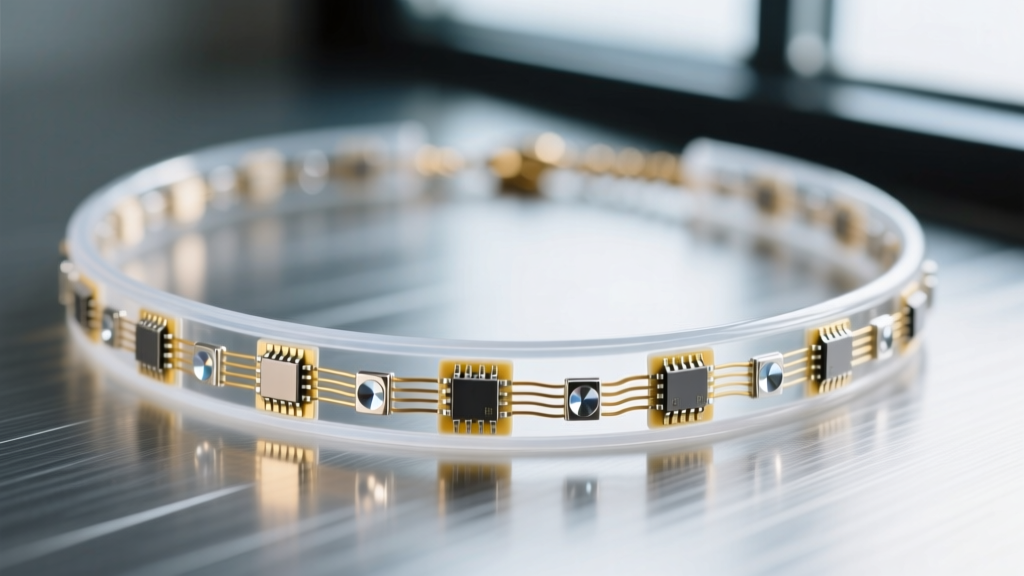
Budget necklace lights typically rely on bare, silver-plated copper wire. While highly flexible initially, copper suffers from work-hardening. Repeated bending around the neck causes microscopic fractures, leading to dead LED nodes within weeks. Premium models utilize FPCB (Flexible Printed Circuit Board) technology. FPCB embeds the copper traces within a flexible polyimide substrate, allowing the necklace to bend and twist without snapping the electrical pathway. FPCB manufacturing costs roughly four times more than bare wire, which is immediately reflected in the retail price, but it increases the lifespan of the jewelry by over 500%.
Casing Safety: PVC vs. Medical-Grade Silicone
Because necklace lights sit directly against the skin—often in hot, sweaty festival environments—the casing material is a critical health and value factor. Cheap models use extruded PVC (polyvinyl chloride) tubing. When exposed to body heat and UV light, low-grade PVC can leach phthalates and other plasticizers. According to the Consumer Product Safety Commission (CPSC), strict limits are placed on phthalates in consumer products due to their endocrine-disrupting properties.
High-value necklace lights use RoHS-compliant, medical-grade silicone. Silicone is hypoallergenic, UV-resistant, and does not degrade or turn yellow when exposed to sweat and sunlight. If a product listing does not explicitly state 'silicone' or 'RoHS certified,' assume it is PVC and factor in the potential skin irritation risk against the low upfront cost.
LED Chip Efficiency: SMD 2835 vs. 5050
The type of Surface-Mount Device (SMD) LED dictates both the brightness and the battery drain. Budget chains use older SMD 5050 chips, which draw roughly 60mA per chip and generate noticeable heat. Modern premium necklaces use SMD 2835 chips. As highlighted by the U.S. Department of Energy, newer LED architectures offer vastly superior lumens-per-watt efficiency. The 2835 chip draws only 20mA while producing a smoother, more diffused light, drastically extending battery life without the uncomfortable heat against the collarbone.
Power Sources: The Hidden Recurring Cost
The most overlooked aspect of assessing the value of necklace lights is the power source. The initial purchase price is only the beginning of your financial investment.
- CR2032 Coin Cells (The Budget Trap): Sub-$15 necklaces usually rely on two CR2032 batteries housed in a bulky plastic toggle switch. While they provide about 30 hours of continuous light, the cost per hour of illumination is high. Replacing these batteries frequently becomes expensive and environmentally wasteful.
- USB-C Li-Po (Lithium Polymer): Mid-tier to premium necklaces ($30–$80) feature integrated 150mAh to 200mAh Li-Po batteries. These offer 8 to 12 hours of high-lumen runtime and can be recharged over 500 cycles. The cost-per-hour of light drops to fractions of a penny.
- Addressable RGB Modules: Necklaces featuring Bluetooth 5.0 app control and addressable RGB chips require a constant micro-current to maintain the wireless connection, reducing overall runtime by about 15% compared to static-color analog circuits.
2026 Value Comparison: Budget vs. Premium Tiers
To visualize the return on investment, we have broken down the current market into three distinct pricing tiers.
| Feature | Budget Tier ($8 - $15) | Mid-Tier ($30 - $50) | Premium Tier ($80 - $150) |
|---|---|---|---|
| Wire Core | Bare Copper Wire | Standard FPCB | Reinforced FPCB with Kevlar weave |
| Casing | PVC Tubing | Standard Silicone | Matte-finish Medical Silicone |
| Power Source | CR2032 (Replaceable) | 150mAh Li-Po (USB-C) | 200mAh Li-Po + Wireless Qi Charging |
| Water Resistance | None | IP65 (Nano-coated) | IP67 (Fully Extruded Sleeve) |
| Estimated Lifespan | 10-20 wears | 2-3 years | 5+ years |
| Cost-Per-Wear | ~$0.75 | ~$0.15 | ~$0.10 |
Real-World Failure Modes (And How to Avoid Them)
Understanding how illuminated jewelry fails is the key to making a smart purchase. Here are the most common points of failure in necklace lights:
- Galvanic Sweat Corrosion: Human sweat contains chlorides and salts. When bare copper wire is exposed to sweat, it rapidly oxidizes, creating a green patina that increases electrical resistance and eventually kills the circuit. Always look for FPCB wires encased in seamless silicone.
- USB Port Oxidation: Mid-tier necklaces often leave the USB-C charging port exposed. Moisture ingress causes the charging pins to corrode, rendering the battery useless. Premium models use magnetic pogo-pin chargers or sealed wireless charging pads to eliminate exposed ports entirely.
- Inverter Whine (EL Wire): Some older or ultra-cheap 'glow' necklaces use Electroluminescent (EL) wire instead of LEDs. EL wire requires a bulky inverter pack that emits a high-pitched whining noise and degrades rapidly in humid conditions. Avoid EL wire entirely in favor of SMD LEDs.
The Value Assessment Framework
When evaluating a specific necklace light, apply the L.I.T. Framework (Longevity, Integration, Toxicity):
- Longevity: Does the product use FPCB and a rechargeable Li-Po battery? If it relies on CR2032s and bare copper, it is a disposable item, not a jewelry investment.
- Integration: How well does the hardware blend into the aesthetic? Premium models hide the battery module inside a decorative pendant housing or a sleek magnetic clasp, whereas budget models leave a bulky plastic switch dangling awkwardly on the collarbone.
- Toxicity: Is the casing verified as medical-grade silicone? Skin safety should never be compromised for a lower price point.
Expert Tip: If you are buying a light-up pendant for a multi-day outdoor festival, IP65 water resistance (nano-coating) is sufficient for sweat and light rain. However, if you plan to wear the necklace in the rain or near heavy water exposure, you must insist on an IP67 rating, which indicates the LEDs are fully encased in a continuous, seamless silicone extrusion with no glued seams.
Final Verdict: Where Should You Invest?
The 'sweet spot' for value in the 2026 necklace lights market sits firmly in the $35 to $55 range. At this price point, you transition away from toxic PVC and fragile copper, gaining access to IP65 nano-coated FPCB, skin-safe silicone, and USB-C rechargeable Li-Po batteries. While the $10 budget options seem appealing for a single-night event, the cost-per-wear and environmental waste of dead coin-cell batteries make them a poor long-term investment. Conversely, unless you specifically require app-controlled addressable RGB patterns or wireless charging, the $100+ premium tier offers diminishing returns for the average wearer. Prioritize FPCB construction and silicone casing, and your illuminated jewelry will outlast the trends that inspired it.


