Necklace Lobster Claw Clasp: Technical Guide to Sizing and Alloys
Discover the metallurgy, sizing standards, and common failure modes of the necklace lobster claw clasp. Expert tips for selection and repair.

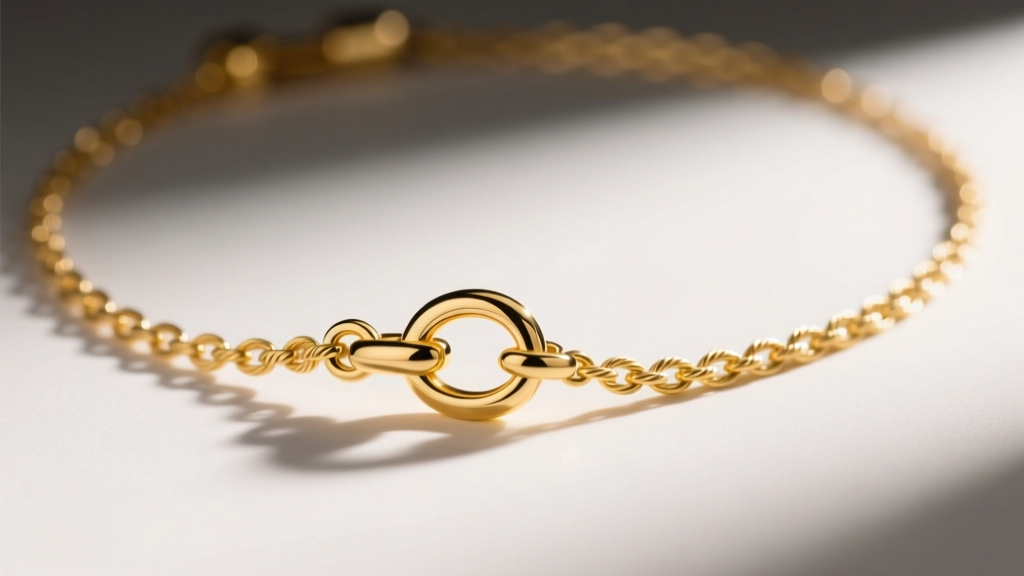
The necklace lobster claw clasp is the undisputed workhorse of modern jewelry findings. Invented in the late 20th century as a robust alternative to the traditional spring ring, its asymmetrical, ergonomic design allows for easier one-handed operation while providing superior tensile strength. However, beneath its simple exterior lies a complex interplay of metallurgy, mechanical engineering, and precise dimensional tolerances. For jewelry designers, bench jewelers, and serious collectors, understanding the technical specifications of these clasps is critical for ensuring the longevity and security of valuable necklaces and heavy pendants.
While consumers often view clasps as mere afterthoughts, industry professionals recognize them as the primary point of mechanical failure on any chain. A poorly engineered clasp can result in catastrophic loss, while an over-engineered one can ruin the drape and aesthetics of a delicate piece. This expert deep dive explores the material science, sizing protocols, and mechanical failure modes associated with modern lobster clasps.
The Metallurgy of Clasp Alloys and Spring Mechanics
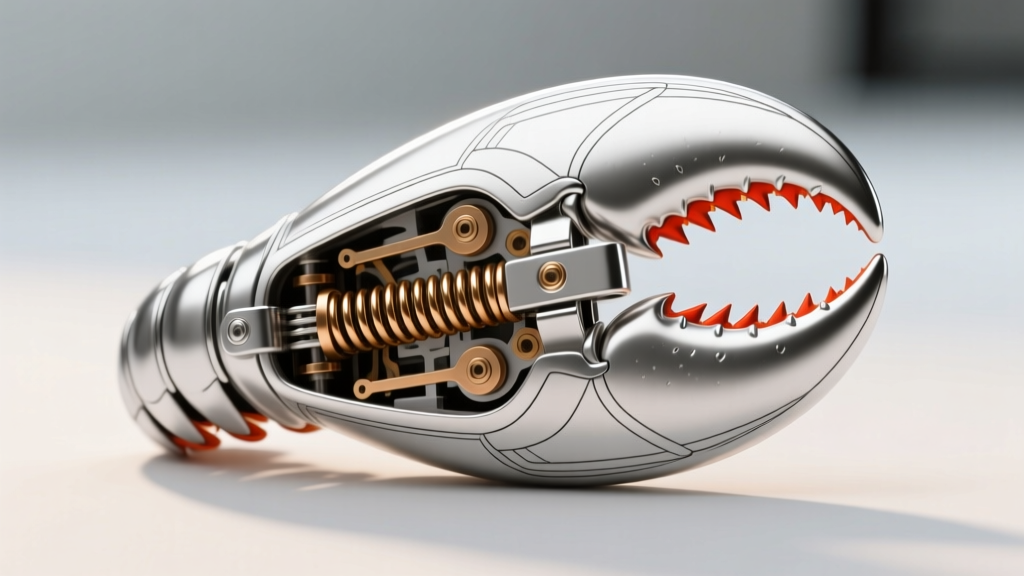
When evaluating high-end jewelry findings, it is a common misconception that a solid 14k or 18k gold lobster clasp is made entirely of precious metal. While the outer body and the lever are indeed cast or die-struck from gold alloys, the internal spring mechanism requires entirely different physical properties. Gold alloys, even when work-hardened, lack the elastic modulus and yield strength required for repeated cyclic loading. According to material data referenced by the Gemological Institute of America (GIA), pure gold and standard karat alloys will suffer from plastic deformation (permanent bending) if used as a leaf spring.
To solve this, premium manufacturers utilize a bi-metal construction. The internal spring of a high-quality gold necklace lobster claw clasp is typically fabricated from 301 or 304 stainless steel, phosphor bronze, or beryllium copper. These alloys possess high elastic limits, allowing them to be compressed and released tens of thousands of times without experiencing spring fatigue. Phosphor bronze is particularly favored in luxury European findings due to its excellent corrosion resistance and low friction coefficient against the gold interior walls.
The manufacturing method of the clasp body also dictates its structural integrity. Die-struck clasps are formed from sheet metal under immense hydraulic pressure, which aligns the grain structure of the metal and work-hardens it, resulting in a Vickers hardness (HV) significantly higher than cast equivalents. Cast clasps, produced via lost-wax investment casting, are more intricate and cost-effective for complex designs but can suffer from micro-porosity. Under heavy tensile loads, a porous cast clasp body may snap catastrophically at the hinge pin, whereas a die-struck body will typically bend or deform first, providing a visible warning before failure.
Dimensional Standards and Tensile Load Limits
Selecting the correct clasp size is not merely an aesthetic choice; it is a strict engineering requirement based on the weight of the pendant and the gauge of the chain. The industry standard sizing for lobster clasps ranges from 9mm for ultra-fine chains up to 25mm or larger for heavy Cuban links and statement pieces. The internal spring wire gauge scales proportionally with the clasp length to maintain consistent lever tension.
Below is a technical reference chart detailing standard dimensions, recommended chain pairings, and approximate tensile yield strengths for premium stainless-steel and karat-gold findings sourced from major suppliers like Rio Grande jewelry suppliers.
| Clasp Length | Spring Wire Gauge | Recommended Chain Gauge | Approx. Tensile Yield | Best Use Case |
|---|---|---|---|---|
| 9mm | 0.40mm | Up to 1.2mm (16g) | ~15 lbs (6.8 kg) | Delicate pendants, lightweight cable chains |
| 12mm | 0.50mm | Up to 2.0mm (12g) | ~25 lbs (11.3 kg) | Standard everyday necklaces, medium lockets |
| 15mm | 0.60mm | Up to 3.5mm (8g) | ~40 lbs (18.1 kg) | Heavy pendants, rope chains, box chains |
| 18mm | 0.80mm | Up to 5.0mm (4g) | ~65 lbs (29.5 kg) | Thick curb chains, multi-strand necklaces |
| 25mm+ | 1.00mm+ | Up to 8.0mm+ (0g) | ~100+ lbs (45+ kg) | Heavy statement pieces, solid gold Cuban links |
It is crucial to note that the tensile yield represents the point at which the clasp body or hinge pin begins to permanently deform. The jump ring connecting the clasp to the chain is often the weaker link in this system. If an 18mm clasp rated for 65 lbs is attached to an unsoldered 20-gauge jump ring, the jump ring will pull open at approximately 12 lbs of force, rendering the clasp's superior strength irrelevant.
Mechanical Failure Modes and Troubleshooting
Despite their robust reputation, lobster clasps are subject to specific mechanical failure modes, particularly when exposed to environmental stressors or improper handling. Understanding these failure points allows bench jewelers to diagnose issues and educate clients on proper maintenance.
1. Lever Creep and Hinge Pin Deformation
The most common user-induced failure is 'lever creep.' This occurs when the user pulls the lever back past its engineered stopping point, often using a fingernail to pry it open. This over-extension bends the lever backward, placing immense lateral stress on the microscopic hinge pin. Over time, the hinge pin fatigues and snaps, causing the lever to detach entirely. Premium clasps incorporate a physical internal stop—a small cast nub inside the body that prevents the lever from rotating past 90 degrees.
2. Galvanic Corrosion and Spring Seizure
In gold-plated or silver-plated base metal clasps, the internal steel spring is highly susceptible to galvanic corrosion. When exposed to the chlorides and acids in human sweat, a micro-galvanic cell forms between the steel spring and the brass or copper body. This corrosion creates metallic salts that act as an abrasive paste, eventually seizing the lever. To prevent this, high-end manufacturers use phosphor bronze springs or coat the internal steel springs in a microscopic layer of PVD (Physical Vapor Deposition) titanium nitride.
3. Cast Porosity at the Hinge
As mentioned earlier, investment cast clasps can trap microscopic gas bubbles during the cooling process. If this porosity occurs near the hinge pin housing, the effective cross-sectional area of the metal is reduced. Under the dynamic, swinging load of a heavy pendant, this porous region becomes a stress concentrator, leading to sudden, unpredictable shearing of the clasp body. Die-struck clasps eliminate this risk entirely.

Integration: Jump Rings and Soldering Protocols
The method used to integrate the necklace lobster claw clasp into the chain is just as critical as the clasp itself. The golden rule of clasp integration is heat management. The internal spring of a lobster clasp is tempered to achieve its specific elasticity. If a bench jeweler uses a traditional butane or oxy-acetylene torch to solder the jump ring shut while the clasp is attached, the ambient heat will anneal the steel or bronze spring. Annealing destroys the temper, turning a springy, resilient wire into a soft, dead piece of metal that will fail to push the lever closed.
To avoid thermal damage, professionals employ one of two protocols:
- Laser Welding: Modern jewelry workshops utilize pulsed Nd:YAG laser welders to fuse jump rings. The laser delivers a highly localized burst of heat that melts the metal in milliseconds, leaving the surrounding clasp body and internal spring completely unaffected by thermal transfer.
- Sequential Assembly: If laser welding is unavailable, the jeweler must first solder the jump ring shut using a torch, quench and pickle the ring, and only then use split-ring pliers to attach the finished lobster clasp to the cooled, soldered ring.
Furthermore, the orientation of the jump ring matters. The clasp should always be attached so that the lever opens away from the chain links, preventing the chain from accidentally slipping into the lever gap and jamming the mechanism during wear.
Magnetic and Specialty Variations
For clients with limited dexterity, arthritis, or neuropathy, operating a standard mechanical lever can be frustrating. The jewelry industry has responded with magnetic lobster clasps. These feature a neodymium rare-earth magnet core encased in a decorative outer shell that mimics the shape of a traditional lobster claw. While they offer excellent shear strength (resistance to sliding apart), their tensile pull-force is limited by the magnet's grade. A standard N52 neodymium magnetic clasp provides roughly 8 to 12 lbs of pull-force, making them suitable only for lightweight chains and pearls. They must never be used for heavy pendants, as a sudden upward tug on the necklace can easily overcome the magnetic bond.
Ultimately, the necklace lobster claw clasp remains a triumph of functional jewelry design. By matching the correct metallurgical composition, dimensional size, and integration technique to the specific requirements of the necklace, jewelers can ensure that the clasp remains a secure, invisible guardian of the pieces we cherish most.


