The Necklace Madame Loisel: Diamond Authentication & Care Guide
Learn vital diamond necklace care, cleaning, and authentication tips inspired by the tragic lessons of the necklace Madame Loisel borrowed.


The Tragedy of Ignorance: Lessons from Maupassant
In Guy de Maupassant’s seminal 1884 short story, Mathilde Loisel’s life is dismantled by a single piece of jewelry. Borrowing what she believes to be a diamond necklace from a wealthy friend, she loses it and spends a decade in grueling poverty to replace it, only to discover the original was merely paste—worth a fraction of her sacrifice. While modern consumers are rarely driven to destitution by lost borrowed jewels, the core failure of Madame Loisel remains highly relevant in today’s fine jewelry market: the inability to accurately identify, properly maintain, and securely document high-value necklaces.
Today’s 'paste' is far more deceptive than the 19th-century lead glass (strass) that fooled Mathilde. Modern simulants like Cubic Zirconia (CZ) and Moissanite, alongside lab-grown diamonds, require specific gemological knowledge to authenticate and distinct chemical protocols to maintain. Whether you are caring for a family heirloom, a newly purchased diamond pendant, or a borrowed piece for a gala, mastering the intersection of authentication and maintenance is essential to protecting your investment.
The Modern 'Strass': Identifying Diamond Simulants
Before applying any cleaning or maintenance regimen, you must definitively know the material composition of your necklace. Diamonds possess unique physical properties that dictate how they interact with light, heat, and chemicals.
Thermal and Optical Testing
Diamonds are exceptional thermal conductors. A standard jeweler’s diamond tester uses a heated thermistor to measure how quickly heat dissipates through the stone. While this easily separates natural diamonds from CZ (a thermal insulator), it fails against Moissanite, which is also highly thermally conductive. To differentiate Moissanite from natural diamond, gemologists rely on optical doubling. Because Moissanite is doubly refractive, viewing the stone through a 10x loupe at an angle through the crown will reveal doubled facet junction lines. Natural diamonds are singly refractive and will show crisp, single lines.
The Loupe Check: Surface Abrasion and Inclusions
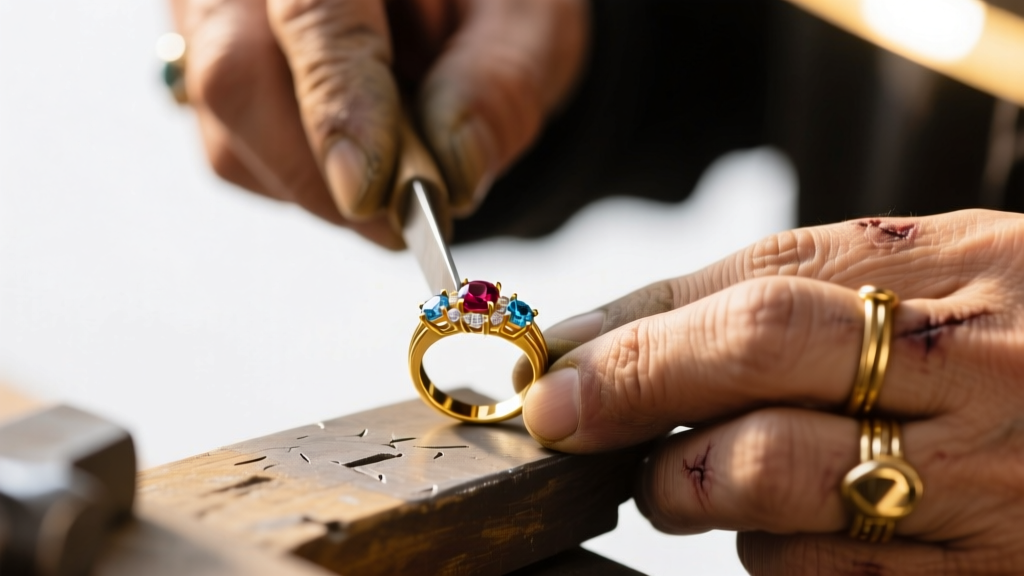
With a Mohs hardness of 10, a natural diamond’s facet edges remain razor-sharp indefinitely. CZ (Mohs 8.5) and paste glass (Mohs 5-6) will exhibit rounded, abraded facet edges over time due to contact with dust (which contains quartz, Mohs 7). Furthermore, natural diamonds often contain internal inclusions (crystals, feathers, or clouds), whereas CZ and glass are typically internally flawless or contain perfectly spherical gas bubbles. For definitive identification, the Gemological Institute of America (GIA) recommends relying on advanced spectroscopic testing for lab-grown versus natural differentiation, as visual inspection alone is no longer sufficient in 2026.
Cleaning Protocols: Natural vs. Simulant Necklaces
Diamonds are uniquely lipophilic (oil-attracting) and hydrophobic (water-repelling). This means they rapidly accumulate sebum, lotions, and makeup, which dulls their brilliance by altering the refractive index at the stone's surface. Conversely, CZ is hydrophilic and tends to attract soap scum and hard water deposits, leading to a cloudy, opaque appearance over time.
The Danger of Fracture-Filled Diamonds
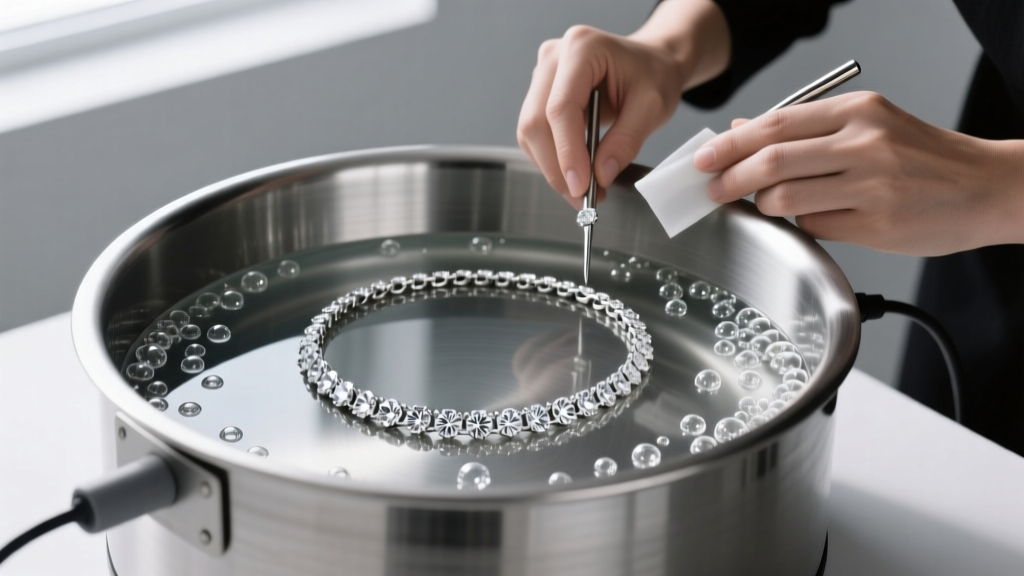
The most critical maintenance warning for diamond necklaces involves fracture-filled stones. Some lower-clarity natural diamonds are treated with a glass-like resin (such as the Yehuda treatment) to mask internal fractures. While standard ammonia-based cleaners (a 6:1 ratio of water to household ammonia) are excellent for degreasing natural, untreated diamonds, ammonia will aggressively dissolve fracture fillings, permanently clouding the stone. Similarly, ultrasonic cleaners can shatter the filling or cause the stone to fracture along the weakened fault lines. Always verify if a diamond has been clarity-enhanced before submerging it in any chemical bath or ultrasonic tank.
Material-Specific Cleaning Matrix
Not all pendants and chains can withstand the same cleaning environment. Use the following matrix to determine the safest maintenance protocol for your specific necklace material.
| Material | Mohs Hardness | Ultrasonic Safe? | Steam Safe? | Primary Cleaning Agent |
|---|---|---|---|---|
| Natural Diamond (Untreated) | 10 | Yes | Yes | Ammonia-based degreaser |
| Fracture-Filled Diamond | 10 (Fragile) | No | No | Mild dish soap & warm water |
| Moissanite | 9.25 | Yes | Yes | Ammonia or commercial jewelry dip |
| Cubic Zirconia (CZ) | 8.5 | Yes (Briefly) | No | Mild surfactant (dish soap) |
| Paste / Rhinestone Glass | 5 - 6 | No | No | Damp microfiber cloth only |
Chain Security and Metal Fatigue
A pendant is only as secure as the chain and clasp holding it. Necklaces endure unique kinetic stressors compared to rings; they swing, catch on textiles, and are subjected to sudden tensile shocks.
Clasp Mechanisms and Ultrasonic Risks
Spring ring and lobster clasps rely on a tiny internal steel spring. Prolonged exposure to ultrasonic cleaners can cause high-frequency resonance that fatigues or snaps this microscopic spring, leaving the clasp permanently open or stuck. Furthermore, hollow chains (like lightweight box or rope chains) are highly susceptible to crushing. If a hollow chain kinks, it cannot be easily repaired without replacing the entire segment. Solid chains, such as solid wheat or cable chains, offer superior tensile strength and are recommended for heavy diamond pendants.
Prong Maintenance for Pendants
Pendants often feature pear, marquise, or princess cuts, which possess sharp points. These points must be protected by V-prongs rather than standard rounded prongs. Because pendants rest against the sternum and are frequently bumped, prongs can wear down or lift. According to Jewelers of America, you should perform the 'catch test' monthly: gently run the prongs over a piece of silk or fine knit fabric. If the metal snags the fabric, the prong is lifted and requires immediate professional re-tipping to prevent stone loss.
The Loisel Rule: Documentation and Storage
Mathilde Loisel’s ultimate downfall was not just losing the necklace, but borrowing it without a formal inventory or condition report, leaving her blind to its true material value. The modern 'Loisel Rule' dictates strict documentation and storage protocols.
Condition Reports for Borrowed Jewelry
If you are borrowing a high-value necklace for an event, require a jeweler’s appraisal or a detailed condition report noting the exact carat weight, metal purity, and any existing inclusions or prong wear. Photograph the necklace under macro lighting before taking possession. This protects you from being held liable for pre-existing damage or attempting to replace a simulant with a natural diamond.
Proper Storage Environments
Diamonds will scratch other diamonds, as well as any softer metal or gemstone. A necklace tossed into a communal jewelry box will suffer micro-abrasions on its gold setting and potentially chip the girdle of adjacent stones. Store diamond necklaces individually in lint-free, soft flannel pouches. For silver chains, include a 3M anti-tarnish strip to absorb sulfur compounds in the air, preventing the formation of silver sulfide (tarnish) which requires abrasive polishing that slowly strips the metal over time.
Conclusion
The tragedy of Madame Loisel serves as a timeless reminder that the true value of jewelry lies not just in its aesthetic brilliance, but in the knowledge of its owner. By utilizing proper gemological testing, adhering to material-specific cleaning protocols, and maintaining rigorous security checks on clasps and prongs, you ensure that your diamond necklace remains a source of joy rather than a catalyst for disaster. Treat every piece with the analytical respect it deserves, and you will never fall victim to the illusion of the paste.


