Troubleshooting a Malachite Beaded Necklace: Restring & Restore
Learn how to troubleshoot, restring, and restore a malachite beaded necklace. Expert fixes for snapped cords, dull beads, and identifying fakes.

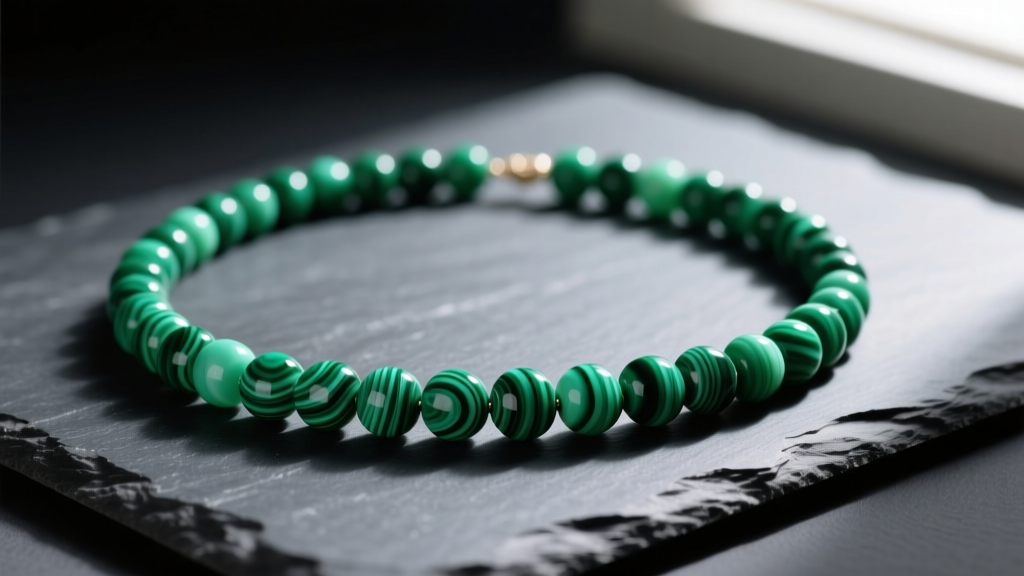
Why Malachite Beaded Necklaces Fail: The Mineral Reality
When your favorite malachite beaded necklace snaps, loses its luster, or suddenly looks suspiciously artificial, the root cause almost always traces back to the stone’s unique mineralogy. Malachite is a copper carbonate hydroxide mineral (Cu2CO3(OH)2). According to the Mindat.org mineral database, it registers a mere 3.5 to 4.0 on the Mohs hardness scale and possesses a high specific gravity of 3.6 to 4.0.
This combination of softness and extreme density creates a perfect storm for jewelry failure. An 8mm malachite bead weighs approximately 1.2 grams. A standard 18-inch necklace comprising 100 beads exerts over 120 grams of continuous tensile stress on the stringing material, while the slightly abrasive, unpolished interiors of the drill holes act like microscopic saws against traditional threads. Furthermore, its chemical composition makes it highly reactive to everyday environmental factors. Understanding these physical and chemical vulnerabilities is the first step in troubleshooting and restoring your necklace.
Diagnostic Chart: Identifying Your Necklace's Problem
Before attempting any repairs, accurately diagnose the specific failure mode. Use the troubleshooting matrix below to identify the issue and determine the required intervention.
| Symptom | Root Cause | Action Required |
|---|---|---|
| Visible sagging or gaps between beads | Stretching of nylon thread or silk cord due to high specific gravity. | Complete restringing using 49-strand micro-fused steel wire. |
| Chalky, dull, or white-etched surface | Chemical reaction with acidic sweat, perfumes, or improper cleaning agents. | Gentle dry polishing; professional lapidary tumbling for deep etching. |
| Sudden snap at the clasp junction | Friction wear from the metal clasp loop cutting into the stringing material. | Restring using French wire (bullion) or wire protectors at the clasp. |
| Banding looks too perfect or uniform | Manufactured imitation (glass, polymer clay, or dyed agate). | Perform thermal and specific gravity tests to confirm authenticity. |
Problem 1: The Stretched or Snapped Cord (And How to Restring)
The most frequent issue with a malachite beaded necklace is cord failure. Many vintage or mass-produced pieces are strung on nylon or silk. While silk is excellent for lightweight pearls, it is entirely inadequate for heavy, semi-precious stones like malachite. The weight of the copper-rich beads will stretch silk within months, and the sharp edges of the drill holes will eventually fray and snap synthetic nylons.
Selecting the Right Beading Wire Gauge
To permanently solve the stretching issue, you must upgrade to a multi-strand beading wire. The industry standard is a 49-strand micro-fused stainless steel wire with a nylon jacket. For 6mm to 8mm malachite beads, use a 0.018-inch (0.46mm) diameter wire. If your necklace features larger 10mm to 14mm statement beads, step up to a heavy-duty 0.024-inch (0.61mm) gauge to prevent kinking and support the increased load.
The Restringing Process: Protecting the Junction
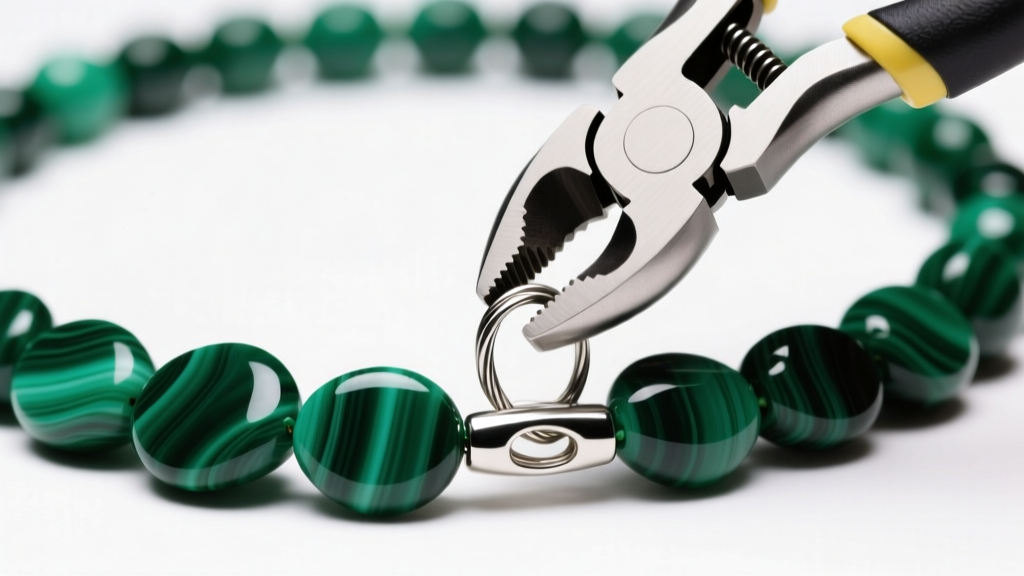
When restringing, the weakest point is always where the flexible wire loops through the rigid metal clasp. Repeated movement causes the metal to saw through the nylon coating and eventually the steel core. To troubleshoot this, always incorporate a sterling silver or gold-filled wire protector (also known as French wire or bullion). Thread the wire through the clasp, slide the wire protector over the loop, and secure it using 2x2mm sterling silver crimp beads. Use a specialized crimping tool to fold the crimp bead into a neat, rounded tube, ensuring a secure, professional finish that will support the heavy malachite beads for decades.
Problem 2: Dull, Chalky, or Etched Beads
Malachite is notoriously sensitive to acids and heat. Because it is a copper carbonate, exposure to even mild acids will cause a chemical reaction that releases carbon dioxide and dissolves the polished surface layer, leaving behind a dull, chalky, or pitted finish. This is a common failure mode for necklaces worn frequently in warm weather, as human sweat is naturally acidic (typically ranging from a pH of 4.5 to 7.0).
The Ultrasonic and Chemical Trap
Never place a malachite beaded necklace in an ultrasonic cleaner, and never use steam. Furthermore, avoid commercial jewelry dips, ammonia, vinegar, or lemon juice. According to the Gemological Institute of America (GIA), malachite requires only the gentlest cleaning methods. If your beads have lost their shine due to surface oils and mild sweat exposure, wipe them down with a slightly damp, lint-free microfiber cloth and dry them immediately.
If the beads are deeply etched or chalky from prolonged acid exposure, home remedies will not restore the polish. The necklace must be disassembled, and the beads sent to a professional lapidary who can re-tumble them using a mild aluminum oxide abrasive to restore the factory-grade mirror finish without dissolving the copper matrix.
Problem 3: Suspecting a Fake (Glass vs. Real Malachite)
Because high-quality, deeply banded malachite commands a premium price, the market is flooded with imitations. If your necklace feels unusually light, or if the beads are perfectly uniform in size and pattern, you may be dealing with a fake. Troubleshooting authenticity requires a multi-sensory approach.
Visual and Tactile Diagnostics
- Thermal Conductivity: Real malachite is a dense mineral and will feel distinctly cold to the touch when first picked up, taking several seconds to warm to your skin temperature. Glass and polymer resin fakes will feel closer to room temperature and warm up almost instantly.
- Weight (Specific Gravity): Hold the necklace in your palm. Genuine malachite has a specific gravity of nearly 4.0, making it significantly heavier than glass or plastic beads of the exact same diameter. If the necklace feels suspiciously light, it is likely a counterfeit.
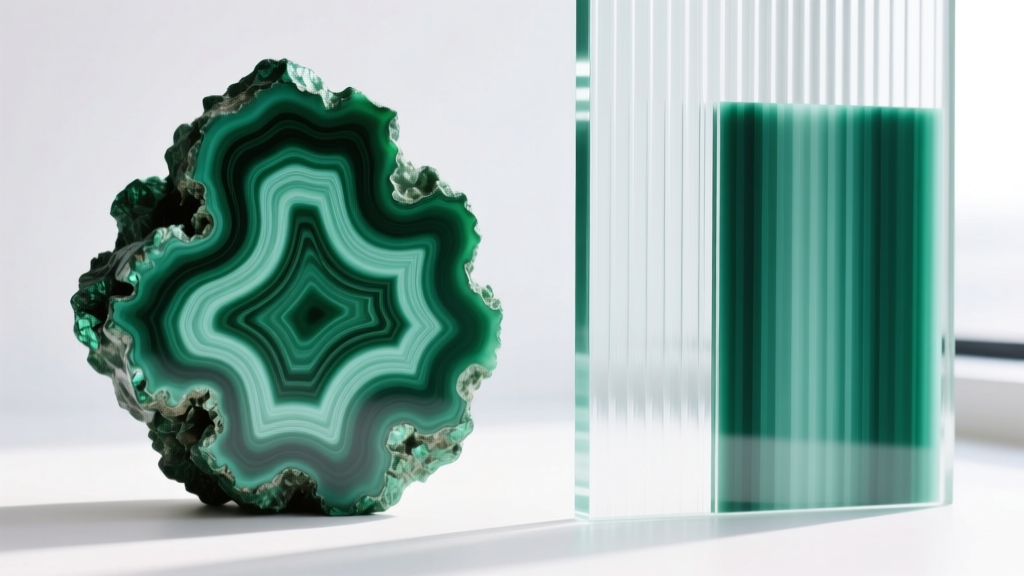
- Banding Patterns: Examine the concentric rings under a 10x jeweler's loupe. Natural malachite banding is irregular, featuring sharp contrasts between dark green, black, and pale mint green layers. Fakes often feature printed or dyed bands that look blurry, overly uniform, or possess a 'pixelated' edge where the dye has pooled in the glass or resin.
Long-Term Storage and Maintenance Framework
Once your malachite beaded necklace has been restrung and polished, proper storage is critical to prevent future troubleshooting. Because malachite is a 3.5 on the Mohs scale, it will easily scratch if tossed into a communal jewelry box alongside diamonds, sapphires, or even quartz (Mohs 7.0).
Always store the necklace flat in a dedicated, soft-lined compartment or a sealed anti-tarnish pouch. Avoid hanging heavy malachite necklaces on standard jewelry trees, as the sustained gravitational pull over months can still cause premature fatigue on even the best steel beading wires. Finally, adopt a strict 'last on, first off' rule: put your malachite necklace on only after applying perfumes, hairsprays, and lotions, and remove it immediately upon returning home to minimize acid and chemical exposure. By respecting the mineral's physical limits, your restored piece will remain a vibrant, structurally sound staple in your collection for years to come.


