What Necklace to Wear With a Strapless Dress: A Material Guide
Discover what necklace to wear with a strapless dress by comparing metal weights, gemstone optics, and skin-safe materials for flawless styling.

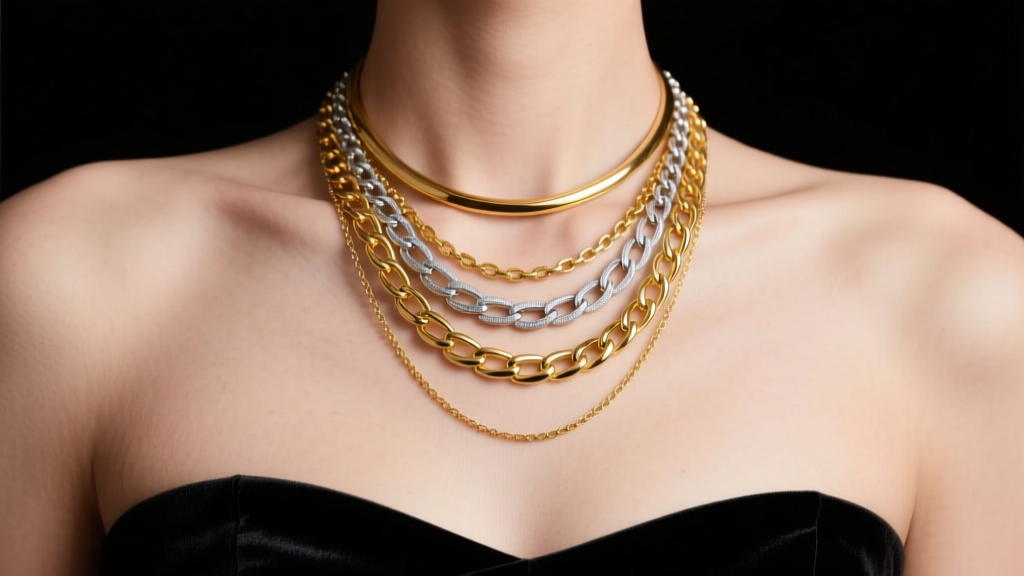
When styling a bare décolletage, the question of what necklace to wear with strapless dress silhouettes extends far beyond simple length and pendant size. A strapless gown removes the visual anchors of fabric around the neck and shoulders, transforming your skin into a blank canvas. In this environment, the physical and optical properties of your jewelry materials—metallurgical density, light refraction, and chemical reactivity—dictate the success of your look. As a jewelry stylist, I approach strapless necklines not just as a fashion choice, but as an exercise in material science and visual physics.
The Canvas Effect: Skin Chemistry and Undertones
Without fabric to absorb light or provide a contrasting border, a necklace resting on a strapless neckline interacts directly with your skin's undertones and chemistry. The décolletage is highly vascular and prone to temperature fluctuations, meaning the metal you choose must withstand perspiration while complementing your natural coloring.
- Warm Undertones: High-karat yellow gold (18k or 22k) and unalloyed copper provide a rich, continuous visual flow against warm skin, preventing the 'floating' effect that high-contrast metals can create.
- Cool Undertones: Platinum, palladium, and rhodium-plated white gold offer a crisp, icy contrast that mimics the structural lines of a strapless bodice.
- Neutral Undertones: Rose gold (specifically 14k, which has a higher copper content for that distinct pink hue) bridges the gap, offering warmth without overwhelming the skin's natural balance.
Metallurgical Weight and Drape Physics
The physical weight of a necklace drastically alters how it sits on the collarbone. A strapless dress offers no structural support to the neck, so the jewelry must self-support. Understanding metal density (measured in g/cm³) is crucial for predicting drape.
Platinum vs. Aluminum and Titanium
Platinum is exceptionally dense (21.45 g/cm³). A solid platinum chain will sit flush against the sternum, creating a deliberate, weighted drape that feels luxurious and stays centered. Conversely, aerospace-grade titanium (4.5 g/cm³) or anodized aluminum (2.7 g/cm³) are incredibly lightweight. While excellent for avant-garde, oversized sculptural collars, lightweight materials tend to shift and slide on bare skin, requiring a tighter choker fit (14-15 inches) to maintain their intended silhouette.
The Danger of Sweat Corrosion
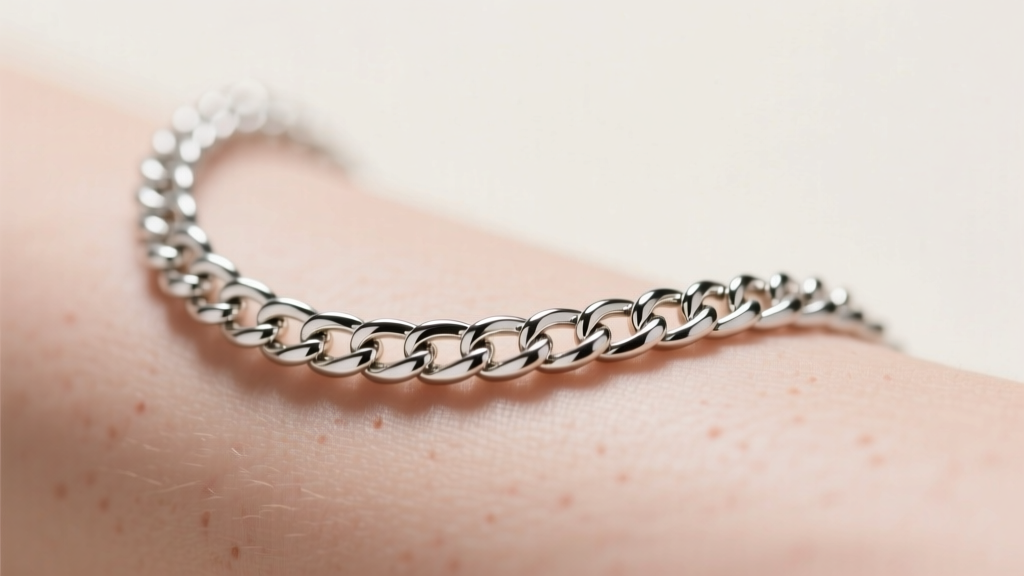
The chest area contains a high concentration of eccrine sweat glands. Human sweat contains chlorides, urea, and lactic acid, which can aggressively tarnish or corrode certain alloys. According to the American Academy of Dermatology, prolonged exposure to sweat can trigger contact dermatitis in sensitive individuals, particularly from nickel alloys often found in lower-karat white gold or cheap brass bases.
Expert Rule: If you are attending a high-heat outdoor event or dancing heavily, avoid sterling silver (92.5% silver, 7.5% copper). The copper will react with sweat chlorides, leaving a green/black residue on your bare chest. Opt for 18k gold, platinum, or surgical-grade 316L stainless steel instead.
Gemstone Optics: Refractive Index on Bare Skin
When a gemstone rests directly on the skin without a fabric backdrop, its Refractive Index (RI)—the measure of how much it bends light—determines its visual impact. The Gemological Institute of America (GIA) categorizes gemstones by their optical properties, which become hyper-visible against a strapless neckline.
High-RI Stones: Diamonds and Moissanite
Diamonds (RI 2.42) and Moissanite (RI 2.65) rely on total internal reflection to create brilliance. Against bare skin, which has a relatively low and uneven reflectivity, these stones act as microscopic mirrors. To maximize this, choose bezel-set solitaires or tennis necklaces where the metal backing is minimized, allowing light to enter the pavilion of the stone directly from the skin's ambient reflection.
Low-RI Organics: Pearls and Opals
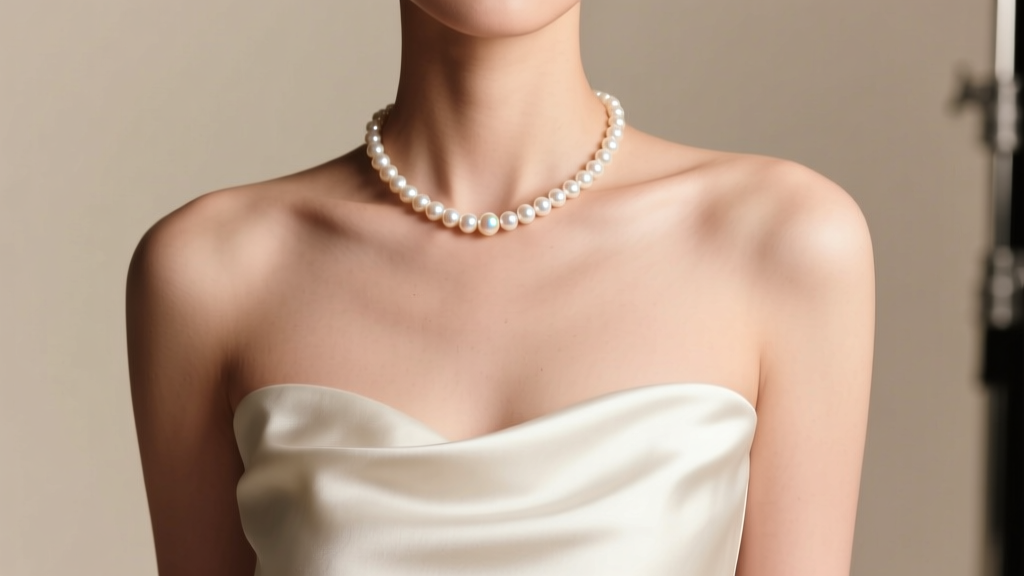
Pearls (RI 1.53-1.68) do not sparkle; they glow through a phenomenon called 'luster' and 'orient' (iridescence). However, pearls are composed of calcium carbonate and conchiolin, making them highly vulnerable to the acidic pH of human sweat (typically 4.5 to 7.0). Wearing a pearl choker directly on a perspiring décolletage will permanently etch the nacre over time. If you must wear pearls with a strapless dress, opt for a matinee length (20-24 inches) that rests lower on the chest where sweat accumulation is minimal, and wipe them with a damp microfiber cloth immediately after removal.
Material Comparison Matrix for Strapless Styling
Use this matrix to select the optimal material based on your event environment and dress silhouette.
| Material | Density / Weight | Sweat & Acid Resistance | Best Strapless Neckline | Maintenance Level |
|---|---|---|---|---|
| Platinum (950) | Very Heavy (21.4 g/cm³) | Exceptional (Inert) | Sweetheart / Plunging | Low (Polish only) |
| 18k Yellow Gold | Heavy (15.6 g/cm³) | High (Tarnish resistant) | Straight across / Bandeau | Low |
| Sterling Silver | Medium (10.4 g/cm³) | Poor (Oxidizes rapidly) | High Choker (Avoid skin) | High (Frequent polishing) |
| Akoya Pearls | Lightweight | Very Poor (Acid sensitive) | Matinee / Opera length | High (Wipe after wear) |
| 316L Steel | Medium (8.0 g/cm³) | Exceptional (Surgical) | Structured Collars | None |
The Physics of Drape: Chain Gauges and Clasp Tension
A common mistake when deciding what necklace to wear with a strapless dress is ignoring the structural integrity of the chain. Without a collar to rest against, the chain must bear the full pendulum force of the pendant.
Selecting the Right Gauge
Chain gauge refers to the thickness of the wire. For a strapless neckline, you need a balance between visual delicacy and tensile strength.
- 18-Gauge (1.0mm): Too fragile for heavy pendants. Best reserved for lightweight station necklaces or bare, minimalist chains that sit flush on the collarbone.
- 14-Gauge (1.6mm): The sweet spot for strapless styling. A 14-gauge box or wheat chain provides enough visual weight to stand up to the expanse of bare skin without looking like industrial hardware.
- 10-Gauge (2.5mm+): Reserved for statement collars. Requires a rigid or semi-rigid structure to avoid collapsing against the sternum.
Clasp Mechanics
Never use a spring-ring clasp for a strapless event. The lack of friction against clothing means the necklace will rotate, bringing the clasp to the front of your neck. Always upgrade to a lobster claw clasp or, ideally, a magnetic neodymium clasp concealed within a decorative metal tube. This ensures the closure remains secure even if the necklace shifts during movement.
Expert Troubleshooting: Slipping and Tarnishing
Even with the perfect material, bare skin presents unique friction challenges. Silicone is the enemy of fine jewelry, but skin oils can act as a lubricant, causing delicate chains to slide off-shoulder.
To combat this, apply a microscopic layer of jeweler's micro-crystalline wax (like Renaissance Wax) to the back of the chain links that will touch your skin. This creates a high-friction, invisible barrier that grips the skin gently while simultaneously protecting the metal from sweat. For gemstone-heavy tennis necklaces that tend to flip upside down, have a jeweler solder tiny, 1mm silicone-lined metal 'speed bumps' onto the interior of the chain every three inches. This bespoke modification guarantees the stones remain perfectly oriented against your décolletage all night.


