In The Necklace What Does the Necklace Symbolize? Style Analysis
Explore literary and modern jewelry symbolism. We analyze material grades, pendant trends, and personal meaning in 2026 necklace styling.

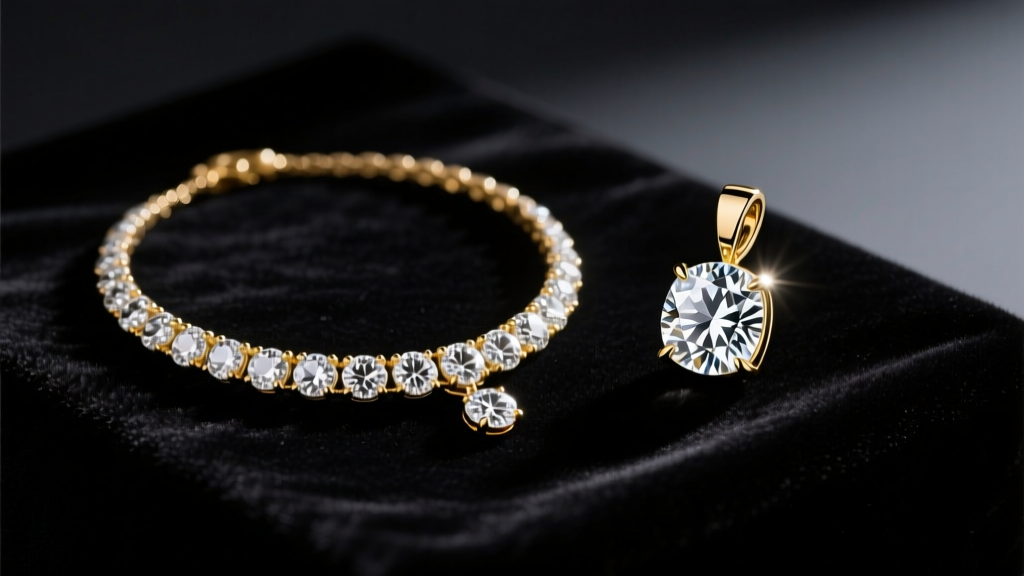
When readers, students, and cultural critics ask, in the necklace what does the necklace symbolize, they are almost universally referring to Guy de Maupassant’s tragic 1884 short story, The Necklace (La Parure). In literature, Mathilde Loisel’s borrowed diamond necklace symbolizes the destructive illusion of wealth, the danger of superficiality, and the heavy cost of pretending to be something you are not. The ultimate twist—that the necklace was merely paste (glass) worth a fraction of the debt incurred to replace it—serves as a timeless cautionary tale about materialism.
But how does this 19th-century literary critique translate to real-world jewelry styling and trend analysis today? As we navigate the jewelry landscape of 2026, the symbolism of the necklace has radically evolved. We have moved away from the "borrowed status" of Mathilde Loisel toward an era of radical authenticity, material transparency, and personal talismanic styling. This guide deconstructs the historical symbolism of the necklace and provides a data-driven framework for choosing pendants and chains that reflect genuine personal meaning rather than hollow illusion.
The Literary Trap: Illusion vs. Material Reality
To understand modern necklace symbolism, we must first understand the historical context of the "paste" jewel. In the 1880s, high-leaded glass was cut to mimic the refractive index of diamonds. According to Britannica's archives on Maupassant, the author used the paste necklace to critique the French bourgeoisie's obsession with appearances over substance. The necklace symbolized a facade: beautiful on the outside, but structurally and financially hollow.
In the decades that followed, wearing "costume" or imitation jewelry carried a stigma of deception. However, the 2026 jewelry market has entirely dismantled this paradigm. The rise of advanced material science has separated optical reality from geological origin, fundamentally changing what a diamond pendant symbolizes.
The 2026 Paradigm Shift: Lab-Grown and the Death of "Fake"
Today, the closest equivalent to Maupassant’s "paste" necklace is the lab-grown diamond (LGD) or high-grade moissanite. Yet, unlike the deceptive glass of the 19th century, modern LGDs are optically, chemically, and physically identical to mined diamonds. The Gemological Institute of America (GIA) confirms that lab-grown diamonds possess the exact same 10 Mohs hardness and refractive index (2.42) as their earth-mined counterparts.
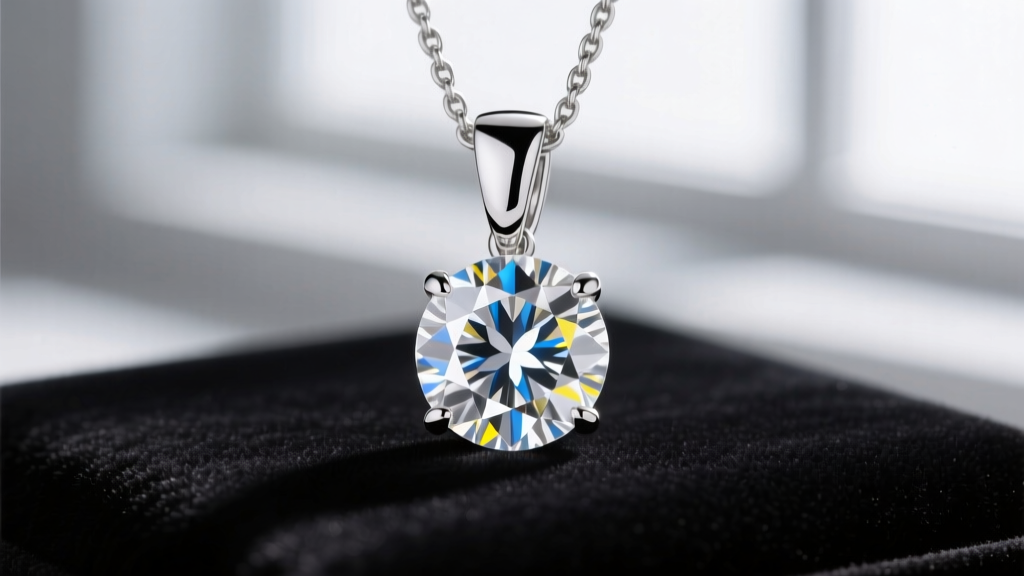
Therefore, in 2026, wearing a lab-grown diamond solitaire pendant no longer symbolizes "fake wealth." Instead, it symbolizes pragmatic luxury and ethical consumerism. A 1.50-carat VVS1 lab-grown diamond set in an 18k white gold bezel pendant retails for approximately $1,800 to $2,400, whereas a comparable mined diamond exceeds $12,000. The modern wearer chooses the former not to deceive, but to allocate capital efficiently while enjoying identical optical brilliance.
Material Grades & The Authenticity Metric
If the gemstone no longer carries the burden of "fakeness," the symbolism of a necklace in 2026 is anchored by its metalwork and structural integrity. True luxury symbolism is now found in the permanence of the chain and the setting. Here is a breakdown of what your metal choice signals to the world:
- 14k Solid Gold (58.5% Purity): The workhorse of 2026. Symbolizes practicality, everyday resilience, and understated confidence. Ideal for 1.2mm to 1.5mm cable chains that withstand daily tension.
- 18k Solid Gold (75% Purity): Symbolizes heritage and high luxury. The deeper yellow hue carries historical weight, but its softer nature requires thicker links (minimum 2.0mm) to prevent stretching over time.
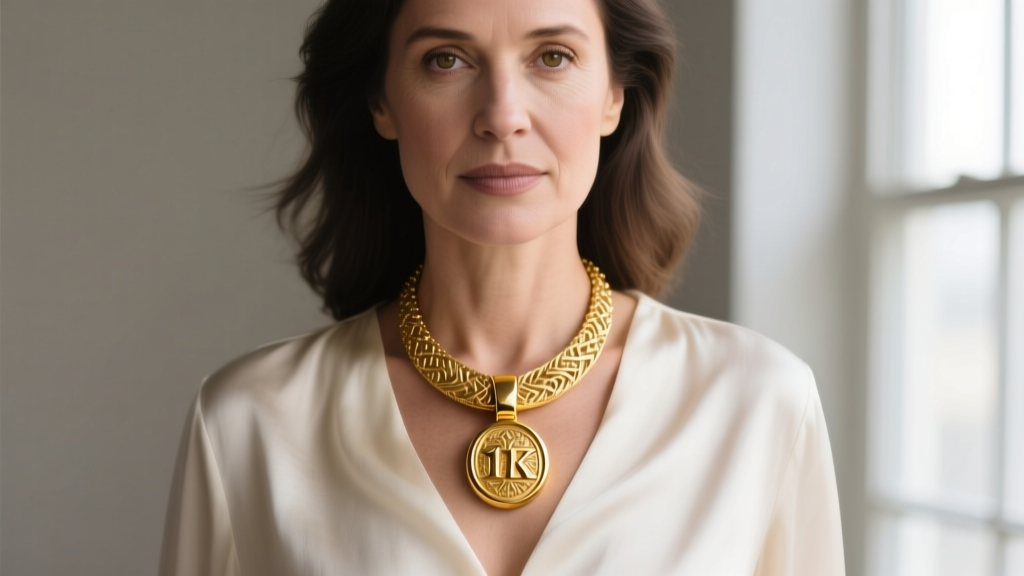
- Platinum (95% Purity): The ultimate symbol of permanence and generational wealth. With a density of 21.45 g/cm³, a platinum pendant bail and chain symbolize an unbreakable commitment, often used for heavy talismanic pendants or heirloom lockets.
- Gold Vermeil / Plated: The modern "paste." While perfectly acceptable for seasonal trend-chasing, relying on plated brass or silver for foundational pieces echoes Mathilde Loisel’s mistake—prioritizing the immediate look over long-term material truth.
The 2026 Trend Matrix: Symbolism by Silhouette
Beyond the materials, the physical silhouette of a pendant carries distinct semiotic weight. Jewelry stylists use specific shapes to communicate different facets of the wearer's identity. Below is our 2026 trend and symbolism matrix for the most dominant pendant styles.
| Pendant Silhouette | Historical / Literary Symbolism | 2026 Stylistic Meaning | Ideal Chain Pairing |
|---|---|---|---|
| The Locket | Secrecy, mourning, hidden romance | Digital detox; safeguarding private memories in a hyper-public era | 18" 14k Rope Chain (2.5mm) |
| The Signet | Aristocratic lineage, authority, sealing | Self-made identity; personal branding and boundary-setting | 20" 18k Figaro Chain (3.0mm) |
| The Solitaire Gem | Purity, wealth, the Maupassant illusion | Minimalism, intellectual focus, pragmatic luxury (via LGD) | 16" Platinum Box Chain (1.0mm) |
| The Talismanic Coin | Protection, travel, ancient currency | Global citizenship, grounding, connection to antiquity | 22" 14k Paperclip Chain (4.0mm) |
Layering as Narrative: Writing Your Own Story
Maupassant’s protagonist wore a single, overwhelming piece that wore her. In contrast, the prevailing 2026 styling methodology is narrative layering. Rather than relying on one massive status symbol, modern stylists curate a "neck mess" that tells a complex, multi-layered personal story.
The Structural Framework for Layering
To layer necklaces without tangling or creating visual clutter, you must adhere to strict gauge and length differentials. This is where E-E-A-T (Experience, Expertise, Authoritativeness, and Trustworthiness) in jewelry styling separates amateurs from experts.
- The Anchor (14" - 16"): A delicate choker or collar. Use a 1.0mm to 1.2mm chain. This sits at the base of the throat and frames the face. A simple 2mm bezel-set gem works best here.
- The Core (18" - 20"): The focal point. This is where your primary symbolic pendant lives (e.g., a vintage coin or a heavy 18k gold signet). The chain must be robust enough to hold the weight without snapping—a 2.5mm to 3.5mm curb or paperclip chain is mandatory for pendants exceeding 5 grams.
- The Terminator (24" - 28"): A long, sweeping lariat or lightweight chain that draws the eye downward, elongating the torso. Keep the pendant minimal here, such as a simple geometric bar or a raw, uncut stone.
By mixing chain textures (e.g., a smooth box chain with a textured rope chain), you create light refraction variations that make the layering look intentional and curated, rather than accidental.
Conclusion: Wearing Your Truth
So, in the necklace what does the necklace symbolize today? It symbolizes autonomy. The tragedy of The Necklace was rooted in Mathilde Loisel’s belief that her worth was tied to an object she did not own, could not afford, and ultimately, an object that was a lie.
The 2026 jewelry landscape offers a liberating alternative. Whether you are investing in a heavy 18k gold signet pendant to mark a career milestone, choosing a VVS lab-grown diamond solitaire for its ethical and optical brilliance, or layering a 14k rope chain with a family heirloom locket, your necklace is no longer a tool for deception. It is a wearable archive of your actual life. When selecting your next piece, look past the superficial flash. Demand solid metal grades, verify the structural integrity of the bail and jump rings, and choose a silhouette that speaks to your genuine reality. True style is never borrowed; it is forged.


