The Necklace Maupassant Trend: 2026 Illusion Gems & Chokers
Explore the 2026 necklace Maupassant trend, blending 19th-century Parisian chokers with modern illusion diamonds and lab-grown statement pieces.

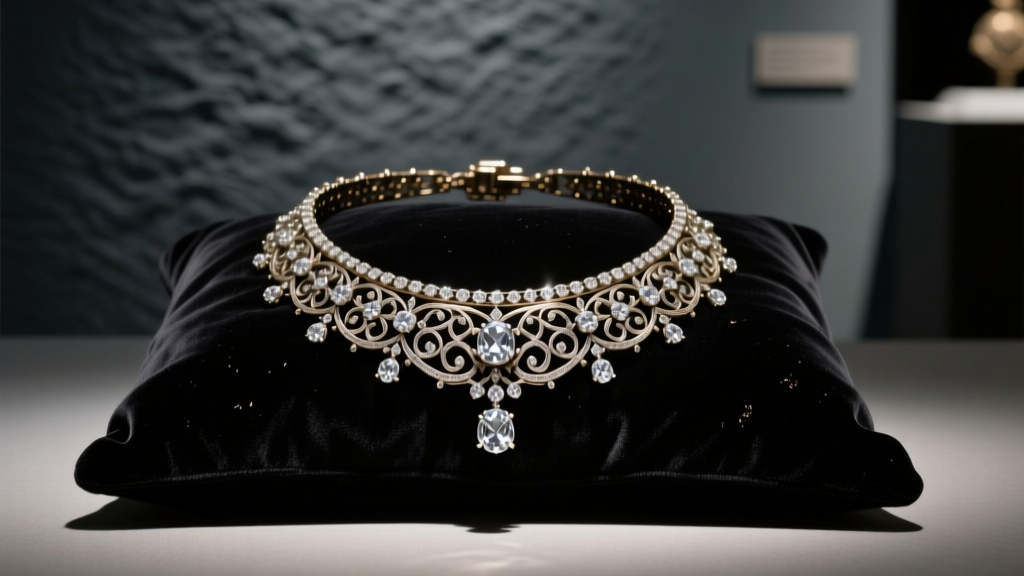
In Guy de Maupassant’s iconic 1884 short story The Necklace (La Parure), the protagonist Mathilde Loisel ruins her life to replace a borrowed diamond necklace she mistakenly believed to be priceless, only to discover the original was mere paste. Today, the necklace Maupassant effect has evolved from a literary cautionary tale into a defining jewelry movement of 2026. As the lines between natural diamonds, lab-grown stones, and ultra-high-end simulants blur, modern collectors and stylists are intentionally embracing 'illusion' jewelry. This trend marries the dramatic, opulent silhouettes of 19th-century Parisian high society with cutting-edge gemological alternatives, allowing wearers to achieve breathtaking scale without the crushing financial weight of the Loisel trap.
The Literary Origins of the Necklace Maupassant Aesthetic
To understand the current revival, we must look at the historical context of the 1880s Parisian jewelry scene. During the Belle Époque, statement bib necklaces and rigid collar chokers were the ultimate markers of social arrival. According to the Metropolitan Museum of Art's archives on 19th-century jewelry, the era was defined by intricate metalwork, rose-cut diamonds, and the early use of strass (lead glass) to create accessible luxury. The 2026 necklace Maupassant trend directly references this duality: the desire for aristocratic scale combined with the modern, pragmatic acceptance of non-traditional gemstones.
Stylists are no longer hiding the fact that their massive 25-carat collar necklaces are lab-grown or high-grade moissanite. Instead, the 'illusion' is celebrated as a triumph of modern science and smart styling. The psychological burden of wearing $100,000 in natural diamonds has been replaced by the creative freedom of wearing visually identical, ethically sourced, and financially accessible alternatives.
2026 Trend Analysis: The Rise of Illusion and Lab-Grown Statement Pieces
The market shift over the last three years has been seismic. In 2026, lab-grown diamonds account for over 60% of the statement necklace market by volume, while advanced simulants like moissanite and proprietary nano-strass have captured the fashion-forward demographic. When executing the necklace Maupassant aesthetic, understanding the gemological properties of your center stones and accents is critical for achieving the right 'sparkle' under evening lighting.
| Material | Refractive Index (RI) | Mohs Hardness | 2026 Price Tier (15ct Bib) | Visual Characteristic |
|---|---|---|---|---|
| Natural Diamond | 2.42 | 10 | $60,000 - $120,000+ | Crisp, scintillating, subtle fire |
| Lab-Grown Diamond (CVD) | 2.42 | 10 | $4,500 - $12,000 | Identical to natural, may show blue nuance |
| Moissanite | 2.65 - 2.69 | 9.25 | $1,200 - $3,500 | High dispersion ('disco-ball' rainbow fire) |
| High-End Strass / Paste | 1.70 - 1.85 | 5.5 - 6.5 | $300 - $900 | Deep, glassy luster, requires foil backing |
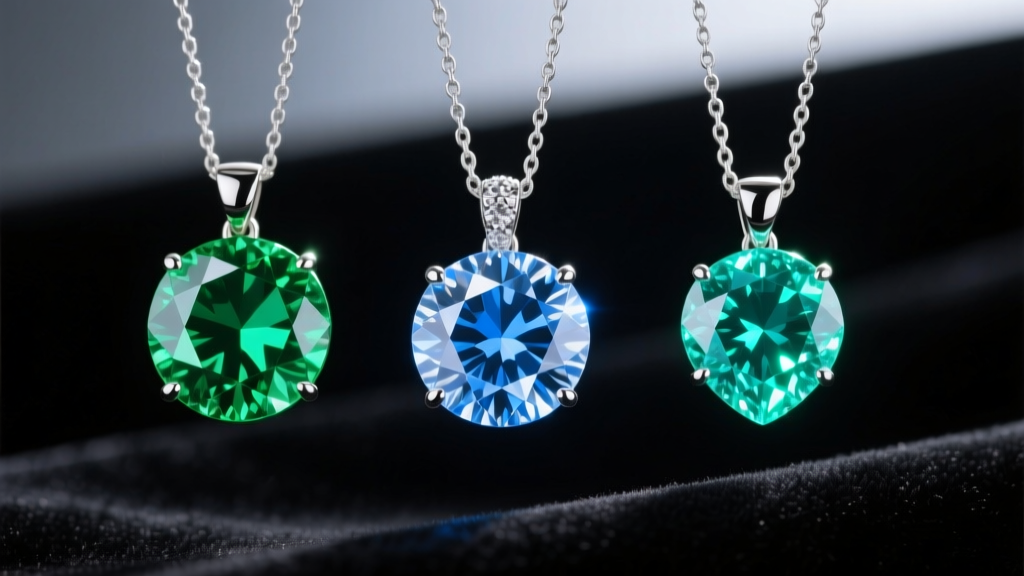
As noted by the Gemological Institute of America (GIA), the higher refractive index of moissanite gives it a distinct 'rainbow fire' that differs from a diamond's white-light scintillation. For the necklace Maupassant look—which relies on vintage, romantic aesthetics—many purists prefer the subdued, glassy luster of high-lead strass or the exact optical match of a CVD lab-grown diamond over the hyper-active fire of moissanite.
Styling the Parisian Revival Choker & Bib Necklace
Achieving the 19th-century Parisian silhouette requires strict adherence to historical proportions. The necklace Maupassant aesthetic is not about delicate, layered chains; it is about architectural, commanding neckwear. Here is how to properly size and style these pieces for modern wardrobes.
The Sizing Matrix
- The True Collar (13 - 14 inches): Sits flush against the base of the neck. Best executed in rigid metals or tightly articulated links. Requires a high, structured neckline or an extreme deep-V to provide negative space.
- The Victorian Choker (15 - 16 inches): The quintessential Maupassant length. Rests just below the collarbone. Ideal for heavy gemstone bibs and oxidized silver settings.
- The Princess Bib (17 - 19 inches): Cascades over the upper chest. Used for graduated stone designs where the center drop stone measures at least 20mm.
Neckline Pairing Guide
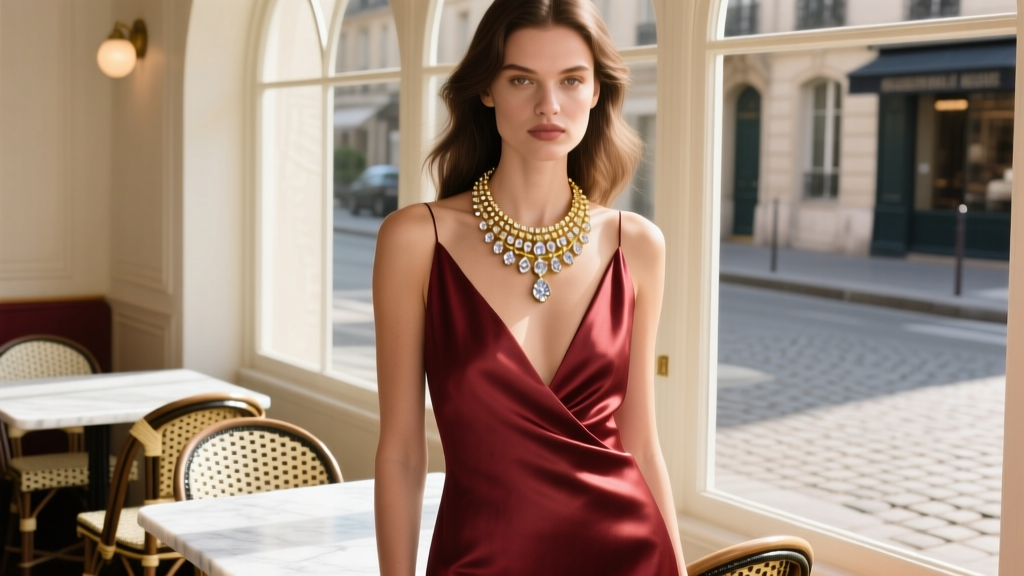
To avoid overwhelming the wearer, the neckline must act as a structural frame for the jewelry. Pair a 15-inch heavy strass choker with a structured, off-the-shoulder velvet bodice. The horizontal line of the neckline anchors the piece. Conversely, if wearing a graduated diamond-illusion bib necklace, opt for a plunging silk cowl neck; the soft drape of the fabric contrasts beautifully with the rigid geometry of the stones.
Material Deep Dive: Modern Paste vs. 19th Century Strass
In Maupassant’s time, 'paste' referred to high-lead glass (strass), invented by Georges Frédéric Strass in the 18th century. By adding up to 30% lead oxide to glass, jewelers achieved a refractive index approaching 1.85, allowing the material to be faceted and backed with metallic foil to mimic the deep, liquid sparkle of old-mine cut diamonds.
In 2026, modern simulants have evolved. While traditional leaded strass is restricted due to toxicity, modern jewelers use advanced bismuth and titanium-oxide infused glass, alongside nano-ceramic coatings, to replicate that specific vintage 'paste' look. Why intentionally buy paste when lab diamonds are affordable? Because the necklace Maupassant trend isn't just about faking diamonds; it's about appreciating the historical art of illusion jewelry. High-end fashion houses are releasing 'heritage paste' collections that intentionally use foil-backed, bezel-set simulants to capture the exact, romantic, slightly muted glow of 1880s evening wear—a look that modern, hyper-brilliant diamonds simply cannot replicate.
How to Avoid the 'Loisel Trap': Authentication and Buying Smart
The core tragedy of Mathilde Loisel was a failure of authentication and a misunderstanding of value. In today's market, the risk isn't replacing a fake with a real diamond; it's overpaying for a lab-grown stone marketed as natural, or buying a low-grade CZ that will cloud within six months. When investing in high-tier illusion or lab-grown statement necklaces, follow these strict protocols:
"Always demand a laser inscription on the girdle of any lab-grown diamond over 0.50 carats. In a multi-stone bib necklace, every primary stone should be mapped and inscribed with its LGD origin to prevent accidental mixing with natural stones during future repairs." — 2026 Independent Gemologist Appraisal Guidelines
Furthermore, when purchasing high-end strass or moissanite, inspect the prong work. The GIA notes that moissanite is highly durable (9.25 on the Mohs scale) and should be set with the same precision as a natural diamond. If a jeweler uses glued settings or flimsy, thin-wire prongs for a $3,000 moissanite choker, the craftsmanship does not match the stone's longevity. Demand 18k gold vermeil or solid 14k gold settings for any piece intended to become a modern heirloom.
Final Verdict: Embracing the Illusion
The necklace Maupassant trend of 2026 is a masterclass in jewelry psychology. It teaches us that the power of a necklace lies not in its geological origin, but in its ability to transform the wearer. By combining the dramatic, romantic silhouettes of 19th-century Parisian chokers with the ethical and financial brilliance of modern lab-grown gems and heritage simulants, today's collectors are rewriting the ending of Maupassant's famous tale. You no longer have to sacrifice a decade of your life to wear a masterpiece; you simply need the right eye for design, a grasp of historical proportions, and an appreciation for the beautiful illusion.


