Troubleshooting Your Necklace Medical ID: Chain Breaks & Skin Reactions
Fix chain breakage, metal allergies, and faded engraving on your necklace medical ID. Expert troubleshooting for safe, durable alert jewelry.

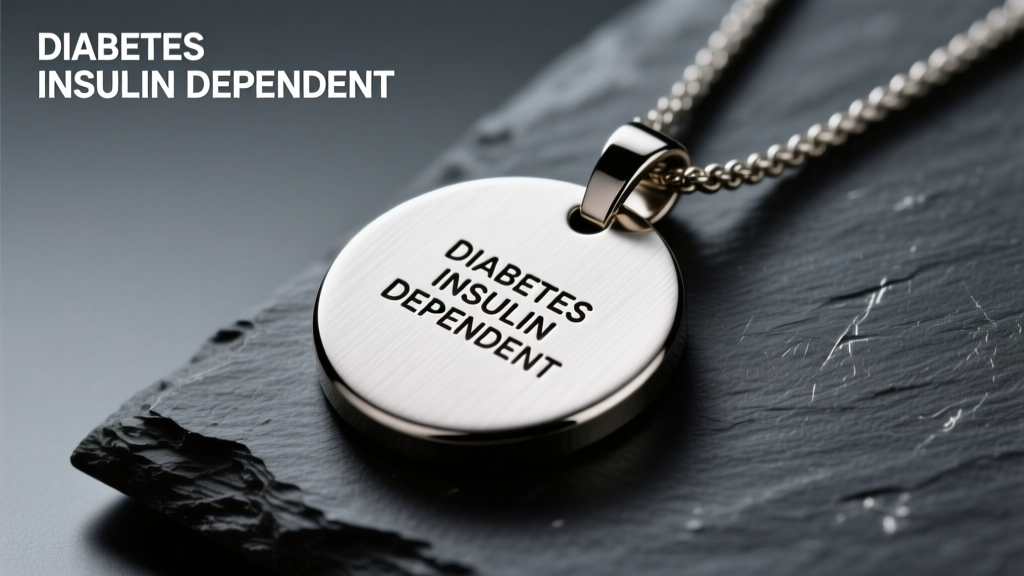
Medical alert jewelry is not merely an accessory; it is a critical lifeline. When first responders arrive at an emergency scene, they have seconds to identify your underlying conditions, allergies, or emergency contacts. However, when your necklace medical ID fails—whether through a snapped chain, an illegible engraving, or a severe contact dermatitis flare-up—it compromises your safety and defeats its primary purpose. As a jewelry specialist, I frequently see patients and consumers struggling with subpar alert jewelry that degrades under daily wear. This comprehensive troubleshooting guide addresses the most common structural, material, and functional failures in medical necklaces, providing actionable, expert-level solutions to ensure your ID performs flawlessly when it matters most.
The Hidden Dangers of Subpar Medical Chains
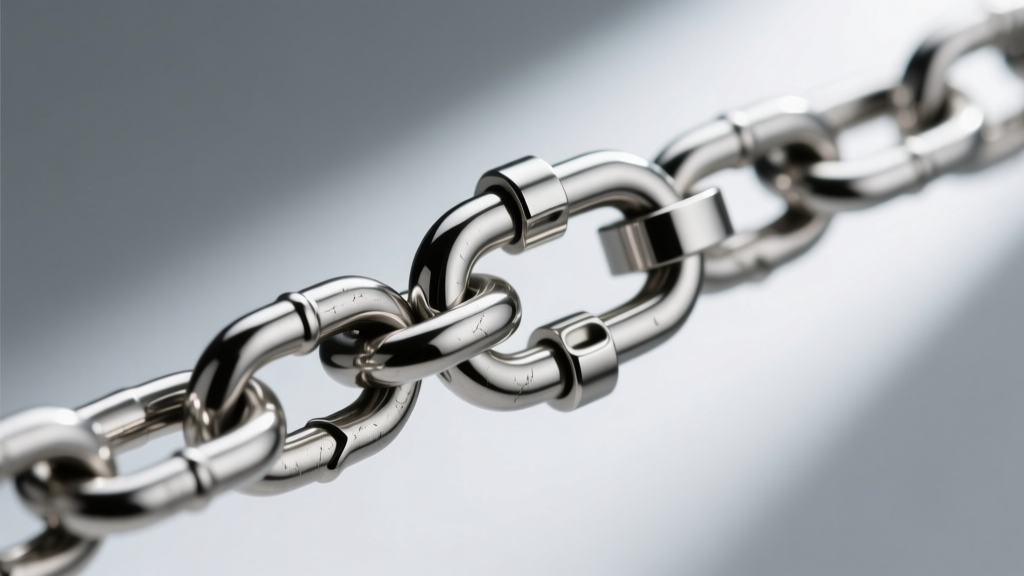
The chain is the structural backbone of your medical ID, yet it is often the first component to fail. Many mass-produced medical necklaces utilize hollow box chains or poorly soldered cable chains to reduce manufacturing costs. While box chains offer a sleek, modern aesthetic, their interlocking square links possess inherent weak points at the solder joints. Under sudden tensile stress—such as getting caught on a door handle or being grabbed during a medical episode—these links can easily snap.
For maximum durability, you must evaluate the chain's link geometry and gauge thickness. A solid welded cable chain or a robust rope chain in the 2.0mm to 3.0mm gauge range offers the optimal balance of tensile strength and comfort. Chains thinner than 1.5mm are highly susceptible to micro-fractures caused by daily torsion. Furthermore, ensure the jump rings connecting the chain to the pendant are soldered shut. An unsoldered jump ring will eventually pull apart under the pendulum weight of the medical tag, leading to the loss of your vital information.
Decoding Metal Allergies: Why Your Skin is Reacting
One of the most frequent complaints I encounter is the development of an itchy, red, or blistering rash at the base of the neck. This is almost always a manifestation of allergic contact dermatitis triggered by nickel exposure. Many brands market their products as "surgical steel" or "hypoallergenic," but these are largely unregulated marketing terms. Standard 316L stainless steel, while highly corrosion-resistant, contains between 8% and 10% nickel. Over time, the combination of skin friction, sweat, and environmental moisture causes nickel ions to leach from the alloy, triggering a severe immune response in sensitized individuals.
If you are experiencing skin reactions, the definitive troubleshooting step is to upgrade your pendant and chain to ASTM F136 compliant Grade 23 Titanium (Ti-6Al-4V ELI). This specific aerospace and medical-grade titanium alloy contains absolutely zero nickel and is the exact material used in surgical implants. It is completely biocompatible, impervious to sweat-induced corrosion, and significantly lighter than steel, reducing neck fatigue during extended wear. According to the Mayo Clinic, avoiding nickel-containing alloys is the only permanent solution for contact dermatitis, making pure titanium or solid 14k/18k gold the only safe choices for reactive skin.
Engraving Failures: When First Responders Can't Read Your ID
A medical necklace is useless if the engraving cannot be read in low-light emergency conditions. Traditional rotary engraving uses a physical diamond or carbide bit to carve into the metal. While this creates deep grooves, it can structurally weaken thin pendants and often results in jagged, inconsistent lettering that fills with dead skin cells and lotion over time, rendering the text illegible.
The industry gold standard is now fiber laser engraving. This process uses a focused laser beam to alter the surface crystalline structure of the metal, creating a permanent, high-contrast mark without removing structural material. When troubleshooting a faded or hard-to-read pendant, look for laser-engraved IDs that utilize a black enamel or epoxy fill in the grooves. This fill dramatically increases the visual contrast between the text and the metal background, ensuring that EMTs can quickly read your blood type, DNR status, or ICE (In Case of Emergency) contact numbers even in the chaotic lighting of an accident scene.
Clasp Malfunctions and Emergency Removal
The clasp presents a unique paradox in medical jewelry design: it must be secure enough to never open accidentally, yet accessible enough to be removed quickly if the chain becomes entangled or if medical personnel need to clear the airway. Standard spring-ring clasps are notorious for failing; their internal tension springs degrade rapidly with daily use, leading to accidental openings and lost pendants.
Expert Insight: First responders are trained to cut away clothing and jewelry that impedes airway management or cervical spine stabilization. If your clasp jams, EMTs will simply use trauma shears to cut the chain. However, a chain that is too thick to cut easily can delay critical care.
To solve clasp malfunctions, upgrade to a heavy-duty lobster clasp with a reinforced lever, or invest in a specialized breakaway safety clasp. Magnetic clasps with a secondary locking twist mechanism are also excellent for individuals with limited dexterity, such as those suffering from rheumatoid arthritis or Parkinson's disease, allowing for one-handed removal without sacrificing security.
Metal & Component Troubleshooting Matrix
| Identified Problem | Root Cause Analysis | Expert Troubleshooting Fix |
|---|---|---|
| Green/black skin discoloration | Copper or brass base metal reacting with skin acids. | Replace with solid 316L steel, ASTM F136 Titanium, or solid gold. |
| Chain snapping at the neck | Hollow links or unsoldered jump rings failing under tension. | Switch to a solid 2.5mm welded cable chain with soldered jump rings. |
| Text fading or rubbing off | Surface-level laser etching or cheap enamel paint wearing away. | Order deep fiber-laser engraving with cured epoxy fill. |
| Clasp sticking or failing to close | Debris in spring-ring mechanism or weakened internal spring. | Upgrade to a stainless steel lobster clasp or magnetic safety lock. |
Sizing and Fit: The Goldilocks Protocol
The length of your medical necklace directly impacts both its visibility to first responders and your physical safety. Choker lengths (14 to 16 inches) are strongly discouraged for medical IDs. A tight-fitting chain poses a severe strangulation hazard if grabbed, or during a seizure episode where the patient's movements are uncontrollable. Furthermore, a choker-length pendant rests high on the clavicle, an area often obscured by collars or cervical collars applied by paramedics.
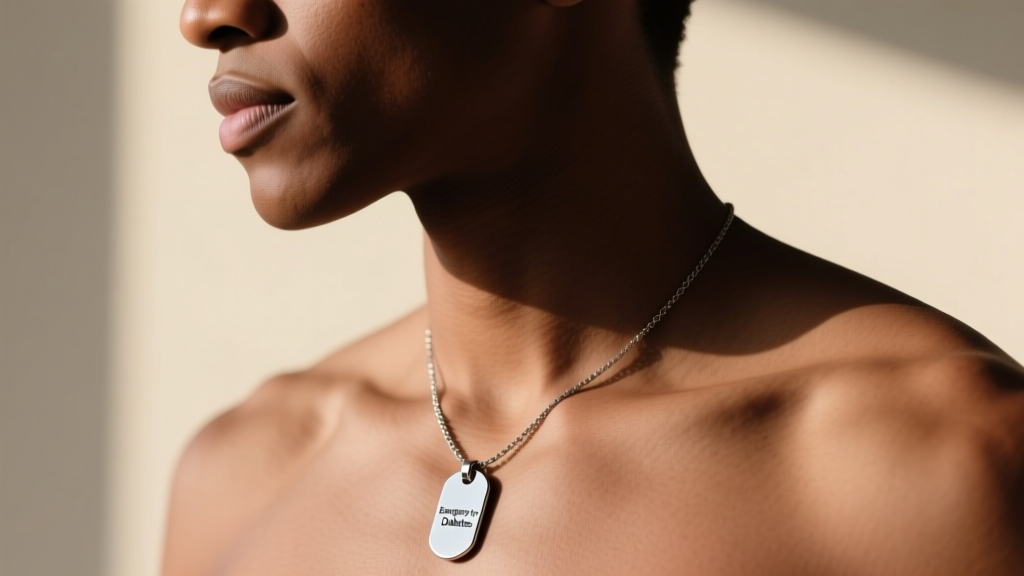
The optimal length for a medical alert necklace is between 20 and 24 inches. At this length, the pendant rests securely on the sternum. This placement is ideal for several reasons: it sits in the primary visual field of an EMT checking the patient's airway and chest rise; it is easily accessible for the wearer to flip over and display the engraved side; and it provides enough slack that the chain can be slipped over the head in an emergency if the clasp is jammed or inaccessible. Always measure your neck and add 4 to 6 inches to determine your ideal medical necklace length, ensuring the pendant hangs freely without restricting movement.
Maintenance Checklist for Longevity
Even the highest-grade titanium and laser-engraved pendants require basic maintenance to remain functional. Once a month, inspect the jump rings for any signs of gaping or metal fatigue. Clean your pendant with warm water, a mild dish soap, and a soft microfiber cloth to remove the buildup of sebum, lotions, and environmental dust that can obscure the engraving. Avoid exposing your medical ID to harsh chemicals, such as chlorine in swimming pools or bleach-based cleaning agents, as these can accelerate the degradation of lower-grade steel alloys and dull the finish of your jewelry. By treating your necklace medical ID as a vital piece of emergency equipment rather than a simple accessory, you ensure it remains a reliable advocate for your health when you cannot speak for yourself.


