Diamond Necklace Meaning: Assessing Value and Budget
Explore the diamond necklace meaning through a financial lens. Learn how to balance symbolic milestones with intrinsic value and smart budgeting.

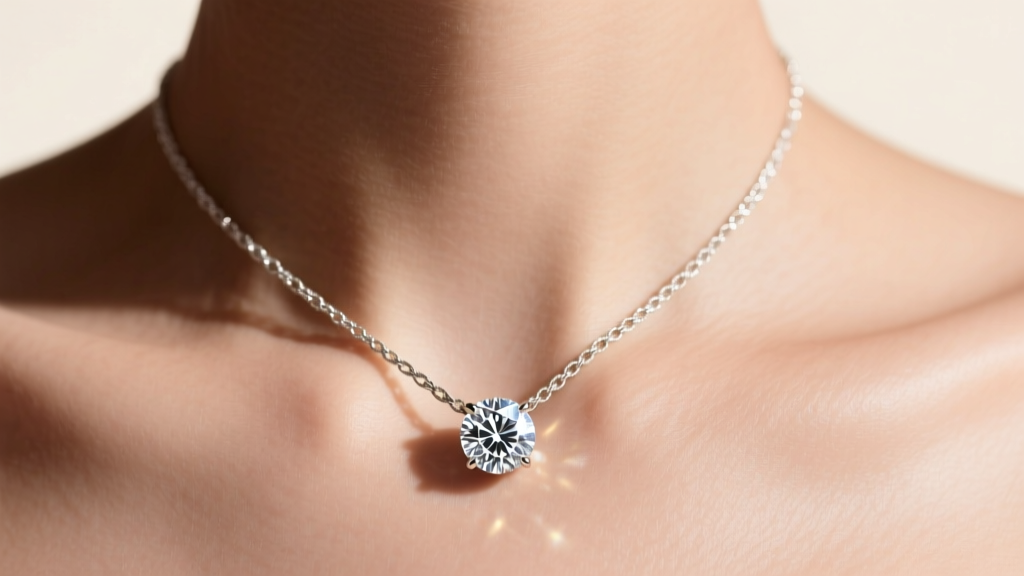
When consumers search for the diamond necklace meaning, they are usually looking for the romantic or historical symbolism behind the stone. Diamonds have long represented invincibility, eternal love, and significant life milestones. However, from a practical jewelry-buying perspective, understanding the 'meaning' of a diamond necklace also requires a rigorous assessment of its financial value. Does the emotional weight of a 10th-anniversary gift justify the premium paid for a natural earth-mined stone, or does a lab-grown alternative fulfill the exact same symbolic purpose at a fraction of the cost?
In this comprehensive value assessment, we bridge the gap between sentiment and economics. We will decode the symbolic meanings of popular pendant styles, analyze the intrinsic versus resale value of modern diamond origins, and provide a concrete budgeting framework to ensure your financial investment perfectly aligns with your emotional intent.
The Emotional ROI: Decoding the Diamond Necklace Meaning
The concept of 'Emotional Return on Investment' (ROI) is critical when allocating a jewelry budget. The meaning of a diamond necklace shifts depending on the design and the occasion, which in turn dictates how much you should reasonably spend.
- The Solitaire Pendant: Representing singular focus, eternity, and unbroken commitment. This is the quintessential 'push present' or major anniversary gift. Because the meaning relies entirely on the single stone's purity and presence, buyers often feel pressured to maximize carat weight, which exponentially inflates the budget.
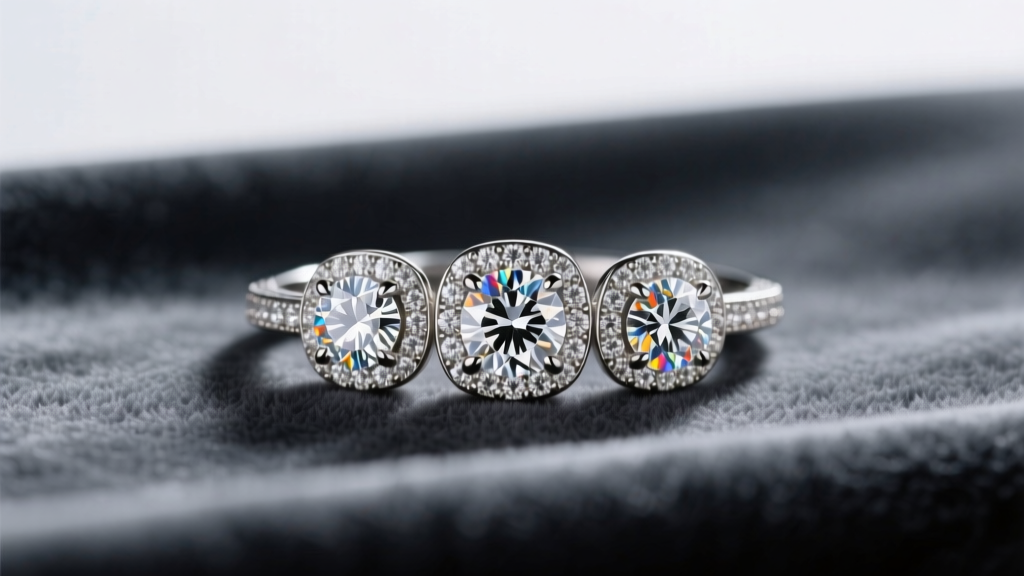
- The Three-Stone Pendant: Symbolizing the past, present, and future of a relationship. This design allows for budget optimization; you can achieve high visual impact and deep symbolic meaning by using a slightly smaller center stone flanked by two proportionate side stones.
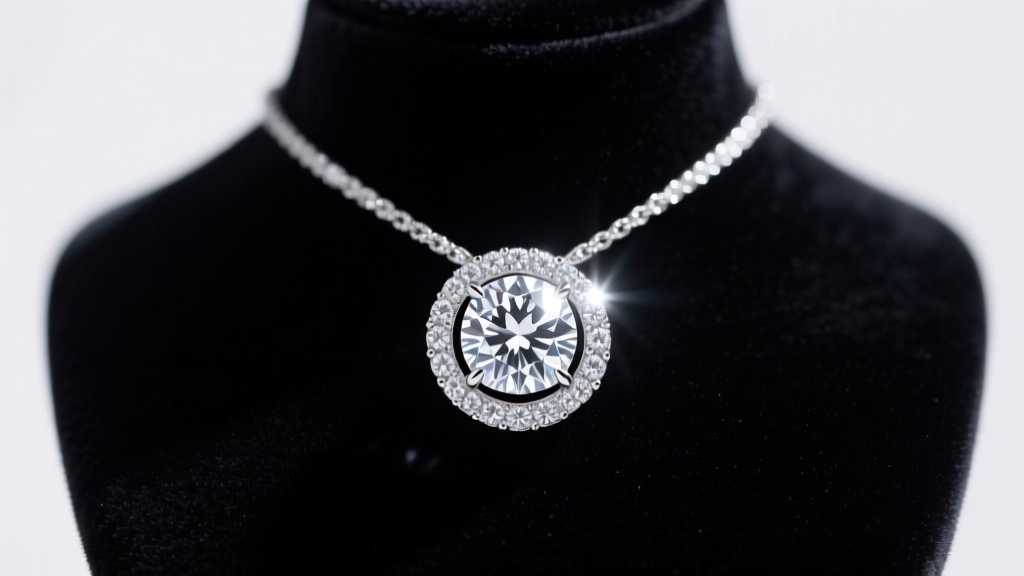
- The Halo Pendant: Representing protection and enhancement. The micro-pave melee diamonds surrounding the center stone amplify the necklace's brilliance and perceived size, making it an ideal choice for buyers who want maximum visual 'meaning' on a strict budget.
According to the Federal Trade Commission (FTC), jewelers must clearly disclose the origin of diamonds, ensuring consumers understand whether they are paying for natural rarity or lab-grown technological achievement. Understanding this distinction is the first step in aligning your budget with the necklace's true meaning.
Intrinsic vs. Sentimental Value: A Buyer's Matrix
To make a financially sound decision, you must separate what the diamond means to you from what it will yield on the secondary market. The jewelry industry operates on high retail markups, meaning the 'investment' angle of diamond necklaces is largely a myth. You are buying emotional utility, not a liquid asset.
| Diamond Origin | Intrinsic Rarity | Resale Value Retention | Symbolic Weight | Ideal Budget Allocation |
|---|---|---|---|---|
| Natural Earth-Mined | High (Finite Supply) | 20% - 35% of retail | Traditional, deeply rooted in history | $3,000 - $10,000+ |
| Lab-Grown (CVD/HPHT) | Low (Infinite Supply) | 5% - 15% of retail | Modern, eco-conscious, identical brilliance | $500 - $2,000 |
| Moissanite / Simulant | None (Synthetic) | Negligible | Aesthetic focus, low emotional stakes | $100 - $600 |
As noted by the Gemological Institute of America (GIA), lab-grown diamonds possess the exact same optical, chemical, and physical properties as natural diamonds. If the 'meaning' of your necklace is rooted in visual beauty and personal milestone marking rather than geological rarity, lab-grown stones offer an undeniable budget advantage.
Budget Allocation by Milestone: What the Meaning Dictates
Different milestones carry different symbolic weights, which should directly inform your spending ceiling. Here is a practical decision framework for allocating your budget based on the occasion.
Graduation and Sweet 16: The 0.25ct to 0.50ct Range
For coming-of-age milestones, the diamond necklace meaning is centered on 'potential' and 'bright futures.' A heavy financial burden is unnecessary here. A 0.25-carat to 0.50-carat lab-grown solitaire set in 14k solid gold provides lifelong durability without the exorbitant cost. Expect to spend between $400 and $900 for a high-quality lab-grown piece in this range, compared to $1,200 to $2,500 for a natural equivalent.
The 10th Anniversary: The 1-Carat Benchmark
The 10th anniversary represents a decade of endurance, traditionally calling for a substantial 1.00-carat diamond. Here, the budget divergence between natural and lab-grown is stark. A natural 1.00ct round brilliant with respectable grades (G Color, VS1 Clarity, Excellent Cut) will command between $5,500 and $7,500. The exact same specifications in a lab-grown diamond will cost between $700 and $1,200. If your budget is capped at $2,000, attempting to buy a natural 1-carat stone will force you to accept poor cut grades or visible inclusions (I1 clarity), severely diminishing the necklace's brilliance. In this scenario, the 'meaning' is better served by a flawless, brilliantly cut lab-grown stone than a cloudy, poorly cut natural one.
Maximizing Visual Impact Without Inflating Carat Weight
If the meaning of your diamond necklace relies on making a bold visual statement, but your budget restricts your carat weight, you can leverage jewelry engineering to maximize perceived size.
The Power of the Bezel and Halo Settings
A standard prong setting exposes the diamond's exact millimeter diameter. By opting for a bezel setting, a thin rim of precious metal surrounds the stone, adding approximately 0.4mm to 0.6mm to the overall diameter, making a 0.75ct stone look closer to a 1.00ct stone. A halo setting is even more effective; a 1.5mm to 2.0mm border of melee diamonds can increase the pendant's face-up footprint by up to 40%, delivering massive visual impact for a fraction of the cost of a larger center stone.
Chain Selection and Proportion
The chain you select drastically alters how the pendant is perceived. For pendants under 0.50 carats, avoid thick chains that will visually swallow the stone. Opt for a 0.8mm to 1.0mm cable or box chain. Conversely, if you are hanging a 1.50-carat pendant, a delicate 0.5mm chain will look unbalanced and risk snapping under the weight. Match the chain length to the neckline: a 16-inch choker length draws the eye directly to the collarbone, making smaller diamonds appear more prominent, while an 18-inch princess length allows the pendant to rest on the chest, requiring slightly more carat weight to maintain presence.
Final Verdict: Aligning Your Budget with the True Meaning
Ultimately, the diamond necklace meaning is defined by the giver and the wearer, not by a gemological laboratory or a retail markup. If the geological origin and natural rarity are core to your personal philosophy, budgeting for a natural diamond is a valid emotional expense. However, if the meaning is rooted in the celebration of a milestone, the brilliance of the stone, and the beauty of the design, lab-grown diamonds and strategic setting choices offer a vastly superior financial value. By understanding the interplay between carat weight, setting mechanics, and diamond origin, you can acquire a breathtaking, deeply meaningful necklace without compromising your financial stability.


