How to Clean and Care for Your Necklace of Adaptation
Learn expert cleaning and maintenance tips for your Necklace of Adaptation pendant, covering bronze disease, silver tarnish, and resin cabochon care.

The Lore Meets Reality: Why Your Amulet Needs Special Care
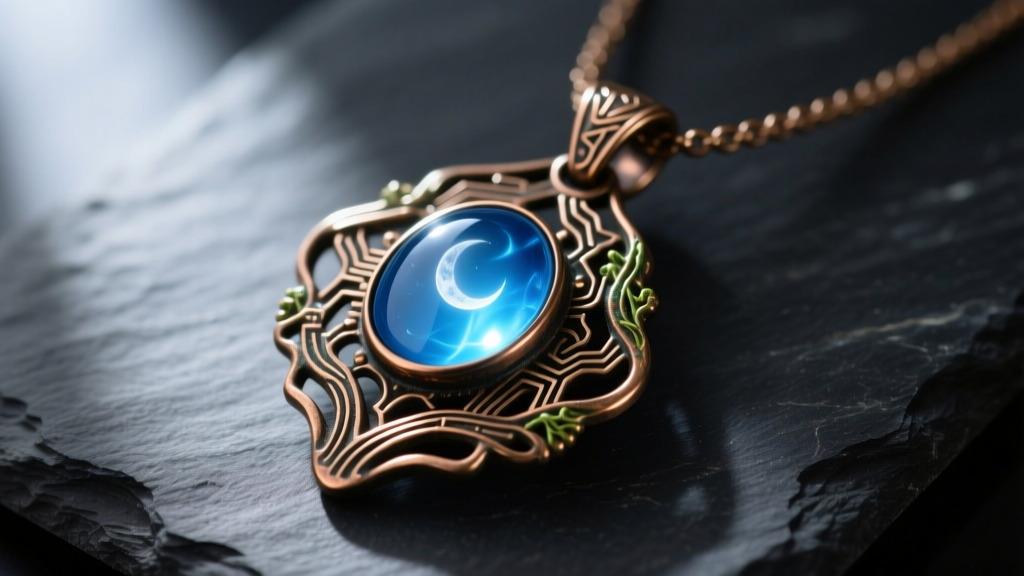
The Necklace of Adaptation is a legendary wondrous item in tabletop lore, famously allowing the wearer to breathe normally in any environment, from the crushing depths of the ocean to toxic swamps. In the real world, custom jewelers and fantasy artisans craft stunning replicas of this iconic amulet using materials like raw bronze, .925 sterling silver, pewter, and cast resin. However, the irony of the Necklace of Adaptation is that while its fictional counterpart survives the abyssal depths, your physical replica will quickly succumb to oxidation, tarnish, and material degradation if exposed to real-world moisture and skin acids.
Whether you purchased a high-end artisan cast or a mass-produced convention piece, maintaining the structural integrity and aesthetic brilliance of your pendant requires a tailored approach. This guide breaks down the exact metallurgical and chemical care protocols required to keep your fantasy jewelry in pristine condition.
Material Breakdown: Identifying Your Pendant's Core
Before applying any cleaning agent, you must identify the base metal and accent materials of your specific necklace of adaptation. Using the wrong chemical solvent can strip patinas, dissolve adhesives, or cause irreversible pitting. Below is a diagnostic matrix of common materials used in fantasy replicas.
| Material | Alloy Composition | Primary Threat | Recommended Cleaner |
|---|---|---|---|
| Sterling Silver | 92.5% Ag, 7.5% Cu | Silver Sulfide (Black Tarnish) | Jeweler's Rouge Cloth |
| Raw Bronze | 90% Cu, 10% Sn | Cuprous Chloride (Bronze Disease) | Distilled Water & Wax |
| Pewter | 90% Sn, Antimony/Cu | Acidic Skin Oils & Denting | Mild Soap & Water |
| Epoxy Resin | Polymer Compounds | UV Yellowing & Micro-Scratches | Dry Microfiber Only |
Step-by-Step Cleaning Protocols by Material
Sterling Silver (.925) and Gold-Plated Replicas
Silver tarnish is not caused by oxygen, but by hydrogen sulfide in the air reacting with the copper alloyed in .925 sterling silver. To remove tarnish from a silver Necklace of Adaptation without stripping the metal, use a treated polishing cloth (such as a Sunshine Polishing Cloth) impregnated with micro-abrasives and jeweler's rouge. Never use liquid silver dips on fantasy jewelry. These dips contain thiourea, a toxic chemical that will aggressively strip the dark antiquing agent intentionally applied by the jeweler to highlight the intricate runes and gills of the pendant design.
Raw Bronze and Brass Castings (Combating Bronze Disease)
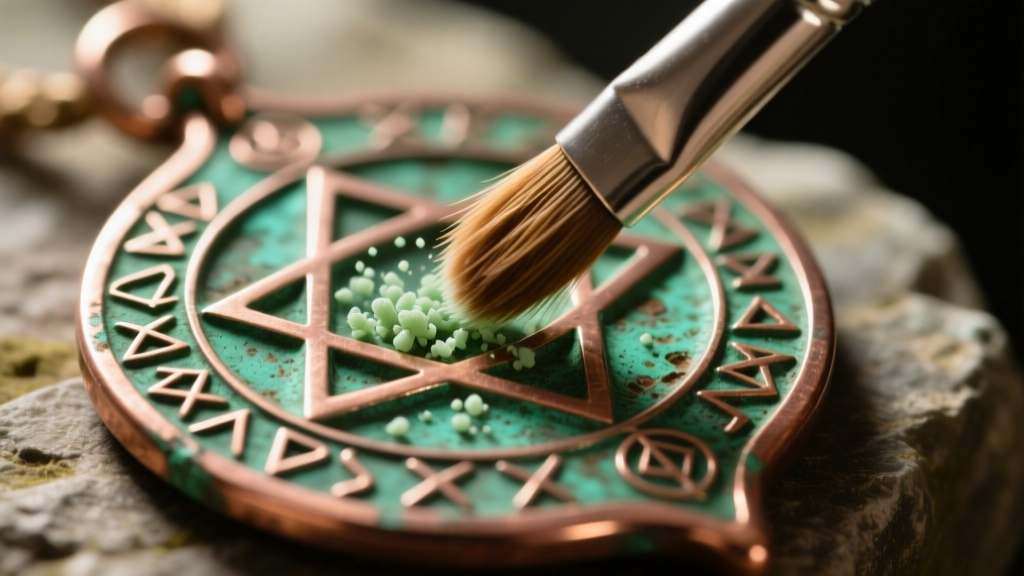
Bronze is highly reactive to chlorides found in tap water and human sweat. When chlorides combine with moisture, they form hydrochloric acid and cuprous chloride, resulting in "bronze disease"—a pale green, powdery corrosion that actively eats the metal. According to conservation guidelines from the American Institute for Conservation, treating bronze disease requires immediate intervention.
Treatment Protocol: Soak the pendant in distilled (not tap) water for 24 hours to draw out soluble salts. Use a soft-bristled fiberglass brush to gently dislodge the green powder. Dry completely in a low-heat oven (150°F for 20 minutes), then seal the metal with a micro-crystalline wax like Renaissance Wax to block ambient humidity.
Resin and Enamel "Magical" Cabochons
Many Necklaces of Adaptation feature a central "gemstone" meant to represent the magical air bubble or aquatic rune. Artisans frequently use tinted epoxy resin or cold enamel to achieve this glowing effect. As of 2026, artisan casters are increasingly using UV-stabilized epoxy resins, but these polymers remain incredibly soft, rating only a 2.5 to 3.0 on the Mohs hardness scale. Never place resin-accented jewelry in an ultrasonic cleaner. The Gemological Institute of America (GIA) warns that the cavitation bubbles generated by ultrasonic waves will implode against the soft resin, causing micro-fractures or shattering the epoxy bond holding the cabochon in its bezel.
The "Water Breathing" Fallacy: Shower and Swim Damage
A common mistake among immersive tabletop fans is wearing their Necklace of Adaptation into the shower, pool, or ocean to "test" its thematic properties. This is catastrophic for the jewelry. Pool chlorine will instantly accelerate bronze disease and strip gold plating. Saltwater acts as an electrolyte, rapidly accelerating galvanic corrosion between the pendant and the metal bail. Furthermore, hot shower water causes the metal bezel to expand at a different rate than the resin cabochon, frequently leading to the gemstone popping out and washing down the drain. Treat your replica as a high-end art piece, not a functional diving talisman.
Long-Term Preservation and Storage
When your character is not adventuring, your necklace requires proper storage to prevent environmental degradation. Follow this three-step preservation framework:
- Neutralize Acids: Always wipe the pendant with a dry, lint-free microfiber cloth after wearing it to remove sebum and lactic acid from your skin.
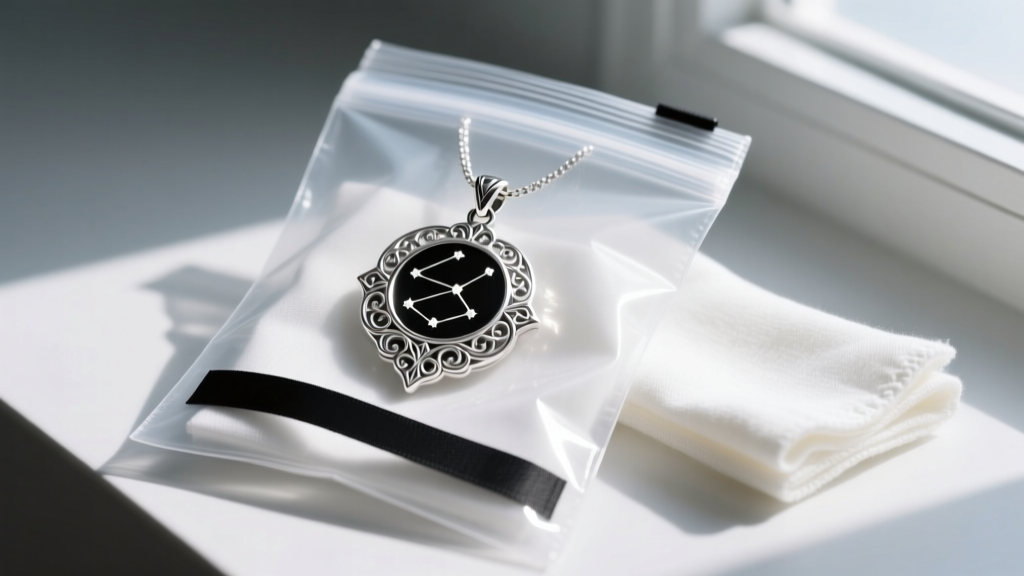
- Atmospheric Control: Store the necklace in an airtight zip-lock bag or a specialized anti-tarnish flannel pouch. Include a 3M anti-tarnish strip, which absorbs airborne sulfur compounds before they can react with the metal.
- Moisture Absorption: Toss a small silica gel desiccant packet into the storage container to maintain a relative humidity below 40%, effectively halting any dormant bronze disease spores.
Troubleshooting Common Failure Modes
Fantasy pendants are notoriously heavy. A solid bronze or silver Necklace of Adaptation typically weighs between 25 and 45 grams. This mass creates significant kinetic stress on the chain and the bail (the loop connecting the pendant to the chain).
Chain Snapping and Bail Wear
Standard 1.0mm or 1.2mm cable chains have a low tensile failure point. The dynamic shock of a heavy pendant swinging against your chest can weaken the soldered links over time, leading to a catastrophic snap. Upgrade your chain to a 2.5mm to 3.0mm rolo, wheat, or Figaro chain. These interlocking patterns distribute the pendant's weight more evenly and offer vastly superior tensile strength. Additionally, inspect the inside of the pendant's bail every six months; if you see a deep groove worn into the metal by the chain, take it to a jeweler to have a sterling silver or steel jump ring soldered inside the bail as a sacrificial wear-guard.
Unseated Cabochons
If the resin or glass "magic bubble" cabochon becomes loose in its bezel, do not use cyanoacrylate (Super Glue). Super glue cures brittle and leaves a white, frosty residue that will ruin the optical clarity of the gem. Instead, use a two-part clear epoxy (like Loctite E-00) applied with a toothpick. Let it cure for 24 hours in a warm, dry environment before wearing.
By respecting the metallurgical realities of your jewelry, you ensure that your Necklace of Adaptation remains a stunning, wearable piece of fantasy history, ready for countless campaigns and conventions to come.


