The Necklace of Passage: 2026 Milestone Trend Analysis
Discover how the necklace of passage is evolving in 2026. Explore milestone jewelry trends, material grades, and styling frameworks for life's biggest moments.

The Evolution of the Necklace of Passage in 2026
Historically, the concept of a 'necklace of passage' was rigidly defined: a strand of matched Akoya pearls for a debutante, or a simple gold cross for a confirmation. However, as we navigate the jewelry landscape of 2026, the milestone necklace has undergone a radical transformation. Today, a necklace of passage is less about adhering to societal uniformity and more about encoding personal narrative, modularity, and ethical sourcing into a wearable heirloom.
According to trend forecasts from JCK, modern consumers are rejecting mass-produced milestone jewelry in favor of bespoke, modular pieces that can evolve alongside the wearer. A necklace acquired for a college graduation at age 22 must seamlessly integrate into a professional wardrobe at 30, and eventually layer with other heirlooms at 40. This demand for 'living jewelry' has driven innovation in chain mechanics, clasp engineering, and pendant modularity.
Defining the Modern Milestone: 3 Key Trend Archetypes
When selecting or commissioning a necklace of passage, the market has coalesced around three distinct design archetypes that prioritize longevity and personal meaning.
1. The Modular Narrative Locket
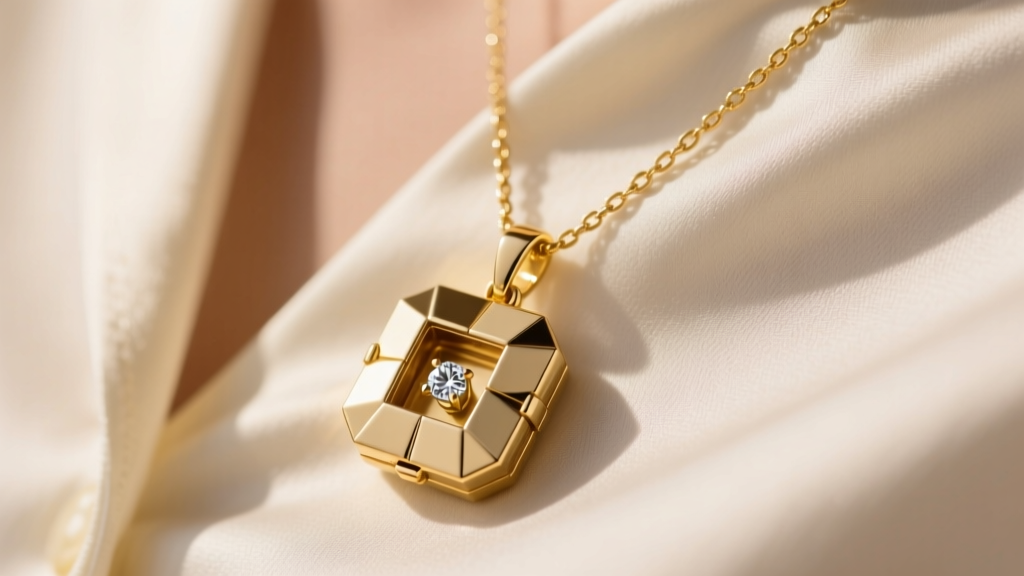
The traditional locket has been re-engineered for the modern era. Rather than a simple hinge-and-snap design holding a paper photograph, 2026's modular lockets feature interchangeable bezels and hidden compartments. Crafted in 18k recycled gold, these pieces allow the wearer to swap out gemstone inserts or engrave new milestones on interior discs. The focus is on tactile satisfaction—precision-machined threads and magnetic closure mechanisms that feel substantial and secure.
2. The Astronomical & Topographical Map
Custom-engraved pendants mapping the exact star alignment or topographical coordinates of a life-changing event (a wedding venue, a first home, a child's birthplace) are dominating the bespoke sector. These are typically rendered in platinum 950 or 14k white gold, utilizing high-contrast rhodium plating in the engraved grooves to ensure the map remains legible against the skin over decades of wear.
3. The Ethically Sourced Solitaire
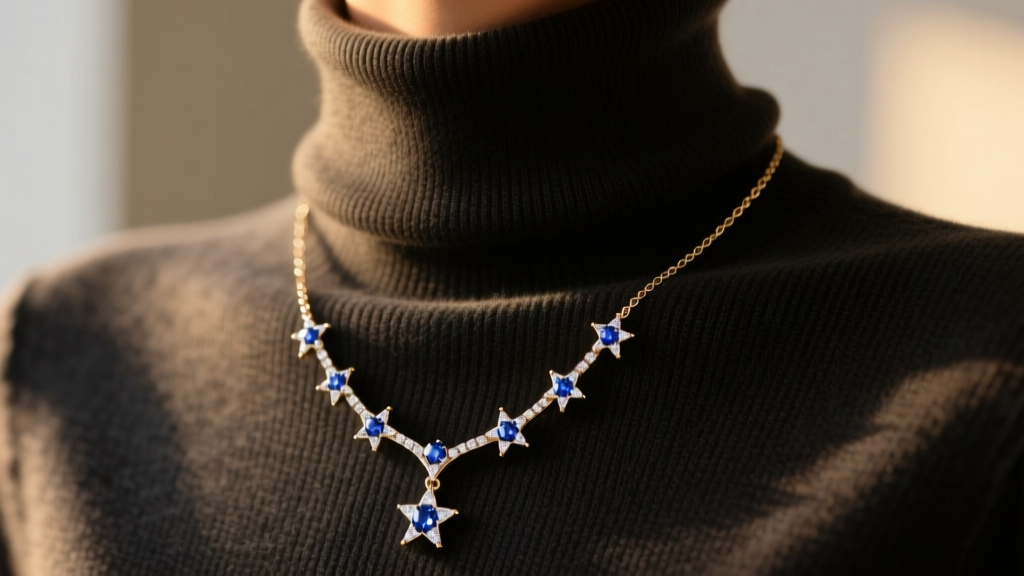
For milestones centered on personal achievement—such as a first major promotion or the launch of a business—the solitaire pendant remains supreme. However, the 2026 standard demands verifiable provenance. Lab-grown diamonds graded by the GIA (typically in the VVS1 to VS2 clarity range) or ethically mined Montana sapphires are the stones of choice, set in low-profile, bezel settings to prevent snagging on professional attire.
Material & Investment Grade Matrix
A true necklace of passage must withstand daily wear for 50+ years. This requires a strict adherence to material science. Below is a comparative matrix of the optimal materials for milestone jewelry in 2026, factoring in tensile strength, skin reactivity, and investment retention.
| Material | Grade / Specification | Best Milestone Application | 2026 Est. Price Range |
|---|---|---|---|
| Platinum 950 | 95% Platinum, 5% Ruthenium | Weddings, Anniversaries, Generational Heirlooms | $1,200 - $3,500+ |
| 18k Yellow Gold | 75% Gold, alloyed with Copper/Silver | Graduations, 21st/30th Birthdays | $600 - $1,800 |
| 14k White Gold | 58.5% Gold, Rhodium Plated | Professional Milestones, Everyday Wear | $400 - $1,100 |
| Lab-Grown Diamond | Type IIa, VVS1/VS2, Ideal Cut | Self-Purchase, Career Achievements | $800 - $2,500 |
Chain Mechanics: The Hidden Hero of the Heirloom
The most common failure point in any necklace of passage is not the pendant, but the chain. A heavy 18k gold locket suspended on a delicate 0.8mm chain is a structural disaster waiting to happen. To ensure your milestone piece survives the decades, you must pay attention to gauge and clasp engineering.
Gauge and Tensile Strength
For pendants weighing between 3 and 8 grams, the chain must be a minimum of 1.2mm in thickness. For heavier statement lockets (8-15 grams), a 1.5mm to 1.8mm rope or wheat chain is mandatory. Wheat chains, in particular, offer superior tensile strength due to their woven, multi-directional link structure, which distributes the kinetic stress of daily movement far better than standard cable chains.
Clasp Engineering
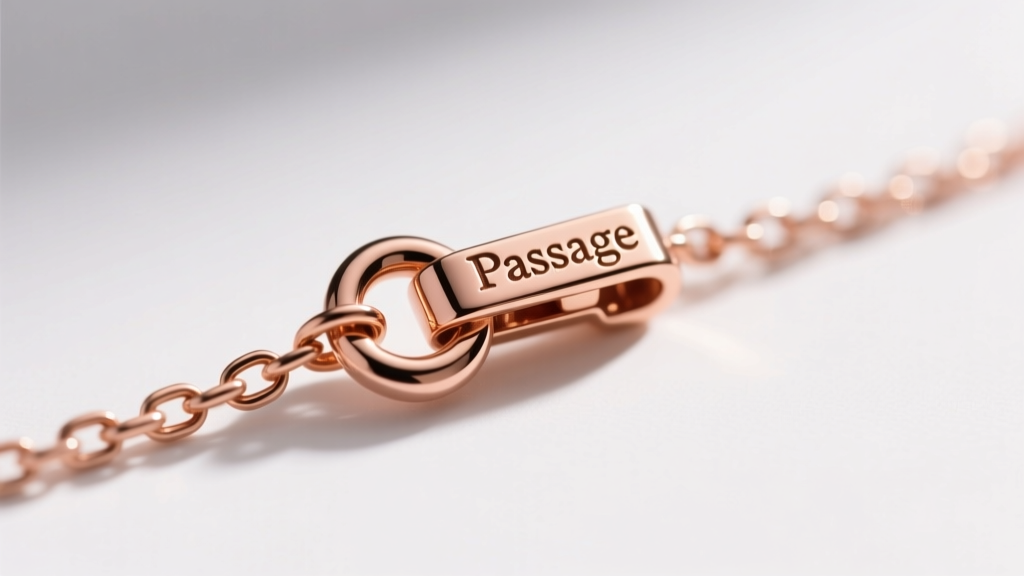
Discard the spring ring clasp entirely. Spring rings rely on a tiny internal spring that degrades over time and is notoriously difficult to operate with one hand. The 2026 standard for heirloom necklaces is the oversized lobster clasp or the custom-machined barrel clasp. A high-quality lobster clasp should feature a solid, non-hollow lever and a tension spring that provides a definitive, audible 'snap' upon closure, ensuring the necklace remains secure even if the chain is pulled.
Styling Framework: Integrating the Milestone Piece
A necklace of passage should not be relegated to a safe; it is meant to be worn. Here is a practical framework for styling your milestone piece across different necklines and occasions:
- The Professional V-Neck: Opt for an 18-inch chain with a low-profile bezel-set solitaire. The pendant should rest exactly one inch above the apex of the V-neckline, drawing the eye upward without interfering with the garment's structure.
- The Cashmere Crewneck: Layer your necklace of passage (e.g., a 16-inch modular locket) with a longer, 22-inch oxidized silver or darker gold chain. This creates a deliberate, textured contrast that grounds the heirloom piece in everyday casualwear.
- The Evening Scoop Neck: Utilize a 15-inch choker-length chain with a heavier, ornate pendant. The bare skin of a scoop neckline provides the necessary negative space to allow the intricate metalwork or gemstone refraction to act as the focal point of the ensemble.
Final Thoughts on Commissioning Your Piece
Whether you are purchasing a necklace of passage for a loved one or commissioning one to mark your own transition, prioritize structural integrity and narrative weight over fleeting micro-trends. Demand solid, un-plated gold or platinum, insist on secure chain gauges, and choose a motif that will resonate as deeply in twenty years as it does today.
'The true value of a necklace of passage is not measured by its carat weight, but by its ability to absorb the experiences of the wearer, becoming a physical ledger of a life well-lived.'


