Mens Black Cross Necklace: Troubleshooting Fading, Tarnish & Fit
Is your mens black cross necklace fading or turning your skin green? Discover expert troubleshooting tips for PVD coatings, oxidized silver, and chain repairs.

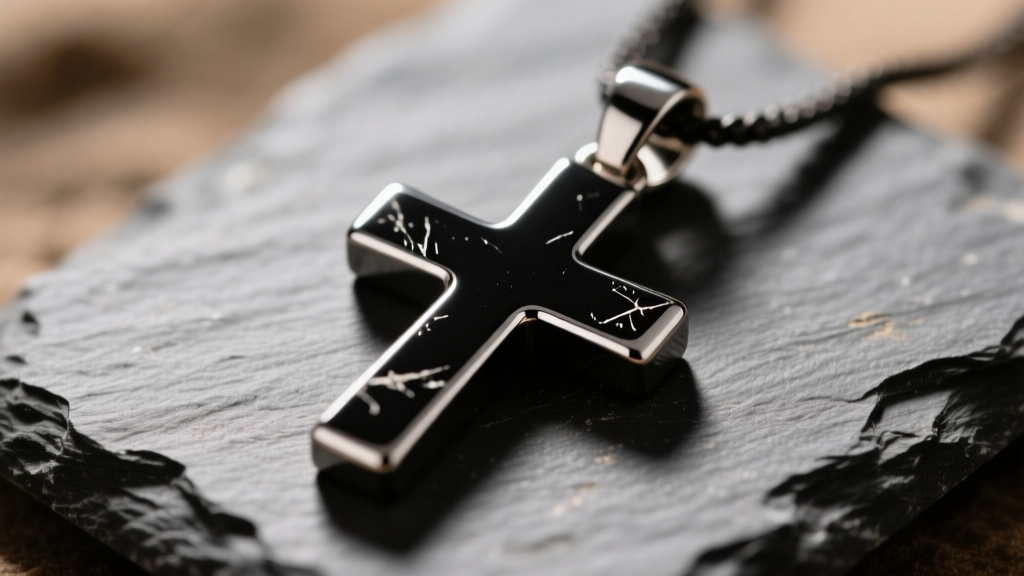
The Metallurgy of Black Finishes: Why Your Cross is Fading
The mens black cross necklace is a staple of modern masculine jewelry, but the dark finish is rarely the metal's natural state. Unless you are wearing solid hematite or black zirconium, your pendant relies on a surface treatment. When that treatment fails, the underlying base metal is exposed, leading to a patchy, degraded appearance. As of 2026, coating technologies have advanced significantly, but understanding your specific finish is the first step in troubleshooting premature wear.
PVD Coating vs. Oxidized Silver vs. Enamel
Physical Vapor Deposition (PVD) is the industry standard for black stainless steel and titanium crosses. In a vacuum chamber, titanium or zirconium nitride is vaporized and bonded to the metal at a microscopic level, typically achieving a thickness of 0.2 to 0.5 microns. According to metallurgical data on Physical Vapor Deposition, this process creates a surface harder than the base metal. However, PVD does not fill in deep scratches; if your cross has sharp edge wear, the coating has likely been physically abraded away by friction against clothing or chest hair.
Alternatively, if your cross is sterling silver (925), the black color is likely achieved through intentional oxidation using liver of sulfur (potassium sulfide). This creates a layer of silver sulfide on the surface. Unlike PVD, oxidized silver is soft and will naturally polish itself away on high-contact areas, leaving the recessed details dark and the raised edges bright silver. Finally, black enamel (either vitreous glass or cold epoxy) is prone to chipping upon impact, revealing the bright metal underneath.
| Finish Type | Base Metal | Expected Lifespan | Primary Failure Mode | Restoration Feasibility |
|---|---|---|---|---|
| PVD (Titanium Nitride) | 316L Steel / Titanium | 3–7 Years | Edge abrasion, deep scratching | Low (Requires factory re-coating) |
| Oxidized (Silver Sulfide) | 925 Sterling Silver | 1–3 Years | Friction polishing (fading) | High (Can be re-oxidized at home) |
| Black Rhodium | White Gold / Silver | 6–18 Months | Sweat erosion, peeling | Medium (Requires professional replating) |
| Cold Enamel | Brass / Silver | 2–5 Years | Impact chipping, UV yellowing | Medium (Epoxy refill possible) |
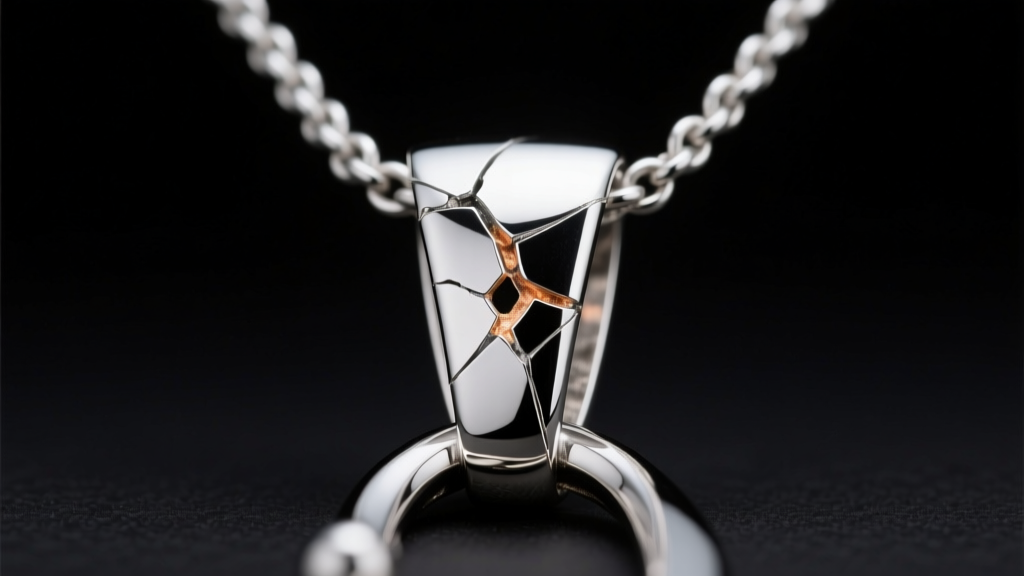
Troubleshooting Structural Hardware Failures
The most common point of catastrophic failure on a mens black cross necklace is not the chain, but the bail—the small loop that connects the pendant to the chain. Mass-produced pendants often feature cast bails with weak, porous solder joints where the loop meets the body of the cross.
The Weak Link: Bail and Jump Ring Breakages
If your pendant repeatedly snaps off, inspect the jump ring (the circular wire linking the bail to the chain). Standard factory jump rings are often 20-gauge or 22-gauge wire that is merely butt-cut (where the two ends meet but are not soldered shut). Over time, the lateral tension of a heavy cross pulling against the chain will warp the ring into an oval, forcing the gap open.
The Fix: Take the piece to a jeweler and request an upgrade to an 18-gauge or 16-gauge stainless steel or titanium jump ring that is laser-welded completely shut. Laser welding, which has become highly accessible by 2026, fuses the metal without applying the broad heat of a traditional torch, which could otherwise damage the PVD coating or melt the enamel on your cross.
"Never use a standard spring-ring clasp for a heavy solid silver or steel cross. The internal spring mechanism is the weakest point. Always upgrade to a forged lobster clasp or a magnetic neodymium locking clasp for secure, daily wear." — Master Bench Jeweler Protocol
The Chemistry of the "Green Neck" Phenomenon
If your black cross necklace is leaving a green or black smudge on your chest, you are experiencing a galvanic reaction. This is almost exclusively a problem with cheaper base metals like brass or copper alloys that have been plated or coated. When the microscopic black coating wears thin, your sweat—which contains water, salt (chlorides), and lactic acid—penetrates the surface and reacts with the copper in the alloy, creating copper chloride. This compound is green and easily transfers to the skin.
According to dermatological studies on metal contact dermatitis and reactions, this isn't necessarily an allergy, but a chemical byproduct of corrosion. To troubleshoot this immediately, you can apply a micro-thin layer of clear polyurethane nail polish to the back of the pendant where it touches your skin. For a permanent fix, have a jeweler electroplate the back of the pendant with a thick layer of surgical-grade 316L stainless steel or pure platinum, creating an inert barrier between the copper alloy and your skin.

Chain Proportion and Tensile Strength
A frequent styling and structural error is pairing a heavy, oversized black cross pendant with a delicate chain. This not only looks visually unbalanced but guarantees chain failure. The tensile strength of a chain must be calculated against the dynamic weight of the pendant (which increases when you move, run, or accidentally snag the necklace).
The 5-to-1 Weight Ratio Rule
As a strict rule of thumb, the breaking strength of your chain should be at least five times the weight of your pendant. If your solid brass or silver black cross weighs 20 grams, your chain must withstand at least 100 grams of tensile force before stretching or snapping.
- Miami Cuban Link (4mm - 6mm): Excellent for heavy crosses (25g+). The interlocking flat links distribute weight evenly and resist pulling.
- Figaro Chain (3mm): Good for medium crosses (10g - 20g). The alternating link pattern offers decent strength but can kink if bent backward.
- Box Chain (1.5mm - 2mm): Best for lightweight, minimalist crosses (under 10g). Box chains are notorious for stretching irreparably if subjected to heavy pendants.
The 2026 Maintenance and Restoration Protocol
Proper cleaning is critical. The biggest mistake owners make is tossing their black jewelry into an ultrasonic cleaner. The high-frequency sound waves and heat will strip oxidized silver finishes, shatter cold enamel, and cause microscopic fracturing in PVD coatings.
Step-by-Step Safe Cleaning
- Preparation: Mix a few drops of pH-neutral dish soap (like Dawn) into a bowl of lukewarm distilled water. Avoid tap water, as the chlorine and fluorides can react with exposed base metals.
- Agitation: Submerge the necklace for exactly 3 minutes. Use an extra-soft baby toothbrush to gently sweep dirt from the crevices of the cross. Do not scrub the flat, polished surfaces.
- Rinsing: Rinse thoroughly under a gentle stream of distilled water.
- Drying: Pat dry with a clean, lint-free microfiber cloth. Never use paper towels, as the wood pulp fibers will leave micro-scratches on black rhodium and PVD surfaces.
For oxidized sterling silver crosses that have faded to a uniform gray, you can restore the deep black contrast at home. Purchase a silver sulfide solution (commonly sold as liver of sulfur gel). Dip the cleaned silver cross into a diluted warm-water mixture for 10 to 30 seconds until it turns pitch black. Rinse immediately, then use a polishing cloth to gently buff only the raised edges, leaving the recessed areas dark for a striking, high-contrast vintage look.


