Necklace of the Moon: Material & Metal Comparison Guide
Discover the best metals and gemstones for a necklace of the moon. Compare durability, tarnish resistance, and pricing for celestial jewelry.

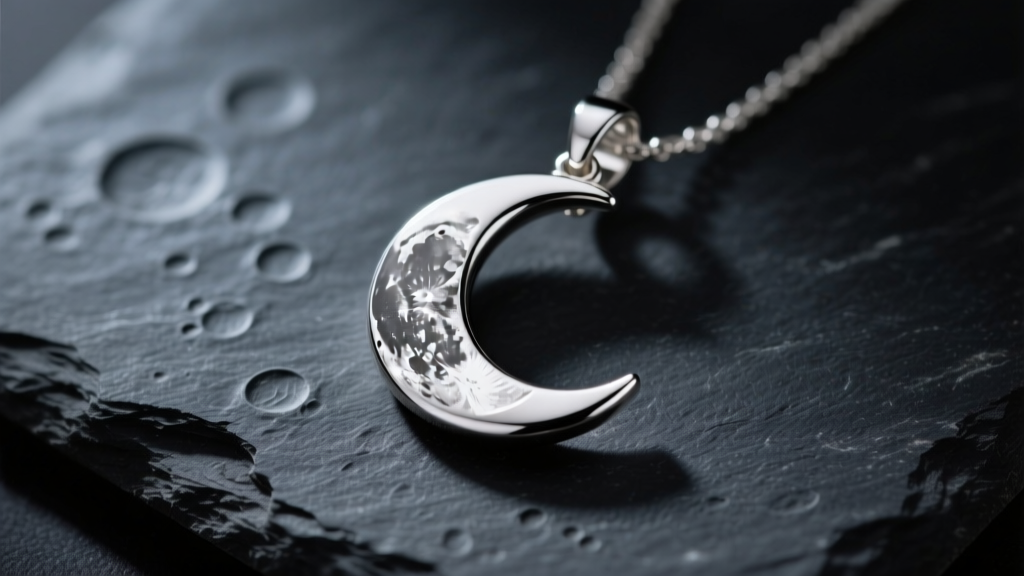
The Anatomy of a Necklace of the Moon
The celestial jewelry trend has evolved from a fleeting aesthetic into a permanent staple of modern adornment. At the heart of this movement is the 'necklace of the moon'—a design category encompassing crescent silhouettes, intricate moon phase sequences, and crater-textured pendants. However, the visual poetry of a lunar necklace is only as enduring as its metallurgical and gemological foundations. Because moon motifs often feature delicate points, micro-engravings, and cabochon inlays, selecting the right material is a critical engineering decision, not just a stylistic one.
When evaluating materials for lunar jewelry, we must balance three core factors: tensile strength for delicate crescent tips, tarnish resistance for deep crater engravings, and optical compatibility with lunar gemstones. This guide breaks down the exact material properties, failure modes, and pricing structures you need to know before investing in or designing a moon-themed pendant.
The Core Metals: Silver, Gold, and Titanium
The metal you choose dictates the pendant's weight, oxidation rate, and long-term wearability. Lunar designs often rely on high-contrast finishes—such as oxidized recesses against highly polished edges—which behave differently across metal types.
Sterling Silver (.925): The Classic Lunar Canvas
Sterling silver remains the most popular choice for a necklace of the moon due to its natural bright-white luster, which mimics moonlight. Standard .925 sterling silver is an alloy containing 92.5% pure silver and 7.5% copper. This copper content provides the necessary hardness for stamping and casting but introduces a vulnerability: copper oxide tarnish. When exposed to sulfur compounds in the air or skin acids, the copper reacts, creating a dark silver sulfide layer.
For moon pendants with deep, engraved craters, this tarnish can actually be leveraged as a design element through intentional oxidation (patina), which settles in the recesses and highlights the topography of the moon's surface. However, if a bright, maintenance-free finish is desired, look for rhodium-plated sterling silver. A high-quality rhodium flash (typically 0.1 to 0.5 microns thick) creates an impenetrable barrier against tarnish. According to Rio Grande jewelry supply, rhodium plating on silver will eventually wear away at high-friction points, requiring re-plating every 18 to 24 months depending on wear frequency.
White Gold vs. Platinum: Premium Durability
For fine jewelry iterations of the moon necklace, white gold and platinum are the standard. 14k white gold (58.5% pure gold) is alloyed with nickel, palladium, or silver to achieve its color, and it is almost always plated with rhodium. While highly durable and excellent for securing micro-pave diamond 'stars' around a moon pendant, white gold requires periodic re-dipping to maintain its bright white color.
Platinum (typically 950 grade, alloyed with 5% ruthenium or iridium) is significantly denser and heavier than gold. When a platinum moon pendant is scratched, the metal is displaced rather than lost, developing a soft 'patina' over time. This matte finish can beautifully mimic the dusty, unpolished surface of the actual moon, making it a favorite among artisan jewelers for textured celestial pieces. Expect to pay a 40% to 60% premium for platinum over 14k white gold due to its density and higher melting point during casting.
Titanium: The Modern Hypoallergenic Alternative
Grade 5 titanium (Ti-6Al-4V) is increasingly used in contemporary lunar jewelry. It is exceptionally strong, highly resistant to corrosion, and entirely hypoallergenic. Because titanium is incredibly difficult to cast and solder, moon pendants made from this metal are typically CNC-machined or laser-cut from sheet metal. This results in ultra-precise, razor-sharp crescent points that would be fragile and prone to bending in softer metals like 24k gold or fine silver.
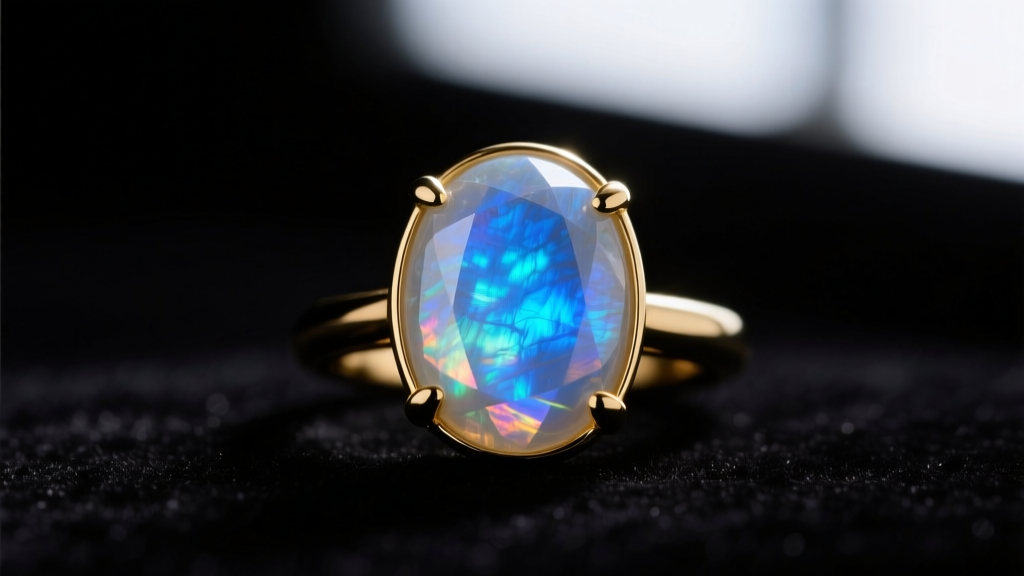
Gemstone Inlays: Capturing the Lunar Glow
A necklace of the moon is frequently anchored by a gemstone that exhibits optical phenomena reminiscent of lunar light. Understanding the crystallography and Mohs hardness of these stones is vital for preventing catastrophic failure in daily-wear pendants.
Moonstone (Orthoclase Feldspar)
The undisputed champion of celestial jewelry is the moonstone. According to the Gemological Institute of America (GIA), moonstone is a variety of orthoclase feldspar that exhibits adularescence—a billowy, floating light effect caused by the scattering of light between microscopic, alternating layers of orthoclase and albite. With a Mohs hardness of 6 to 6.5, moonstone is relatively soft. More critically, it possesses two directions of perfect cleavage. This means a sharp impact against a hard surface can cause the stone to split cleanly along its internal planes. Jewelers must use protective bezel settings or heavily reinforced prongs with deep seats to secure moonstone cabochons in moon phase necklaces.
Ethiopian vs. Australian Opal
Opals are frequently used to represent the 'supermoon' or full moon phases due to their intense play-of-color. Ethiopian opals are hydrophane, meaning they are porous and will absorb water, oils, and lotions, which can temporarily alter their transparency and color play. Australian opals are non-porous and much more stable for daily-wear necklaces. Both share a Mohs hardness of 5.5 to 6.5, making them highly susceptible to scratching from dust (which contains quartz, Mohs 7). Opals in lunar pendants should always be set in a bezel with a slightly recessed profile to protect the dome from edge-on impacts.
Mother of Pearl and Moon Dust Inlay
For a more subtle, iridescent lunar effect, crushed mother of pearl (nacre) or synthetic 'moon dust' (often a mix of lapis lazuli powder, pyrite, and resin) is inlaid into engraved silver or gold channels. Nacre is composed of aragonite platelets and organic conchiolin, making it highly sensitive to acids, including the natural pH of human sweat and common perfumes. Over time, acidic exposure will dissolve the calcium carbonate, leaving the inlay dull and chalky. Always advise applying perfumes and hairsprays before putting on an inlaid necklace of the moon.
Material Comparison Matrix
To streamline your decision-making process, the following table compares the most common materials used in lunar-themed necklaces across critical performance metrics.
| Material | Mohs / Durability | Tarnish Risk | Avg. Price Range (Pendant) | Best Lunar Application |
|---|---|---|---|---|
| .925 Sterling Silver | 2.5 - 3 (Metal) | High (without plating) | $45 - $150 | Oxidized crater textures, vintage crescents |
| 14k White Gold | 3.5 - 4 (Metal) | Low (Rhodium plated) | $250 - $600 | Micro-pave diamond halos, fine moon phases |
| 950 Platinum | 4 - 4.5 (Metal) | None (Patina develops) | $400 - $1,200+ | Heirloom pieces, heavy textured full moons |
| Rainbow Moonstone | 6 - 6.5 (Stone) | N/A (Sensitive to heat) | $30 - $120 (Stone cost) | Cabochon inlays, glowing center stones |
| Australian Opal | 5.5 - 6.5 (Stone) | N/A (Sensitive to shock) | $80 - $300 (Stone cost) | Bezel-set full moon representations |
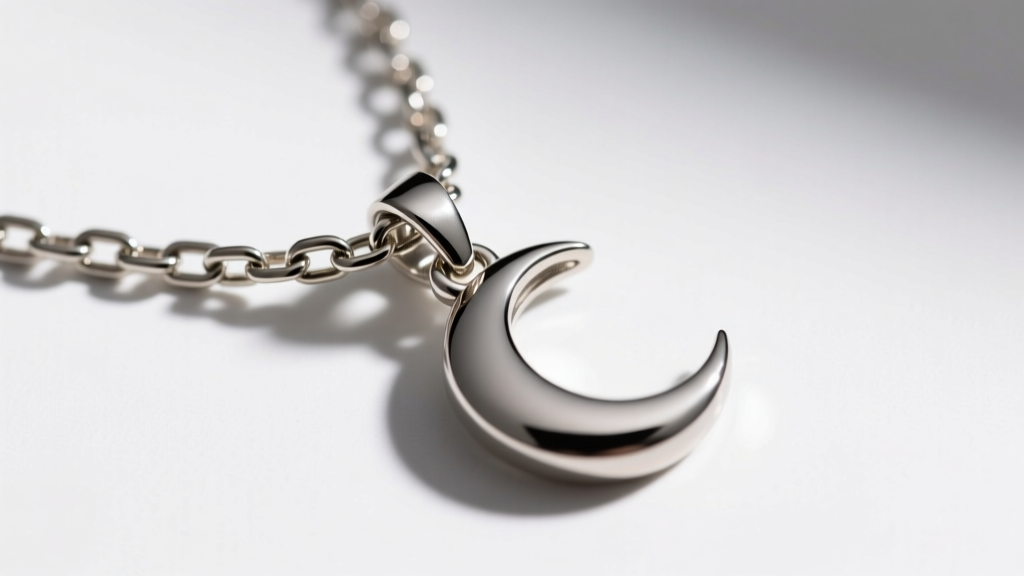
Chain Selection: Engineering the Suspension
The pendant is only half the equation. A necklace of the moon requires a chain that complements its weight and thematic delicacy. The most common failure mode in celestial jewelry is the snapping of an undersized chain or the distortion of a chain's links under the pendulum-like swing of a heavy moon pendant.
- Box Chains (0.9mm - 1.2mm): The optimal choice for moon pendants weighing between 3 and 8 grams. The interlocking square links distribute tension evenly and resist kinking. A 1.0mm sterling silver box chain can safely support up to 15 pounds of tensile force before breaking.
- Cable Chains (1.0mm - 1.5mm): Classic and versatile, but the oval links can stretch over time if the pendant is too heavy. Best reserved for lightweight, minimalist crescent moons under 4 grams.
- Snake Chains (1.5mm - 2.0mm): While they offer a fluid, liquid-metal look that mimics the night sky, snake chains are notoriously prone to permanent kinking if bent sharply. They also trap skin oils and lotions between their tightly packed bands, requiring frequent ultrasonic cleaning (provided the pendant stone can withstand it).
Always ensure the chain's jump ring (the loop connecting the chain to the pendant) is soldered shut. An open jump ring will inevitably pull apart under the lateral stress of a swinging moon pendant, leading to loss of the piece.
Care and Maintenance Protocols
Maintaining the brilliance of your lunar necklace requires material-specific care. Never use ultrasonic cleaners or steam cleaners on a necklace of the moon if it features moonstone, opal, or mother of pearl. The high-frequency vibrations can shatter stones with perfect cleavage or internal fractures, while the heat can cause opals to craze (develop a network of fine cracks).
For plain metal lunar pendants (silver, gold, or platinum without porous stones), a mild solution of warm water and a few drops of phosphate-free dish soap, agitated with a soft-bristled baby toothbrush, is the safest way to remove sebum and dead skin cells from deep crater engravings. For oxidized silver pieces where the dark patina is intentional, avoid silver dip solutions entirely, as they will strip the oxidation and leave the moon's surface looking flat and sterile. Instead, use a polishing cloth exclusively on the raised, high-polish edges of the crescent or sphere, preserving the dark contrast in the recesses.
By understanding the specific mineralogical and metallurgical properties outlined above, you can select a necklace of the moon that is not only visually captivating but structurally engineered to endure a lifetime of wear.


